
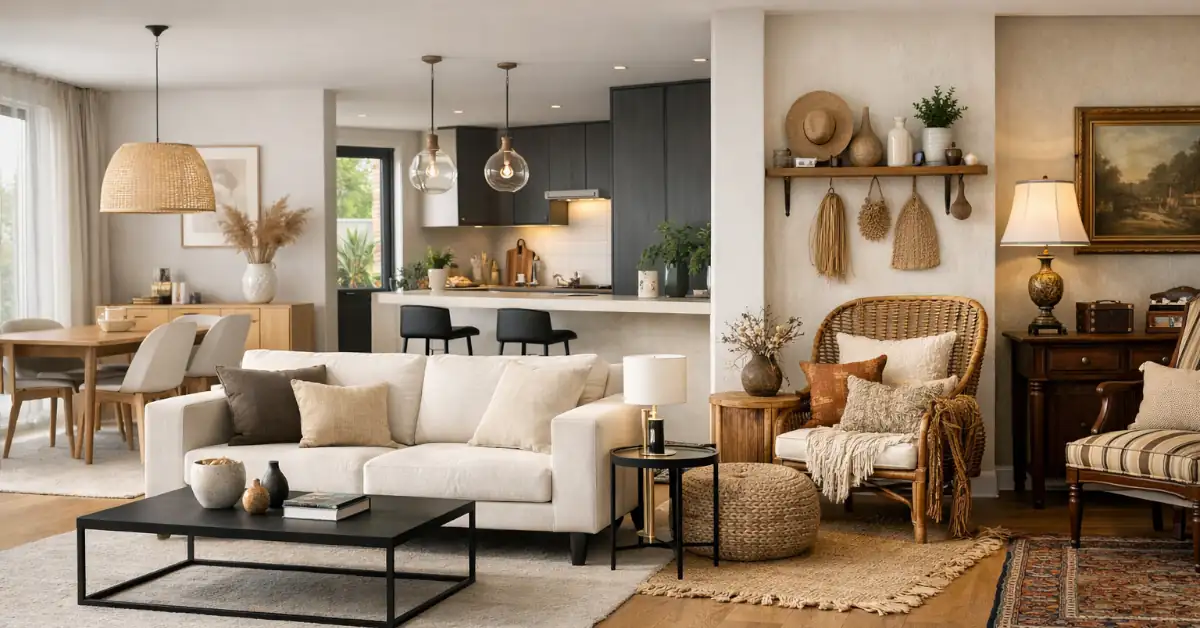
Learn popular interior design style, how they differ, and how to choose one that fits your home.
You save one room because it feels calm. Another because it feels rich and warm. A third because it looks clean and expensive.
Then the confusion starts.
One room is called Scandinavian. One is transitional. One is modern organic. Suddenly, you are staring at beautiful photos without knowing what any of the labels really mean. That is where most people get stuck, and honestly, most articles do not make it easier.
I’m writing this from the perspective of helping absolute beginners, because that’s where most guides fail. Current design coverage from major magazines also points in the same direction: people are moving toward personal style, layered texture, and thoughtful mixing, not blind loyalty to one strict look.
Why interior design style feel confusing at first
The three labels people mix up most
The biggest confusion in interior design styles usually comes from these words:
- Modern often refers to a historical design language tied to the early-to-mid 20th century.
- Contemporary means what feels current right now.
- Transitional mixes traditional and modern elements in a softer, more timeless way.
That matters because a room can look “modern” in casual speech but actually be contemporary, transitional, or midcentury modern in design terms.
Myth-busting: you do not need one pure style
Here’s the thing: almost nobody lives in a perfect showroom. Even House Beautiful and Architectural Digest make room for overlap, blending, and evolution across styles. The problem is not mixing. The problem is mixing without a plan.
A simple analogy that helps
Think of style like music.
Scandinavian is acoustic and calm.
Industrial is raw and edgy.
Traditional is classical and layered.
You do not need one song on repeat forever. You just need the playlist to feel intentional.
The interior design styles that matter most in real homes
You do not need to memorize 30 labels. Start with the eight interior design styles that show up again and again in real homes and in current editorial coverage.
Scandinavian
Scandinavian style is light, functional, simple, and cozy. Expect pale wood, soft neutrals, clean lines, natural materials, and very little visual clutter. It works well for small homes because it lets light bounce around the room.
Midcentury modern
Midcentury modern comes from the middle of the 20th century. It favors warm woods, practical forms, tapered legs, and pieces that feel sleek but still welcoming. This style is great for people who want retro charm without too much ornament.
Traditional
Traditional interiors lean into symmetry, classic furniture shapes, richer woods, antiques, layered fabrics, and a sense of polish. It feels settled. Grown-up. Comfortable. But it can look heavy if you overdo dark colors and formal details.
Transitional
Transitional style sits between traditional and modern. That is why so many people like it. It keeps the warmth of classic interiors but removes some of the heaviness. Think neutral palettes, softer shapes, cleaner lines, and a balanced, timeless look.
Bohemian
Boho feels collected, expressive, and relaxed. It often includes layered textiles, global influence, rich colors, handmade pieces, and art that feels personal rather than staged. The risk is obvious: without editing, it can drift from soulful to chaotic.
Industrial
Industrial style borrows from warehouses and utilitarian architecture: metal, concrete, brick, darker palettes, strong lines, exposed structure. It can look dramatic and urban. It can also feel cold if you forget softness.
Farmhouse
Farmhouse style values comfort, function, and a lived-in feel. The classic version draws from older American homes, while modern farmhouse tones things down with cleaner lines and less visual weight. It is warm and approachable, but too many themed pieces can make it feel costume-like.
Japandi
Japandi blends Japanese restraint with Scandinavian calm. It uses natural materials, low furniture, muted color, and a quiet sense of order. Many readers love it because it feels peaceful without feeling empty.
Quick comparison table
| Style | Feels like | Best for | Watch out for |
|---|---|---|---|
| Scandinavian | Light, calm, airy | Small spaces, bright rooms | Can feel flat if everything is pale |
| Midcentury modern | Retro, warm, smart | Vintage lovers, clean layouts | Too many replicas can feel generic |
| Traditional | Classic, rich, formal | Older homes, layered rooms | Can get heavy fast |
| Transitional | Balanced, soft, timeless | Beginners, family homes | Can become bland without contrast |
| Bohemian | Creative, relaxed, personal | Collectors, color lovers | Easy to overfill |
| Industrial | Raw, urban, bold | Lofts, masculine spaces | Can feel cold |
| Farmhouse | Cozy, familiar, simple | Casual homes, family spaces | Theme-decor danger |
| Japandi | Quiet, grounded, refined | Minimalists who still want warmth | Can look sparse if under-layered |
How to choose a style that fits your real life
Start with feeling, not furniture
Most beginners start backward. They ask, “Should I buy a boucle chair?” when the better question is, “How do I want this room to feel?”
Try these words first:
- calm
- warm
- elegant
- playful
- dramatic
- cozy
- polished
- earthy
Your feeling words matter more than style labels.
If you want calm and light, Scandinavian or Japandi may fit and If you want polished but welcoming, transitional may be better. If you want history and warmth, traditional might be your base.
Match your style to your home and habits
A style is only useful if it survives daily life.
In practice, this usually means:
- homes with kids or pets need forgiving fabrics and less fragile styling
- small apartments benefit from lighter palettes and cleaner silhouettes
- busy households often do better with transitional or Scandinavian than very ornate traditional rooms
- highly expressive people usually feel happier with boho, eclectic, or layered traditional spaces
Current trend coverage also shows that personality and real-life use are winning over rigid, perfect-looking rooms.
Common mistake: decorating for photos instead of daily life
This is a big one.
A room can look amazing online and still annoy you every single day. White boucle in a house with muddy shoes. Open shelving for someone who hates dusting. Dark industrial finishes in a low-light apartment. Beautiful, yes. Practical, no.
A good room should serve your life, not just your camera roll.
A real-world example
Take Sarah, a bakery owner renting a one-bedroom apartment in Chicago. She loves old wood furniture, soft cream walls, black-framed mirrors, and linen curtains. She also works long hours and does not want a fussy home.
I would not tell Sarah to choose between traditional and modern. I would guide her toward transitional with Scandinavian restraint:
- keep a warm neutral palette
- use one antique wood piece for soul
- add a simple sofa with clean lines
- repeat black accents lightly
- layer texture through linen, wool, and a soft rug
That gives her warmth without heaviness. Style without stress.
How to mix interior design styles without making a mess
Use the 80/20 rule
This is the trick I use most.
Let one style lead about 80% of the room. Let the second style show up in the remaining 20%.
Examples:
- Scandinavian + boho
- Traditional + modern
- Farmhouse + industrial
- Japandi + rustic
This works because the room still reads clearly. It does not feel like eight opinions fighting each other.
Use color, shape, and material as the glue
When readers ask how to combine interior design styles, they often think the answer is “buy matching furniture.” It usually is not. Reddit discussions show many people actually prefer curated, mixed rooms over perfect matching sets.
The real glue is repetition:
- repeat one wood tone
- repeat one metal finish
- repeat two or three core colors
- repeat a shape, like curves or straight lines
That is what makes a mixed room feel calm.
The #1 mistake everyone makes
They mix statements, not systems.
A carved antique table. A neon acrylic chair. A farmhouse sign. A glam mirror. A boucle sofa. A tribal rug. None of these are “bad.” They just may not belong in the same sentence.
Slow down. Edit hard.
How I would do a living room
Let’s say your base is transitional.
I would build it like this:
- a neutral sofa with soft lines
- one classic wood coffee table
- one modern floor lamp
- one vintage-style rug
- art that bridges old and new
- two accent colors repeated across pillows and books
That room feels layered, not random. That is the goal.
A room-by-room checklist you can actually use
Living room
Ask:
- Do I want this room to impress, relax, or both?
- Will I entertain here?
- Do I need storage hidden or visible?
For most people, the living room is where interior design styles become easiest to read. Start there.
Bedroom
Prioritize calm over performance. Bedrooms usually work best when the palette is simpler and the texture is softer. Even bold personalities often want less noise where they sleep.
Kitchen and dining
This is where trend-chasing can get expensive. Stay careful. Choose durable materials and a timeless backbone first. Then bring style through lighting, stools, textiles, art, and hardware.
The 5-step shopping filter
Before buying any piece, ask:
- Does it fit my main style direction?
- Does it repeat a color or material already in the room?
- Does it solve a real need?
- Will I still like it in two years?
- Does it help the room feel clearer, not busier?
If the answer is “no” to three of those, leave it.
Frequently Asked Questions
What is the difference between modern and contemporary?
Modern usually refers to a historical design movement, while contemporary reflects what feels current now. They can look similar, but they are not the same thing.
Can I mix farmhouse and modern?
Yes. Keep the farmhouse pieces simple, not overly themed, and pair them with cleaner modern lines. That usually works better than mixing very ornate farmhouse details with ultra-sleek modern furniture.
What style makes a small room look bigger?
Scandinavian, Japandi, and some transitional rooms often help because they use lighter palettes, cleaner shapes, and less visual clutter. That said, any style can work in a small room if you control scale and storage.
Is Japandi just Scandinavian design with darker colors?
Not quite. Japandi shares Scandinavian simplicity, but it adds stronger Japanese influence through lower furniture, deeper tones, and a different kind of restraint.
How do I know my home looks cohesive?
Look for repetition. When colors, materials, and shapes quietly echo each other across rooms, your home will feel connected even if you mix styles.
Do I need to know every style before decorating?
No. You only need a clear starting point. Most beautiful homes are edited over time, not solved in one weekend.
Conclusion
The best way to understand interior design styles is not to memorize every label. It is to learn the few that fit your taste, understand how they behave, and use them with intention.
Start simple. Pick one main style. Add one supporting style. Repeat your colors and materials. Edit harder than you shop.
That is enough.
Pick one room this week, write down three feeling words for it, and use those words as your filter for every choice you make.