

Introduction to Auractive
In today’s rapidly evolving technological landscape, “Auractive” stands out as a concept that is difficult to define yet impossible to ignore. This innovative idea is capturing the attention of tech enthusiasts, industry experts, and everyday consumers alike. Auractive is not just another buzzword — it represents a shift towards more intuitive, immersive, and intelligent technology. This article explores the various facets of Auractive, its implications, its applications, and its potential to reshape multiple industries.
What is Auractive?
Auractive is a term that describes a wide range of advanced technologies designed to improve how people interact with digital systems. At its core, Auractive merges augmented reality (AR), artificial intelligence (AI), and immersive digital experiences into one cohesive framework. This fusion creates a more intuitive interface between humans and machines, enabling seamless interaction and deeper engagement.
The Core Components of Auractive
Augmented Reality (AR)
Overview of Augmented Reality
Augmented Reality (AR) overlays digital information onto the real world, enhancing how people perceive and interact with their environment. Unlike virtual reality, which creates a fully artificial environment, AR blends the digital and physical worlds, offering a unique and enriched user experience. Digital elements feel naturally embedded within physical surroundings.
Applications of Augmented Reality
AR has found applications across many fields:
- Gaming and Entertainment: Games like Pokémon Go have shown how AR can bring digital creatures into the real world. AR also enhances live events, museums, and theme parks by adding digital layers to physical exhibits and attractions.
- Education: AR makes learning more interactive and engaging — for example, bringing historical events to life or providing 3D visualisations of complex scientific concepts.
- Professional Training: In medicine, engineering, and military training, AR provides hands-on practice without real-world risks. Surgeons can rehearse procedures on virtual patients, and engineers can manipulate 3D models of complex machinery.
- Retail and Marketing: AR lets customers virtually try on clothes or preview furniture in their homes. This improves satisfaction, boosts sales, and reduces return rates.
AR in the Auractive Framework
By integrating AR into the Auractive framework, users experience a richer, more interactive environment. Auractive uses AR to make digital interactions feel natural, bridging the gap between the digital and physical worlds through gestures, voice commands, and physical movement.
Artificial Intelligence (AI)
Overview of Artificial Intelligence
Artificial Intelligence (AI) refers to the simulation of human intelligence by machines, particularly computer systems. It ranges from simple rule-based systems to complex algorithms that learn and adapt over time. AI spans machine learning, natural language processing, computer vision, and robotics — each contributing to more intelligent, responsive systems.
Applications of Artificial Intelligence
AI’s role in modern technology is broad:
- Machine Learning: Algorithms that learn from data and improve over time, used in recommendation systems and predictive maintenance.
- Natural Language Processing (NLP): Enables machines to understand and respond to human language — the basis of virtual assistants and customer-service chatbots.
- Computer Vision: Allows machines to interpret visual input, with applications in facial recognition, autonomous vehicles, and medical imaging.
- Robotics: AI-powered robots perform complex tasks — from manufacturing to surgery — with precision, adapting to new tasks through learning algorithms.
AI in the Auractive Ecosystem
Within the Auractive ecosystem, AI analyses user behaviour, preferences, and patterns to deliver personalised, adaptive experiences. By tailoring content and suggestions to each individual, AI makes every interaction feel relevant — which in turn boosts engagement and satisfaction.
Immersive Digital Experiences
Overview of Immersive Digital Experiences
Immersive digital experiences fully engage the user’s senses, creating a feeling of presence within a virtual or augmented environment. Virtual reality (VR), augmented reality (AR), and mixed reality (MR) together form a spectrum of immersive environments.
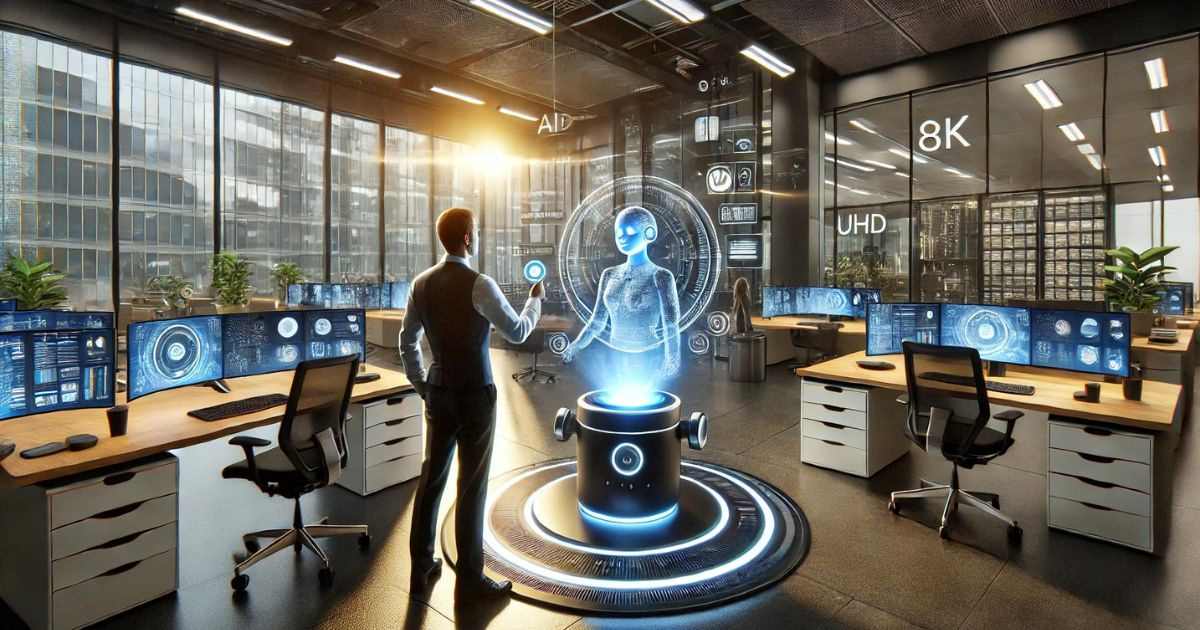
Applications of Immersive Digital Experiences
Immersive technologies have a wide range of applications:
- Virtual Reality (VR): Fully digital environments for gaming, virtual tours, training simulations, and therapeutic mental-health settings.
- Mixed Reality (MR): Blends real and virtual worlds so physical and digital objects coexist and interact in real time — used in advanced training, design, and collaborative work.
- Interactive Storytelling and Media: Immersive experiences let audiences become part of the story, exploring different paths and outcomes for deeper emotional engagement.
Role in the Auractive Framework
Auractive uses these immersive technologies to create highly engaging, interactive experiences that go beyond traditional digital interactions. Combining VR, AR, and MR gives Auractive a dynamic, adaptable platform — particularly valuable in education, training, and entertainment, where deep immersion matters most.
The Evolution of Auractive Technology
Early Beginnings
Auractive began with its individual components — AR and AI. Early applications were limited and specialised, focused on narrow tasks such as navigation or simple interactive experiences. But the potential of combining these technologies soon became clear, sparking more ambitious projects.
Integration and Expansion
As AR and AI matured, their integration produced more sophisticated systems. Powerful mobile devices and advances in computing accelerated the shift towards holistic experiences that blend the physical and digital worlds seamlessly.
Current State and Future Prospects
Today, Auractive sits at the forefront of innovation, with applications across many industries. Continued improvements in AI algorithms, AR capabilities, and immersive technology suggest Auractive will only become more pervasive — redefining how we interact with technology.
Applications of Auractive Technology
Healthcare
Auractive could revolutionise patient care and medical training. AR can give surgeons enhanced visualisation of anatomical structures during operations, while AI-driven diagnostic tools analyse medical data to support accurate, timely decisions.
Education
Auractive technology can make learning more interactive and engaging. AR applications can bring historical events to life, and AI-powered tutoring systems can personalise learning to each student’s needs and pace.
Entertainment and Gaming
The entertainment and gaming industries have already embraced Auractive technology. AR games like Pokémon Go merged digital content with the real world; future developments promise even more immersive experiences that blur the line between virtual and physical.
Retail and E-Commerce
In retail, Auractive lets customers try on clothes virtually or preview furniture in their homes. AI analyses shopping behaviour to provide personalised recommendations — creating a more satisfying, efficient shopping experience.
Industrial and Professional Training
Auractive can transform professional training. AR simulates real-world scenarios for risk-free hands-on practice, while AI tracks progress and adapts training programmes to individual learning needs.
The Impact of Auractive on User Interaction
Enhanced Engagement
Auractive enables deeper engagement by making interactions natural and intuitive. Users control digital content the way they interact with the real world — through gestures and voice commands — leading to more satisfying, productive experiences.
Personalised Experiences
AI’s ability to learn from user data enables highly personalised experiences. Whether tailoring content to individual preferences or adapting interfaces to behaviour, Auractive ensures each interaction feels unique and relevant.
Accessibility and Inclusivity
Auractive can also make digital interaction more accessible and inclusive — for example, AR visual aids for people with visual impairments, or AI-powered real-time translation across languages.
Challenges and Considerations
Technical Challenges
Auractive still faces technical hurdles: the need for robust, efficient hardware, sophisticated AI algorithms, and seamless integration between AR and other digital experiences. Ongoing research and innovation are essential.
Privacy and Security
Auractive’s extensive use of AI and data analysis raises privacy and security concerns. Protecting user data and using it ethically is crucial for building trust.
Ethical Considerations
Ethical questions also matter — including data bias, the digital divide, and the impact of immersive experiences on mental health. These need careful, ongoing attention.
The Future of Auractive Technology
Advancements in AR and AI
Evolution of Augmented Reality
Auractive’s future is closely tied to AR’s evolution, with major improvements expected in both hardware and software:
- AR Glasses: Widespread adoption of AR glasses will bring hands-free, immersive experiences. Future glasses should be lighter, more comfortable, and equipped with better displays and sensors.
- Spatial Computing: AR systems will understand and interact with the physical world in more complex ways, enabling more accurate, realistic digital overlays.
Advancements in Artificial Intelligence
AI remains a critical driver of Auractive’s future:
- Powerful AI Algorithms: Machine learning models will become more accurate and efficient, processing vast amounts of data in real time for immediate insights and responses.
- Personalisation and Context Awareness: AI will understand user behaviour, preferences, and environmental context more deeply, making interactions feel more natural.
- AI in AR Applications: AI will make AR smarter — recognising objects, providing contextual information, improving navigation, and enabling voice-activated controls.
Broader Adoption Across Industries
Healthcare
- Surgical Assistance: AR overlays critical information onto the patient’s body during procedures, while AI analyses data to support real-time decisions.
- Remote Consultations: AR and AI enable high-quality virtual care, regardless of geography.
Education
- Interactive Learning: Students explore 3D models of historical sites, dissect virtual organisms, and visualise complex science concepts.
- Adaptive Learning Systems: AI customises content to each student’s pace and needs.
Entertainment and Gaming
- Immersive Games: AR and AI will create interactive worlds that respond to players in real time.
- Interactive Media: Audiences will influence narratives and outcomes, creating participatory entertainment.
Retail and E-Commerce
- Virtual Try-Ons: Customers try on clothes, accessories, and makeup virtually; AI suggests products based on preferences.
- Enhanced In-Store Experiences: AR provides interactive product information and navigation; AI offers personalised recommendations.
Integration with Emerging Technologies
Internet of Things (IoT)
- Smart Environments: IoT devices feed environmental data to AR systems — for example, smart homes displaying real-time energy usage, security status, and appliance health through AR.
- Industrial IoT: AR combined with IoT improves maintenance efficiency, overlaying real-time data and instructions onto machinery.
5G Networks
- Low Latency: 5G enables real-time interaction in AR and AI applications — crucial for remote surgery, autonomous vehicles, and live gaming.
- Increased Bandwidth: 5G supports high-resolution AR content and large-scale AI computation for more complex applications.
Conclusion
Auractive represents a significant leap forward in how we interact with technology. By merging augmented reality, artificial intelligence, and immersive digital experiences, it creates a more intuitive, engaging, and personalised interface between humans and machines. Challenges remain, but the potential benefits and applications are vast. As this concept continues to evolve, Auractive is poised to reshape multiple industries and redefine our relationship with technology.
Frequently Asked Questions
What is Auractive technology?
Auractive technology integrates augmented reality (AR), artificial intelligence (AI), and immersive digital experiences to create a more intuitive, engaging, and personalised interface between humans and machines — with applications across healthcare, education, entertainment, and retail.
How does Auractive enhance user experiences?
Auractive uses AR to overlay digital information onto the physical world, AI to understand and adapt to user behaviour, and immersive technologies like VR and MR to create engaging environments — making digital interactions more natural and personalised.
What are some practical applications of Auractive technology?
- Healthcare: Enhanced surgical precision, remote consultations, improved medical training.
- Education: Interactive learning experiences and personalised content.
- Entertainment and Gaming: Immersive games and interactive media.
- Retail and E-Commerce: Virtual try-ons, personalised recommendations, enhanced in-store experiences.
What advancements are needed for Auractive technology to reach its full potential?
- AR Hardware: Lightweight, comfortable AR glasses with better displays and sensors.
- AI Algorithms: More powerful, efficient algorithms for real-time processing and personalisation.
- Integration: Seamless connection with IoT devices and 5G networks.
- Infrastructure: Robust hardware and software platforms for sophisticated Auractive applications.
What challenges does Auractive technology face?
- Technical Hurdles: Integrating AR, AI, and immersive tech into cohesive systems.
- Privacy and Security: Protecting user data and using it ethically.
- Ethical Considerations: Data bias, the digital divide, and mental-health impacts.
How will Auractive technology impact the future?
As AR and AI advance and integrate with IoT and 5G, Auractive will create more connected, intelligent, immersive experiences — transforming how we interact with digital content and reshaping entire sectors.