
📌 Illustrative Example: This case study is an illustrative example created to demonstrate renovation possibilities, costs, and design ideas. Names, quotes, and specific details are fictional and intended for inspiration only.
Project Overview
Location: Paddington, Brisbane QLD
Home: 1960s Queenslander (enclosed underneath), rented
Family: Jess and Tom, renting, both working from home two days a week
Scope: Cosmetic living-room refresh — no structural work, landlord-approved
Timeline: 2 weekends plus one tradie day, completed April 2026
Not every transformation needs a sledgehammer. Jess and Tom rent their Queenslander and couldn’t touch the structure, the kitchen, or anything behind the walls. But their living room — the room they now spend 60+ hours a week in between work-from-home days and evenings — was working against them: dark stained floorboards, cream walls gone yellow with age, one lonely ceiling batten, and heavy block-out curtains that kept the famous Brisbane light firmly outside.
Their landlord agreed to a cosmetic refresh on two conditions: nothing structural, and everything reversible or value-adding. The budget was tight and the brief was clear — make it feel like a Queenslander again, not a cave.
The Challenge
Queenslanders were designed for light and airflow — high ceilings, wide verandahs, breezes. This living room had none of that working in its favour. The floorboards had been stained almost black by a previous tenant, which swallowed what little light the single north-facing window provided. The walls were a nicotine-cream that made the 2.7m ceilings feel low. And because both Jess and Tom work from the dining table twice a week, the room had to function as an office without looking like one on weekends.
The constraints shaped every decision: no sanding back the stained floors (too destructive for a rental), no new power points (no electrician budget for chasing walls), and everything had to either come with them or add value the landlord would appreciate.
[BEFORE IMAGE PLACEHOLDER]The Solution
With structure off the table, the makeover attacked the three things that actually determine how a room feels: light, floor, and softness.
Key changes:
– Paint: Two coats of warm white on walls and ceiling in a low-VOC paint — the single highest-impact change in the project. The ceiling went from yellowed cream to crisp white, which visually lifted it a good 15cm. One feature wall behind the sofa in a muted eucalyptus green added depth without darkening the room.
– Flooring: The black-stained boards were covered, not fought. Click-lock hybrid flooring in a pale oak went straight over the top as a floating floor — fully reversible, no glue, no damage. At roughly $70/m² installed across 45m², it was the biggest single line item and worth every cent.
– Lighting: The ceiling batten was swapped for a simple flush-mount fixture with warm-white globes, and two plug-in floor lamps with linen shades created the layered light the room never had. No electrician needed for the lamps — just well-placed power boards hidden behind furniture.
– Window treatment: Heavy block-outs came down; sheer linen-look curtains went up on the existing rod. Brisbane light finally entered the room, and the sheers diffuse it instead of blocking it. The block-outs were kept for the bedroom.
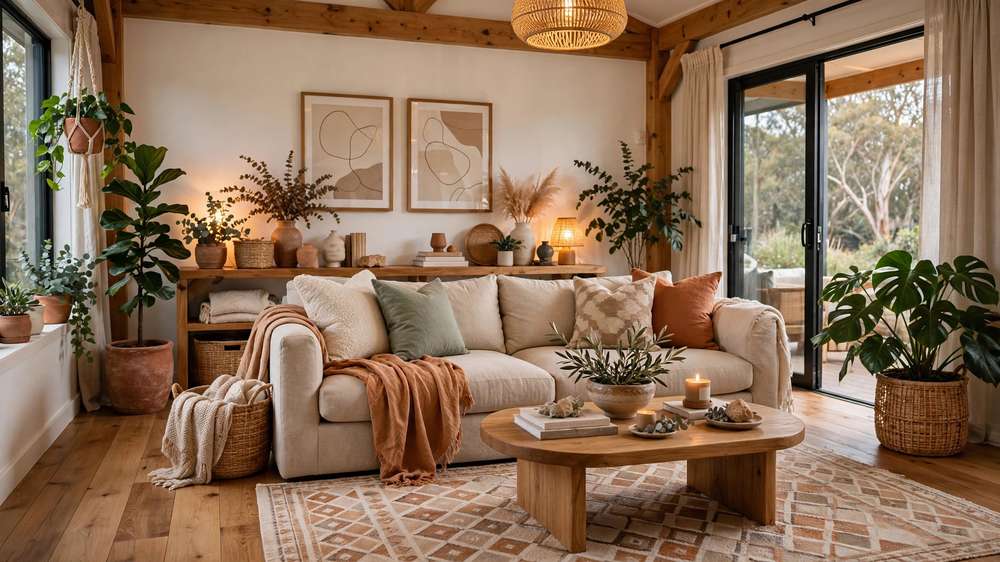
– Furniture: The existing sofa stayed (good bones, re-covered with a washable slipcover in natural linen). A secondhand solid-timber coffee table and a large jute rug anchored the seating zone. The “office” is a slim console desk behind the sofa that reads as a sideboard on weekends.
– Styling: Three framed prints from a local Brisbane artist, a tall fiddle-leaf fig in the dead corner, and a throw and cushions in the same green as the feature wall. Total styling spend: under $800, all of it portable.
The room went from cave to Queenslander in eleven days — and every dollar either travels with them or made the landlord’s property better.
[AFTER IMAGE PLACEHOLDER]Cost Breakdown
| Item | Cost |
|---|---|
| Interior painting (walls, ceiling, feature wall, labour + paint) | $3,200 |
| Hybrid flooring, 45m² floating install (reversible) | $3,150 |
| Flush-mount ceiling light + warm globes | $350 |
| Two floor lamps with linen shades | $480 |
| Sheer curtains + hardware | $620 |
| Sofa slipcover (washable linen) | $420 |
| Secondhand timber coffee table | $280 |
| Large jute rug (2.4 × 3.0m) | $900 |
| Slim console desk (doubles as sideboard) | $650 |
| Framed prints (local artist, set of 3) | $380 |
| Indoor plant + pot | $120 |
| Throw, cushions and small decor | $300 |
| Tradesperson day (light fitting, curtain rod fixes) | $550 |
| Contingency and bits | $2,200 |
| Total | $13,600 |
For context, a full professional interior paint of a living area this size runs $3,000–$5,000 in Brisbane, and hybrid flooring at $60–$95/m² installed is the renter-sweet-spot material — waterproof, floating, and removable. Nothing here required council approval, a licence, or the landlord’s nervous supervision.
Key Takeaways
1. Paint is the cheapest transformation per dollar. $3,200 changed the room more than everything else combined. If your budget only stretches to one thing, paint the ceiling white and watch the room grow.
2. Cover bad floors; don’t fight them. Floating hybrid flooring over stained boards gave a pale-oak finish with zero damage to the original floor — and it all lifts up when the lease ends.
3. Layer plug-in lighting. Without an electrician’s budget, floor and table lamps on warm globes created the cosy evening light a single ceiling batten never could. Three light sources minimum per room.
4. Make work-from-home furniture do double duty. A console desk that reads as a sideboard means Monday’s office disappears by Saturday. In a living room, every piece should earn its place twice.
Homeowner Testimonial
“We honestly thought we’d need to move to get a living room we liked. Turns out we just needed white paint, pale floors and actual light. Our landlord asked for the painter’s number.” — Jess