
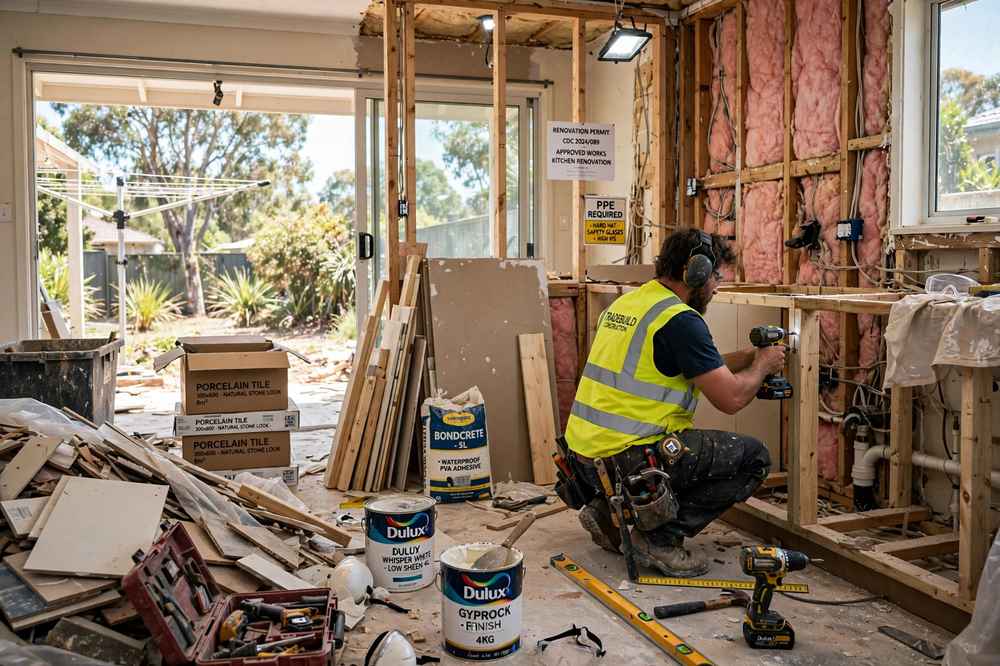
How Much Does Renovating Cost in Australia in 2026?
If you’re trying to budget a renovation in Australia, understanding renovation costs Australia 2026 benchmarks is the first step — and the numbers move fast. Labour rates rose roughly 4–5% year on year across most trades, materials like paint are up over 6% since 2024, and where you live changes everything: a mid-range kitchen in Sydney can cost nearly double the same job in Adelaide.
This guide pulls together real, published 2026 pricing from Australian trade sources — Hipages-style marketplaces, trade pricing guides, licensed contractor price lists and industry data — so you can sanity-check quotes before you sign anything. Every figure below cites its source. Treat these as starting benchmarks, not quotes: your final number always depends on scope, access and finishes.
Kitchen Renovation Costs Australia 2026
The kitchen is the most renovated room in Australia — and the hardest to price without a proper scope. A cosmetic refresh (new handles, splashback, benchtop resurface, layout unchanged) starts around $8,000, while a luxury custom kitchen with structural changes can pass $150,000 (Source: What’s The Damage, Oct 2026).
For full renovations, expect these bands in 2026:
| Tier | Typical scope | Indicative cost |
|---|---|---|
| Cosmetic refresh | Reface doors, new splashback, new handles, layout unchanged | $8,000–$20,000 |
| Budget renovation | Flat-pack cabinetry, laminate benchtops, standard appliances | $12,000–$25,000 |
| Mid-range renovation | Semi-custom cabinetry, stone benchtops, new appliances, flooring | $25,000–$45,000 |
| Premium custom | Custom joinery, premium stone, integrated appliances | $45,000–$80,000 |
| Luxury / structural | Full custom, imported appliances, butler’s pantry, walls moved | $80,000–$150,000+ |
(Source: What’s The Damage, verified Aug 2026; Paradise Kitchens, Sydney 2026)
City makes a real difference. A standard mid-range kitchen (new cabinets, stone benchtops, mid-range appliances, no walls moved) costs roughly:
| City | Mid-range estimate | Premium estimate |
|---|---|---|
| Sydney | $55,000–$85,000 | $100,000–$150,000+ |
| Melbourne | $40,000–$65,000 | $85,000–$120,000+ |
| Brisbane | $38,000–$60,000 | $75,000–$110,000+ |
| Perth | $35,000–$55,000 | $70,000–$100,000+ |
| Adelaide | $32,000–$50,000 | $65,000–$95,000+ |
(Source: au.taujinews.com kitchen cost guide, 2026)
Two things to know before you budget: engineered stone benchtops have been banned across Australia since 1 July 2024 — porcelain, sintered stone and natural stone are the current premium alternatives (Source: hackeraustralia.com.au, 2026). And allow a contingency for hidden work: asbestos removal in pre-1990 homes adds $2,000–$5,000, and switchboard upgrades for induction cooktops run $1,500–$3,000 (Source: au.taujinews.com, 2026).
Bathroom Renovation Costs 2026
The Housing Industry Association puts the national average bathroom renovation at roughly $26,000 (Source: HIA, via ebusinessplanet.com, Apr 2026). Most Australian guides place typical bathroom renovations between $8,000 and $35,000, with premium projects going higher (Source: Houzz Australia, 2026).
Costs vary sharply by state:
| State | Low end | Average | High end |
|---|---|---|---|
| NSW | $10,000–$15,000 | $20,000–$30,000 | $40,000–$80,000 |
| VIC | $9,000–$14,000 | $18,000–$28,000 | $38,000–$75,000 |
| QLD | $8,000–$13,000 | $17,000–$26,000 | $36,000–$70,000 |
| WA | $8,500–$13,500 | $18,000–$27,000 | $37,000–$72,000 |
| SA | $8,000–$12,500 | $17,000–$25,000 | $35,000–$68,000 |
| TAS | $7,500–$12,000 | $16,000–$24,000 | $34,000–$65,000 |
| ACT | $9,000–$14,000 | $18,500–$28,500 | $38,000–$75,000 |
| NT | $8,500–$13,000 | $17,500–$26,500 | $36,500–$70,000 |
(Source: servicetasker.com.au bathroom cost guide, 2026)
For reference, a Sydney company now sells fixed-price bathroom packages from $18,999 to $28,999 for a standard 2.4 × 3.0m bathroom, covering demolition through to final installation (Source: S & T Tiling via ebusinessplanet.com, Apr 2026).
The single biggest money-saver: keep the existing plumbing layout. Moving drains and water points is where budgets blow out — a toilet relocation alone can cost $800–$4,000 in plumbing work (Source: What’s The Damage, Oct 2026).
Painting Costs 2026
Painting is the cheapest transformation per dollar in any renovation — and the most misquoted trade, according to the HIA (Source: Brushworks Painters, Sydney 2026). Labour and preparation make up 70–80% of the bill; paint and materials are only 20–30% (Source: Modernize Solutions, 2026).
| Job | 2026 rate |
|---|---|
| Interior walls, per m² | $20–$60 |
| Exterior, per m² | $30–$80 |
| Ceilings, per m² | $10–$30 |
| Full 3-bedroom interior | $6,000–$11,000 |
| Single-storey exterior | $4,000–$18,000 |
| Painter hourly rate (Sydney) | $45–$75/hr |
(Sources: Modernize Solutions 2026; Brushworks Painters, Sydney 2026; asestimation.com 2026)
Material costs rose 6.21% between 2024 and 2026, and that increase is baked into current pricing (Source: Brushworks Painters, 2026). Note that per-m² rates are a rough guide, not a quote — setup costs don’t scale with area, so small rooms cost more per m² than large ones.
Flooring Costs 2026
Fully installed flooring prices per square metre in 2026, including materials and professional installation:
| Flooring type | Materials /m² | Installed /m² |
|---|---|---|
| Laminate | $25–$45 | $55–$110 |
| Hybrid (SPC) | $33–$55 | $60–$95 |
| Vinyl plank (LVP) | $30–$45 | $55–$85 |
| Carpet | $25–$90 | $45–$120 |
| Porcelain tiles | $30–$150 | $100–$200 |
| Engineered timber | $80–$150 | $120–$220 |
| Solid timber | $180–$280+ | $180–$300 |
(Sources: hybridfloors.com.au, 2026; theflooringguys.com.au, 2026; timberflooringclearance.com.au, 2026)
Hybrid flooring sits in the sweet spot for most Australian homes: waterproof, kid- and pet-friendly, and genuinely DIY-friendly thanks to click-lock boards — confident DIYers can save $30–$60/m² on labour (Source: hybridfloors.com.au, 2026). Budget for extras: old flooring removal runs $5–$15/m², and subfloor levelling can add $8–$15/m² (Source: timberflooringclearance.com.au, 2026).
Tiling Costs 2026
Tiling in Australia ranges from $50 to $280 per m² fully installed, depending on tile material and job complexity (Source: TradieVerify, 2026). Labour alone typically runs $40–$120/m², with Sydney and other metro areas at the top of the band (Source: TradieVerify, 2026; servicetasker.com.au, 2026).
| Component | 2026 rate |
|---|---|
| Labour (standard install) | $45–$150/m² |
| Ceramic tiles (supply) | $20–$60/m² |
| Porcelain tiles (supply) | $50–$130/m² |
| Natural stone (supply) | $80–$150+/m² |
| Tile removal | $45–$55/m² |
| Waterproofing (per wet room) | $500–$1,500 |
(Sources: TradieVerify 2026; servicetasker.com.au 2026; ownyourreno.com 2026; tradeheroes.com.au)
Critical budgeting point: the tile’s shelf price is only the supply component. A $80/m² tile does not mean your bathroom costs $80/m² to tile — installation, waterproofing, adhesive, grout, trims, wastage and delivery sit on top (Source: ownyourreno.com, 2026). Waterproofing is mandatory in all wet areas under Australian Standards — never let it be skipped to save money.
Plastering and Drywall Costs 2026
| Job | 2026 rate |
|---|---|
| Plasterboard / Gyprock install, per m² | $20–$70 |
| Wet plaster / solid render, per m² | $45–$90 |
| Skim / finishing coat only, per m² | $15–$30 |
| Ceiling (plasterboard), per m² | $30–$60 |
| Full room re-plaster (average room) | $800–$2,500 |
| Small patch repair (callout) | $100–$360 |
(Sources: legitplasterpaint (Medium), Hobart 2026; servicetasker.com.au ceiling guide 2026; medium.com Brisbane plastering guide 2026)
Plasterboard is far cheaper and faster than traditional wet plaster, which needs skilled hand-finishing and longer drying time. Old lath-and-plaster walls in pre-war homes almost always need extra prep before work starts — get that assessed on site, not over the phone.
Electrical Costs 2026
Electricians in Australia typically charge $70–$140/hour for residential work, with Sydney and Darwin at the top end (Sources: willpowerelectricalvic.com.au, 2026; abelectricians.com.au, Sydney 2026; whatsthedamage.com.au, Oct 2026).
| Job | 2026 cost |
|---|---|
| Power point installation | $80–$200 |
| Light fitting installation | $80–$200 per fitting |
| Ceiling fan installation | $100–$300 |
| Safety switch installation | $150–$400 |
| Switchboard upgrade (single phase) | $1,500–$3,500 |
| Switchboard upgrade (three phase) | $3,500–$6,500 |
| Partial home rewire | $3,000–$8,000 |
| Full home rewire | $8,000–$20,000+ |
| Smoke alarm installation | $80–$200 per alarm |
| EV charger installation | $500–$1,200 |
(Sources: willpowerelectricalvic.com.au 2026; seqsparky.com.au Brisbane 2026; localperthelectrician.com.au Perth 2026; dlgelectrical.com.au Sydney 2026)
Switchboard pricing varies notably by city: Brisbane single-phase RCBO upgrades run $1,800–$3,200 fitted including compliance paperwork, while Sydney ranges $1,500–$3,500 (Sources: seqsparky.com.au; dlgelectrical.com.au, 2026). Watch for quotes that exclude mandatory items — network application fees, safety certificates and surge protection are legal requirements, not optional extras.
Plumbing Costs 2026
The national average plumber charges around $120/hour for standard residential work, within a broad $80–$200/hour band (Source: What’s The Damage, Oct 2026). Most plumbers add a callout fee of $60–$150 on top.
| Job | 2026 cost |
|---|---|
| Tap washer replacement | $80–$150 |
| Unblock drain (simple) | $150–$500 |
| Unblock drain (CCTV + jetter) | $350–$1,100 |
| Toilet installation | $400–$900 |
| Bathroom rough-in | $2,000–$6,500 |
| Bathroom fit-off (after tiling) | $1,000–$3,000 |
| Toilet relocation (new drain) | $800–$4,000 |
| Hot water system (electric, replace) | $800–$3,000 |
| Hot water system (gas, replace) | $1,200–$3,500 |
| Heat pump hot water install | $3,000–$6,000 |
| Gas fitting (per point) | $250–$650 |
(Sources: whatsthedamage.com.au, Oct 2026; allkindplumbing.com.au, Brisbane 2026)
Emergency and after-hours plumbers charge $150–$400+ just for the callout (Source: What’s The Damage, Oct 2026). If it’s not flooding, wait for business hours.
Roofing Costs 2026
A full roof replacement on a typical 150–250m² Australian home runs $15,000–$45,000 installed, or roughly $40–$500/m² depending on material (Source: k22.taujinews.com roof guide, 2026).
| Material | Installed /m² | Expected lifespan |
|---|---|---|
| Concrete tile | $40–$170 | 30–40 years |
| Colorbond steel | $60–$205 | 40–50 years |
| Terracotta tile | $90–$255 | 50–70 years |
| Slate (premium) | $150–$500+ | 75–100+ years |
(Sources: k22.taujinews.com 2026; modern.taujinews.com 2026; tagg.com.au, Sydney 2026)
Colorbond is Australia’s most popular residential roofing material — over 50% of new installations in NSW — because it’s lightweight, durable in coastal and bushfire areas, and carries long manufacturer warranties (Source: ks.taujinews.com, 2026). Material is only 25–35% of the project cost; labour, roof removal, disposal and structural work make up the rest (Source: temu.visibletech.in roof guide, 2026). Before committing to replacement, get an inspection: many roofs need repair or restoration at a fraction of the price (Source: tagg.com.au, 2026).
Deck and Pergola Costs 2026
| Material | Installed /m² | 25m² deck | Lifespan |
|---|---|---|---|
| Treated pine | $150–$350 | $3,750–$8,750 | 15–20 years |
| Merbau hardwood | $220–$450 | $5,500–$11,250 | 25–40 years |
| Spotted gum (premium) | $280–$400 | $7,000–$10,000 | 30–50 years |
| Composite | $250–$600 | $6,250–$15,000 | 25–30 years |
(Sources: gulli.taujinews.com decking guide 2026; evodek.com.au 2026; perthlandscapeguys.au 2026)
The cheapest upfront option isn’t the cheapest over time: a 25m² treated-pine deck costs about $18,000 over 25 years once maintenance and a mid-life replacement are counted, versus roughly $14,500 for composite (Source: evodek.com.au, 2026). Timber needs oiling or staining at least annually under Australian UV — skip it and the boards grey, split and fail early.
What Makes Renovation Costs Go Up (or Down)
Location. Sydney labour rates lead the country across nearly every trade; Adelaide and Tasmania sit at the lower end. Regional areas can be cheaper for labour but dearer for materials once freight is added.
Access. Double-storey homes, steep blocks, narrow inner-city streets and apartments with lift restrictions all add cost. Scaffolding, crane lifts and strata compliance aren’t free.
Existing conditions. Pre-1990 homes may hide asbestos ($2,000–$5,000 to remove). Old wiring, corroded plumbing and structural surprises found at demolition are the classic budget killers — which is why every guide recommends a contingency of 10–20%.
Materials. The gap between budget and premium finishes is enormous: $20/m² ceramic versus $150/m² natural stone; $33/m² hybrid boards versus $150/m² engineered timber. Decide your tier before you start shopping.
Timing. Booking outside the spring–summer renovation peak can shave 10–15% off some trades’ pricing (Source: theflooringguys.com.au, 2026).
How to Get Quotes You Can Actually Compare
1. Get three written, itemised quotes covering identical scope. A quote that isn’t itemised isn’t comparable.
2. Check licences. Every state has an online register — verify before you sign, especially for electrical, plumbing and waterproofing work.
3. Ask what’s excluded. The cheapest quote often just leaves things out: disposal, waterproofing, compliance certificates, paint.
4. Fix the scope before you shop. Changing tile selections or moving plumbing after demolition is the fastest way to blow a budget.
5. Never pay large deposits upfront. Staged payments tied to completed milestones protect both sides.
Frequently Asked Questions
How much does a full home renovation cost in Australia in 2026?
A full home renovation typically ranges from $70,000 to $250,000+, depending on size, scope and finishes. A common rule of thumb is $2,000–$4,500+ per square metre for extensions and major structural work (Source: templetonbuilt.com.au).
Which renovation adds the most value?
Kitchens and bathrooms consistently return the strongest value uplift, followed by outdoor living areas. Quality matters more than spend — buyers discount visibly cheap work.
Should I renovate or sell and buy?
If your renovation will cost more than 10–15% of your home’s value and you don’t love the location, run the numbers on selling instead. Stamp duty, agent fees and moving costs are the comparison baseline.
How much contingency should I allow?
Most Australian renovation guides recommend 10–20% on top of your quoted total for unexpected work discovered during demolition — more for older homes.
Can I do any renovation work myself to save money?
Yes — painting, demolition (non-structural, asbestos-free), landscaping and click-lock flooring are realistic DIY savings. Electrical, plumbing, gasfitting and waterproofing legally require licensed tradespeople in every state.
When is the cheapest time to renovate?
Late autumn and winter are typically quieter for trades, and some offer 10–15% better pricing outside the spring–summer peak. Material sales around end of financial year (June) are also worth watching.
Related Renovation Costs Australia 2026 Resources
Planning your renovation? These renovation costs Australia 2026 resources will help you budget accurately:
- Free Renovation Cost Calculators — estimate your project costs instantly
- Interior Designers Sydney: Costs & Guide
- Interior Designers Melbourne: Costs & Guide
- Sydney Kitchen Renovation Case Study ($62,000)
- Melbourne Bathroom Renovation Case Study ($24,500)
Authoritative Sources for Renovation Costs Australia 2026
These renovation costs Australia 2026 figures are grounded in data from trusted Australian industry sources:
- Housing Industry Association (HIA) — Australia’s peak residential building body
- Hipages — Australian tradie marketplace with published cost guides
- Airtasker — Australian services marketplace with 2026 pricing data
Understanding renovation costs Australia 2026 helps you budget realistically. Always get 3+ quotes from licensed tradespeople before committing to a renovation project in Australia in 2026.