
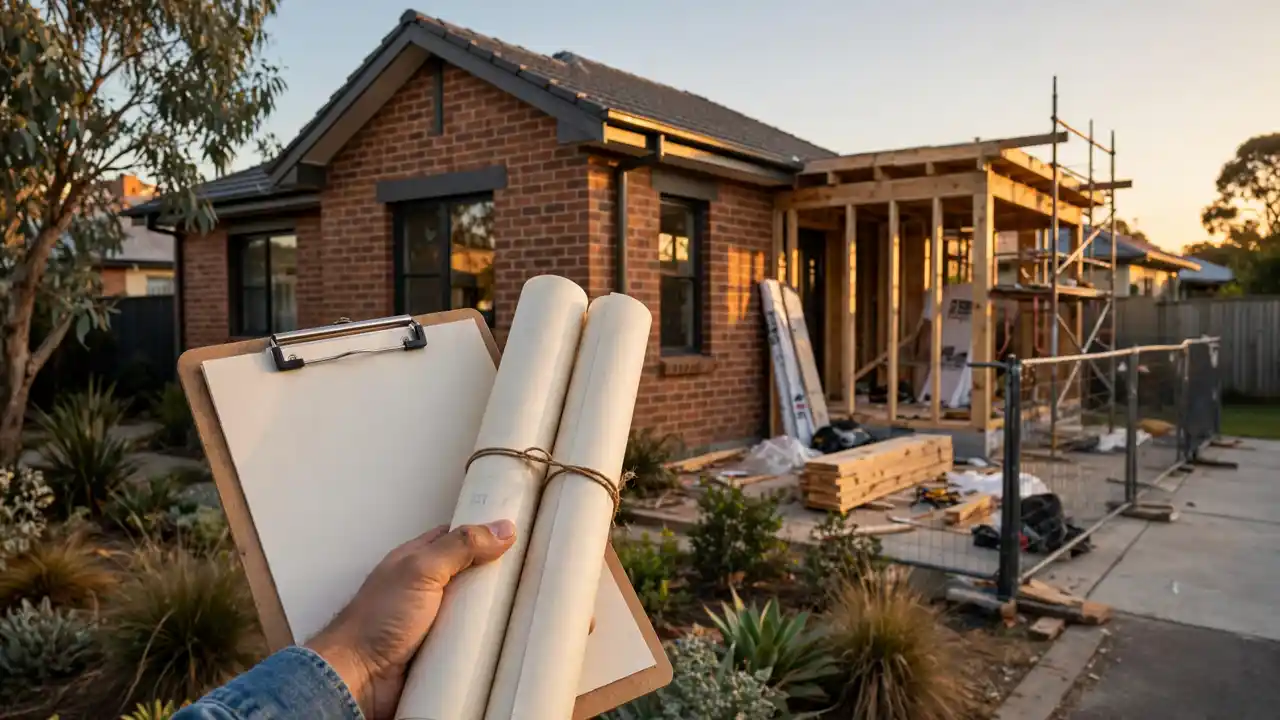
Before you book a builder or order a single tile, one question decides whether your renovation starts on time or stalls for months: do you need approval, and if so, which kind? A council approval renovation australia search returns three different answers at once — exempt, CDC and DA — because there is no single national rule. Your state, your council and the exact work all change the answer, and getting it wrong is the most expensive mistake in a renovation.
Council Approval Renovation Australia at a Glance
Overall, almost every Australian renovation falls into one of three buckets.
| Pathway | What it is | Typical time | Who decides |
|---|---|---|---|
| Exempt development | Minor work needing no approval, if it meets every condition | None | No one |
| Complying development (CDC) | Fast-track combined planning and building approval | 10–20 days (NSW) | Private certifier or council |
| Development application (DA) | Full council assessment | 6–12 weeks; up to 6+ months complex | Local council |
However, two traps sit inside that table: the names change by state, and planning approval and building approval are different permissions — planning says the work suits the site, building says it can be built safely.
Do You Need Approval? The Five-Question Test
In short, a yes to any of the first four questions means you almost certainly need approval.
- Does it change the structure? Removing a load-bearing wall, changing the roofline or touching footings is structural work.
- Does it add floor area? Any extension or second storey adding liveable space needs approval.
- Does it change how the building is used? Turning a garage into a bedroom or a house into two dwellings changes its classification.
- Does it touch services? Moving plumbing or drainage, relocating a kitchen or bathroom, or changing waterproofing usually needs approval.
- Is the property restricted? Heritage listing, a conservation area, a flood or bushfire overlay, or a strata title can turn an exempt job into one needing permission.
In contrast, if every answer is no — repainting, like-for-like fixtures, cabinetry in the same room — the work is usually exempt, provided every condition in your state’s rules is met.
The Three Pathways: Exempt, CDC and DA
First, exempt development is the lightest path. In New South Wales it covers minor work under the State Environmental Planning Policy (Exempt and Complying Development Codes) 2008 — the Codes SEPP — provided the work meets every standard in the code. For example, small decks, pergolas, sheds and fences are the usual examples.
Next, a complying development certificate, or CDC, is the middle path: a combined planning and building approval for straightforward work that meets every preset standard in the Codes SEPP. Because the standards are fixed numbers, a registered private certifier — or the council — can issue it without a full council assessment. Indeed, the NSW Planning Portal’s home renovation page confirms that some internal alterations qualify.
Finally, a development application, or DA, is the full path: a formal request to your local council, assessed on merit against the local environmental plan, the development control plan and state planning policies. A DA is needed when the work does not meet the exempt or CDC standards — most two-storey additions, heritage items and anything needing a variation. The council usually notifies neighbours.
| CDC | DA | |
|---|---|---|
| Who assesses it | Private certifier or council | Local council |
| Typical time (NSW) | 10–20 days | 6–12 weeks; 6+ months complex |
State by State: NSW, VIC, QLD, WA and SA
| State | Planning approval | Building approval | Fast track |
|---|---|---|---|
| NSW | DA to council | Construction certificate, or CDC covers both | 10–20 days |
| VIC | Planning permit to council | Building permit from a surveyor | VicSmart, 2–4 weeks |
| QLD | Development approval, only if City Plan outcomes are not met | Building approval from a QBCC certifier | Days to weeks |
| WA | Development approval to council | Building permit from council | Certified, 10 business days |
| SA | Development approval via PlanSA | Building consent, part of the approval | Deemed-to-satisfy, 20 days |
In New South Wales, a certifier issues a CDC in 10 to 20 days — 10 days under the Housing Pattern Book pathway — while a DA goes to council. A DA for a $500,000 build typically carries a lodgement fee of $1,500 to $3,000. More than one in three DAs come back for further information.
Victoria keeps the two approvals genuinely separate. A council planning permit asks whether the work suits the site and the neighbourhood — heritage, character, setbacks, overlooking. A registered building surveyor’s building permit asks whether it can be built safely. You need one for structural work, new floor area, roof changes and plumbing or wet-area work over $10,000. A clean planning permit takes 8 to 16 weeks, but the Melbourne average is closer to five months. Amendment VC282 (2025–26) removed the planning-permit step for many extensions on lots of 300 square metres or more, but any heritage, character, design or landscape overlay still triggers one.
Queensland puts the certifier at the centre of the system. You need building approval before work starts on most domestic building work. It comes from a private certifier licensed by the Queensland Building and Construction Commission. Planning approval is separate: Brisbane City Council says internal-only renovations are unlikely to need it. A straightforward certifier approval can take days; a council job takes weeks to months.
In Western Australia, most renovation work requires a building permit, and planning approval must come first where needed. A certified application takes 10 business days and an uncertified one 25. In South Australia, applications run through the PlanSA portal: deemed-to-satisfy takes 20 business days and performance-assessed 40.
Council Approval Renovation Australia: What It Costs
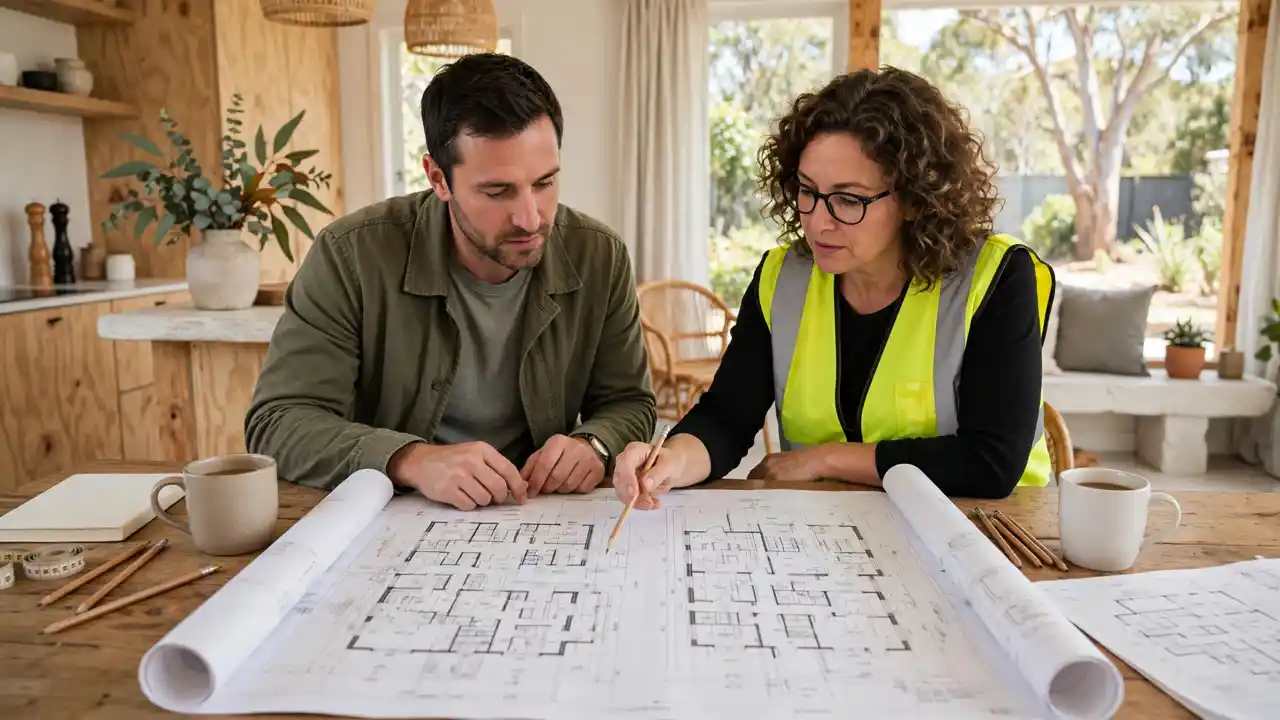
In fact, approval costs are the line most budgets miss: the fee on the council website is only one part of the total. A realistic budget has four lines — the lodgement or certifier fee, the drawings, the specialist reports, and the levies. That is where council approval renovation australia budgeting goes wrong.
| Cost line | Typical range | Notes |
|---|---|---|
| CDC, all-in (NSW) | $3,000–$6,000 | Certifier fee plus plans |
| DA, all-in (NSW) | $5,000–$15,000+ | Lodgement, plans, reports, contributions |
| Specialist reports | $2,000–$8,000 | BASIX, stormwater, bushfire, acoustic, arborist |
For example, one council’s schedule shows how the lodgement fee scales: Shellharbour’s 2026–27 schedule charges $554 for alterations under $12,000, $877 for $12,001 to $50,000, $1,321 for $50,001 to $100,000, and $1,741 for work over $250,000. As a rule of thumb, total approval costs run 3 to 8 per cent of the project cost. Watch the licensing trap, too: New South Wales requires a licensed contractor for residential work over $5,000, and Victoria a registered practitioner for domestic work over $10,000.
Kitchen, Bathroom and Internal Work: The Room-by-Room Checklist
| Work | Usual position | What changes it |
|---|---|---|
| Repainting, flooring, cabinetry | Usually exempt | Heritage controls, strata by-laws |
| Kitchen refresh, same layout | Usually exempt | Structural wall removal, plumbing reroute |
| Bathroom refresh, same layout | Usually exempt | Waterproofing, plumbing, layout change |
Indeed, a kitchen renovation is the classic example. For instance, replacing cabinets, benchtops, appliances, a splashback and taps inside the same layout is cosmetic work and usually needs no council approval at all. Remove the wall between the kitchen and the living room, move the sink, or re-route the plumbing and the job changes character: now it is structural or services work, and a DA or CDC is likely. The same logic applies to bathrooms — tiling alone is one thing, but waterproofing, plumbing and layout changes trigger approval. Above all, repainting is the clearest exempt job of all: choosing popular interior paint colours and repainting a room needs no approval.
Heritage Homes and Strata Units: The Two Traps
Indeed, heritage is the restriction that catches the most owners. In New South Wales, heritage listings generally restrict CDC eligibility, so a heritage home that would otherwise qualify for the fast track may need a full DA instead. For example, Hornsby Shire Council says kitchen and bathroom upgrades to heritage items commonly need written Heritage Exemption Advice from council. Confirm the exemption in writing before work starts.
In contrast, in Victoria the picture is more forgiving. A heritage overlay controls demolition, construction, external alteration and painting a previously unpainted surface — but internal alterations only need heritage approval if the overlay schedule specifically applies internal controls, and in Glen Eira most properties do not have that control. Read the overlay schedule; do not guess from the age of the house. In addition, strata is the second trap: the owners corporation’s consent is a separate permission.
What Happens If You Skip Approval
Above all, building without the approval your job needed is not a paperwork problem you can fix with a late fee. Under New South Wales law it is an offence, and the consequences stack: a stop-work order, a fine, an order to demolish or restore the work, and a record that follows the property when you sell. That is the expensive side of council approval renovation australia.
In fact, the fines are larger than most homeowners imagine. Under the Environmental Planning and Assessment Act 1979, Tier 1 offences carry a maximum penalty of $1 million for an individual and $5 million for a corporation, plus $10,000 and $50,000 respectively for each day the offence continues. In practice, councils more often issue on-the-spot penalty notices — up to $3,000 for an individual and $6,000 for a company. Wingecarribee Shire Council states it plainly: you may have to re-do unauthorised work with approvals or demolish it.
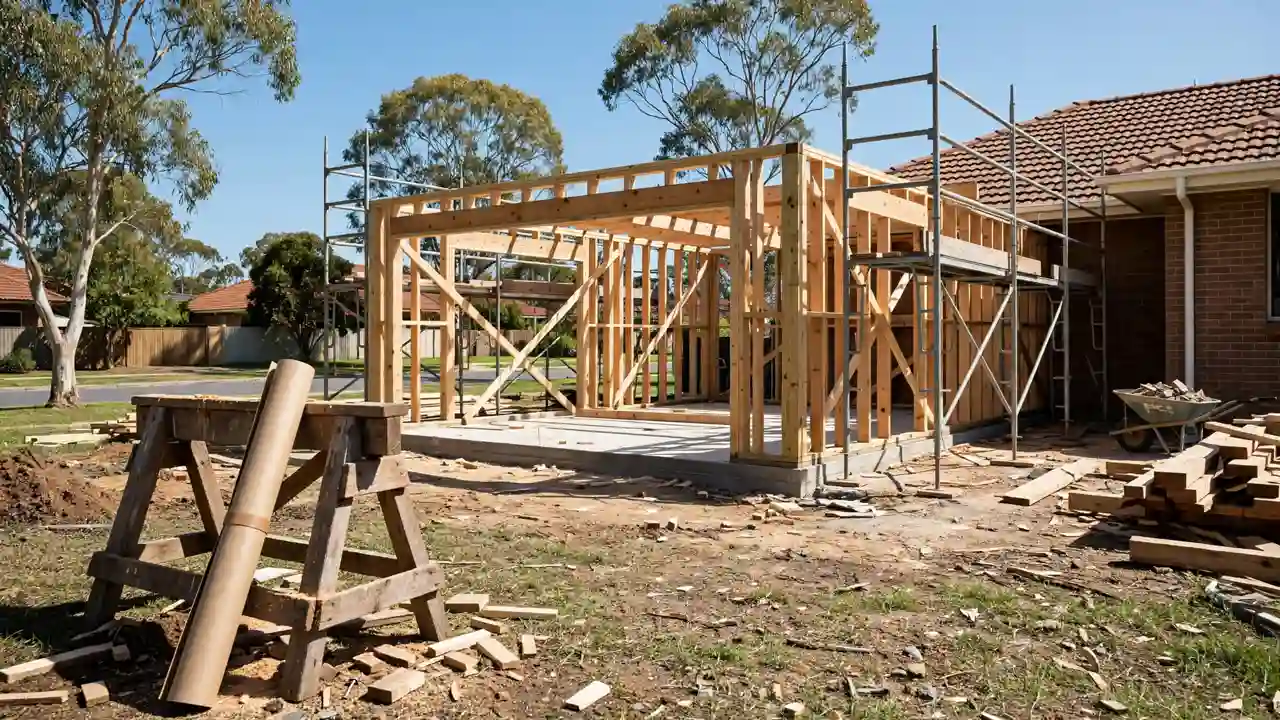
However, the costs that hurt most are not the fines. Demolition and restoration are at the owner’s expense, and unapproved work shows up in council records and in the planning certificate a buyer requests — which can stall or kill a sale. Insurers may refuse a claim for non-compliant work. Add the fees and the months of delay, and skipping approval routinely costs tens of thousands of dollars.
How to Lodge: What to Prepare Before You Apply
Indeed, a complete application is the fastest application. Before you lodge, have these ready:
- Drawings — site plan, floor plans, elevations and sections, drawn to scale. Early sketches can come from 3D home design planners.
- Section 10.7 planning certificate — from council, showing the zone and overlays.
- Statement of environmental effects — for a DA, how the proposal meets the planning controls.
- Engineering — structural engineering, plus geotechnical or stormwater reports where required.
- BASIX and energy — a BASIX certificate in New South Wales, required before a DA or CDC for major work, or the energy report in Victoria — see our energy-efficient home design guide.
- Heritage or bushfire documents — where the overlays require them, plus the lodgement fee.
Finally, lodge via the NSW Planning Portal, the SPEAR system for Victorian planning permits, the PlanSA portal, or your council or certifier’s portal. Above all, do not start work until the approval is in hand. In short, this guide is general information, not legal or planning advice.
Do I need council approval for a kitchen renovation?
Usually not, if the renovation is cosmetic — new cabinets, benchtops, appliances, splashback and taps inside the same layout, with no structural change. You are likely to need approval if you remove a wall, move plumbing or drainage, or the home is heritage-listed or in a strata scheme.
What is the difference between a DA and a CDC?
A development application (DA) is a merit-based assessment by your local council, used when a project does not meet the fixed CDC standards — it takes 6 to 12 weeks for a standard job. A complying development certificate (CDC) is a fast-track, rules-based approval for work that meets every preset standard in the Codes SEPP, issued by a private certifier or council in 10 to 20 days in New South Wales.
How long does council approval take in Australia?
It depends on the pathway and the state. A New South Wales CDC takes 10 to 20 days, a standard DA takes 6 to 12 weeks, and a complex DA can take 6 months or more. In Victoria a clean planning permit takes 8 to 16 weeks, with the Melbourne average closer to five months, while a building permit takes 2 to 4 weeks. Queensland building approval through a private certifier can take days to a few weeks.
Do I need approval for internal renovations?
Often not for genuinely cosmetic internal work — painting, flooring and like-for-like fixture swaps inside the same room are usually exempt. You do need approval for internal work that is structural, changes plumbing or drainage, alters waterproofing, or is in a heritage-listed home or a strata unit.
What if my home is heritage listed?
Check the listing before assuming any exemption. In New South Wales, heritage listings generally restrict CDC eligibility, and minor internal works commonly need written Heritage Exemption Advice from council. In Victoria, internal alterations need heritage approval only if the overlay schedule specifically applies internal controls — most properties do not have that control — but external changes still need a planning permit.
Can council approval be granted after the work is finished?
Generally no. In New South Wales, planning approval cannot be issued after work has been carried out without approval. You can apply for a building information certificate for unauthorised work, but it does not guarantee approval, and council may still issue a stop-work or demolition order. If work has already been done without approval, stop and get advice from a certifier or planning lawyer.