
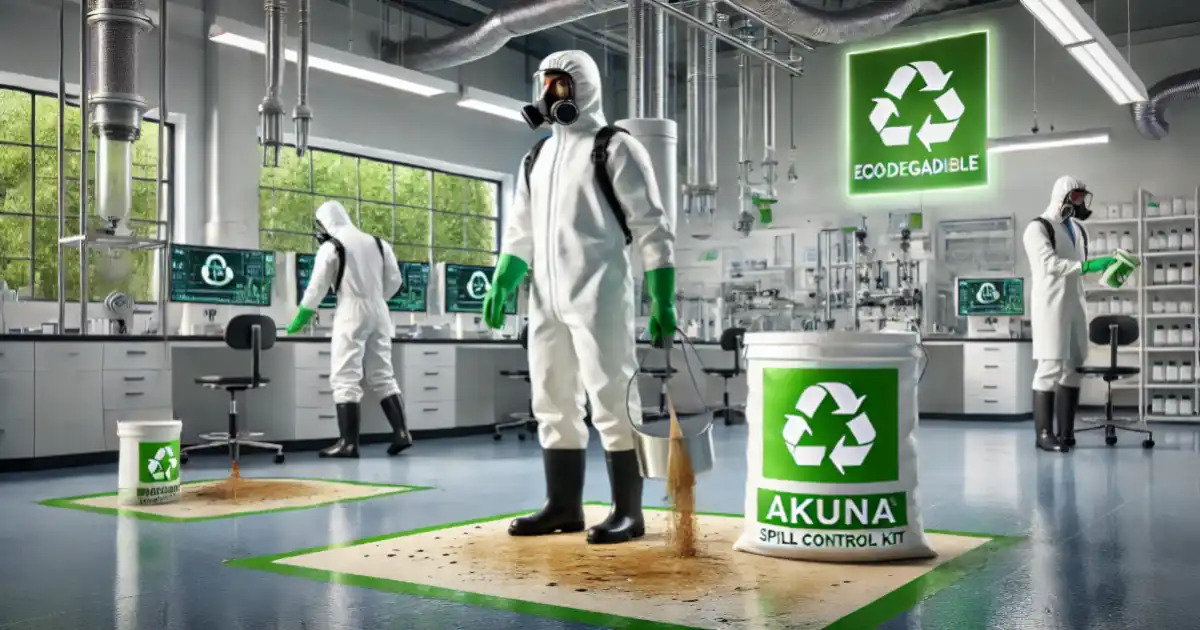
For Melbourne businesses, spill management sits at the intersection of workplace safety and environmental responsibility. Akuna spill control kits are built for that dual purpose: practical spill response kits assembled around eco-friendly materials, for workplaces that want to stay compliant without compromising their sustainability commitments.
This guide explains what spill control kits contain, what makes an eco-friendly kit different, and how to choose the right setup for your workplace.
What Is a Spill Control Kit?
A spill control kit is a ready-to-use package of absorbents, containment tools and protective equipment designed to contain and clean up spills of oils, chemicals, fuels and other liquids. Workplaces that store or handle hazardous substances are generally expected to have spill response measures in place, and a well-stocked kit is the front line of that response.
The Eco-Friendly Difference
Conventional spill kits often rely on synthetic, single-use plastics. Eco-friendly kits instead favour biodegradable absorbents, recycled content and packaging with a lower footprint — reducing the environmental cost of the cleanup itself. The goal is simple: deal with the spill without creating a second waste problem.
What’s Inside a Typical Kit
- Absorbent pads, socks and pillows for soaking up oils, fuels and chemicals
- Containment booms or barriers to stop spills spreading
- Personal protective equipment such as gloves and goggles
- Disposal bags and ties for safe collection of used materials
- Instruction guide so staff can respond quickly and correctly
Meeting Compliance Obligations
Victorian workplaces must manage hazardous substances in line with occupational health and safety and EPA Victoria requirements. Having appropriate spill kits — and staff who know how to use them — is a core part of meeting those obligations. Eco-friendly kits can help businesses satisfy both safety and sustainability policies at once.
Customising Akuna Spill Control Kits for Your Industry
Different workplaces face different spill risks. Warehouses handling hydraulic oil need different absorbents from laboratories working with chemicals, or workshops dealing with fuels and solvents. Kits can be tailored to the substances on site, the size of the area covered and the number of staff — so the kit matches the risk instead of offering a one-size-fits-all box.
Training and Spill Response Planning
A kit is only as good as the people using it. Workplaces should make sure staff know where kits are located, how to deploy absorbents and barriers, and how to dispose of used materials safely. Including spill response in inductions and running occasional drills keeps everyone prepared.
Disposal and Environmental Care
Used absorbents must be disposed of according to the type of substance absorbed and local regulations — particularly for chemicals and oils. Choosing kits with biodegradable components reduces landfill burden, but contaminated materials still need to go through proper waste channels. Check EPA Victoria guidance for your waste type.
Why Melbourne Businesses Are Switching
Melbourne’s business community increasingly weighs sustainability alongside safety. Eco-friendly spill kits let workplaces respond to incidents quickly while staying true to environmental commitments — a practical step that supports both compliance and corporate responsibility goals.
Frequently Asked Questions
What are Akuna spill control kits?
They are spill response kits assembled around eco-friendly materials, designed to help Melbourne workplaces contain and clean up spills of oils, chemicals and fuels.
What spills can these kits handle?
Depending on configuration, kits can address oil, fuel, chemical and general-purpose spills. Choose absorbents rated for the substances used on your site.
Are eco-friendly spill kits as effective as conventional ones?
Yes — biodegradable and recycled-content absorbents are designed to match the performance of conventional synthetics for their rated spill types.
How do I dispose of used spill kit materials?
Follow the disposal requirements for the absorbed substance and check EPA Victoria guidance. Contaminated materials must go through proper waste channels.