
Introduction
Purple gold, often considered one of the most luxurious and rare forms of metal alloy, captures the attention of jewellers and enthusiasts alike. The blend of gold with aluminium creates a unique hue that sets it apart from traditional gold. This alloy isn’t just about its mesmerising appearance — it also reflects a fusion of modern technology with ancient metalworking traditions. The rarity of purple gold and its increasing demand in luxury jewellery make it a subject of fascination and intrigue in the industry.
In this article, we’ll explore purple gold: its history, production process, uses, and why it’s gaining traction as a premium choice in luxury items. We will also dive into its distinct characteristics, how it compares with other gold alloys, and what to consider if you’re interested in purchasing purple gold.
What Is Purple Gold?
Purple gold, also known as amethyst gold or violet gold, is a rare material that combines pure gold with aluminium. This unique combination produces an intermetallic compound known as AuAl2, which gives the metal its distinctive purple hue. Unlike conventional gold alloys, which are typically yellow, white, or rose, purple gold offers a striking visual appearance that is both rare and unusual.
Gold is too soft in its purest form to be used in most jewellery, so it is often alloyed with other metals to increase its hardness and durability. The introduction of aluminium in purple gold does more than harden the metal — it transforms the way light interacts with the surface, resulting in a shimmering purple tone unlike any other type of gold available on the market.
The Chemistry Behind Purple Gold
Purple gold is created by forming an intermetallic compound, which is different from a traditional alloy. In a typical alloy, two or more metals are blended, and the properties of the resulting metal are a mixture of the components. In an intermetallic compound like purple gold, however, the elements combine in fixed proportions and form a unique crystalline structure.
This crystalline structure is what causes purple gold to exhibit such a vibrant and unusual colour. The compound AuAl2 absorbs and reflects light, giving off a purplish hue. The ratio of gold to aluminium must be carefully controlled, as even slight deviations can affect the colour and stability of the resulting material.
History of Purple Gold
While purple gold might seem like a relatively modern invention, the origins of coloured gold alloys can be traced back thousands of years; ancient civilisations, including the Egyptians and Romans, experimented with gold alloys, using metals such as copper, silver, and tin to produce different hues and enhance the strength of their jewellery.
The specific composition of purple gold, combining gold with aluminium, was not developed until modern metallurgy advanced in the 20th century. The development of modern metallurgy allowed scientists and jewellers to explore new possibilities for creating unique metal compounds, and purple gold emerged from this period of experimentation.
Modern Popularity
Purple gold remained a relatively obscure material for many years, used primarily by experimental jewellers and metallurgists. In recent decades, however, it has gained wider attention. High-end jewellers and luxury brands have begun incorporating purple gold into their designs, using it to stand out in an increasingly competitive market.
The rarity of purple gold and its striking appearance have made it a sought-after material for those looking to create one-of-a-kind pieces. It has found its place in bespoke jewellery, watches, and even luxury accessories, solidifying its status as a symbol of exclusivity and luxury.
The Making of Purple Gold
Creating purple gold is a delicate and complex process requiring precise control over the gold and aluminium proportions. Here is an overview of the steps involved:
- Melting the Gold: First, pure gold is melted down — typically 24-karat gold, the highest purity available — to ensure the final alloy has the desired properties.
- Adding Aluminium: Aluminium is carefully introduced once the gold has reached the appropriate temperature. The ratio of gold to aluminium is crucial, as it determines the final colour of the material. The two metals are combined to form the intermetallic compound AuAl2.
- Crystallisation: After combining the metals, the mixture is allowed to cool and crystallise. This is where the distinctive purple colour begins to emerge. The intermetallic compound formed during this process has a unique crystalline structure that reflects light differently from traditional gold alloys, giving it a purple hue.
- Shaping and Polishing: Once the purple gold has cooled, it can be shaped into jewellery or other items. Because purple gold is brittle compared to other types of gold, it is typically used as an accent in designs rather than the primary material. The final step involves polishing the material to enhance its natural lustre and colour.
Challenges in Manufacturing
One of the biggest challenges in working with purple gold is its brittleness. Unlike yellow or rose gold, which are relatively malleable, purple gold can be prone to cracking or breaking if not handled carefully. This limits its use in jewellery to decorative elements, inlays, or settings rather than pieces made solely from purple gold.
Because of its brittleness, jewellers must use special techniques and tools to work with purple gold. Many jewellers use it as an accent metal, pairing it with other materials like diamonds or platinum to create stunning contrasts and visual appeal.
Uses and Applications
Purple gold’s rarity and stunning appearance make it an ideal choice for high-end jewellery, but its uses extend beyond adornment. The metal is also gaining popularity in other luxury industries, including:
Jewellery
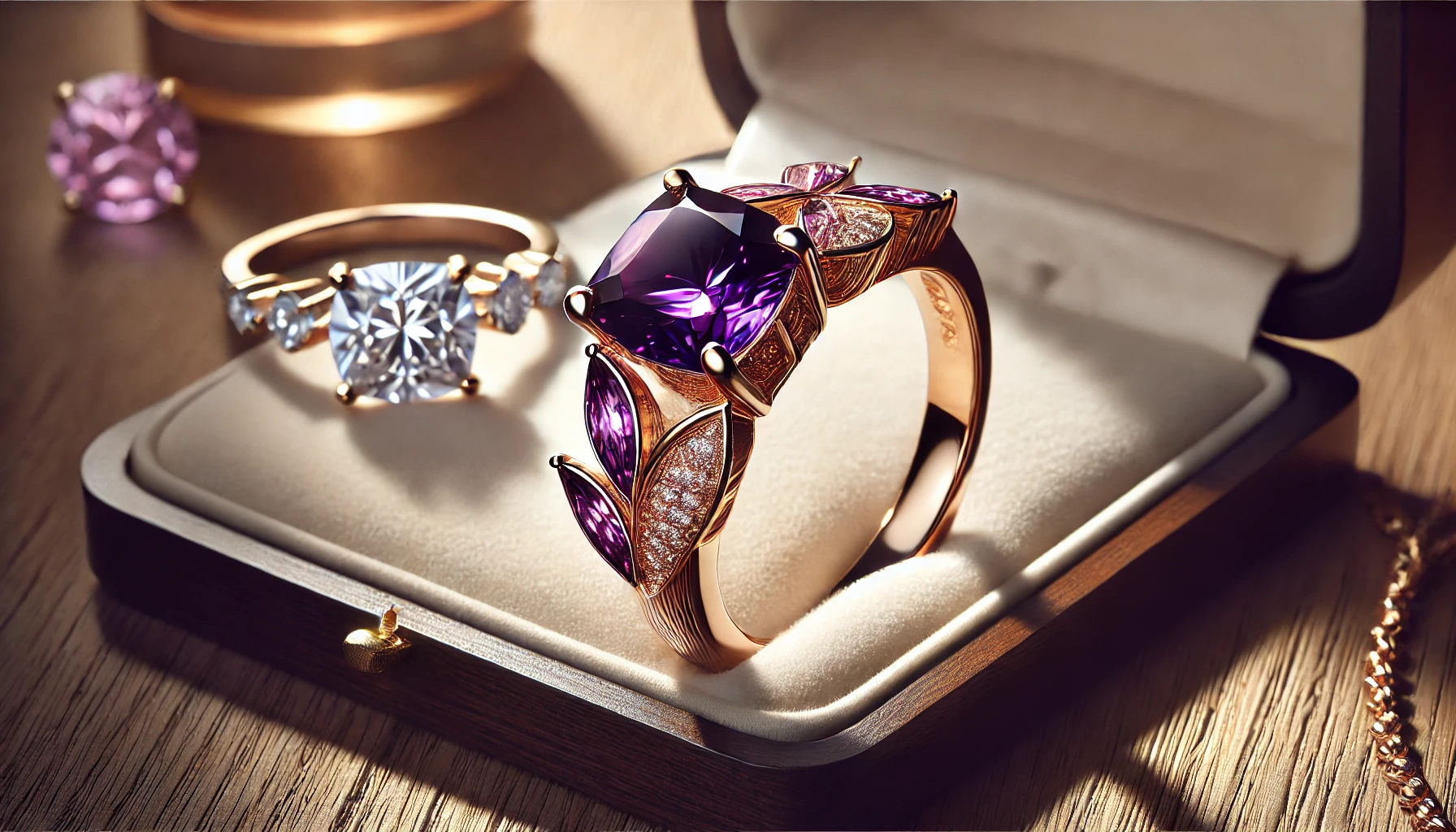
The primary application of purple gold is in creating unique and bespoke jewellery pieces. Rings, pendants, earrings, and bracelets featuring purple gold elements are highly sought after by collectors and those looking for something different. Designers often pair purple gold with diamonds or other precious stones to enhance the visual contrast and appeal.
Watches
Some luxury watchmakers have started incorporating purple gold into their designs, particularly for watch dials and accents. The deep purple hue adds a layer of sophistication and luxury to these timepieces, making them stand out in the competitive market of high-end watches.
Luxury Accessories
Beyond jewellery and watches, purple gold is also finding its way into other luxury accessories. Items such as cufflinks, belt buckles, and even smartphone cases have been designed using purple gold to appeal to consumers who value exclusivity and uniqueness.
Purple Gold vs. Other Gold Alloys
Gold alloys come in various colours and compositions, each with unique characteristics. Here is how purple gold compares to some of the other popular gold alloys:
Yellow Gold
Yellow gold is the most traditional and widely recognised form of gold. It is made by mixing pure gold with metals like copper and zinc. While yellow gold is more malleable and durable than purple gold, it lacks the latter’s unusual appeal.
White Gold
White gold is an alloy of gold and at least one white metal, such as nickel or palladium. It has a bright, silvery appearance and is often used as a substitute for platinum in jewellery. While white gold is more durable than purple gold, it doesn’t offer the same visual impact.
Rose Gold
Rose gold, a mixture of gold and copper, has a warm, pinkish hue and has become increasingly popular in recent years. Like white and yellow gold, it is more malleable than purple gold but doesn’t have the same rarity or uniqueness.
Green Gold
Another unusual gold alloy, green gold, is created by adding silver to pure gold. While green gold is less brittle than purple gold, its colour is subtler and less striking.
Is Purple Gold a Good Investment?
With its rarity and growing popularity, some may wonder whether purple gold is a good investment. While purple gold is generally more expensive than traditional gold alloys, its value is primarily driven by rarity and demand in luxury markets. Like any investment in luxury goods, the value of purple gold can fluctuate based on trends and consumer preferences.
For those looking to invest in purple gold, it is essential to work with reputable jewellers and dealers to ensure the authenticity and quality of the pieces. Because purple gold is far less well known than other gold alloys, its resale market may be smaller — but for collectors and enthusiasts, the appeal lies in owning something rare and visually stunning.
Caring for Purple Gold Jewellery
Due to its brittleness, purple gold jewellery requires special care to remain in good condition. Here are a few tips for maintaining purple gold items:
- Avoid Impact: Purple gold is more fragile than other types of gold, so avoid dropping it or striking it against hard surfaces.
- Regular Cleaning: Clean purple gold jewellery regularly with a soft, lint-free cloth. Avoid harsh chemicals or abrasive materials that could damage the surface.
- Store Separately: To prevent scratches, store purple gold items separately from other jewellery in a soft pouch or a dedicated jewellery box.
Conclusion
Purple gold is a unique and stunning material that blends modern metallurgy with timeless luxury. Its rich colour, rarity, and association with exclusivity make it a sought-after material in high-end jewellery and luxury accessories.
Frequently Asked Questions (FAQs)
What makes purple gold different from traditional gold?
Purple gold differs from traditional gold in both composition and appearance. While traditional gold is typically yellow, white, or rose, purple gold has a striking violet hue. It is created by combining pure gold with aluminium, producing a unique intermetallic compound that gives it its distinct colour. Purple gold is also more brittle than other gold alloys, making it less common in jewellery but highly valued for its rarity and beauty.
Is purple gold a durable metal for everyday wear?
Due to its brittle nature, purple gold is less durable than traditional gold alloys. While it can be used in jewellery, it is typically applied as an accent or decorative feature rather than the main component of a piece. It is more prone to cracking or breaking under stress, so purple gold jewellery should be handled carefully and reserved for special occasions rather than everyday wear.
How is purple gold used in jewellery design?
Purple gold is often used as a striking accent in high-end jewellery designs, adding a bold and unusual touch to rings, pendants, and earrings. Due to its brittleness, jewellers typically incorporate it into inlays and settings or as a complementary material alongside more durable metals like platinum or traditional gold. Its vibrant colour pairs beautifully with diamonds and other precious stones, creating eye-catching contrasts.
What is the price range of purple gold jewellery?
The cost of purple gold jewellery varies depending on the gold content, the craftsmanship involved, and whether other precious stones or metals are included in the design. Because it is a rare and unusual alloy, purple gold pieces tend to be more expensive than traditional gold jewellery, and custom-made items or pieces from luxury brands can command premium prices, making purple gold a symbol of exclusivity and luxury.
Is purple gold hypoallergenic?
Since purple gold is made with aluminium rather than nickel, many people find it comfortable to wear. However, individual reactions can vary, and anyone with a known metal allergy should check the exact composition of a piece with the jeweller before buying to make sure it won’t cause irritation.
Can purple gold tarnish or lose its colour over time?
Purple gold is relatively stable and resists tarnishing better than metals such as silver. Like all precious metals, it can develop a patina over time with regular wear. Proper care, such as cleaning it with a soft cloth and storing it safely when not in use, will help maintain its vibrant colour and shine. Because it is more brittle than other gold alloys, careful handling is essential to preserving its beauty.