
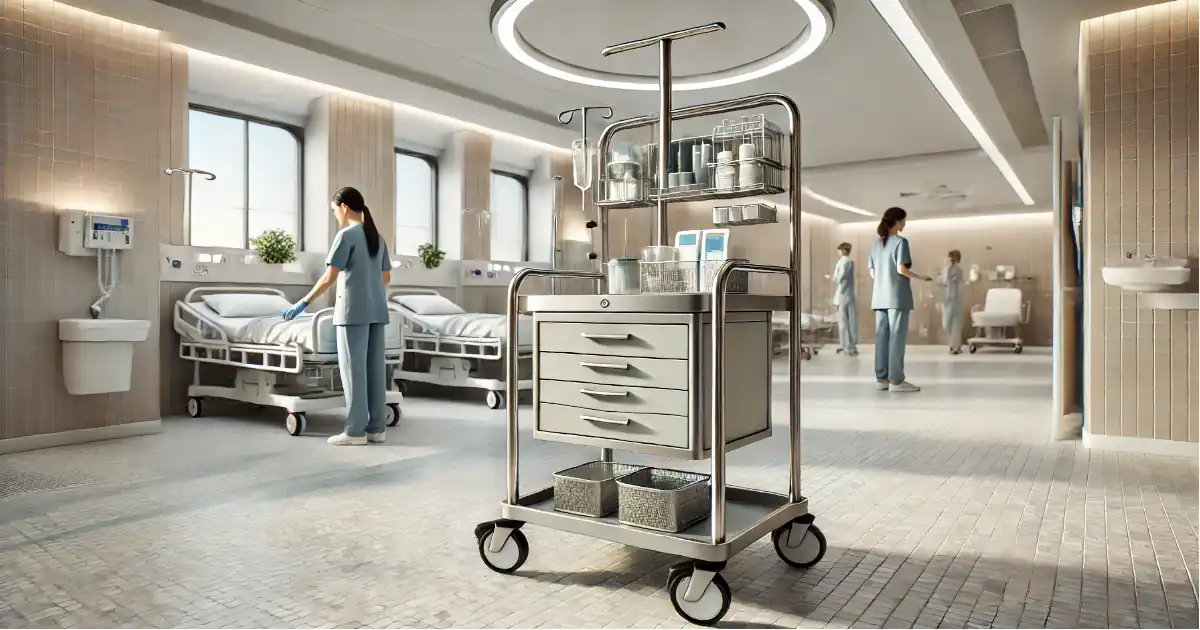
Introduction
Safety and efficiency are significant factors when choosing a bathroom trolley for healthcare facilities. The right bathroom trolley can enhance patient care while protecting healthcare workers from injury. This guide examines the key selection criteria, providing the knowledge needed to find the best CHS Healthcare bath trolley for healthcare facilities.
Ergonomic Design
The design of a bathroom trolley should minimise physical strain on healthcare workers, even during long shifts. Trolleys should have adjustable handles to accommodate staff of varying heights, particularly frequent users.
This feature helps prevent poor posture and reduces the risk of musculoskeletal disorders. Ergonomically designed grips also improve comfort and handling.
Robust Build Quality
Durability is very important in bathroom trolleys, since they must withstand daily use in a busy facility. Choose trolleys made from strong, robust materials such as stainless steel or high-impact plastics.
These strong materials resist corrosion and are easy to maintain, keeping the trolley performing at its best for as long as possible.
Easy to Clean
Bathroom trolleys must have smooth surfaces that are easy to clean to limit the spread of infections. Choose models with non-porous surfaces and minimal design intricacies that could harbour germs and debris. Look for trolleys with removable components that can be washed separately, ensuring thorough disinfection.
Appropriate Size and Storage
The trolley’s size should suit the facility’s space constraints. It needs to be compact enough to navigate narrow corridors and doorways, yet spacious enough to carry everything required.
Look for adequate storage such as drawers and shelves with dividers and partitions for linen, personal accessories, medicines, and medical equipment.
Lockable Wheels
Lockable wheels are essential for bathroom trolleys, ensuring stability during patient interactions. Locking the trolley properly prevents it from moving during delicate procedures. This added stability enhances the safety of both patients and healthcare providers, allowing for more confident and effective care.
Accessibility Features
Accessibility features are very important for the overall functionality of bathroom trolleys in healthcare facilities. Features such as slide-out trays and revolving bin holders reduce the need to stretch or bend, making the trolley’s contents easier to reach.
This reduces staff fatigue, especially during long shifts, supporting staff wellbeing and ultimately helping them deliver better care to patients.
Customisation Options
Customisation can significantly enhance the functionality of a bathroom trolley. Many manufacturers offer options to tailor dimensions, colour, and configuration to specific needs. Custom features include:
- Integrated dispensers for gloves or sanitiser.
- Built-in waste bins.
- Dedicated secure storage.
Weight Capacity
Consider the trolley’s load-bearing capacity to ensure it performs safely under the expected load. Exceeding the trolley’s carrying capacity may cause it to collapse, posing considerable danger to patients.
Furthermore, overloading the trolley may lead to wasted time and expensive repairs, disrupting the functioning of busy hospitals.
Safety Rails or Edges
Safety rails or raised edges are an essential design feature in bathroom trolleys, ensuring that items do not roll off the shelves when the trolley is moved from one place to another.
This feature keeps contents secure — liquids, delicate instruments, or sterile supplies — while the trolley is in motion.
A raised rail gives staff added safety, as it minimises the risk of spilling or breaking anything.
Cost-Effectiveness
Budget is always a consideration for healthcare facilities, but a higher-quality trolley may prove more economical in the long run. A poorly constructed, flimsy trolley will need repair and replacement more often than a well-built, sturdy one, ultimately costing more over time.
This strategic investment improves day-to-day operations, providing optimised value for staff and patients over the trolley’s life cycle.
Portability and Manoeuvrability
A lightweight design makes it easy to transport a trolley across the healthcare facility and allows easy manoeuvring. High-quality casters facilitate smooth movement on both carpeted and linoleum floors without destabilising the contents.
Modular Components
Telescopic trolleys make practical use of multi-layer space and are among the most versatile trolley models available. They can be easily adjusted and combined with various components such as bins, shelves, and holders.
This adaptability allows the trolley to evolve alongside the healthcare facility’s practices, ensuring optimal functionality and efficiency in patient care.
Integrated Technology
In contemporary healthcare environments, incorporating technology into trolleys and disability bathtubs can improve functionality. Trolley features like electronic locking systems for secure storage, built-in charging stations for mobile devices, and bathtub features such as built-in seating, grab bars, handrails, adjustable showerheads, and therapeutic equipment can streamline workflows and enhance patient care.
Visibility and Aesthetics
A bathroom trolley’s appearance can significantly impact a healthcare setting’s atmosphere. Choosing trolleys with a professional, clean aesthetic can help create a calming environment for patients. Furthermore, bright colour coding can differentiate trolleys for specific purposes, reducing cross-contamination risk and enhancing workspace efficiency.
Maintenance Requirements
Finally, consider the trolley’s maintenance requirements. Models with readily available spare parts that are easy to repair reduce maintenance downtime and lower costs.
Scheduling periodic maintenance checks can also increase the durability of the trolley, making it a valuable long-term asset in healthcare facilities.
Final Thoughts: Choosing the Right Bathroom Trolley
By carefully assessing these factors, healthcare facility stakeholders can identify the bathroom trolley that meets current operational demands and future requirements. This approach addresses patients’ safety and comfort while maximising the efficiency of care delivery, leading to optimal care and enhanced patient satisfaction within the healthcare environment.
Frequently Asked Questions (FAQs)
What is a bathroom trolley?
A bathroom trolley is a mobile unit used in healthcare facilities to transport bathing supplies, linens, and medical equipment. Designed for hygiene and efficiency, it helps staff deliver safe, comfortable care to patients during bathing and hygiene routines.
What features should I look for in a bathroom trolley?
Look for ergonomic handles, robust build quality, easy-to-clean non-porous surfaces, lockable wheels, adequate storage, safety rails, and an appropriate weight capacity. Customisation options and modular components add further versatility.
Why is weight capacity important in a bathroom trolley?
Exceeding a trolley’s load-bearing capacity may cause it to collapse, posing considerable danger to patients. Choosing a trolley with an appropriate weight capacity also prevents wasted time and expensive repairs from overloading.
How should a bathroom trolley be maintained?
Choose models with readily available spare parts that are easy to repair, and schedule periodic maintenance checks. Regular cleaning of non-porous surfaces and removable components helps limit the spread of infections.