
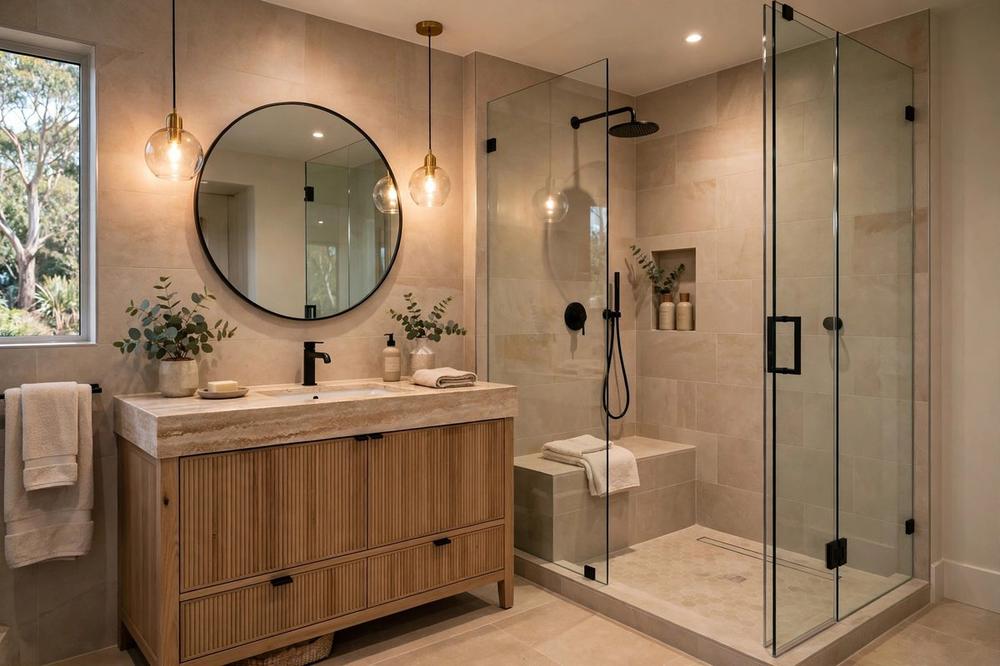
The short answer to “does bathroom renovation add value in Australia” is yes — after kitchens, the bathroom is the room buyers judge hardest, and a tired one drags your whole listing down. But not every bathroom reno pays off equally. A $12,000 refresh can return more, proportionally, than a $50,000 luxury overhaul. The difference is in knowing what buyers actually pay for, what your suburb can support, and where the money leaks out.
The Average ROI of a Bathroom Renovation in Australia
Let’s start with honest numbers. Industry estimates consistently put the typical return on a mid-range Australian bathroom renovation at around 50 to 65 cents back for every dollar spent. A $25,000 bathroom reno might add $12,500 to $16,000 to your sale price. Again — that’s a partial return, not a profit.
That figure surprises a lot of renovators, because bathrooms feel like they should be gold. They are, relatively speaking. Here’s how typical renovation ROI ranks by room:
| Renovation | Typical spend (AU) | Estimated ROI |
| Mid-range bathroom renovation | $18,000–$35,000 | 50–65% |
| Mid-range kitchen renovation | $20,000–$40,000 | 50–75% |
| Adding a second bathroom | $20,000–$30,000 | 60–80% |
| Painting (whole house) | $5,000–$12,000 | 60–70% |
| Outdoor entertaining area | $15,000–$40,000 | 40–60% |
Bathrooms sit just behind kitchens — but with an important twist. A dated, mouldy bathroom actively *subtracts* value. Buyers walk in, see cracked grout and a dripping tap, and mentally subtract $30,000 from their offer. So the “value added” by a bathroom reno is partly the money you *stop losing*.
Real estate analysts have long noted that kitchens and bathrooms are the two rooms that sell homes. CoreLogic’s property research regularly shows that homes with renovated kitchens and bathrooms achieve stronger sale prices than comparable unrenovated homes in the same suburb — particularly in competitive markets where buyers are paying for turnkey convenience. You can explore their market insights at [CoreLogic Australia](https://www.corelogic.com.au/).
What Adds the Most Value in a Bathroom Renovation
Not all bathroom spending is equal. Buyers in 2026 respond to a short list of upgrades that signal quality without screaming money.
A Walk-In Shower Replacing an Old Bath
The single highest-impact change in most Australian homes is swapping a dated shower-over-bath for a walk-in shower with a frameless glass screen. Families with young kids still want a bath, so don’t remove the *only* bath in a family home — but where there’s already one, the walk-in shower wins. It makes small bathrooms feel bigger and photographs beautifully for listings.
A Second Bathroom (or Even a Powder Room)
This is the standout. Going from one bathroom to two is the highest-ROI bathroom move available to most homeowners. A second bathroom doesn’t need to be big — even a compact ensuite or powder room changes how a home lives and how agents market it. “Two bathrooms” is a search filter on every property portal in the country. If your floor plan allows it, this beats any amount of marble.
Quality Fixtures and Tapware
Buyers touch taps and handles during inspections. Cheap, wobbly tapware signals cheap everything. Mid-range Australian brands with solid warranties (think Caroma, Methven, Phoenix) cost a few hundred dollars more per piece and read as “quality renovation” rather than “landlord special”. Matte black is still strong; brushed nickel and brushed brass are the safe 2026 picks.
Good Lighting and Ventilation
Bathrooms fail inspections on feel, not just looks. A dark bathroom with a rattling exhaust fan reads as a problem room. Layered lighting — bright task lighting at the mirror, softer ambient light — plus a quiet, effective exhaust fan (vented outside, not into the roof cavity) transforms how the room is experienced. This is cheap value: often under $1,000 in electrical work.
Tile Choices That Won’t Date
Large-format neutral tiles with minimal grout lines are the safe value play. They make small bathrooms look bigger and don’t lock you into a trend cycle. Save the bold choices for paint or accessories that the next owner can change cheaply. Zellige-look handmade tiles photograph well but cost more in labour — fine if you love them, but don’t expect the premium back.
What Does NOT Add Value (Common Money Wasters)
Over-Capitalising for the Street
This is the big one. A $45,000 bathroom in a street where the median is $600,000 will never return its cost. The rule of thumb: your total renovation spend shouldn’t push your home’s value more than about 10% above the suburb median. Check recent comparable sales before committing to luxury finishes.
Removing the Only Bath in a Family Suburb
Young families are a huge buyer segment, and many want at least one bath. If your suburb is full of three-bedroom family homes, removing the only bath to install a double shower can *reduce* your buyer pool. Know your demographic before you demo.
Ultra-Trendy Finishes
Concrete basins, vessel sinks perched at awkward heights, black grout everywhere — trends photograph well on Instagram and age badly in real homes. Anything that a buyer would need to rip out to feel comfortable is money you’ll never see back. Classic shapes, neutral palettes, quality materials.
Cheap Waterproofing
This is the invisible killer. Australian waterproofing standards (AS 3740) exist because bathroom leaks destroy homes. Cutting corners here — skipping the licensed waterproofer, using cheap membranes — risks tens of thousands in rectification and insurance headaches. It adds no visible value, but its absence can destroy all of it. Always use a licensed waterproofer and keep the certificate.
DIY Plumbing and Electrical
In Australia, most plumbing and all electrical work must be done by licensed professionals. DIY here isn’t just risky — it’s illegal, uninsurable, and a red flag in pre-purchase building inspections. Budget for licensed trades from the start.
Cost vs Value: What Each Tier Returns
| Renovation tier | Typical cost (AU) | What you get | Likely value added |
| Cosmetic refresh | $5,000–$12,000 | Re-grout, new tapware, mirror, paint, accessories | $4,000–$9,000 |
| Standard full reno | $18,000–$30,000 | New tiles, vanity, toilet, shower, lighting | $10,000–$19,000 |
| Mid-range | $30,000–$45,000 | + frameless shower, stone vanity top, heated floor | $16,000–$28,000 |
| Luxury | $50,000+ | Freestanding bath, custom joinery, premium everything | Rarely fully recovered |
The sweet spot for resale is the standard to mid-range tier. Cosmetic refreshes punch above their weight on ROI percentage but add limited absolute dollars. Luxury renos are for your own enjoyment — budget them as lifestyle spending, not investment.
For detailed 2026 pricing breakdowns, see our [Australian Renovation Cost Database 2026](https://ntdesigns.com.au/renovation-costs-australia-2026/), and use our [free renovation calculators](https://ntdesigns.com.au/renovation-tools/) to budget your specific project.
City Differences: Sydney, Melbourne, Brisbane
Sydney
Sydney’s high property values mean buyers expect more — but also that over-capitalising is easier to do. In inner-west and eastern suburbs terraces, a quality bathroom reno is table stakes; skipping it costs you at auction. In outer suburbs, keep spending disciplined: mid-range finishes, no imported stone. Labour costs run 15–20% above the national average.
Melbourne
Melbourne buyers are design-literate and notice details — tile alignment, grout colour, tapware quality. Period homes (Victorian, Edwardian, Californian bungalow) reward sympathetic renovations: keep the character, upgrade the function. A badly modernised period bathroom can hurt more than a dated-but-original one.
Brisbane
Queenslander’s raised homes and older brick houses often have small, awkward bathrooms — which means clever layout changes deliver outsized impact. Ventilation matters more here: humidity and mould are constant battles, so a proper exhaust system and mould-resistant paint aren’t optional extras. Buyers know to check for it.
5 Expert Tips for Maximum Value
1. Fix the layout before the finishes. A beautiful bathroom with a door that hits the vanity is still a bad bathroom. Spend design effort on the floor plan first.
2. Keep plumbing where it is. Moving a toilet or shower drain can add $3,000–$8,000 in plumbing costs alone. Work within the existing wet-area footprint where possible.
3. Nail the waterproofing. Licensed waterproofer, compliant membrane, certificate kept on file. Non-negotiable.
4. Choose one hero, keep the rest quiet. A single feature — a beautiful vanity, a striking tile wall — plus calm neutrals elsewhere. Restraint reads as expensive.
5. Think about the photos. Most buyers see your bathroom online first. Good lighting, a large mirror, and uncluttered surfaces photograph well and drive inspection numbers.
When NOT to Renovate the Bathroom Before Selling
Sometimes the smartest move is to leave it alone. Don’t renovate if:
- The bathroom is functional and neutral. A clean, working 2000s bathroom won’t excite anyone, but it won’t repel them either. Spend the money where it moves the needle.
- You’re in a hot seller’s market. When buyers are desperate, they’ll overlook a dated bathroom. Save the reno budget.
- You’d need to borrow at high interest. If the reno is debt-funded at 8%+, the interest can wipe out the partial return.
- The rest of the house is unrenovated. One luxury bathroom in an otherwise tired house looks odd and won’t lift the price proportionally. Renovate evenly or not at all.
Frequently Asked Questions
How much does a bathroom renovation cost in Australia in 2026?
A standard full bathroom renovation in Australia typically costs $18,000 to $35,000 in 2026, including demolition, waterproofing, tiling, fixtures, and labour. Cosmetic refreshes run $5,000–$12,000, while luxury renovations exceed $50,000. Costs vary by city, with Sydney running 15–20% above the national average.
What is the ROI of a bathroom renovation in Australia?
The typical return on a mid-range Australian bathroom renovation is around 50 to 65 cents back for every dollar spent. Adding a second bathroom delivers the highest return at 60–80%. Cosmetic refreshes offer the best ROI percentage, while luxury renovations rarely return their full cost.
Does adding a second bathroom increase home value?
Yes — adding a second bathroom is one of the highest-ROI renovations available, typically returning 60–80% of its cost. “Two bathrooms” is a search filter on every Australian property portal, so it also widens your buyer pool significantly.
Should I renovate my bathroom before selling?
It depends. If your bathroom is dated, mouldy, or dysfunctional, a mid-range renovation usually pays for itself in sale price and faster time on market. If it’s clean and functional, you’re often better off spending on presentation (styling, minor fixes) than a full reno. In hot markets, skip it entirely.
What bathroom features do Australian buyers want in 2026?
Walk-in showers with frameless glass, quality tapware in matte black or brushed metallics, good lighting and quiet exhaust fans, large-format neutral tiles, and ample storage. Buyers also check ventilation carefully — mould is a deal-breaker in humid climates.