
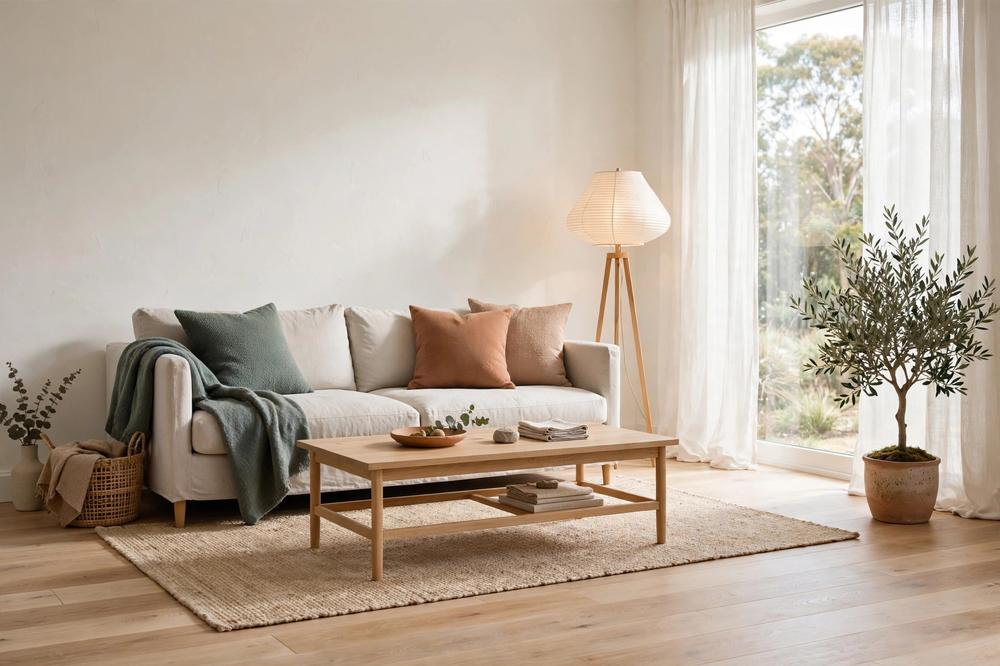
Scandinavian interior design in Australia has settled into something distinctly local: the light-and-timber calm of Nordic homes, adapted for our stronger sun, indoor-outdoor living and warmer palette of materials. Where classic Scandi rooms were designed to maximise weak northern light, Australian versions can afford to be a little richer — deeper timber tones, textural linen, eucalyptus greens and clay accents all sit naturally beside the clean lines and quiet neutrals the style is known for. Done well, the look is neither a cold minimalist box nor a cookie-cutter IKEA catalogue; it is a comfortable, practical home that feels calm without feeling empty.
This guide covers the defining elements of the style, the colour palettes that work under Australian light, the materials worth spending money on, room-by-room ideas, and what a Scandinavian-inspired makeover realistically costs in Australia in 2026.
What Defines Scandinavian Interior Design (and What It Doesn’t)
At its core, Scandinavian design is about function first, beauty second, and clutter never. Rooms are designed around how people actually live: furniture has clean lines and honest proportions, storage is planned rather than improvised, and every object in a room is expected to earn its place. Light colours, natural materials and uncluttered surfaces are the familiar signature, but the style is warmer and more personal than its minimalism suggests.
A few things worth clearing up. Scandinavian style is not all-white — soft greys, warm beiges and muted accent colours have always been part of the palette. It is not expensive by definition; some of the most authentic Scandi rooms are furnished almost entirely from secondhand finds. And it is not the same as Japandi, although the two styles share a love of restraint — Japandi adds Japanese wabi-sabi influence with darker timbers, lower furniture profiles and a more meditative, sparse feel.
If you’re still deciding which direction suits you, the interior design style quiz can help you pin down whether Scandinavian, Japandi or something else altogether matches your taste.
The Scandinavian Colour Palette for Australian Light
Nordic homes lean heavily on white walls because for much of the year they are fighting for every scrap of daylight. Australian homes don’t have that problem — if anything, the risk is the opposite: too much glare, washed-out rooms and whites that look harsh under strong sun. The trick is to keep the palette light and calm, but choose whites with the right undertone.
Whites and warm neutrals
Cool, blue-based whites can look clinical in an Australian interior, especially in north-facing rooms. Warm and neutral whites sit much more comfortably: Dulux Natural White (a neutral with subtle warmth), Dulux Hog Bristle Quarter, or a soft warm beige like Dulux Ecru Quarter for feature walls. Dulux’s own guide to choosing the right white is worth reading before committing, because the difference between a warm white and a cool one is dramatic once it’s on a whole wall.
Pair white walls with warm greiges, soft oatmeals and pale timber floors rather than grey-on-grey. This is where Australian Scandi rooms diverge from their Nordic cousins: a little more warmth, a little less restraint.
Accent colours that suit the local landscape
Scandi rooms typically keep bold colour to small doses. The accents that feel most at home in Australia are drawn from the local landscape: eucalyptus and sage greens, clay and terracotta, soft dusty blues, and ochre. Use them on cushions, throws, a single armchair, or artwork — never on every surface at once. A good rule of thumb is the 60-30-10 approach: 60 per cent light neutrals, 30 per cent mid-tone timber and textiles, 10 per cent accent colour.
Materials: Timber, Linen and Stone
Materials do the heavy lifting in Scandinavian interiors. Because the colour palette is quiet, texture carries the interest — and this is where spending money makes the biggest difference.
Light timber is the backbone: oak, ash and birch for furniture, flooring and cabinetry. If you already have darker timber floors, don’t tear them up — pale rugs, light upholstery and white walls will balance them. New floors? Wide-plank oak or pale engineered timber is the classic choice; for a tighter budget, pale timber-look hybrid flooring gets you close at a fraction of the cost.
Linen and wool add the softness the style needs. Linen curtains, wool throws and sheepskins (real or good-quality faux) are Scandi staples for a reason — they warm up the clean lines without adding visual noise. In Australia, lighter weaves and breathable fabrics work better than heavy drapes, which also suits the indoor-outdoor flow of many homes.
Stone and ceramics bring a grounded, tactile quality. A travertine side table, handmade ceramic vases, or a stone benchtop in the kitchen sit beautifully in a Scandi scheme. Matte finishes beat high-gloss every time; the style is allergic to anything that looks shiny and mass-produced.
Adapting Scandi Style for the Australian Climate
This is where a straight copy of a Copenhagen apartment can go wrong. A few practical adaptations make the style work in our conditions:
- Window treatments: Heavy double-layered curtains make sense in Scandinavia; in Australia they fight the best part of the house. Choose sheer linen curtains or light-filtering blinds that let daylight through while softening glare. Louvres and plantation shutters are the pragmatic Australian answer — they read as clean and minimal while handling heat and privacy.
- Indoor-outdoor flow: Scandi rooms are inward-looking by design, but Australian living happens across the threshold. Extend the palette outside: the same light timber, pale textiles and simple forms on a deck or balcony make the whole home feel connected. Outdoor rugs and washable cushion covers are inexpensive ways to do this.
- Heat management: Light palettes reflect heat, which helps, but choose fabrics and rugs that breathe. Wool rugs in summer can feel hot underfoot — swap seasonal textiles if your home isn’t air-conditioned, or choose flat-weave cotton rugs year-round.
- Greenery: Indoor plants are almost a requirement. They add life to neutral rooms and suit both the Scandi love of nature and the Australian climate. Olive trees, fiddle leaf figs, native grasses in simple ceramic pots, or even a branch of eucalyptus in a glass vase — all of them work.
Room by Room: Scandinavian Ideas for Australian Homes
Living room
Start with a neutral base: pale walls, light timber or pale rug, one comfortable sofa in a natural fabric. Keep the layout open and uncluttered — Scandi living rooms are arranged around conversation and daylight, not around a wall of electronics. A modular or compact sofa suits smaller Australian apartments and townhouses, while a larger L-shape works in suburban living rooms. Add one sculptural floor lamp with a paper or fabric shade, a nesting pair of coffee tables, and texture through cushions and throws rather than pattern.
Kitchen
Scandi kitchens are flat-front, handleless or discreetly handled, with pale cabinetry and plenty of concealed storage. White or pale oak-look cabinetry, a light stone benchtop, and open shelving for one or two shelves of everyday ceramics is the classic formula. Under-bench drawers instead of cupboards keep lines clean and are genuinely more practical. Keep benchtops clear — the style only works if the clutter lives behind closed doors, so be honest about whether your household can maintain it.
Bedroom
The bedroom should be the calmest room in the house. A low-profile timber bed frame, crisp white or soft neutral bedding in linen or cotton, and minimal bedside clutter. One piece of simple artwork, a paper-shade pendant or pair of wall-mounted reading lights, and a sheepskin or soft rug beside the bed. Avoid overhead downlights as the only light source — layered, warm lighting is what makes the room feel restful.
Bathroom
Scandinavian bathrooms favour pale tiles, timber-look vanities and brushed-nickel or matte black tapware. Large-format tiles in a soft white or pale grey keep grout lines minimal. A floating vanity makes small bathrooms feel larger, and a single frameless glass panel keeps a shower open rather than boxed in. Warm the room with a timber stool or bath mat — the contrast of pale tile and natural timber is one of the style’s most reliable moves.
What Does a Scandinavian Makeover Cost in Australia?
Costs vary enormously depending on whether you’re refreshing surfaces or replacing furniture, but these ranges reflect typical 2026 Australian pricing:
| Scope | Typical cost (AUD) | What’s included |
| Single-room refresh | $1,500 – $4,000 | Paint, new textiles, lighting swap, styling pieces |
| Living room furniture update | $4,000 – $10,000 | Sofa, rug, coffee table, floor lamp, curtains |
| Full apartment refresh | $8,000 – $18,000 | Paint throughout, key furniture pieces, lighting, textiles |
| Full home restyle | $20,000 – $45,000+ | Furniture, flooring updates, window treatments, styling |
| Kitchen facelift (Scandi style) | $15,000 – $30,000 | Cabinetry refresh, benchtop, splashback, tapware |
The most cost-effective move is almost always paint plus textiles: a warm white on the walls and a layer of linen, wool and pale timber tones will take a room most of the way there for a few thousand dollars. If you’re planning a bigger renovation, the 2026 renovation costs guide breaks down what each part of the project should cost, and the free renovation tools can help you budget before you start.
Common Mistakes to Avoid
- Going too white. An all-white room with no texture reads as sterile, not Scandinavian. Timber, wool, linen and plants are what keep it human.
- Ignoring storage. The uncluttered look requires somewhere for the clutter to go. Plan storage before buying furniture, especially in apartments.
- Buying the cheapest flat-pack everything. Scandi style values honest materials. A few solid timber pieces mixed with affordable basics look far better than a whole room of particleboard.
- Forgetting warmth. If your room feels cold, the answer is usually texture, not colour — a wool throw, a sheepskin, a linen curtain.
- Copying Nordic rooms literally. Dark Scandinavian winters justify things that look odd in Australian light. Adapt the palette and window treatments to your climate.
Frequently Asked Questions
Is Scandinavian interior design still popular in Australia in 2026?
Yes — and it has matured. The stark, all-white minimalism of the 2010s has softened into what designers call soft or warm minimalism: the same clean lines and light palettes, but with more texture, warmer whites and natural accents. It remains one of the most requested styles for apartments and family homes alike.
What is the difference between Scandinavian and Japandi style?
Both favour restraint and natural materials, but Japandi blends Scandinavian minimalism with Japanese wabi-sabi. Japandi uses darker timbers, lower furniture profiles, more negative space and a moodier, more meditative feel. Scandinavian is generally lighter, brighter and a little more relaxed and liveable.
What colours go with Scandinavian interiors?
Warm and neutral whites on walls, pale timber, soft greiges and beiges, with accents drawn from nature: eucalyptus and sage greens, clay, terracotta, dusty blues and ochre. Keep accent colours to about 10 per cent of the room.
Can Scandinavian style work in a hot Australian climate?
Absolutely, with adaptations. Use sheer window treatments instead of heavy drapes, breathable fabrics like linen and cotton, and consider how the style flows to outdoor areas. Light palettes reflect heat, which is a genuine practical advantage in summer.
How do I start a Scandinavian makeover on a small budget?
Paint the walls a warm white, declutter ruthlessly, and add texture: linen curtains, a wool or cotton rug, a couple of plants and a floor lamp with a warm bulb. For most rooms this costs $1,500–$3,000 and delivers the biggest visual change per dollar.