
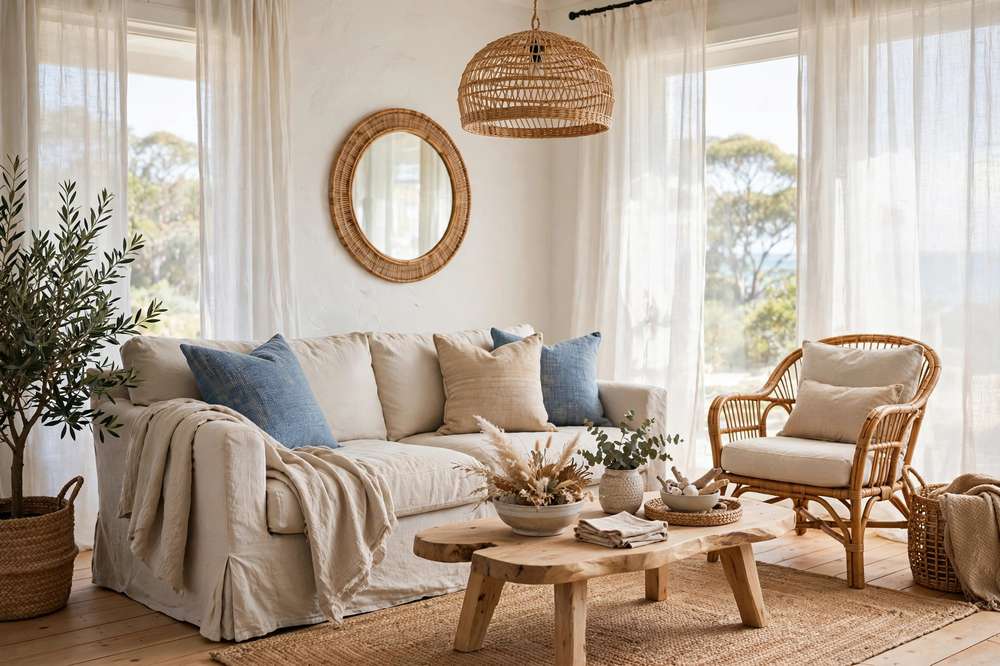
Coastal interior design in Australia has grown up. The old formula — blue-and-white stripes, a bowl of shells and a sign that says “beach house” — has given way to something calmer and far more liveable: sun-washed neutrals, honest natural materials and rooms that breathe. It is a style shaped by how Australians actually live near the water: bare feet, open doors, salt in the air and guests who wander in from the sand. Whether your home overlooks the ocean or sits three suburbs back, these coastal interior design Australia ideas cover the palette, the materials, the room-by-room ideas and the mistakes that cheapen the look.
What coastal means in an Australian home
American coastal style leans preppy: navy, rope and polished brass. Australian coastal is looser. It borrows from our landscape — bleached timber like driftwood, sand tones, eucalyptus greens and the pale grey-blue of a southern ocean morning. The feeling to chase is relaxed sophistication rather than themed decoration: a home that feels like a deep breath.
The style also has to work harder here than it does in a magazine. Salt air corrodes cheap metals, strong sun bleaches fabrics, and open-plan indoor-outdoor living means your interior finishes cop more wear than a northern-hemisphere equivalent. Good coastal design chooses materials that age gracefully in these conditions instead of fighting them. If you are still deciding between coastal, Hamptons and other relaxed looks, take the interior design style quiz to find your natural direction.
The coastal colour palette
Start with a base of warm whites — not stark blue-whites, which can feel harsh under strong Australian sunlight. Dulux Natural White, Whisper White and White Duck are dependable choices; in rooms with big windows and pale floors, a half-strength white keeps things soft rather than glaring.
Layer in the coastal tones:
- Sandy beige and warm greige for grounding — think Dulux Beige Royal or soft stone tones
- Seafoam blue and misty grey-blue for calm — Dulux Mornington Half is a much-loved Australian coastal blue
- Soft sage and eucalyptus green, which connect the interior to native planting outside
- Driftwood grey for weathered, textural depth
The 60-30-10 rule keeps it balanced: roughly 60 per cent warm white and pale neutrals, 30 per cent mid-tone sandy and blue hues, 10 per cent deeper accents like ink blue or charcoal. One feature wall in a muted ocean blue can anchor a bedroom; across a whole living area, keep walls light and let furniture and textiles carry the colour.
For 2026, the direction is warmer than the cool grey-beach palettes of a few years ago. Terracotta, ochre and clay tones are appearing as accents — a nod to our coastline’s sandstone cliffs — and they sit beautifully against white linen and pale timber.
Materials that suit the climate
Coastal design is a material-first style. Choose surfaces that feel good barefoot and look better slightly worn.
Timber is the hero. Light oak, American ash or bleached-look engineered boards for floors; recycled or weathered-look timber for feature walls, shelving and outdoor furniture. In salt-air zones, specify marine-grade finishes on exterior timber and stainless steel (316 grade) for any metal within cooee of the surf.
Natural fibres do the softening: Belgian linen or linen-look slipcovers on sofas, jute and sisal rugs, rattan and cane for armchairs, pendants and bedheads, and cotton or linen curtains that move in the breeze. These textures are what separate real coastal style from a white room with blue cushions — they add the relaxed, touchable layer the palette needs.
Stone and concrete ground the look. Travertine is having a strong moment in Australian interiors and suits coastal bathrooms and kitchens; honed concrete floors work in open-plan living, especially in warmer states. Keep finishes matte — gloss fights the relaxed brief and shows every sandy footprint.
What to avoid: chrome and cheap metals near the coast (they pit), heavy velvets and brocades (wrong mood, wrong climate), and anything that cannot handle a damp towel being dropped on it.
Room-by-room coastal ideas
Living room
The coastal living room is built around light and lounging. A deep, slipcovered sofa in white or oatmeal linen anchors the space — slipcovers are non-negotiable if you want it to survive real life; they wash. Layer a jute rug over timber or concrete floors, add a rattan armchair and a solid timber coffee table with a relaxed, low profile. Keep window treatments simple: sheer linen curtains or light-filtering roller blinds that glow rather than block. One large piece of coastal art — an abstract ocean study or a framed seascape photograph — beats a gallery wall of small beach prints.
Bedroom
Bedrooms are where coastal style feels most natural. White or pale timber bed frame, washed linen bedding in white layered with a sage or sea-blue throw, and bedside tables in rattan or light timber. A jute or flat-weave rug softens hard floors. Keep styling minimal: a carafe of water, one book, a small plant. If you want pattern, choose subtle stripes or a faded ticking stripe on cushions — never literal beach motifs on the doona.
Kitchen and dining
Coastal kitchens share DNA with Hamptons style but run more casual: shaker or flat-panel cabinetry in warm white, timber open shelves, stone or honed laminate benchtops and handmade-look tiles in soft white or pale blue. A long timber dining table with linen-upholstered or rattan chairs suits the way Australians eat — inside, outside, and everywhere in between. Pendant lights in woven rattan or white glass over the table or island complete the picture.
Bathroom
The coastal bathroom is a small sanctuary. Large-format matte tiles in warm white or pale stone-look porcelain, timber-look vanity or floating oak shelf, brushed nickel or brushed brass tapware (brushed finishes hide water spots), and plenty of natural light. A timber bath caddy, folded white towels and one eucalyptus stem in a stoneware vase are all the styling required. Heated floors are worth considering in Melbourne and Hobart; in Brisbane and Darwin, prioritise ventilation to handle the humidity.
Outdoor connection
In Australia the “room” that matters most is often the one without walls. Treat the alfresco area as part of the interior scheme: repeat the indoor palette in outdoor fabrics, use the same timber tones in decking and furniture, and choose outdoor rugs and cushions that echo the interior textiles. Consistent flooring — or at least a consistent tone — between inside and out makes both spaces feel bigger.
Light, windows and window treatments
Coastal interiors live or die on natural light. Maximise it: keep windows clean and uncluttered, use low-profile furniture that sits below sill height where possible, and choose light-filtering treatments over blockouts in living areas (bedrooms are the exception — sleep matters more than style).
Sheer curtains are the coastal default. Hang them high and wide so the window feels larger, and choose a ripple-fold or simple wave heading in a natural linen tone. For west-facing windows that cop harsh afternoon sun, pair sheers with a light-filtering roller blind or plantation shutters you can angle against the glare. Avoid heavy drapes, pelmets and fussy tiebacks — they belong to a different style entirely.
Mirrors earn their place in coastal homes, especially in apartments and terraces where light is limited. A large round mirror opposite a window doubles the daylight and adds the relaxed curve the style loves.
Styling without the kitsch
This is where coastal design most often goes wrong. The rule is simple: evoke the beach, do not illustrate it. A single beautiful shell or piece of coral on a stack of books is styling. A bathroom full of shell soap dishes, anchor hooks and “gone fishing” signs is a theme park.
What works: natural objects (driftwood, a stone, dried grasses), handmade ceramics in sandy glazes, woven baskets, glass in sea tones, linen throws, and one or two pieces of genuine coastal art. What does not: mass-produced “beachy” word art, rope-wrapped everything, plastic starfish and colour schemes that only use primary blue.
Edit ruthlessly. Coastal style needs negative space — clear surfaces, uncluttered shelves and room for the eye to rest. If every surface is styled, none of them are.
Budget guide: coastal style at three levels
- Refresh ($2,000 to $6,000): repaint in warm whites, swap cushion covers and throws to linen, add a jute rug, change pendant shades to rattan, declutter and restyle surfaces.
- Room makeover ($8,000 to $20,000): new sofa with washable slipcovers, rattan armchair, quality rug, sheer curtains throughout, large-scale art, new lighting.
- Full-home coastal renovation ($40,000 to $100,000+): timber or hybrid flooring, kitchen and bathroom updates in the coastal palette, plantation shutters, integrated indoor-outdoor living.
The refresh level delivers most of the feeling for a fraction of the cost, because coastal style is more about palette and texture than expensive structure. Before committing to the bigger spend, map it properly — our renovation costs Australia 2026 guide breaks down where the money goes, and the free renovation tools help you budget room by room. Australian home builders are also publishing useful coastal guidance; Kookaburra Homes has a solid guide to creating the coastal style that covers colour, flooring and texture from a builder’s perspective.
Coastal vs Hamptons vs modern Scandi
These three get confused constantly, so here is the quick distinction. Hamptons is tailored and classic — crisp whites, shaker cabinetry, marble, symmetry. Coastal is relaxed and textural — warm whites, rattan, linen, weathered timber, barefoot comfort. Modern Scandi is minimal and functional — pale timber, clean lines, cosy textiles, less colour. Coastal borrows from both: Hamptons’ light palette without its formality, Scandi’s simplicity with more warmth and texture. Many Australian homes sit happily between coastal and Hamptons, and that is fine — the styles share a foundation.
Frequently asked questions
What is coastal interior design?
Coastal interior design is a relaxed, light-filled style inspired by beachside living. In Australia it means warm white walls, natural materials like timber, linen, rattan and stone, a palette of sandy beiges, seafoam blues and soft greens, and uncluttered rooms that connect easily with outdoor spaces.
How is Australian coastal style different from American coastal style?
Australian coastal is looser and more textural — bleached timber, washed linen, jute and eucalyptus tones — while American coastal tends to be preppier, with navy, crisp stripes and polished finishes. The Australian version is also built for stronger sun, salt air and genuine indoor-outdoor living.
What colours work best for a coastal home in Australia?
Warm whites as the base (Dulux Natural White, Whisper White), layered with sandy beige, seafoam blue, misty grey-blue, soft sage and driftwood grey. Deeper accents like ink blue or charcoal should be used sparingly — around 10 per cent of the scheme.
How do I get the coastal look without it feeling kitschy?
Evoke the beach through colour and natural materials rather than literal decoration. Avoid mass-produced beach motifs, word art and themed accessories. Use natural objects, handmade ceramics, woven textures and one or two pieces of real coastal art, and leave plenty of uncluttered space.
What flooring suits a coastal interior?
Light timber, engineered oak or pale hybrid boards are the classic choice; honed concrete and large-format matte stone-look tiles also work, especially in warmer states. Keep finishes matte and tones light — dark or glossy floors fight the relaxed, airy brief.