
Gardens sit halfway between a lifestyle upgrade and a financial investment, and it’s not always clear which one you’re buying. So: does landscaping add value to property Australia buyers will actually pay more for — or is it just money you enjoy while you live there?
Good landscaping usually does both — but only when it suits the house, the climate, and how local buyers live. Below: what landscaping costs in Australia in 2026, what the research says about the return, and where the smart money goes.
The short answer: yes, landscaping adds value — within limits
Australian data on this is stronger than most people expect. Domain’s *Plant Value Report* found houses with visible greenery fetched 17.4 per cent higher prices (roughly $140,000 extra), attracted about 7 per cent more buyer views, and spent a day less on the market. Units with a garden balcony saw a 16.1 per cent lift of around $100,000 and sold three days faster; regional houses did best of all at up to 24 per cent, or about $154,000.
Separate research from Money.com.au, reported by realestate.com.au, found Australian homebuyers are willing to pay a “green premium” of around $21,860 on average for a property with manicured lawns or quality landscaping. Tasmanians topped the chart at nearly $25,000; buyers in New South Wales, Western Australia and South Australia weren’t far behind. Worth noting: these figures describe *well-presented* gardens, not just any garden. The spread between a great garden and a bad one is enormous, which is exactly why the *how* matters as much as the *how much*.
What landscaping costs in Australia in 2026
Landscaping costs vary wildly with block size, slope, access and finishes, so treat these as realistic ranges for a standard suburban block rather than quotes:
| Tier | Typical budget | What it usually covers |
| Budget refresh | $3,000–$12,000 | Mulching, new lawn/turf, basic garden beds, pruning, edging, a feature tree or two, tidy-up and fertiliser |
| Mid-range makeover | $15,000–$30,000 | Paved entertaining area, quality turf, defined garden beds, basic irrigation, garden lighting, simple fence or screening updates |
| Premium redesign | $30,000–$60,000+ | Professional design, natural stone or high-end paving, retaining walls, fully zoned irrigation, integrated lighting, mature planting, pergola or outdoor kitchen |
A few current benchmarks: professionally laid turf runs around $100 per square metre installed; decking sits at $500–$800 per square metre; irrigation systems typically fall between $5,000 and $12,000. One long-standing industry rule of thumb is to budget 5 to 10 per cent of your property’s value on total landscaping — on a $600,000 home, that’s $30,000 to $60,000.
You don’t need the premium tier to see a return: some of the highest-ROI work is also the cheapest.
ROI and street appeal: what the numbers really mean
Property investment analysis has put the return on landscaping at 75 to 100 per cent of spend — up there with the best-performing projects, and well ahead of pools (around 50 per cent, because buyers are divided on them) — our 2026 renovation cost guide shows how kitchens and bathrooms can cost more while returning less proportionally.
Why does it work? Street appeal. Agents consistently say the front yard is the first thing buyers judge — some will drive past, look at the front of the property, and keep driving. A tidy, inviting front garden frames the whole house and shapes the emotional first impression before anyone steps inside.
A fascinating wrinkle comes from research by the University of Technology Sydney and the City of Sydney, which analysed over 1,500 property sales against some 50,000 street trees. Homes 10 to 20 metres from a street tree saw values lift by about 1 per cent (roughly $30,000 at the study’s prices) — but when a tree sat within 10 metres, values fell by nearly 3 per cent (around $70,000), as buyers priced in blocked light, root risk and maintenance. That’s a $100,000 swing between a well-placed tree and a badly placed one.
What adds value vs what doesn’t
Not every dollar spent on the garden pays you back. Here’s how the common projects stack up:
| Project | Typical cost (AUD) | Value impact |
| Lawn refresh / new turf | $2,000–$8,000 | High — the green premium research shows lawns directly feed buyer willingness to pay |
| Native, low-maintenance garden beds | $3,000–$10,000 | High — water-wise, cheap to run, suits drought-conscious buyers |
| Front path, edging and mulch | $1,000–$5,000 | High — small spend, big first-impression payoff |
| Timber deck or paved entertaining area | $10,000–$30,000+ | Medium–high — outdoor living is a genuine drawcard in Australia’s climate |
| Irrigation system | $5,000–$12,000 | Medium — keeps everything looking good, buyers notice lush gardens |
| Pool surround landscaping | $10,000–$40,000 | Low–medium — pools themselves return ~50%; don’t gold-plate around them |
| Elaborate water features | $5,000–$20,000+ | Low — personal taste; many buyers see maintenance, not magic |
| Over-planted, high-maintenance beds | Varies | Negative — buyers mentally price in the weekend labour |
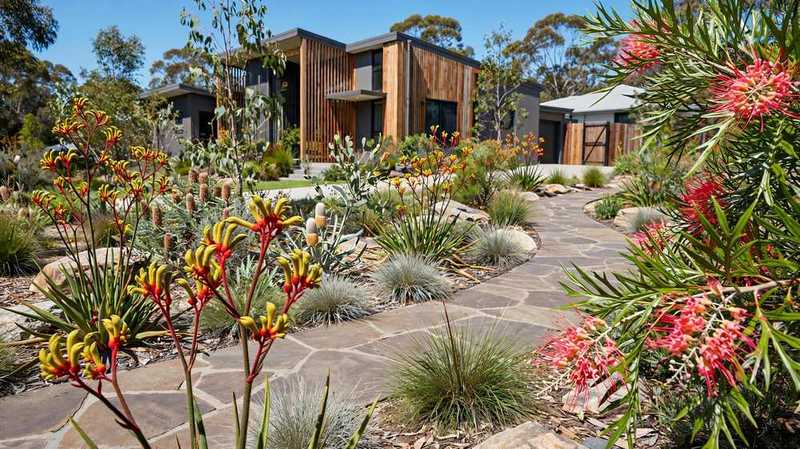
Native, water-wise planting is where buyer preference is heading — one in three homeowners planning upgrades now want low-maintenance, water-wise designs. Established natives (grevillea, banksia, kangaroo grass, lomandra) survive hot summers on far less water and tell a buyer the garden won’t become a second job. Agents warn against over-planting for the same reason: buyers look at a fussy garden and see work, not beauty.
Lawns remain the single best cheap win. Fresh turf, sharp edging and a mow before photos will do more for perceived value per dollar than almost anything else in the garden. If you can only afford one thing before selling, make it the lawn — especially the front lawn.
Decking and paved entertaining areas pay back because Australians genuinely live outdoors, but keep them in proportion to the home’s price point. Pool surrounds are where people overspend: a tidy, safe pool area is fine, but a resort-grade transformation rarely returns its cost when roughly half of buyers are ambivalent about pools anyway.
Front yard vs backyard: where to spend first
If you’re working to a budget, start at the front. Street appeal decides whether a buyer bothers to come inside, and the front yard is almost always cheaper to fix than the backyard: clean up and mulch, edge the beds, lay fresh turf where the lawn has died, trim tired shrubs, and make sure the path to the front door is clear and welcoming.
The backyard is where lifestyle value lives — and where spending can blow out fastest. Prioritise in this order: a usable, level entertaining area (paving or deck); privacy screening from neighbours; then planting to soften the edges. Leave the elaborate extras until the basics are finished — and be honest about whether your suburb’s price point supports them. If you’re comparing big-ticket options, the renovation calculators help keep the numbers grounded before you commit.
Low-maintenance Australian garden tips
A few principles that work across most Australian climates:
- Plant natives suited to your area. Local species handle local rainfall, heat and soil with minimal intervention. Your local nursery or council planting guide is the best source for what actually thrives in your suburb.
- Mulch heavily. A thick layer of mulch (75–100mm) suppresses weeds, holds soil moisture and instantly makes beds look finished.
- Reduce lawn area strategically. Keep lawn where it’s used and visible — front verge, kids’ play area — and replace awkward strips and corners with native beds or gravel. Less mowing, less watering, tidier look.
- Group plants by water needs and choose slow growers for structure. Thirsty plants together, drought-tolerant ones together, so irrigation runs efficiently. Fast-growing hedges look great in year one and become a pruning nightmare by year three — slow-growing natives hold their shape with far less work.
- Keep edges clean. Neat edging between lawn and beds signals “easy to maintain” to a buyer even when the planting itself is simple.
Expert tips before you spend a cent
- Spend in proportion to the property. The 5–10 per cent of property value rule exists for a reason. A $15,000 garden refresh on a $700,000 home is proportionate; a $60,000 designer landscape on a $400,000 unit probably isn’t.
- Get three quotes, and check what’s included. Landscaping quotes vary enormously — soil prep, drainage, irrigation, clean-up. A cheap quote that skips base preparation is the most expensive mistake in the book.
- Think about the next owner. If you might sell within five years, favour broad appeal: clean lines, low maintenance, usable entertaining space. Save the personal projects for your forever home.
- Time it right. Plant in autumn or early winter where possible so roots establish before summer heat; lay turf when you can water it in properly. A garden planted the week before listing looks exactly like what it is.
- Match the garden to the house’s style. A cottage garden suits a weatherboard; architectural natives suit a modern build. If you’re unsure what direction suits your home, our interior design style quiz can help clarify the overall aesthetic before you plant a thing.
Frequently asked questions
How much value does landscaping add to a house in Australia?
Quality landscaping can lift a property’s value by roughly 5 to 20 per cent. Domain’s Plant Value Report found houses with greenery achieved 17.4 per cent higher prices (about $140,000 extra), while Money.com.au research found buyers willing to pay a “green premium” of around $21,860 for manicured lawns or landscaping. Treat these as indicators, not guarantees.
What landscaping adds the most value for the least money?
A lawn refresh is the classic high-return, low-cost move: fresh turf, sharp edging, mulch and a general tidy-up. Front-yard presentation — clear paths, trimmed shrubs, healthy lawn — delivers the biggest first-impression payoff per dollar spent.
Is landscaping worth it before selling?
Usually, yes — if you keep it proportionate and low-maintenance. Focus on the front yard, fix the lawn, and avoid anything that looks like ongoing work for the next owner.
Do native gardens add value?
They can. Water restrictions and hot summers make drought-tolerant gardens more appealing — about one in three homeowners planning upgrades now want water-wise, low-maintenance designs. Well-designed native gardens signal low running costs.
Can landscaping decrease property value?
Yes. An overgrown, neglected garden drags value down, and poorly placed planting can backfire — UTS research found trees planted too close to a house reduced values by nearly 3 per cent (around $70,000 in the study). Over-planted, high-maintenance gardens also put buyers off.