
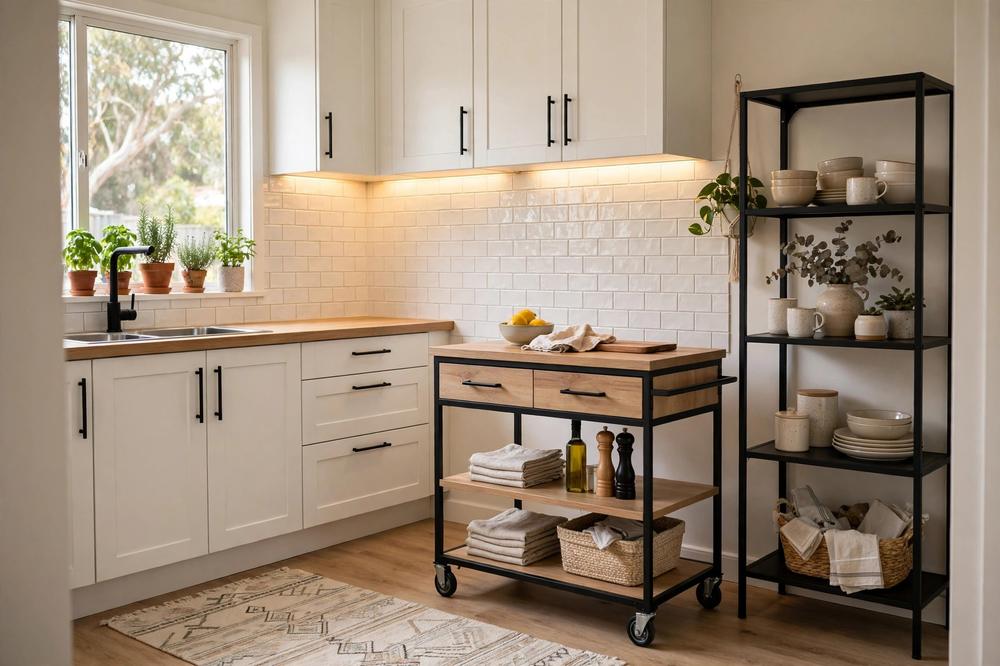
Nearly a third of Australian households rent, and the kitchen is usually the room renters feel least able to touch. Dated cabinets, tired benchtops and landlord-beige walls can make the heart of the home feel like someone else’s — which, technically, it is. But rental friendly kitchen ideas in Australia have come a long way from a sad tea towel draped over the oven handle. With removable, reversible upgrades, you can genuinely transform a rental kitchen and still hand back the keys — and your bond — with confidence.
This guide covers the best renter-friendly kitchen upgrades, what they cost, what your rights are as a tenant, and how to make it all disappear on moving day.
First: Know the Rules Before You Touch Anything
In most Australian states, any alteration to a rental property needs the landlord’s written consent — even small ones. The good news is that in NSW, landlords cannot unreasonably refuse consent for alterations of a “minor nature” under the Residential Tenancies Act, and you can remove fixtures you installed at the end of the tenancy. The Tenants’ Union of NSW explains tenants’ rights around property modifications in detail, and other states have similar provisions — check your local tenants’ advice service before you start.
The practical rule is simple: if it can be fully reversed without a trace, most landlords won’t object — and many will say yes to upgrades that improve their property. Always get the yes in writing (an email counts), take dated photos before you start, and keep every original fitting you remove in a labelled box so it goes straight back on moving day.
How to ask your landlord (and get a yes)
Frame your request around their interests, not yours. Landlords care about three things: no damage, no cost to them, and a better property at the end. So offer all three in writing: you’ll pay for everything, you’ll use removable products, and you’ll restore the original condition. Mention specific products — “peel-and-stick splashback tiles, fully removable” sounds far less alarming than “I’m redoing the kitchen.” If they hesitate, offer to send photos of the finished result; most landlords warm up once they see how good reversible upgrades look.
The Big Wins: Highest Impact, Fully Reversible
Peel-and-stick backsplash tiles
Nothing dates a kitchen faster than a tired splashback, and nothing transforms one faster than covering it. Peel-and-stick tiles — available in subway, hexagon, terrazzo and stone looks from hardware stores and online sellers — go straight over existing tiles, handle heat and splashes behind the cooktop, and peel off when you leave. Budget $30–$80 per square metre, and a standard splashback run takes an afternoon. Pro tip: apply them over a layer of removable vinyl shelf liner first and removal becomes genuinely effortless.
Cabinet hardware swap
Landlord kitchens almost always have the cheapest possible handles — or none at all. Swapping them for matte black bar pulls, brass knobs or leather tabs is a 30-minute job with a screwdriver and changes the whole feel of the cabinetry. Keep the originals in a labelled bag. Cost: $2–$8 per handle; a typical kitchen needs 10–20.
Benchtop contact paper
Modern adhesive vinyls convincingly mimic stone, marble and timber, and they’re heat- and water-resistant enough for a benchtop that isn’t used as a cutting board. A full benchtop wrap costs $50–$150 in materials and a patient afternoon. Use a felt-edge squeegee, work slowly from one end, and cut around the sink with a sharp craft knife. It lifts off with gentle heat from a hairdryer when you move out.
Removable wallpaper
One feature wall — or the wall behind open shelving — in a bold removable wallpaper gives a rental kitchen the personality that beige walls deny it. Modern peel-and-stick wallpapers are genuinely repositionable during install and come off cleanly. From $60–$150 per roll depending on the design; most kitchen walls need one or two rolls.
Storage Upgrades That Move With You
Rental kitchens are chronically short on storage, and everything you buy to fix that should be furniture, not fixtures.
- Freestanding shelving unit or baker’s rack: an open shelf tower in timber or black metal adds pantry storage and display space without touching a wall. IKEA’s IVAR and similar pine shelving systems are cheap, sturdy and flat-pack for the next move.
- Kitchen cart on castors: a rolling island gives you extra prep space and storage, then tucks against a wall or serves as a bar cart when you entertain. Locking castors keep it put while you chop.
- Over-door and inside-cupboard organisers: racks that hook over cupboard doors, tiered shelf inserts and under-shelf baskets double usable space inside existing cabinets. No screws, no damage.
- Magnetic strips and rails: a magnetic knife strip mounted with heavy-duty removable adhesive (not screws) and magnetic spice tins on the side of the fridge free up bench and drawer space.
- Tension rods: a spring-loaded rod inside a cupboard creates instant extra shelving for cutting boards and trays; under the sink, one holds spray bottles off the base.
Lighting: The Fastest Mood Change
Rental kitchens usually have one harsh ceiling batten doing all the work. You can’t rewire, but you can layer light:
- Battery or USB puck lights stuck under wall cabinets with removable adhesive wash the benchtop in warm light and make the whole kitchen feel designed. Rechargeable sets cost $30–$60.
- Plug-in pendant lights with long cords can hang from a hook (removable adhesive) over a dining nook or island — no electrician needed.
- A stylish floor or table lamp in a kitchen corner sounds odd until you try it; warm ambient light at night transforms how the room feels.
- LED strip lights with adhesive backing along the top of cabinets or under open shelves add a soft glow for a few dollars per metre.
Soft Furnishings and Styling
Never underestimate what textiles and styling do for a rental kitchen:
- A runner rug down the length of a galley kitchen adds colour, pattern and warmth underfoot. Choose a low-pile, washable rug — kitchen floors get messy.
- Curtain or skirt under the sink: if your rental has an open or ugly under-sink area, a simple fabric skirt on a tension rod hides pipes and cleaning products in seconds.
- Open display: a freestanding shelf styled with everyday ceramics, a timber chopping board collection and a trailing plant makes even basic cabinetry look intentional.
- Herbs and greenery: pots of basil, mint and rosemary on the windowsill are free decor that you also get to eat. A hanging planter from a removable ceiling hook adds life without losing bench space.
- Matching small touches: decant dish soap and hand wash into matching pump bottles, swap the tea towels for linen ones, and put a timber tray on the bench to corral oils and utensils. Cohesion reads as design.
Appliances and Fixtures You Can Take With You
Some upgrades are worth buying because they move to the next rental:
- A tap/mixer swap is the single most luxurious-feeling change — a matte black or brushed brass mixer transforms a dated sink. It’s a 20-minute plumber job (or a confident DIYer with an adjustable wrench), and you store the original to refit later. Get landlord consent in writing first.
- A portable dishwasher needs no plumbing changes — it connects to the tap — and solves the worst part of rental kitchens. From around $500; it pays for itself in sanity.
- Your own fridge in a colour or style you love (retro-style SMEG-type fridges are the classic renter flex) if the supplied one is ugly. Store the landlord’s or negotiate — some landlords will buy yours when you leave.
- A freestanding rangehood or a good benchtop appliance lineup — a beautiful kettle, toaster and coffee machine on display do more for a kitchen’s feel than you’d expect.
What Does a Rental Kitchen Makeover Cost?
| Upgrade | Typical cost (AUD) |
| Peel-and-stick backsplash | $60 – $200 |
| Cabinet hardware swap (full kitchen) | $40 – $160 |
| Benchtop vinyl wrap | $50 – $150 |
| Removable wallpaper (feature wall) | $60 – $300 |
| Under-cabinet puck lights | $30 – $60 |
| Freestanding shelving / baker’s rack | $100 – $400 |
| Kitchen cart on castors | $80 – $300 |
| Runner rug (washable) | $50 – $200 |
| Tap/mixer swap (incl. plumber) | $250 – $600 |
| Realistic total for a full transformation | $500 – $2,000 |
That’s the price of a genuinely different kitchen — one that photographs well, cooks well and gives you back every cent of bond. If you’re planning bigger changes to a home you own, the 2026 renovation costs guide covers full kitchen renovations, and the free renovation tools help with budgeting.
Moving Day: Reversing Everything
Plan the exit when you plan the entrance. Keep a “rental box” with every original handle, screw, tap fitting and light globe, plus the dated photos you took on day one. Peel off vinyls with gentle heat, fill any tiny holes with filler, and give the kitchen a proper clean. Most of these upgrades reverse in a single weekend — and the freestanding pieces just get loaded onto the truck.
Not sure which upgrades suit your style? The interior design style quiz takes two minutes and points you toward the look — and the renter-friendly pieces — that fit you best.
Frequently Asked Questions
Can I renovate my rental kitchen in Australia?
You can make changes with your landlord’s written consent. In NSW and several other states, landlords cannot unreasonably refuse minor alterations, and you generally have the right to remove fixtures you installed. Anything structural, plumbing-related or permanent needs explicit permission — get it in writing before spending a dollar.
Will peel-and-stick tiles damage my rental kitchen?
Quality peel-and-stick tiles are designed to remove cleanly from smooth surfaces like existing tiles. Applying them over a base layer of removable vinyl liner makes removal even safer. Avoid cheap unbranded tiles with aggressive adhesive, and test one in a hidden spot first.
What’s the easiest rental kitchen upgrade?
Swapping cabinet handles. It takes under an hour, costs less than $100 for most kitchens, needs no permission in practice (you’re refitting the originals later), and the visual difference is out of all proportion to the effort.
Can I paint my rental kitchen?
Only with written landlord consent, and most landlords will say no to colour changes — or yes only if you repaint it back. Removable wallpaper gives you the same visual impact with none of the risk, which is why it’s usually the better renter move.
How do I get my bond back after kitchen upgrades?
Document everything: dated photos before and after, written landlord consent for each change, and a labelled box of every original fitting. Reverse all changes before the final inspection, fill and touch up any marks, and leave the kitchen cleaner than you found it.