
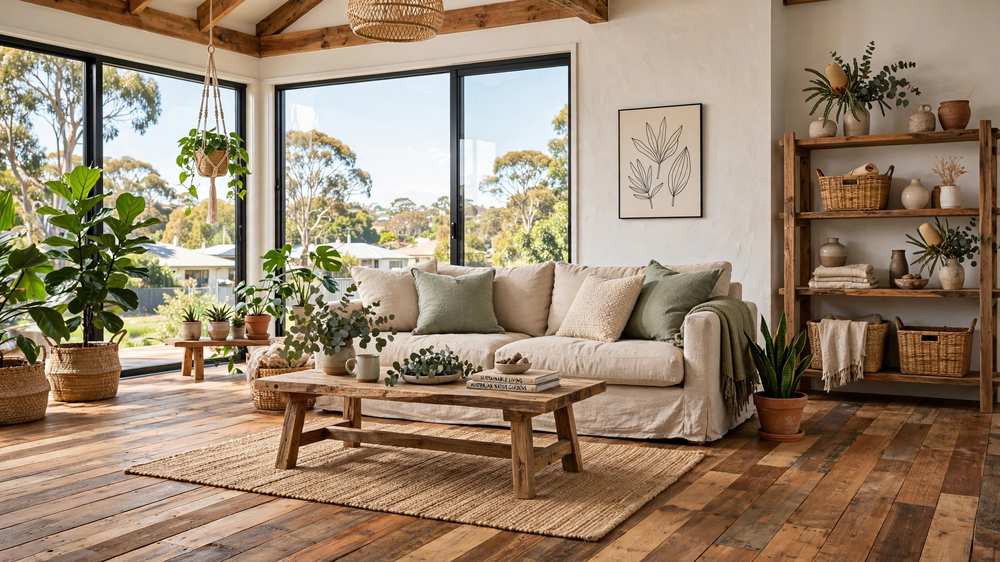
Looking for sustainable renovation ideas? Australia has moved well past the token solar panel and a few LED downlights. With energy prices stubbornly high, new state mandates pushing minimum star ratings up, and buyers increasingly willing to pay a premium for efficient homes, the greenest renovation is now also one of the smartest financial moves you can make.
The good news is you do not need a knockdown rebuild. Most Australian homes — especially the weatherboard and brick-veneer stock built between the 1950s and 2000s — leak energy in predictable ways, which means targeted upgrades pay back quickly. Here are twelve ideas that work, roughly in order of bang for buck.
1. Know Your NatHERS Rating First
Before spending a cent, understand how your home performs. NatHERS (the Nationwide House Energy Rating Scheme) scores homes from 0 to 10 stars based on thermal performance — how much heating and cooling the building shell needs. Most existing Australian homes sit around 2 to 3 stars; new builds must meet 7 stars nationally, and Victoria’s sustainable homes mandate now pushes new homes toward 7.5 stars with solar and all-electric systems from October 2026.
A NatHERS assessment of your renovation plans — done by an accredited assessor before drawings are finalised — costs a few hundred dollars and tells you exactly where energy escapes. It is the cheapest design advice you will ever buy.
2. Insulate and Seal: The Unsexy Upgrade That Pays Fastest
No sustainable renovation ideas list is honest without putting insulation first. An uninsulated ceiling can account for up to 35 percent of winter heat loss, and wall insulation in older homes is often non-existent.
- Ceiling: Top up to R5.0 or higher batts. Easy, cheap, and the single fastest payback in most homes.
- Walls: Blown-in or injected insulation suits existing brick-veneer and weatherboard walls without stripping linings.
- Floors: Underfloor insulation batts or foilboard on suspended timber floors, especially in cooler climates.
- Sealing: Draught-proof doors and windows, seal gaps where services penetrate walls, and fit chimney dampers on unused fireplaces.
Budget around $3,000 to $8,000 for a comprehensive insulation and draught-sealing package on a typical three-bedroom home — recovered within three to five years through lower bills, with an immediate comfort difference.
3. Upgrade Windows Without Replacing Them All
Windows are the weakest thermal link in most homes, but full replacement with double glazing is expensive — often $1,000 to $1,800 per window installed. Smarter moves:
- Secondary glazing: A second pane fitted inside the existing frame delivers much of the benefit at a fraction of the cost, and suits heritage and strata homes where the facade cannot change.
- Heavy curtains with pelmets: Floor-length, lined curtains in a pelmet box stop the convective loop that makes single-glazed windows feel icy.
- Target the west: If the budget only stretches to a few new windows, replace the large west-facing ones first — that is where summer heat gain punishes you most.
4. Electrify: Get Off Gas
Electrification is the backbone of every serious sustainable renovation in Australia now. Gas prices keep climbing, several states are phasing gas out of new builds, and an efficient all-electric home running on solar is simply cheaper to operate.
- Hot water: A heat-pump hot water system uses roughly a third of the energy of an old electric storage tank. Installed cost is typically $3,500 to $6,000, with rebates available in several states.
- Cooking: Induction cooktops are faster, safer and more efficient than gas. A 60cm induction cooktop starts around $800 at major retailers, plus electrician costs.
- Heating and cooling: A modern reverse-cycle split system heats at three to four times the efficiency of a gas heater. Size it to the room — oversized units short-cycle and waste energy.
Plan the switch as one project rather than piecemeal: one electrician visit, one round of switchboard upgrades, and you can often abolish the gas supply charge entirely, saving $300-plus a year before you use a single kilowatt.
5. Solar and Batteries, Sized to the New Demand
Rooftop solar remains Australia’s standout sustainable upgrade — over 4.2 million households now have it, saving an estimated $1,500 a year on average. But the order matters: insulate, electrify and reduce demand first, then size solar to what is left. A tight, all-electric home might need only a 6.6kW system where a leaky one needed 10kW.
When you do go solar in 2026:
- Ask your designer for a roof layout that leaves clear, unshaded north-facing space for panels — bring this up before plans are finalised, not after.
- A heat-pump hot water system timed to run midday effectively acts as a thermal battery, soaking up excess solar.
Typical installed cost for a quality 6.6kW system sits around $5,000 to $8,000 after the federal STC rebate. Batteries add $8,000 to $15,000 depending on capacity.
6. Choose Recycled and Low-Tox Materials
The materials you specify carry embodied carbon — the emissions from making and transporting them — and they affect your indoor air quality for years.
- Recycled timber: Flooring, decking and feature beams from demolition yards give you old-growth hardwood character no new timber can match. Check for nails, treat for borers, and buy from reputable recyclers.
- Recycled brick: Perfect for garden walls, edging and even feature interiors; it weathers in beautifully.
- Low-VOC paints: Brands like Dulux Wash&Wear and Taubmans Pure Performance offer low-VOC ranges — critical when you are sealing a home up tighter, because off-gassing has nowhere to go.
- Reclaimed fixtures: Solid timber doors, cast-iron baths and vintage tapware from salvage yards add character and keep quality materials in circulation.
- Sustainable sheet goods: Look for E0 or E1 low-formaldehyde board for cabinetry, and FSC-certified timber for framing.
Ask suppliers for Environmental Product Declarations where they exist; specifying them nudges the whole supply chain toward transparency.
7. Water: Tanks, WELS and the Garden
Water efficiency is the quiet half of sustainable renovation, and in much of Australia it matters as much as energy.
- Rainwater tanks: A slimline tank plumbed to toilets and laundry can cut mains water use dramatically. Check council rules — many exempt tanks under 10,000 litres from approval.
- WELS-rated fixtures: Australia’s Water Efficiency Labelling and Standards scheme rates taps, showers, toilets and appliances from one to six stars. Choose 4-star-plus taps and 3-star showerheads (the maximum rating for showers) and you will feel no difference in the shower while using far less hot water — which also cuts energy bills.
- Native gardens: Replacing thirsty lawn with Australian natives cuts water use, supports pollinators and cools the microclimate around your home, reducing air-conditioning load. Many councils offer rebates for native planting.
8. Passive Design Tweaks That Cost Almost Nothing
Some of the most effective sustainable renovation ideas are design decisions, not products:
- Eaves and shading: Correctly sized eaves shade summer sun while admitting winter sun on north-facing glass. External blinds or awnings on west windows beat any internal treatment.
- Cross-ventilation: Opening windows on opposite sides of the house, plus high-level vents or louvres, can flush heat on summer evenings without air conditioning.
- Thermal mass where it helps: A polished concrete slab or brick internal wall on the north side stores winter sun and releases it overnight. In hot climates, keep mass shaded and insulated externally instead.
- Zoning: Doors between living zones let you heat or cool only the rooms you are using — a $200 door can save more than a $2,000 appliance upgrade.
If you are still shaping the floor plan, take our interior design style quiz first — knowing whether you lean warm-minimalist or something richer helps you choose sustainable finishes you will actually love living with.
9. Lighting and Appliances: The Easy Wins
- Replace remaining halogens with quality LEDs — the difference across a whole house is hundreds of dollars a year.
- When appliances die, buy the highest energy star rating you can justify — fridges and washers run for a decade, so the efficient one pays back many times.
- Smart power strips kill standby loads, which can reach 10 percent of household electricity.
- A simple energy monitor or your solar app makes usage visible; households that watch consumption typically cut it 5 to 15 percent with no other changes.
10. Ventilation and Moisture: Seal Tight, Ventilate Right
Here is the catch with all that insulation and sealing: a tighter home needs deliberate ventilation, or moisture builds up. Bathroom and laundry exhausts must vent outside (not into the roof cavity), rangehoods should be ducted externally, and in cooler climates a heat-recovery ventilation unit supplies fresh air without dumping your heated air outside. It is the difference between a healthy efficient home and a sealed box with mould.
11. Budget Breakdown: What It All Costs
| Upgrade | Typical cost | Payback |
|---|---|---|
| Insulation + draught sealing | $3,000 – $8,000 | 3 – 5 years |
| Heat-pump hot water | $3,500 – $6,000 | 4 – 7 years |
| Induction cooktop + electrical | $1,500 – $3,000 | Bill savings ongoing |
| 6.6kW solar (after rebate) | $5,000 – $8,000 | 3 – 5 years |
| Battery (10kWh-ish) | $8,000 – $15,000 | 7 – 12 years |
| Secondary glazing (whole house) | $6,000 – $12,000 | Comfort + 5 – 10 years |
| Rainwater tank plumbed in | $2,500 – $5,000 | Water bill savings |
A sensible staged program — insulation and sealing first, then hot water and cooking electrification, then solar sized to the new load — typically runs $15,000 to $30,000 and transforms bills and comfort. Our renovation cost guide for 2026 puts these figures in the context of full project budgets.
12. Get the Paperwork That Proves It
Sustainable upgrades add the most value when documented. Keep NatHERS certificates, warranties, compliance certificates and energy bills in one folder. In markets like Melbourne, efficient homes have sold at premiums of 10 percent or more in 2026 — but only buyers who can see the evidence will pay it.
Frequently Asked Questions
What is the most cost-effective sustainable renovation in Australia?
Insulation and draught sealing, without contest. For $3,000 to $8,000 on a typical home it cuts heating and cooling demand more than any other single upgrade, pays back in three to five years, and makes every subsequent upgrade — smaller heat pump, smaller solar system — cheaper too.
What NatHERS star rating should I aim for when renovating?
New homes must meet 7 stars nationally, and that is a sensible target for a major renovation as well. Even lifting an existing home from 2–3 stars to 5–6 stars delivers a dramatic comfort and bill improvement. An accredited NatHERS assessor can model your specific plans before you commit.
Is it worth getting off gas during a renovation?
For most households, yes. Heat-pump hot water, induction cooking and reverse-cycle heating are all more efficient than their gas equivalents, gas supply charges alone cost $300-plus a year, and several states are moving away from residential gas. Doing it as one coordinated project is far cheaper than piecemeal.
How much does solar cost in Australia in 2026?
A quality 6.6kW rooftop system typically costs $5,000 to $8,000 installed after the federal small-scale technology certificate rebate. Reduce your demand first through insulation and electrification, then size the system to what remains — you may need less capacity than you think.
Do sustainable renovations increase home value?
Evidence increasingly says yes. Energy-efficient homes with documented upgrades — NatHERS ratings, solar, all-electric systems — have attracted buyer premiums, with some 2026 market analyses showing double-digit percentage premiums in cities like Melbourne. Keep certificates and bills as proof.
The ACT Government’s five tips for a more sustainable build or renovation is a handy official checklist that mirrors much of the advice above. And when you are ready to put numbers to the plan, our renovation tools will help you budget each stage.