
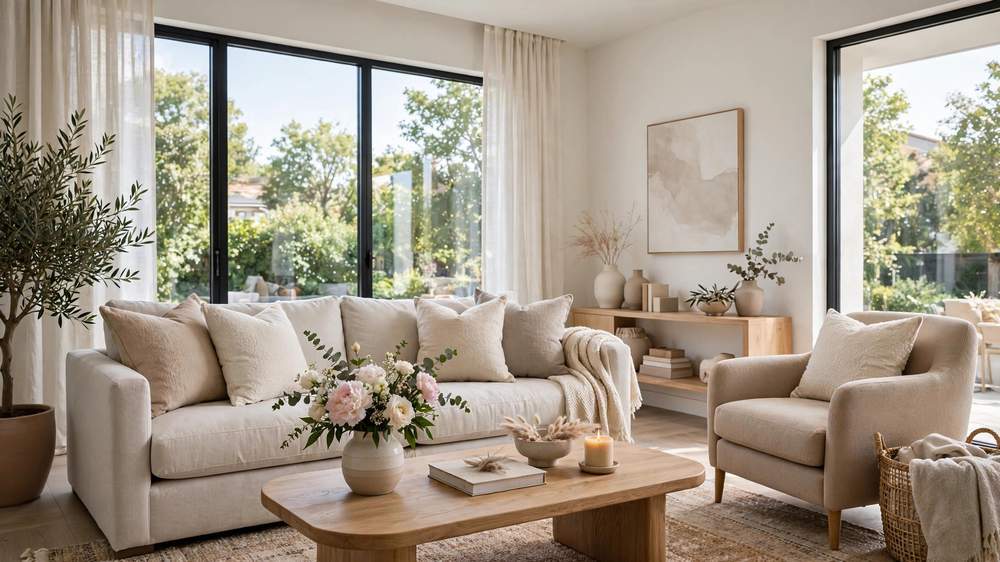
If you’re about to sell, agents will almost certainly recommend staging — furnishing and styling a property so it looks its best on listing day. But does home staging add value in Australia, or is it just another cost stacked onto an already expensive selling campaign?
Staging usually pays off, but it isn’t magic: $3,000 styling that adds $30,000 to the sale price is brilliant; $10,000 spent in a flat land-value market just buys prettier photos. This guide covers 2026 staging costs, sale-price uplift research, and when it’s worth doing — and when it isn’t.
The Short Answer
Yes — in competitive markets, professional staging usually adds more to the sale price than it costs. Studies have found staged homes selling 3% to 12.5% above comparable unstaged properties, with more interest and faster sales.
The catch: the spend must suit the property’s price and the styling must suit the buyer. A $25,000 prestige fit-out suits a $1.2 million Sydney terrace; the same spend on a $350,000 regional unit is hard to justify.
How Much Does Home Staging Cost in Australia in 2026?
Costs vary with the home’s size, whether it’s empty or occupied, and the hire period. Most companies price around a 4- to 6-week hire, with extra weeks charged weekly. Here’s what to expect in 2026:
| Staging type | Typical cost (2026) | What’s included |
| Styling consultation (2 hrs) | $150–$600 | Walkthrough, recommendations, plan for staging |
| Partial styling (key rooms only) | $1,800–$3,500 | Living, dining and main bedroom styled; rest left as-is |
| Full staging — 2-bed apartment | $2,500–$4,500 | Furniture hire for 4–6 weeks, styling, delivery and removal |
| Full staging — 3-bed house | $2,800–$6,000 | Full fit-out of living areas and bedrooms, hire for 4–6 weeks |
| Full staging — 4-bed family home | $5,000–$10,000 | Complete home fit-out with accessories and styling |
| Prestige / luxury property | $10,000–$25,000 | High-end furniture, art and finishes for premium homes |
| Extra weeks beyond hire period | $500–$800/week | Extension of furniture hire if the campaign runs long |
Sydney agent Ben Horwood puts the range at roughly $3,000 (partial style) to $25,000 (complete staging), while Vault Interiors’ Justine Wilson says a standard house runs around $10,000. Budget providers advertise full 4-bedroom fit-outs from about $3,000 — so compare quotes.
One warning: weekly extension fees of $500 to $800 past the included hire period erode your return fast. Price realistically so the home sells within the window.
What the Statistics Say About Sale-Price Uplift
Australian data is thinner than the US evidence, but what exists is encouraging. Treat these findings as directional rather than guaranteed:
- Cape Cod Residential and the Interior Design Association ran a six-year study finding staged properties achieved an average premium of $69,017 (3% to 10%), with nearly a third topping $100,000.
- LJ Hooker research found that styling a property could lift the final sale price by between 7.5% and 12.5%.
- realestate.com.au reported on Melbourne suburb-level data: styled three-bedroom CBD apartments achieved a typical $200,745 uplift, West Melbourne two-bedroom homes gained 15.37% (about $97,592), and Brunswick three-bedroom houses jumped 10.65% (roughly $134,978). Even in growth corridors like Truganina, styled four-bedroom homes picked up an extra $10,000 or so.
- The US National Association of Realtors found staged homes spent 73% less time on the market on average; Australian stylist David McLean of Furnish & Finish says his team sees styled properties sell around four weeks faster than average.
Days on market costs you too: every extra week unsold means more mortgage payments, holding costs and price-reduction risk. Sell an $800,000 home four weeks sooner and the avoided costs alone start covering the outlay.
A common agent rule of thumb: expect roughly 3% to 5% back in competitive metro markets. On an $800,000 home that’s $24,000 to $40,000 — comfortably above a $4,000 to $8,000 fit-out.
What Adds Value vs What Doesn’t
Not all staging spend is equal.
What genuinely adds value
- Decluttering and depersonalising. Costs almost nothing and delivers the most per dollar. Family photos and crowded shelves make it harder for buyers to picture their own life in the home.
- Lighting. Brighter rooms photograph better and feel larger. Swap dim globes for warm-white LEDs, add a floor lamp to dark corners and maximise natural light.
- The kitchen and main living areas. Buyers spend the most emotional energy here. Clear benches and a well-dressed dining area signal a home that’s easy to live in.
- Fresh paint in neutral tones. A few litres of warm white or soft grey transform tired rooms cheaply — the highest-ROI mini-renovation there is.
- Kerb appeal. Buyers see the exterior first. Tidy garden, fresh mulch, clean entryway and a working outdoor light set the tone.
What usually isn’t worth it
- Full styling for genuine renovator properties. If buyers will gut the kitchen and bathroom, they want to see bones and potential — not furniture layered over work they’ll demolish.
- Over-styling to a niche taste. Bold art and hyper-trendy finishes narrow your buyer pool. Staging should be broadly appealing, not a personal design statement.
- Staging only the photos. If the furniture leaves before the first open home, buyers will feel the disconnect. Photograph the home exactly as they’ll see it.
- Ignoring repairs to fund styling. A leaking tap or cracked tile undermines every styling dollar. Fix the small stuff first — our renovation cost guide can help you budget for the basics before you spend on presentation.
DIY vs Professional Staging
You don’t always need to hire a staging company. The right choice depends on your home, your furniture and your confidence.
DIY staging works well when:
- Your furniture is modern, in good condition and neutral in tone
- The home is already tidy and well-maintained
- Presentation expectations in your market are modest
- Your budget is tight — a deep clean, declutter, fresh paint and a few accessories runs $1,000 to $2,000
DIY essentials: declutter ruthlessly, deep-clean everything, touch up paint, fix minor repairs, add fresh neutral linen and cushions, style the tables, and make sure every light works. Mostly a weekend of honest labour.
Professional staging is worth considering when:
- The home is vacant — empty rooms photograph poorly and feel cold at inspections
- Your furniture is dated, worn or mismatched
- You’re selling a prestige property where presentation is expected
- You’re time-poor and want delivery to removal handled for you
A middle path is partial styling: hire the stylist for the hero rooms — living, dining and main bedroom — and leave the rest alone. It typically runs $1,800 to $3,500 and delivers most of the impact at a fraction of the full cost.
Room-by-Room Priorities
If you’re working with a limited budget, spend it where buyers look first.
Living room
Keep furniture proportionate — oversized sofas shrink the room. A rug anchors the seating area, and layered lighting (floor lamp plus table lamp) beats a single harsh ceiling light. US research consistently ranks the living room the most important to buyers.
Kitchen
Clear the benches. Appliances and clutter make even large kitchens feel cramped. Style the island or table with a simple bowl of fruit or a vase, and make sure the rangehood, splashback and tapware are spotless — buyers read a clean kitchen as a well-kept home.
Main bedroom
Buyers want calm here. Crisp neutral bedding, matching bedside tables and lamps, minimal clutter. Steam the bed linen before photography — wrinkles show up in every shot.
Bathrooms
The cheapest transformation in the house. New white towels, a soap dispenser instead of plastic bottles, a small plant, gleaming grout and mirrors. Tired grout? A grout pen or re-grouting costs a fraction of retiling.
Outdoor areas
Australians buy the outdoor lifestyle, so dress the deck, patio or courtyard like a living room. Clean the furniture, add an outdoor rug, make the garden look loved. In warmer months, a staged alfresco area can be the emotional moment that sells the home.
Expert Tips for Getting the Best Return
- Get your agent’s input first. A good local agent knows what your suburb’s buyer pool responds to — and which rooms to prioritise.
- Style for the buyer, not yourself. Suburban family homes need warmth and practicality; city apartments need sleek and minimal. Match the styling to the likely buyer.
- Stage first, photograph last. Everything should be in place before the photographer arrives. Shoot in mid-morning natural light.
- Neutral but not bland. Beige-everything feels lifeless. Add warmth with timber tones, soft textures and one restrained accent colour repeated through the home.
- Plan the timeline. Book the stylist before the photographer, and sequence delivery, installation and the photo shoot properly. Last-minute styling shows.
If you’re not sure which look suits the property, our interior design style quiz can help you pin it down. And if you’re weighing staging against a quick renovation, run the numbers with our renovation calculators to compare the true cost of each path.
Frequently Asked Questions
Does home staging really increase sale price in Australia?
Studies suggest it can: Australian research has found premiums of 3% to 12.5% for staged homes, with one six-year study averaging $69,017. It works best in competitive metro markets.
How much does it cost to stage a house in Australia?
Partial styling of key rooms runs $1,800 to $3,500; full home fit-outs range from $3,000 to $10,000, and prestige properties can reach $25,000. Most quotes include four to six weeks of hire, with extensions charged weekly.
Is staging worth it for a cheap or older home?
Often yes — just scale the spend to the price. A $2,000 to $3,000 partial style on a $450,000 home can still pay off. Skip luxury styling on homes buyers will renovate anyway.
Can I stage my home myself?
Absolutely. Decluttering, deep cleaning, fresh neutral paint, good lighting and simple accessories can do the job for $1,000 to $2,000 — best when your furniture is already modern.
How long does staging furniture stay in the home?
Most companies include four to six weeks of hire in the base price. Extensions typically cost $500 to $800 per week.