
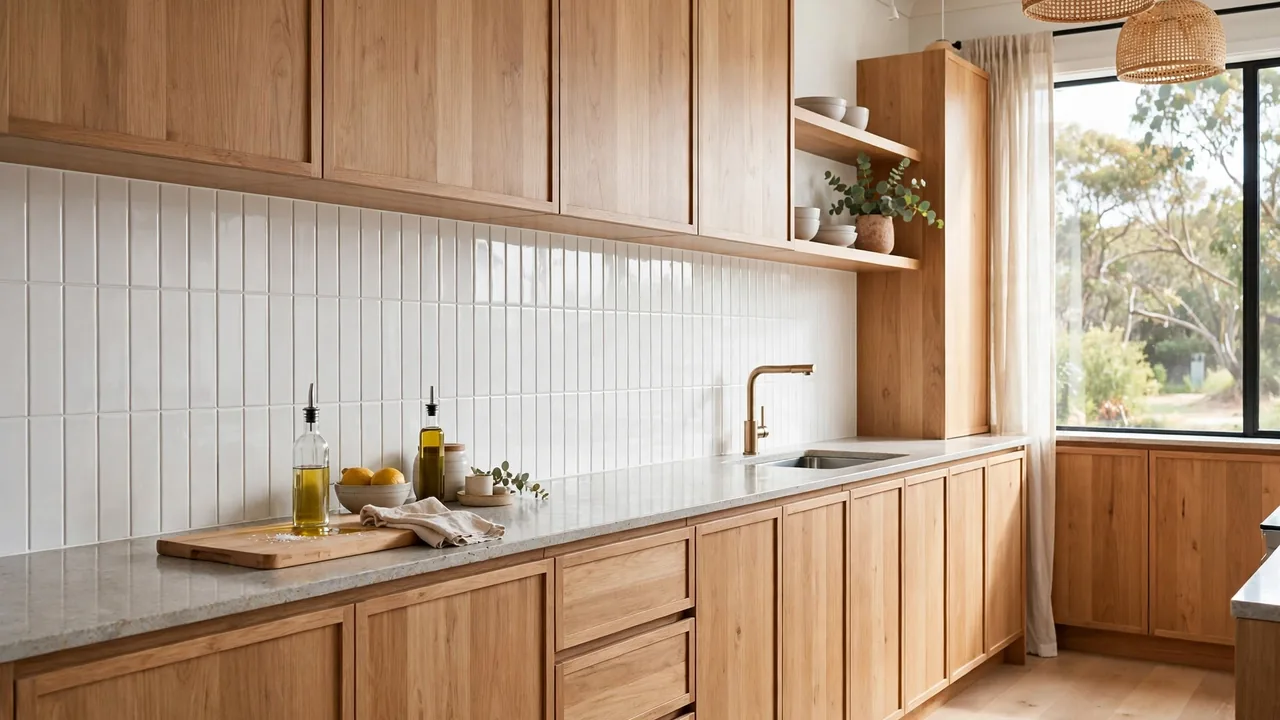
A splashback is one of the highest-impact, lowest-cost upgrades in a kitchen. It protects your walls from cooking splatter, steam and stains, and it can completely change the feel of the room without touching the cabinetry. But quotes vary wildly — from a few hundred dollars for a DIY tile job to several thousand for full-height stone — so it helps to know what drives kitchen splashback cost in Australia before you call anyone.
Short answer: In 2026, the typical kitchen splashback cost in Australia is $600 to $2,500 supply and install for a standard kitchen. Budget tiled splashbacks run $60–$120 per square metre installed, toughened glass runs $250–$450 per square metre installed, and premium stone or sintered stone reaches $300–$600+ per square metre. Powerpoint cut-outs, wall preparation, full-height coverage and gas cooktop clearances all move the final figure.
Note: all prices below are indicative 2026 Australian figures drawn from published supplier and trade guides (sources listed at the end). Kitchen splashback cost in Australia varies by location, supplier and project complexity — always compare itemised quotes for your kitchen.
Kitchen splashback cost in Australia: the 2026 averages
Most Australian kitchens have a splashback zone roughly 600mm high running along the benchtop — often 2 to 4 square metres in total. That small area is why a splashback refresh is so cost-effective: you are only paying for a few square metres of material and a day or two of labour.
| Material | Indicative supply cost | Indicative installed cost |
|---|---|---|
| Ceramic / subway tiles | $15–$80/m² | $60–$120/m² |
| Porcelain tiles (large format) | $40–$120/m² | Not verified — allow extra for laying |
| Mosaic tiles | $100–$200/m² | Add $50–$100/m² for laying |
| Glass tiles | $80–$150/m² installed | $80–$150/m² |
| Toughened glass panels | $200–$600/m² (materials) | $250–$450/m² |
| Natural stone | $360–$420/m² (indicative) | Not verified — specialist install |
| Sintered stone / porcelain slab | $300–$600+/m² | Not verified — specialist install |
| Stainless steel | $150–$250/m² | Not verified |
| Acrylic panels | $100–$180/m² | DIY-friendly |
| Laminate hardboard | $60–$100/m² | DIY-friendly |
| Pressed metal | $80–$120 per sheet | DIY-friendly |
For a typical kitchen, an all-in glass splashback (supply and install) generally lands between $1,000 and $2,000, while a straightforward tiled splashback installed by a tiler often comes in under $1,000 including materials. A tiler will typically charge around $400 to tile a splashback in an average-sized kitchen, plus materials.
Kitchen splashback costs in Australia: tiles
Tiles remain the most popular splashback choice in Australia, and the most flexible. Ceramic and subway tiles are the budget champions at $15–$80 per square metre supply, and a mid-range tiled splashback professionally installed generally costs $60–$120 per square metre. That makes tile the easiest way to get a designer look — handmade-look zellige, kit-kat (finger) tiles or classic subway in a stacked pattern — without a designer budget.
Porcelain tiles cost more ($40–$120/m² supply) but bring lower porosity and minimal grout lines when laid in large formats, which suits contemporary kitchens. Mosaic sheets ($100–$200/m² materials, plus $50–$100/m² laying) and glass tiles ($80–$150/m² installed) sit at the premium end of tiling: beautiful, but labour-intensive, because every sheet must be aligned perfectly and glass tiles demand expert handling to avoid cracking.
The main ongoing cost with tiles is grout. Grout needs sealing and periodic attention to resist staining and mould, especially behind the cooktop. If low maintenance is a priority, larger tiles with fewer grout lines — or a switch to glass — are worth considering.
Tiles are also the most DIY-friendly option for a competent renovator. Simple layouts (subway, stacked) can be tackled by a careful DIYer, while intricate mosaics, natural stone and anything behind a gas cooktop are better left to a professional.
Kitchen splashback costs in Australia: glass panels
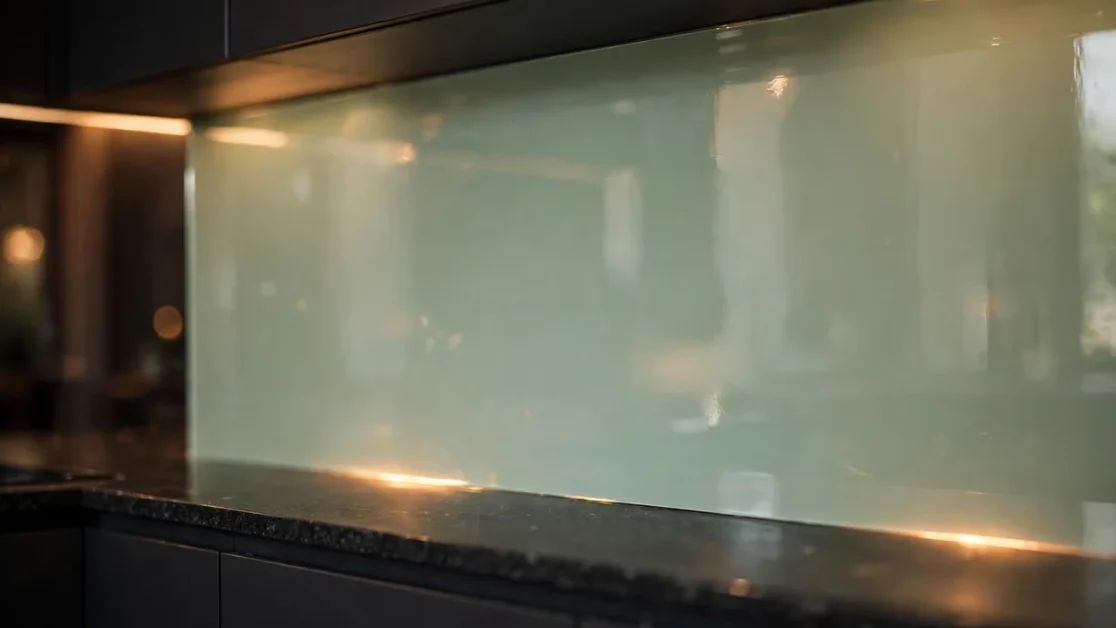
A toughened glass splashback — usually back-painted in a Dulux colour or finished as a low-iron “ultra-clear” panel — gives a seamless, grout-free surface that bounces light around the kitchen. It is the go-to for modern renovations and a favourite for making small kitchens feel larger.
Expect $250–$450 per square metre installed for standard back-painted glass, with materials-only guides quoting $200–$600 per square metre before labour (installers often charge $80–$120 per hour on top when not quoted as a fixed figure). For a typical kitchen the all-in figure usually lands between $1,000 and $2,000; as a reference point, suppliers quote from around $1,200 supply and install for a 1000×2000mm back-painted panel, rising to around $1,400–$1,500 for tinted mirror or marble-look finishes.
Glass is strictly a professional job: it requires precise on-site measuring, off-site manufacture in toughened safety glass, and specialist installation. Every powerpoint and rangehood cut-out is cut at the factory, which is why cut-outs are a major cost driver — each one adds handling and risk. On the plus side, glass has no grout to stain or regrout, and a single glass panel typically outlasts a tiled splashback through one or two kitchen refreshes, which can make it cheaper over a ten-year horizon despite the higher upfront cost.
Kitchen splashback costs in Australia: stone and sintered stone
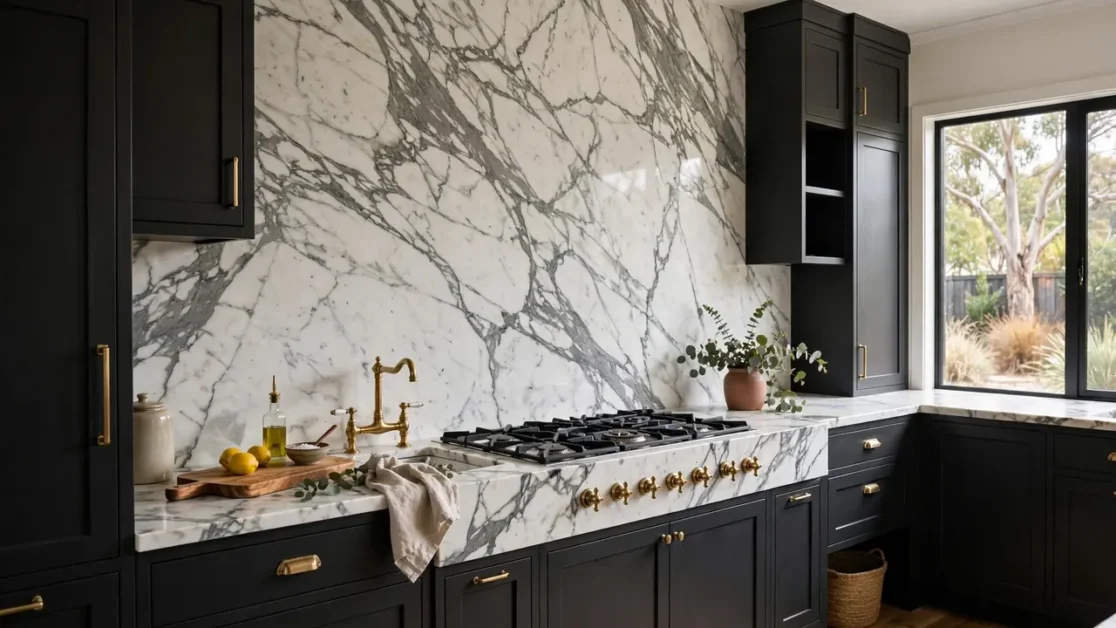
Running your benchtop material up the wall as a full-height splashback is the premium move — and the price reflects it. Natural stone splashbacks are quoted from around $360–$420 per square metre (indicative), while sintered stone and large-format porcelain slabs run $300–$600+ per square metre supply. Specialists install these slabs.
This is the right choice when you want a continuous, luxurious surface with virtually no maintenance: stone and sintered stone are non-combustible (no restrictions behind gas cooktops), heat-resistant and easy to wipe down. The downsides are cost, weight and lead time — slabs need templating, specialist cutting and experienced installers, so this is never a DIY project. As a result, always ask for itemised quotes.
Stainless steel, pressed metal and budget-friendly options
Stainless steel ($150–$250/m² supply) is non-combustible, hygienic and ideal behind gas cooktops or in hardworking family kitchens. Choose a matte or satin finish over polished — it is far more forgiving of fingerprints. Pressed metal panels ($80–$120 per sheet) suit traditional, cottage and Hamptons-style kitchens and can be painted to match your cabinetry.
On a tight budget, acrylic panels ($100–$180/m²) and laminate hardboard ($60–$100/m²) are genuine options. Both are DIY-friendly glue-on products, but with an important caveat: behind a gas cooktop they must be installed over a non-combustible backing to meet clearance requirements. They suit electric and induction kitchens best.
What affects your splashback quote
Two neighbours can get quotes thousands of dollars apart for the “same” splashback. These are the levers that move the price:
- Area and height. A standard 600mm-high splashback over 3 metres of bench is under 2m²; running it full-height to the rangehood or ceiling can double or triple the area — and the cost.
- Powerpoint and fixture cut-outs. The factory cuts each cut-out in glass or stone and prices it accordingly. An average kitchen has four to six; more cut-outs means a higher quote.
- Wall condition. Uneven walls, old tile adhesive or damaged plasterboard add preparation labour. Tilers may need to level or re-sheet before a single tile goes up.
- Gas cooktop clearances. Materials behind a gas cooktop must satisfy heat and clearance requirements (see AS 5601, via Standards Australia). Non-combustible options — tiles, toughened glass, stainless steel, stone — have no restrictions; acrylic and laminate need compliant backing.
- Pattern complexity. A simple stacked subway layout is quick to lay; herringbone, mosaics and book-matched stone take far longer and cost more in labour.
- Location. Trade rates in Sydney and Melbourne run higher than in regional centres, and remote areas add travel and freight.
- Lead times. Custom glass and stone require measuring, off-site manufacturing and professional installation — allow weeks from measure to install, and never book other trades hard up against the date.
DIY vs professional installation
DIY suits: ceramic and subway tiles in simple layouts, acrylic panels, laminate hardboard and pressed metal — provided you are competent, patient and working around an electric or induction cooktop. You will save the labour component, which is often 40–60% of a tiled splashback’s cost.
Hire a professional for: toughened glass (specialist measure and install only), natural stone and sintered stone, mosaics and natural stone tiles, anything behind a gas cooktop, and any wall that needs levelling or re-sheeting first. A poor splashback is visible every single day — this is not the place to learn tiling from scratch.
If you hire, check that the installer is licensed for the work in your state where a licence applies, and confirm who is responsible if a panel arrives damaged.
How to get an accurate quote
- Measure first. Note the length and height of each splashback run, count powerpoints and switches, and photograph the cooktop area.
- Get three itemised quotes. Ask for materials, labour, cut-outs, wall preparation and waste removal listed separately — not a single lump sum.
- Confirm what “supply” means. Some quotes are supply-only; others are supply-and-install. Compare like with like.
- Ask about lead times. Custom glass and stone have manufacture lead times; get the install date in writing.
- Check consumer protections. In Australia, tradie services come with automatic consumer guarantees — the ACCC’s guidance on consumer guarantees is worth reading before you pay a deposit.
Splashback refresh or full kitchen renovation?
A splashback replacement is the classic “weekend facelift”: new tiles or a glass panel, fresh silicone, and the kitchen feels a decade newer for under $2,000 in most cases. But if your cabinetry is failing, the layout doesn’t work or the benchtop is damaged, a splashback alone is lipstick on a tired kitchen. In that case, read our complete guide to kitchen renovation costs in Australia to budget the full project properly — and our kitchen design guide to get the layout right before you spend a dollar. If you’re tiling it yourself, our free tile calculator will work out exactly how many tiles, adhesive and grout to buy.
Frequently asked questions
How much does a kitchen splashback cost in Australia?
For a standard kitchen in 2026, expect $600–$2,500 supply and install. Budget tiled splashbacks cost $60–$120/m² installed, toughened glass $250–$450/m² installed (typically $1,000–$2,000 all-in for a kitchen), and stone or sintered stone $300–$600+/m². Cut-outs, wall prep and full-height coverage increase the total.
Is a glass splashback cheaper than tiles?
Tiles are usually cheaper upfront — ceramic tile materials start around $15–$80/m² versus $250–$450/m² installed for glass. Over ten years the picture narrows: glass has no grout to stain, seal or regrout, and one glass panel typically outlasts a tiled splashback through one or two kitchen refreshes.
Can I install a kitchen splashback myself?
Yes for simple ceramic tile layouts, acrylic panels, laminate hardboard and pressed metal if you’re a competent DIYer. No for toughened glass, stone and sintered stone (specialist measure and install), mosaics, and anything behind a gas cooktop or on a wall that needs levelling.
What is the best splashback material behind a gas cooktop?
Use a non-combustible material: ceramic or porcelain tiles, toughened glass, stainless steel or stone. These have no restrictions behind gas cooktops. Acrylic and laminate panels can only go behind gas with a compliant non-combustible backing — check the clearance requirements of AS 5601 via Standards Australia.
How long does splashback installation take?
A straightforward tiled splashback usually takes a professional tiler one to two days for an average kitchen. Custom glass and stone take longer overall because they are measured on site, manufactured off-site, and then installed — allow several weeks from measure to completion.
Costs vary by location, supplier and project complexity. Figures above are indicative 2026 ranges from the sources below — get itemised quotes for your kitchen.