
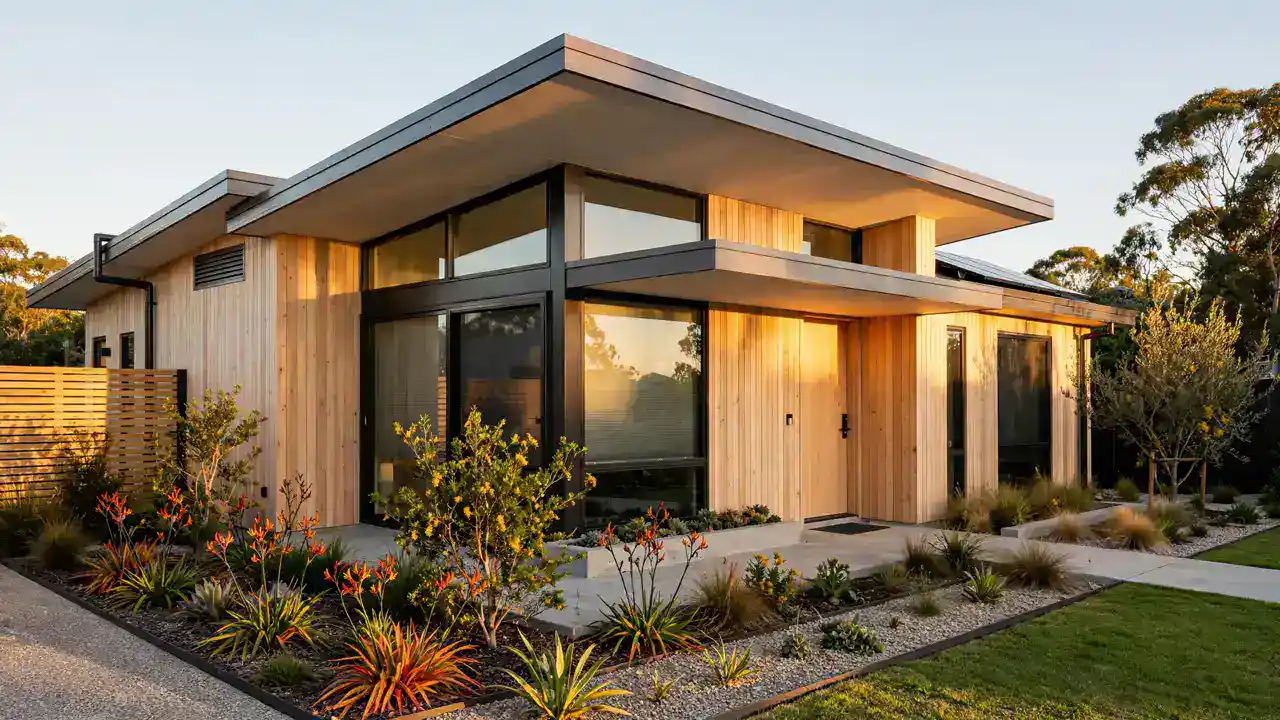
A passive house cost australia buyers should plan for is not a single number. It moves with size, climate, glazing, and certification. For example, it also moves with whether you pay for formal certification or simply build to the same principles. Figures below come from 2026 Australian builder and designer guides. In addition, where they disagree, the disagreement is shown. However, the cheapest quote often leaves out ventilation, airtightness testing, or the window specification. That specification makes the approach work.
A passive house, also called Passivhaus, is a measured standard. Designers model the design in PHPP software. A blower-door test checks the finished home for air leakage. An independent certifier checks a certified home. A home built to passive house principles may follow the same five ideas without that formal check. Only the certified version gives a tested result. That difference is also part of the price gap.
Passive house cost Australia in 2026 at a glance
Australian guides do not agree on one per-square-metre rate. For example, Perth designer Studio Origami updated its 2026 guide in October 2026. It puts a standard 7-star NatHERS home at $2,500–$3,500 per square metre. It also puts a high-performance passive solar home at $3,500–$4,500 per square metre. In addition, it puts a home built to Passive House principles at $4,500–$5,500 per square metre. For a 250 square metre home, the step up from standard to Passive House principles is $150,000–$250,000.
Victorian rates in 2026
Victorian figures sit higher. Melbourne guide We Are Terra reports recent studies averaging about $6,500 per square metre for new Passive Houses. It also reports about $5,500 for high-performance homes short of the full standard. That gives a premium of about 10–15 percent over a quality custom build. In addition, Sustainable Homes Melbourne prices high-performance custom homes at $5,200–$7,500 per square metre in 2026. Its top exceptional tier, including certified Passive House work, sits at $7,500–$11,000 or more. Finally, Jane Cameron Architects updated its guide in October 2026. It reports one small sloping Passivhaus build at about $6,000 per square metre. That figure uses 2025 rates and excludes the garage.
| Source and level | 2026 rate | What it covers |
|---|---|---|
| Studio Origami, Perth, Passive House principles | $4,500–$5,500 per square metre | Airtight, insulated, glazed, ventilated |
| We Are Terra, Victoria, Passive House average | About $6,500 per square metre | Average from recent studies |
| Sustainable Homes Melbourne, high performance | $5,200–$7,500 per square metre | Above code compliance, construction only |
| Sustainable Homes Melbourne, exceptional tier | $7,500–$11,000 or more per square metre | Top tier, certified work, construction only |
| Studio Origami, Perth, standard 7-star home | $2,500–$3,500 per square metre | Minimum NCC 2022 compliance, no airtightness or ventilation |
A planning band, not a quote
Read together, those sources point to a planning band, not a quote. For a straightforward, well-shaped home in a temperate climate, use $4,500–$6,500 per square metre as a reasonable early planning range. That range covers Passive House principles in 2026. It also excludes land, site works, and landscaping. However, complex shapes, large glass, steep sites, and full certification push a project above that band. Most figures here are construction-only. For example, Sustainable Homes Melbourne excludes land, site works, design fees, and landscaping.
What counts as a passive house, and what does not
Five ideas work together, and removing one weakens the rest. First, use continuous insulation without gaps and an airtight envelope. Second, use thermal-bridge-free detailing. Third, use high-performance windows. Most use double glazing, and cooler climates often use triple glazing. Finally, use mechanical ventilation with heat recovery. It supplies fresh filtered air while recovering most outgoing heat or cooling energy.
The measured limits separate the standard from a general claim. Certification requires airtightness of 0.6 air changes per hour or less at 50 pascals. Writers shorten that limit to 0.6 ACH50. A blower door tests it. Marvel Homes cites CSIRO figures for a typical new Australian home. That home tests at about 15.4 ACH. As a result, it sits over twenty times the certified limit. Modellers must also model heating and cooling limits in PHPP for the actual climate. Do not copy them from a European example. In hotter, humid zones, the problem shifts from keeping heat in to keeping heat out. See this energy-efficient home design in Australia guide for low-energy homes outside the certified standard.
Where the premium actually goes
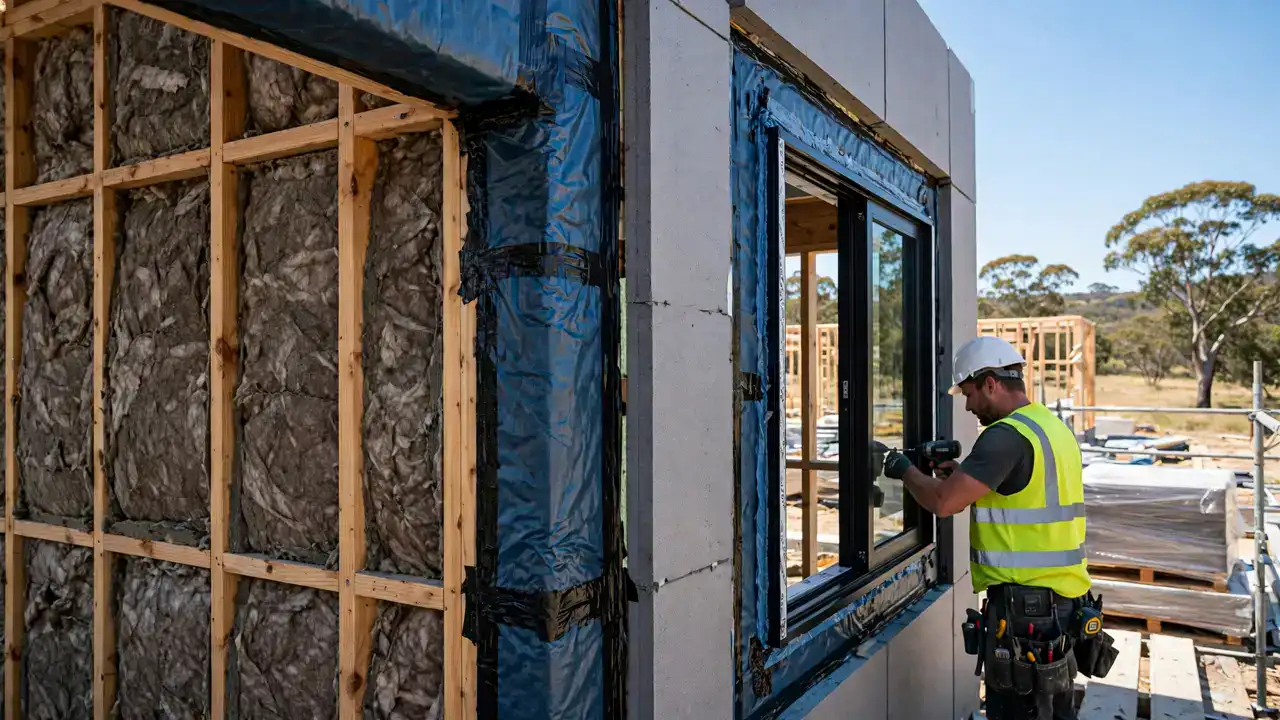
Most extra money goes into the envelope, not visible finishes. Thicker, continuous insulation costs more to install without gaps. Airtight membranes, tapes, and sealing around every penetration take skilled time. High-performance windows are the most visible cost jump. Cheapening them after upgrading the rest of the envelope wastes the investment.
Ventilation is the next major line, often missing from a low quote. An airtight home cannot rely on draughts, so it needs a mechanical system. A Houzz panel quotes Australian and New Zealand experience. It puts medium whole-home systems for homes of about 125–220 square metres at around $15,000 for the unit. Installation sits on top of that price. Single-room units start at around $1,000. Budget $8,000–$15,000 for a whole-home system, ducting and commissioning included.
Design, modelling, and testing are a smaller but non-negotiable slice for certified work. That slice covers PHPP modelling, certifier review, and blower door testing at pre-plaster and completion. One New South Wales builder example prices blower door testing at $800–$1,500 by dwelling size. It also prices PHPP modelling at about $4,500. A quote promising certification with no modelling or testing line is a warning sign.
Passive house cost Australia by home size
The table below applies the Perth range of $4,500–$5,500 per square metre to three common sizes. These are planning figures, not quotes. They also exclude land, site works, design fees, approvals, and landscaping. In contrast, Melbourne and Sydney figures run higher.
| Home size | At $4,500–$5,500 per square metre | Planning note |
|---|---|---|
| 150 square metres, compact three-bedroom | $675,000–$825,000 | Higher rate: kitchens, bathrooms, ventilation over fewer square metres |
| 200 square metres, four-bedroom family home | $900,000–$1,100,000 | Most commonly quoted size in 2026 guides |
| 250 square metres, larger family home | $1,125,000–$1,375,000 | Perth example: premium over standard $150,000–$250,000 |
Compare those totals with the general build market. Estimating Australia prices a standard 200 square metre home at a medium finish at roughly $480,000–$760,000. That figure sits before land and design costs. A 200 square metre passive house sits at $900,000–$1,100,000. That puts it roughly $140,000–$620,000 above that standard range. However, the exact gap depends on which end of each range you take. In addition, land changes the picture more than any envelope choice. BuildStreet updated its guide in October 2026 from ABS data. It puts the average structure-only cost at $474,939. It also puts the national median lot price at $403,570. Together, those figures give about $878,500 before design, approvals, and site works.
Certification, modelling and testing costs
Formal certification is a quality check, not a style upgrade. Designers model the design in PHPP. An independent certifier reviews it. The finished home must pass a blower door test before a certifier awards certification. Maxa Design, writing in August 2026, stresses certification requires checking against a fixed method. An accredited certifier independent of the design team does that checking. It also requires as-built verification, including mandatory blower door testing.
The Australian Passive House Association is the industry body for certified designers, builders, and certifiers in Australia. Its directory is the sensible first check before engaging anyone. See the Australian Passive House Association for accredited professionals and certification information. Do not rely on unproven certification claims.
Certification is not compulsory, and many projects use the principles without pursuing the certificate. Passive house cost Australia totals for a certified home therefore include modelling, review, and testing. Those costs sit on top of the envelope upgrade. A sound middle path is to model properly and test airtightness even if you skip the formal certificate. In New South Wales, the BASIX tool introduced the Passive House Standard Method from 1 May 2026. It offers an alternative thermal performance pathway alongside the usual NatHERS route.
Climate changes the design, and the price
Perth is the clearest hot-climate example. Studio Origami reports a certified Passive House in Perth typically uses up to 90 percent less heating and cooling energy than a standard home. That saving is worth $1,500–$2,500 a year, or $30,000–$50,000 over twenty years. That alone does not repay the full premium.
Sydney sits in the middle. Marvel Homes puts its passive house budgets at $900,000 to $2 million or more. It reports a typical premium of 15–20 percent over a standard home. It also notes cold winters, humid summers, and high cooling demand in the west. One Sydney builder example puts the premium for a 200 square metre home at about $31,000–$66,000. That figure sits far lower than Perth and Melbourne percentages. As a result, do not quote single-project examples as national figures.
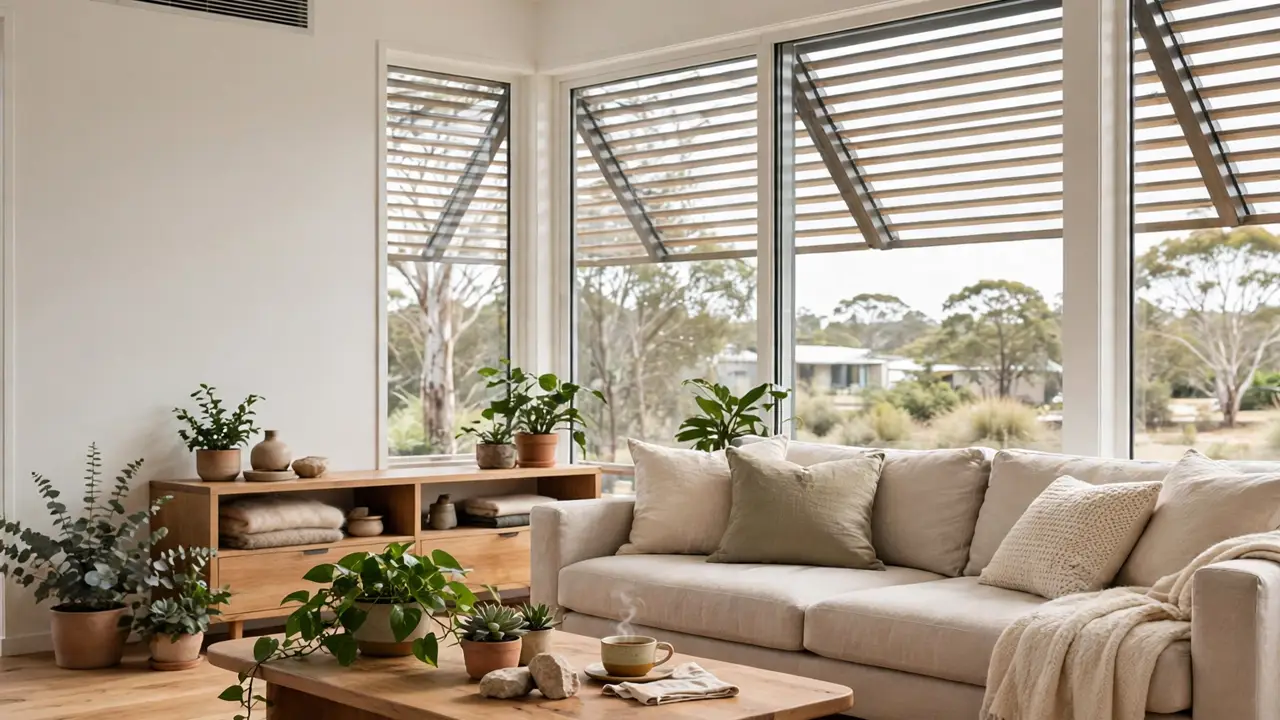
Melbourne and cooler Victorian climates face the highest per-square-metre figures here, but also the clearest heating saving. Passive house cost Australia comparisons across cities only make sense when climate, glazing, and certification level are stated alongside the rate. In Darwin and other tropical zones, Maxa Design notes a far larger jump from 7-star compliance than in temperate cities. That jump applies to meeting the full energy cap. In those zones, the Passive House Institute Low Energy Building standard may be more appropriate. It sets a heating demand limit of 30 kilowatt hours per square metre per year instead of 15. It also sets airtightness at 1.0 ACH50 instead of 0.6. Do not use a Melbourne specification for a Darwin home, or vice versa.
The quote decoder and how to cut the premium
A quote is only comparable when every builder prices the same scope. Check windows: glass type, frame material, thermal break, and whether the area matches your plans. Then check insulation, airtightness, ventilation, and testing. That check covers membrane and tapes, who seals penetrations, and unit plus ducting plus commissioning. It also covers blower door stages, including who pays if a test fails. Then check exclusions. Those exclusions include land, demolition, site works, and footings for your soil class. They also include service connections, council contributions, landscaping, driveways, and fencing. Ask builders to break out bundled items.
In addition, shape is the cheapest saving available. A compact, simple form needs less insulation, membrane, and fewer tricky junctions than a sprawling home. Reducing glass on the west and east, where summer heat gain is hardest to control, cuts window cost and cooling load. Engaging a passive house designer before you fix the plans costs far less than redesigning a finished plan. Early PHPP modelling shows which choices move performance. To spread costs across two dwellings on one block, compare the duplex build cost in Australia guide. For a factory-built alternative needing the same site, approval, and ventilation thinking, see the modular home cost in Australia guide.
Mistakes that blow the budget
The most expensive mistake is changing the specification after signing. Swapping windows, adding glass, or moving walls after PHPP modelling means remodelling and repricing. So freeze the envelope early. Treat later changes as priced variations with a performance check. The second mistake is treating ventilation as optional. An airtight home without a working system will feel stuffy and risk condensation. The third is comparing quotes that do not match. A quote without certification, testing, or ventilation will always beat a complete quote on price. It will lose on performance. Passive house cost Australia planning works best when you fix scope, climate, and testing before you compare price, not after.
Frequently asked questions
How much does a passive house cost per square metre in Australia?
In 2026, Perth principles-based guides put the rate at $4,500–$5,500 per square metre, Victorian studies average about $6,500, and certified work can reach $7,500–$11,000 or more. For a straightforward home, $4,500–$6,500 per square metre is a sensible planning range before land, site works, and landscaping.
Is a passive house worth the extra cost in Australia?
It depends on what you value and how long you stay. Perth guides report heating and cooling savings of up to 90 percent, worth $1,500–$2,500 a year. That can offset part of the premium, but it rarely repays the full envelope upgrade on energy alone. Comfort, air quality, and resale are why many owners choose the standard despite the premium.
Do I need full certification, or can I just use passive house principles?
Full certification gives independent modelling, review, and blower door testing, proving the home performs as designed. Building to principles without certification can save fees and complexity, but removes that check. A sound middle path is to model properly and test airtightness even if you skip the certificate, so you still have a measured result.
What does the 0.6 air changes per hour test actually check?
The blower door test pressurises the home to 50 pascals and measures air leaking through the envelope in one hour. Certification requires 0.6 air changes per hour or less. A typical new Australian home tests at about 15.4, so the limit is far tighter. Tests are usually done before plaster and again at completion, so leaks can be found while accessible.
How much does a heat recovery ventilation system add?
Budget $8,000–$15,000 for a whole-home system in early planning, with ducting, controls, and commissioning in the same line. Single-room units start at around $1,000, and medium whole-home units for homes of about 125–220 square metres are quoted at around $15,000 for the unit before installation in Australian and New Zealand experience. Get the full installed price.
Does passive house work in hot Australian climates?
Yes, with climate-specific design. In Perth, the approach targets summer heat gain, shading, and ventilation as much as winter warmth, and guides report up to 90 percent less heating and cooling energy than a standard home. In tropical zones, the full standard is harder to meet, and the Low Energy Building standard with relaxed limits may be more appropriate. Model the specification for the actual location, not another city.