
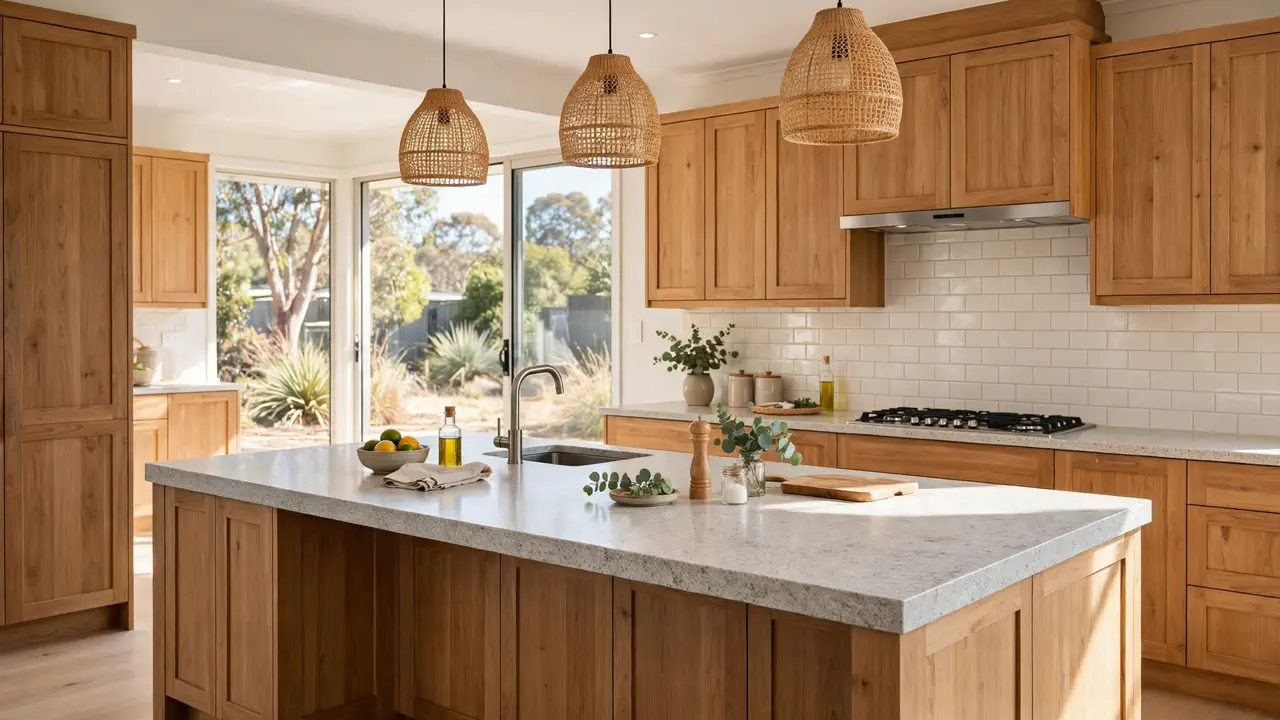
Kitchen benchtop cost Australia is not one number. It runs from about $120 per square metre for laminate to $2,500 or more for natural stone, and a typical kitchen totals $1,200 to $9,000 depending on material, size, and what the quote includes. The widest trap is comparing a supply-only figure with a supplied-and-installed figure and thinking the cheaper one wins.
This guide prices the job the way a fabricator quotes it: material plus templating, fabrication, and installation, with extras called out separately. All figures come from 2026 Australian guides, and where they disagree, the disagreement is shown. Nothing here is a quote for your kitchen. It is the range to test quotes against.
Kitchen benchtop cost Australia: 2026 prices at a glance
Most Australian kitchens use between 4 and 6 square metres of benchtop, so a per-square-metre rate converts quickly into a project total. A 5-square-metre kitchen at $150 per square metre is a $750 bench before extras; the same area at $1,000 per square metre is $5,000. That multiplication is why material choice matters more than haggling over a small hourly rate.
| Material | Installed per m² in 2026 | Typical whole kitchen |
|---|---|---|
| Laminate | $120–$400 | $1,200–$2,500 |
| Porcelain / sintered stone | $300–$1,800 | $2,500–$7,000 |
| Granite | $400–$2,000 | $2,500–$7,000 |
| Marble | $600–$2,500 | $3,500–$9,000 |
| Timber | $550–$1,200 | $2,500–$5,000 |
| Solid surface | $700–$1,300 | $3,500–$6,500 |
| Low-silica engineered stone | $450–$1,000 | $2,500–$6,000 |
Whole-kitchen totals above use Melbourne fabricator typicals for the common materials and New South Wales guide totals for the rest, for kitchens of 4 to 6 square metres. Sydney totals often sit higher: one New South Wales guide puts most households replacing a bench at $3,500 to $9,000 for the bench itself, supplied, fabricated, and installed. Treat any total that does not state its area as uncomparable, and ask for the per-square-metre rate beside it.
Why 2026 prices changed: the engineered stone ban
That is why kitchen benchtop cost Australia guides written before July 2024 now mislead. On 1 July 2024, Australia banned the manufacture, supply, processing, and installation of engineered stone benchtops, panels, and slabs containing more than 1% crystalline silica. The material that dominated the mid-market for two decades, sold under names like Caesarstone and Quantum Quartz at roughly $600 to $1,000 per square metre installed, can no longer be supplied or installed for a new kitchen.
The ban does not cover everything stone-like. Natural stone such as granite and marble is not banned, porcelain and sintered stone are not engineered stone, and engineered stone products with less than 1% crystalline silica remain permitted. SafeWork NSW explains what the ban covers and what it leaves alone, including the notification rule for work on legacy engineered stone installed before the ban. If a quote still offers traditional engineered stone for a new kitchen, walk away: it cannot legally be installed.
The practical effect is a reshuffled middle. Granite has absorbed much of the demand quartz held, porcelain and sintered stone are the closest visual replacements, and low-silica engineered products fill part of the gap. Replacement prices vary more by brand, thickness, and city than quartz prices did, which is why the porcelain range below is so wide.
Laminate: $120–$400 per square metre
Laminate is the cheapest honest option, and modern high-pressure laminate looks far better than the plasticky sheets of twenty years ago. Guides agree closely here: budget laminate from about $120 per square metre, premium brands such as Laminex and Formica at $250 to $350, and installed totals of $150 to $400 per square metre depending on edge treatment and installation. One Sydney guide quotes made-to-order laminate at $142 to $440 per lineal metre, which is a different basis and not directly comparable to a per-square-metre rate.
The limits are heat and water. Laminate is not heat-proof, so a hot pan can scorch it, and a failed join near the sink can swell the substrate. Budget for replacement within 10 to 15 years in a hard-used family kitchen. For a rental or a kitchen you plan to redo within a decade, laminate is often the smart spend.
Porcelain and sintered stone: $300–$1,800 per square metre
Porcelain and sintered stone are the fastest-moving part of the market, and the price spread proves it. Melbourne fabricators quote budget porcelain from $300 to $600 per square metre installed, while Sydney guides list premium sintered stone at $1,500 to $1,600. Both can be genuine: thin 12 mm porcelain in a plain colour costs far less than a 20 mm sintered slab with mitred edges and a book-matched island.
What you get is heat resistance, no sealing, and better stain resistance than marble. Check thickness, edge finish, and whether the slab needs a supporting substrate, because some thin porcelain must be bonded to a backing board and that work sits in the fabrication line, not the slab price. For a marble look without marble maintenance, quote this category first.
Granite: $400–$2,000 per square metre
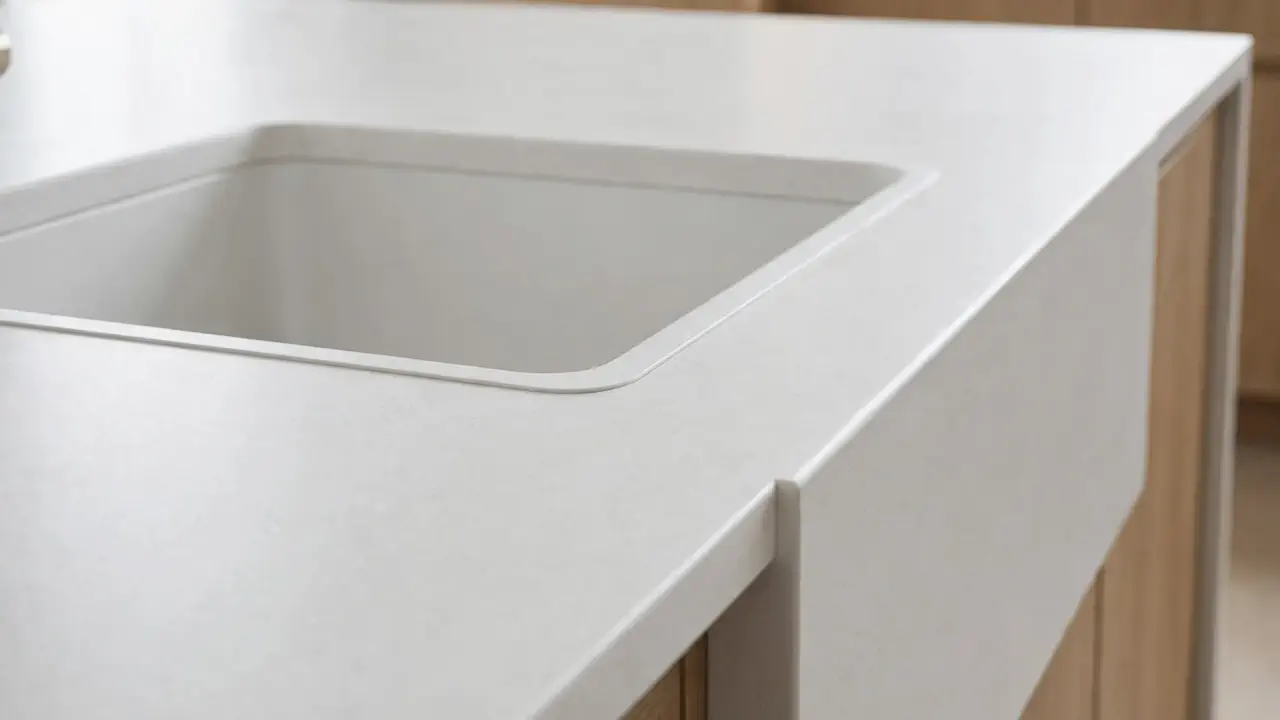
Granite is now the default stone bench for many Australian kitchens, and its range reflects how much slab choice matters. Entry-level granite in a common colour starts near $400 to $600 per square metre installed, mid-range colours sit around $700 to $1,200, and rare imported stone reaches $1,900 to $2,000. Melbourne typicals put a whole granite kitchen at $2,500 to $7,000, which matches a 4 to 6 square metre area at the lower half of the range.
Granite needs resealing every 12 to 18 months, and it is heavy, so check older cabinets and floors can carry it before you choose a slab. Always view the actual slab, not a sample chip: natural variation means the bench you get is the slab you approved.
Marble, timber, and solid surface
Marble is the dearest mainstream choice and the least forgiving. Installed guides range from $600 to $2,500 per square metre, with a typical Melbourne marble kitchen at $3,500 to $9,000. It etches on contact with lemon, wine, and vinegar, scratches more easily than granite, and needs resealing about every 12 months. Buy it for the look, with eyes open, not as a low-maintenance surface.
Timber sits at $550 to $1,200 per square metre installed and suits kitchens where warmth matters more than stain resistance. It needs oiling and it marks, but marks can be sanded out, which no stone bench allows. Solid surface, at $700 to $1,300, is repairable with no silica issue, but it is not heat-proof and shows scratches in dark colours. Low-silica engineered stone, at $450 to $1,000, is the closest thing to the old quartz market, but check the silica content in writing: under 1% is the legal line.
What a quote should include
A benchtop quote has more lines than the slab, and the cheapest headline rate often leaves several out. Before comparing quotes, check each one for templating, fabrication, edge profiling, sink and cooktop cut-outs, joins, delivery, installation, and removal and disposal of the old bench. A quote that omits removal can look cheaper on paper and cost the same once you pay someone to take the old bench away.
Edges and ends move the total more than most buyers expect. A standard pencil or arris edge is usually included, while mitred edges, waterfall ends that run the slab down the side of an island, and curved or shaped ends are fabrication extras. So do extra cut-outs for a second sink, a tap hole in stone, or a cooktop in an unusual position. If you are still choosing the material itself, our kitchen benchtop materials compared for Australian homes guide weighs porcelain, stone, timber, and laminate side by side.
Kitchen benchtop cost Australia: 3 worked budgets
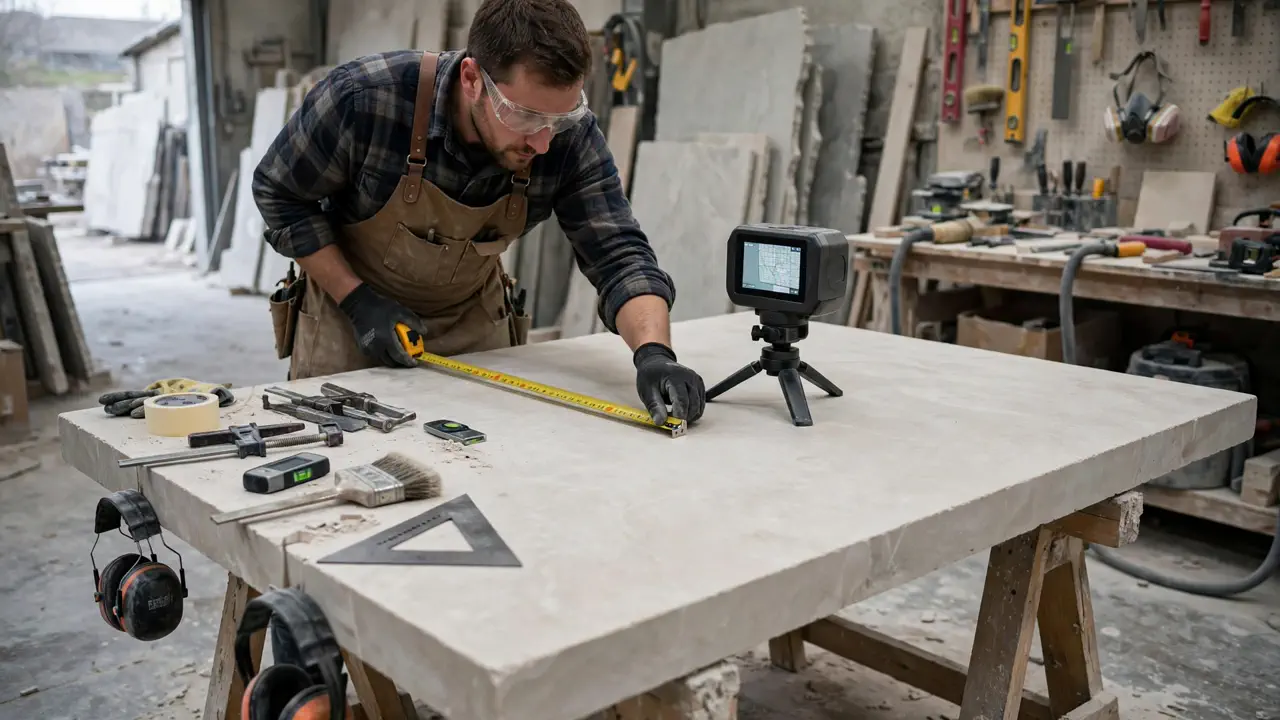
Each kitchen benchtop cost Australia budget below uses a Melbourne fabricator typical total for a real layout, so the area and material are stated, not assumed. Use them to sense-check a quote for a similar kitchen, then adjust for your city: Sydney totals generally run higher.
| Kitchen | Material and area | Budget |
|---|---|---|
| Small galley, rental refresh | Laminate, about 3 to 4 m² | $1,200–$2,500 |
| Mid-size family kitchen | Porcelain or granite, about 5 m² | $2,500–$7,000 |
| Large kitchen with island | Marble, about 6 to 7 m² | $3,500–$9,000 |
Check your own quote the same way: area in square metres, multiplied by the installed rate, plus extras. A 5-square-metre granite bench at $800 per square metre installed is $4,000 before extras, inside the mid-size budget above. If a quote lands far outside its band, the likeliest cause is a different area, thickness, or excluded line, and the quote should say which.
Seven checks before you accept a quote
First, confirm the basis: per square metre installed, or per lineal metre, or supply only. Second, confirm the thickness and the exact slab or product name, because a 12 mm and a 20 mm slab are different benches at different prices. Third, ask what edges, cut-outs, joins, and waterfall ends are included, and what each extra costs.
Fourth, ask about the old bench: removal, disposal, and any plumbing or electrical disconnect and reconnect. Fifth, check the lead time and whether templating happens after cabinets are installed and level, since an early template is a common cause of a poor fit. Sixth, get sealing and care instructions in writing for granite, marble, and timber. Seventh, if the kitchen includes an island, check its size against kitchen island sizes and layouts for Australian homes, because an oversized island can push the job into a second slab and a visible join.
One pairing worth pricing together: if the cabinets are sound but dated, a benchtop-only swap plus repainting can refresh the whole kitchen for far less than a full renovation. Our kitchen cabinet painting cost in Australia guide prices that half of the job, so you can compare the combined total against a full rebuild.
How to measure your benchtop
Measure each run in metres, multiply length by depth, and add the runs together. A standard run is about 600 mm deep, so a 3-metre run is about 1.8 square metres. Islands add their full area, and waterfall ends add the side panel area, which is why an island kitchen measures larger than its floor area suggests.
Measure after cabinets are in and level, and let the fabricator template rather than working from your numbers alone. Your measurement is for budgeting and quote comparison; the template is what gets cut. If two quotes use different areas, ask each fabricator to show their takeoff: one square metre of error moves a stone quote by $400 to $2,000.
Frequently asked questions
How much does a new kitchen benchtop cost in Australia in 2026?
Most kitchens land between $1,200 and $9,000 supplied and installed, depending on material and size. Per square metre, laminate runs $120 to $400, porcelain and sintered stone $300 to $1,800, granite $400 to $2,000, and marble $600 to $2,500. Always compare installed rates for the same area, not supply-only against installed.
Can I still buy Caesarstone or engineered stone benchtops?
No, not for a new kitchen. Since 1 July 2024, engineered stone benchtops containing more than 1% crystalline silica cannot be manufactured, supplied, processed, or installed in Australia. Products with less than 1% crystalline silica, including some low-silica engineered stone, remain permitted. Work on legacy engineered stone installed before the ban is still regulated and may need notification to the state safety regulator.
Is porcelain cheaper than granite?
Sometimes, but not always. Budget porcelain from $300 to $600 per square metre installed undercuts most granite, while premium sintered stone at $1,500 or more can cost more than entry-level granite. Compare installed quotes for the same thickness, edge finish, and area: the cheapest slab can become the dearer bench once fabrication is added.
Are benchtops priced per square metre or per lineal metre?
Both, and that is where comparisons go wrong. A per-square-metre rate already includes the depth of the bench, while a per-lineal-metre rate does not, so a cheap lineal-metre figure can hide a deep or wide bench. Ask every fabricator for the installed per-square-metre rate and the total area they measured, then compare like with like.
Can I replace just the benchtop without new cabinets?
Yes, if the cabinets are sound, level, and the right height for the new thickness. The fabricator templates after checking the cabinets, and the old bench comes off before the new one is cut. If cabinets are sagging, water-damaged, or the wrong height, fix that first, because a new stone bench on a failing carcass is money wasted.
What adds the most to a benchtop quote?
Waterfall ends, mitred edges, rare or book-matched slabs, extra cut-outs, and removal and disposal of the old bench move the total most. Regional travel and a second slab for a large island also add up. Ask for each extra as its own line, so you can see whether a dearer quote is a dearer bench or a more complete one.
The short answer
The right kitchen benchtop cost Australia answer for your kitchen is the installed total for a stated area, not the cheapest headline rate. Price laminate if the budget is tight, granite or porcelain for the middle, and marble only if you accept its care. Then get three itemised quotes, compare them line by line, and let the most complete quote win.