
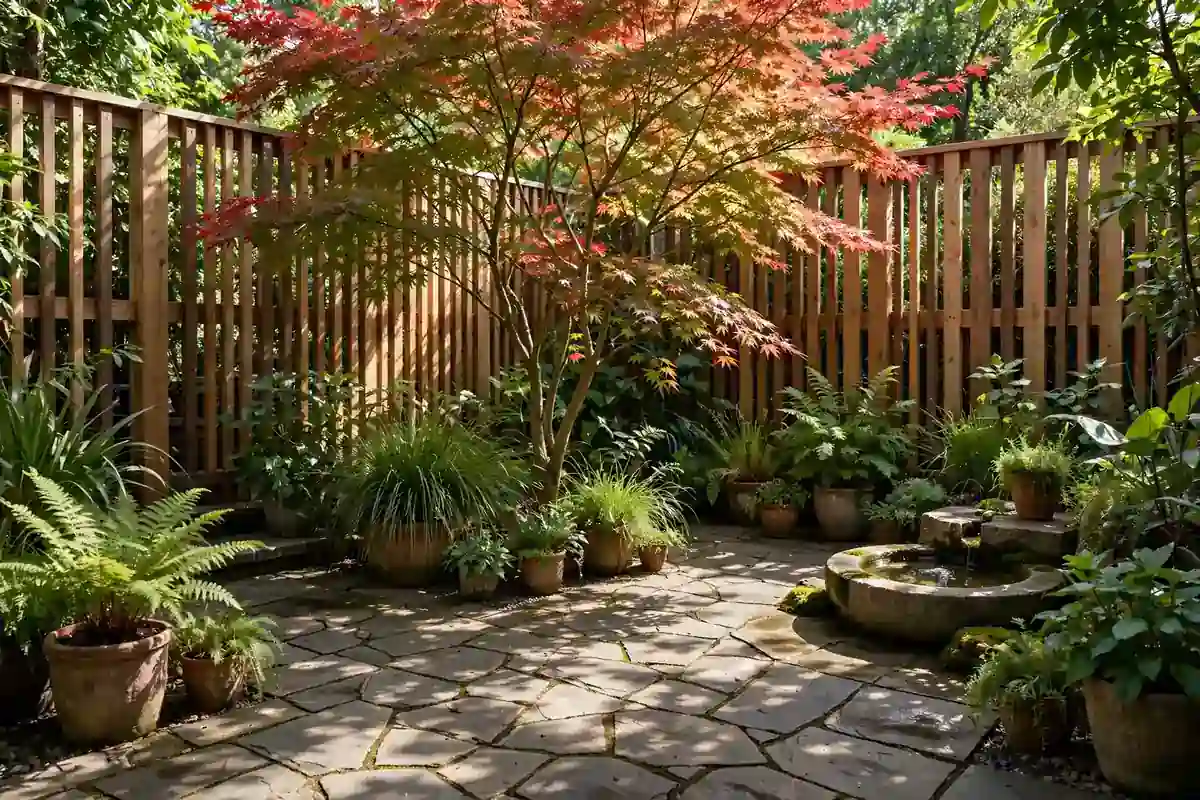
A courtyard is often the most underused space in an Australian home — a small paved square glimpsed from the kitchen window and promptly forgotten. But with clever design, even a tiny 3×4 metre courtyard can become your favourite “room” in the house. Here’s how to make it happen, with realistic Australian costs.
How Much Does a Courtyard Makeover Cost?
- DIY refresh (paint, pots, mulch, festoon lights): $500–$3,000
- Modest professional makeover (paving, planting, lighting, small water feature): $5,000–$15,000
- Full designer courtyard (custom paving, built-in seating, irrigation, mature plants): $15,000–$40,000+
- Garden design fees alone: $800–$5,000 depending on documentation level
One real example: a Bunnings-featured Japanese-inspired courtyard makeover in WA came in at around $3,000 DIY — proof that thoughtful design beats big budgets.
Start With How You’ll Use It
Before buying a single plant, decide the courtyard’s job. Common options:
- Outdoor dining: Needs the biggest flat paved area. Allow 3×3m minimum for a table and chairs.
- Quiet retreat: A bench or daybed, screening plants, a water feature for sound. Smaller footprint works.
- Kids/pets zone: Tough surfaces, no poisonous plants, somewhere for a cubby or sandpit.
- Entertaining: Flow from indoor living, outdoor heating or fire pit, good lighting.
Most courtyards try to do two of these. Pick your primary use and design around it.
Making Small Feel Bigger: Design Tricks
Vertical Interest
When floor space is limited, go up. Green walls, climbing plants on wires, tall narrow planters and wall-mounted features draw the eye upward and make the space feel larger.
Mirrors
A $40 mirror screwed to a fence can visually double a small courtyard. Pair it with a shaded structure — our pergola cost guide covers timber vs aluminium options. Use outdoor-rated or acrylic mirrors, and angle them to reflect greenery — not your neighbour’s bathroom window.
Diagonal Lines
Lay pavers on the diagonal or use a curved path. Diagonal lines trick the eye into reading more distance than straight ones.
Layered Planting
Three layers — groundcover, mid-height shrubs, one feature tree or tall screening plant — create depth. A single layer of same-height plants looks flat and small.
Consistent Flooring
Running the same paving from inside to outside (or a close match) visually extends the interior. Even just matching tones helps enormously.
Paving and Surfaces
- Concrete pavers: $80–$150/m² installed. Huge range, durable, easy to replace one if it cracks.
- Natural stone: $150–$300/m² installed. Beautiful but pricey; can get slippery — choose honed or textured finishes.
- Decking: $300–$500/m² for hardwood; composite $250–$400/m². Warms up a courtyard instantly.
- Gravel/decomposed granite: $50–$100/m². Cheap, permeable, great for Mediterranean or native garden styles. Needs edging to stay put.
Whatever you choose, ensure adequate drainage. Courtyards are notorious for pooling water — a 1:100 fall away from the house and a strip drain at the low point prevent headaches.
Plants That Thrive in Courtyards
Courtyards are microclimates — often hotter, more sheltered and shadier than open gardens. Choose accordingly:
- For shade: Philodendrons, monstera, ferns, clivias, native violets
- For sun: Westringia, correa, kangaroo paw, citrus in pots, rosemary
- Screening: Lilly pilly (Syzygium), bamboo in contained planters (never in the ground!), murraya
- Feature plants: Japanese maple (needs afternoon shade), frangipani (warm climates), olive tree in a large pot
Pot sizes matter: 200–300mm pots ($20–$60 each) give reasonable instant impact. Advanced specimens ($60–$200+) deliver immediate effect but cost more. Tube stock ($5–$20) is cheapest but takes a season or two to fill in.
Water Features and Sound
A small water feature masks traffic noise and adds a sense of calm far beyond its cost. Options:
- Self-contained bowls: $150–$600. Plug in, fill, done. No plumbing needed.
- Wall-mounted spouts: $500–$2,000 installed. Elegant and space-efficient.
- Pondless waterfall kits: $1,000–$3,000. Recirculating, safe for kids and pets.
Solar-powered pumps ($30–$80) work for small features but only run in direct sun. Mains-powered pumps are more reliable.
Lighting a Courtyard
Courtyards come alive after dark with the right lighting — and you need less than you think:
- One uplight on your feature plant or tree
- Festoon lights overhead for entertaining warmth ($50–$200)
- Step or wall lights for safety on any level changes
- A wall washer on a textured wall for ambient glow
Warm white (2700K) throughout. Put them on a timer so you’re not lighting an empty courtyard all night.
Privacy and Screening
Overlooked courtyards feel exposed, not relaxing. Fixes:
- Bamboo screening: $50–$150 per panel. Instant, but weathers to grey — embrace it or oil yearly.
- Slatted timber screens: $200–$500/m installed. Beautiful and durable; allow airflow.
- Climbing plants: Star jasmine, pandorea or native wisteria (Hardenbergia) on wires. Takes 1–2 seasons but looks soft and natural.
- Outdoor blinds: $300–$800 per blind. Retractable shade and privacy in one.
Courtyard Drainage: Getting It Right First Time
Drainage is the unglamorous detail that makes or breaks a courtyard. Get it wrong and you’ll have a swimming pool every time it rains.
- Fall: Paving needs a minimum 1:100 fall away from the house — that’s 10mm drop per metre. Your paver will set this with a string line.
- Strip drains: A slim channel drain at the lowest point catches runoff. $80–$200 per metre supplied; allow $500–$1,500 installed for a typical courtyard.
- Permeable surfaces: Gravel, permeable pavers and garden beds absorb water naturally. The more hard surface you have, the more drainage you need.
- Downpipe connections: Roof water must go to stormwater, not across your courtyard. If downpipes discharge onto paving, get a plumber to connect them properly — $300–$800 typically.
- Garden bed levels: Keep soil in garden beds at least 50mm below interior floor level to prevent water tracking inside during heavy rain.
If your courtyard already floods, the fix is usually regrading or adding a strip drain — not expensive, but messy. Far cheaper to get it right during the initial build.
FAQs
How much does a small courtyard makeover cost in Australia?
A DIY refresh costs $500–$3,000. A modest professional makeover with paving, planting and lighting runs $5,000–$15,000. Full designer courtyards with custom work start around $15,000 and can exceed $40,000.
What plants are best for a small shaded courtyard?
Philodendrons, monstera, ferns, clivias and native violets all thrive in shade. For screening in shady spots, try murraya or gardenias. Avoid sun-lovers like kangaroo paw in deep shade — they’ll sulk.
How do I make my courtyard feel bigger?
Use vertical planting, a mirror on the fence, diagonal paving lines, layered planting heights, and flooring that matches or complements your interior. Keep the palette simple — too many materials chop up small spaces.
Do I need council approval for courtyard works?
Usually not for planting, paving and minor structures. But check with your council before building anything over 10m², installing plumbing or electrical work, or if you’re in a heritage area or apartment with strata rules.
How do I stop my courtyard flooding?
Ensure paving falls away from the house (1:100 minimum), install a strip drain at the low point, and don’t let garden beds sit higher than your interior floor level. If flooding persists, a plumber can assess stormwater connections.