
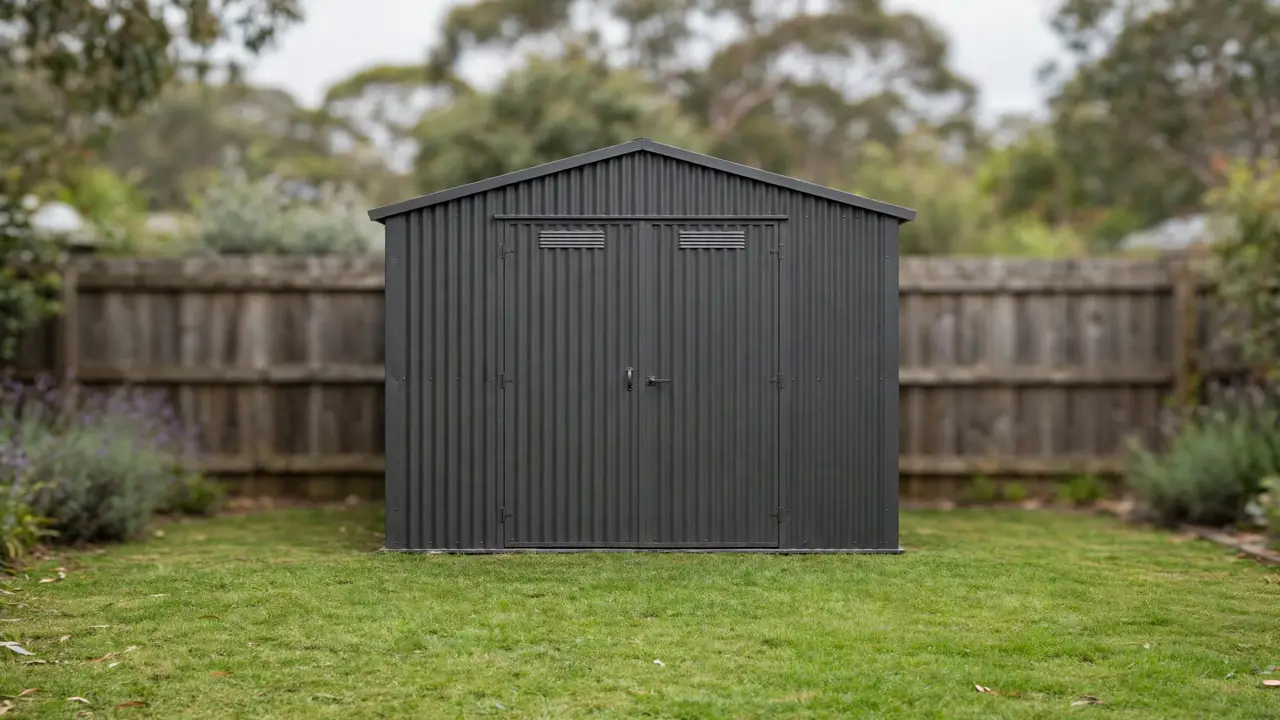
A garden shed is the rare home improvement where the sticker price and the real price live in different suburbs. The kit in the aisle says $3,500; the finished, anchored, powered shed at the end of your garden says something closer to $8,000. That’s what garden shed cost Australia queries are really asking: buyers do the easy maths on the kit, then discover the slab, the assembly, the electrical and the council fee were never in the brochure.
Garden shed cost in Australia in 2026 runs from about $300 for a basic metal kit to $7,000+ for a large Colorbond kit — but the kit is only the first of three bills. Add a slab ($900–$7,600 depending on size) and assembly ($100–$2,500 depending on who builds it), and a typical installed shed lands between $1,500 and $12,000. This guide prices the whole project — kit, base, install, power and permits — with worked budgets from current 2026 figures.
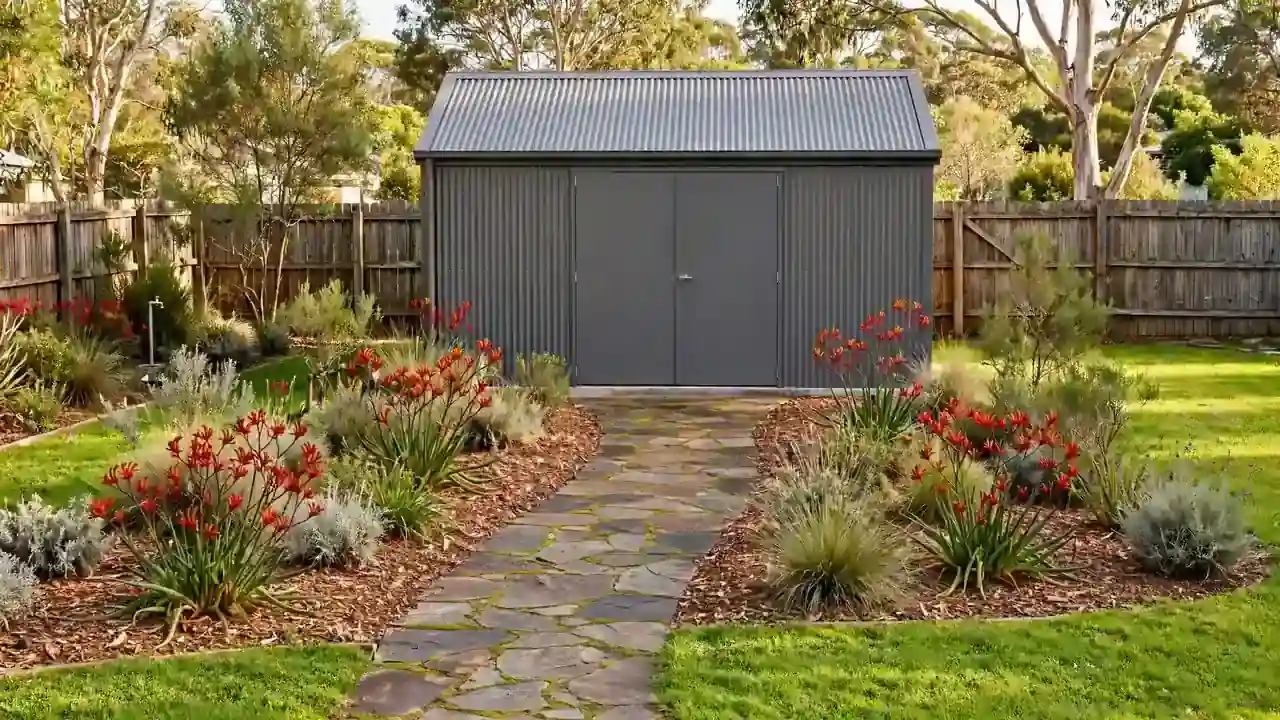
Garden Shed Cost Australia: 2026 Prices at a Glance
Across eight current Australian sources — cost guides, supplier price lists, live retail prices and 10,000 completed Airtasker jobs, all 2026 — shed kit prices settle into clear material bands, kit-only, before slab and installation:
| Shed type | Kit price (2026) | Best for |
|---|---|---|
| Basic metal | $300–$4,000+ | Budget tool storage |
| Plastic (HDPE) | $500–$3,000+ | Small tool stores; no rust, fades in harsh sun |
| Timber | $1,500–$5,000+ | Garden settings and studios; needs staining |
| Zincalume | $2,000–$6,000+ | Corrosion-resistant; plain silver, no colour choice |
| Colorbond | $2,500–$7,000+ | Match the house; low maintenance |
Live retail prices back those bands up: Bunnings lists an Absco 5.96 × 3.0 m workshop shed at $3,500 and an EnduraShed 7.5 × 3 × 2.4 m at $3,606, while a Zincalume single-car garage kit sits around $2,500 and a double around $3,500 — all kit-only, before the base and installation.
What a Garden Shed Really Costs: Kit + Slab + Install
A shed project is three purchases, not one: the kit (the box), the base (slab, pavers or footings), and the install (labour to put it up and anchor it). Most disappointment comes from budgeting for one and getting invoiced for three.
The base is the bill people forget. A 3 × 3 m shed pad costs $900–$1,800; a 6 × 6 m slab runs $3,300–$5,000; a 6 × 9 m Colorbond shed slab is $4,900–$7,600 (2026 figures, GST included). Small pads cost more per square metre because every pour carries fixed costs. Allow $400–$1,900 for footings on larger sheds, and $1,500–$3,000 if you want an electrician to run power and lighting out to the shed.
Installation splits three ways. A handyman typically costs $100–$375 for a standard kit (Airtasker’s 2026 data across 10,000 completed jobs), with real jobs ranging from $150 for a shed bolted to an existing slab to $700–$800 for a 3 × 3 m shed with accessories or a paver base. A professional shed builder charges $1,200–$2,500 on a prepared site — or from $3,000 in labour if they’re also doing foundations. DIY saves the labour but costs a weekend and, on larger sheds, a second pair of hands.
Garden Shed Cost Australia by Size: 4 Worked Budgets
These four budgets combine 2026 kit, slab and install figures into the total-project numbers nobody advertises:
| Project | Kit | Base + install | All-in 2026 total |
|---|---|---|---|
| Small garden shed 2.25 × 2.25 m zincalume | $500–$900 | Paver base DIY ~$200; handyman assembly $250–$375 | $1,000–$1,500 |
| Workshop shed ~6.0 × 3.0 m Colorbond | $3,500 (Bunnings Absco) | Slab 18 m² ~$1,800–$2,500; pro install $1,200–$2,500 | $6,500–$8,500 |
| Single garage ~6 × 6 m Colorbond | $8,690 (kit, delivered) | Slab 36 m² $3,300–$5,000; erect ~$2,000–$4,000 | $14,000–$18,000 |
| Double garage ~6.5 × 9 m Colorbond | $16,120 (kit, delivered) | Slab 54 m²+ ~$4,900–$7,600; erect + power | $22,000–$28,000 |
The garage rows line up with what suppliers actually sell: a Perth shed company prices supply-and-install single garages from $8,500 and doubles from $14,000 (engineering and approvals included), while a regional NSW builder quotes $11,000–$18,000 and $16,000–$26,000 supply and erect. Kit-only supply is typically 40–50% less than supply-and-install — the gap is the slab, the labour and the paperwork. If the shed sits inside a bigger backyard makeover, fold these totals into your landscaping cost guide budget early; the slab and power run are cheapest when sequenced with the rest of the works.
Metal vs Timber vs Plastic: Which Shed Material Suits Your Garden?
The material choice is a design decision as much as a budget one — the shed will sit in your garden for decades, so it should look like it belongs there.
Colorbond and Zincalume steel dominate Australian backyards: no rot, almost no maintenance, and Colorbond’s colour range lets you match the roof, fence or house. A deep scratch exposes the steel, so touch up damage quickly. Cheaper kits use thinner steel that feels flimsy and can rust in coastal or damp spots — the kit price tells you which one you’re buying.
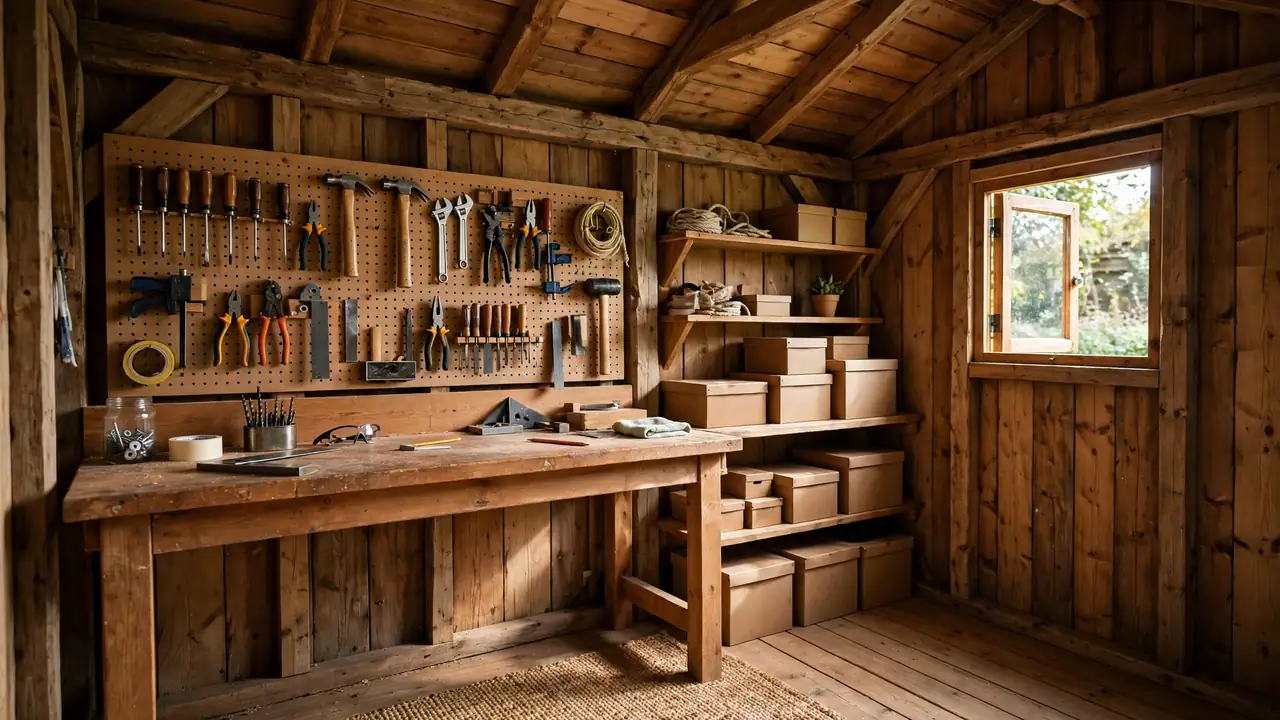
Timber sheds suit garden settings in a way steel never will, and they’re the easiest to fit out with shelves, benches and hooks — the pick for studios and workshops. The trade-offs: regular staining or painting, termite protection, and a firm no from your council if you’re in a bushfire-prone area and haven’t checked first.
Plastic (HDPE) sheds are the quick, cheap answer for a small tool or bin store: no rust, no rot, up in an afternoon. Less secure than steel and strong sun breaks them down faster — a 5–10 year purchase, not a permanent structure.
The Slab: the $900–$7,600 Line Nobody Prices First
No shed should sit straight on soil or grass. The base options, cheapest first: compacted crusher dust or pavers for small kits (a few hundred dollars DIY); a concrete pad for anything you want level and permanent; a thickened-edge slab for garages and workshops, where the supplier’s engineering drawings specify exactly what’s needed.
2026 concreting rates for shed slabs run $90–$140 per square metre including GST: a 3 × 3 m pad is $900–$1,800, a 6 × 6 m shed slab $3,300–$5,000, a 6 × 9 m Colorbond shed slab $4,900–$7,600. Kit suppliers normally provide the engineering and footing details for the slab — hand those to your concreter and make sure the hold-down bolt positions match the kit, because a slab that’s 50 mm out is a problem you discover with a truckload of steel on site.
Installation: DIY, Handyman or Shed Builder?
DIY suits small kit sheds: a basic metal or plastic kit goes up in a day with basic tools. The wrong call for large sheds — heavy panels, a frame that must be square, and anchoring that has to meet the wind rating. An unanchored shed in a storm is a liability, not a saving.
A handyman is the sweet spot for standard kits on a prepared base: $100–$375 for most jobs in 2026, booked by the task. Have the base ready and the kit checked against the parts list before they arrive.
A shed builder earns their $1,200–$2,500 on bigger jobs: they handle out-of-square sites, anchor to the slab properly, fit roller doors and windows square, and their work usually carries a warranty the kit alone doesn’t. For anything with a slab, power or a permit involved, this is the right tier. Get every installer quoting the same shed size and scope — a quote that leaves out the slab or delivery can look cheaper than one that includes them.
Council Approval: When Your Shed Needs a Permit
The broad pattern: in Victoria a shed of 10 square metres or less can often go up without a building permit if height, boundary and siting conditions are met; Queensland is similar outside tropical cyclone areas; in NSW a garden shed can be exempt development if it meets the size, height and setback standards in the state’s codes. Heritage areas, bushfire-prone land and sheds close to a boundary almost always have extra rules, and anything bigger than the exempt limits needs approval before you build.
Two things people get wrong: the 10 m² figure is floor area, and it includes any awning or overhang the code counts — measure the way the code measures. And a shed approved as storage usually can’t be lived in; if the plan is a home office with someone working in it daily, talk to the council before you fit it out.
The 7 Lines Every Fair Shed Quote Must Show
A quote that reads “Supply and install shed — $6,200” tells you nothing. These are the seven lines an honest 2026 quote should show:
| Quote line | 2026 going range | Notes |
|---|---|---|
| 1. Kit supply | $300–$7,000+ by material and size | Must name the brand, model, dimensions and steel thickness/colour |
| 2. Delivery | Included metro; confirm for regional | Ask explicitly — remote delivery is a separate line |
| 3. Base / slab | $900–$7,600 by size; $90–$140/m² | Pad, pavers or engineered slab to the kit’s drawings |
| 4. Assembly labour | $100–$375 handyman; $1,200–$2,500 shed builder; from $60/m² | On a prepared base — foundations are extra |
| 5. Anchoring & fixings | Often in the kit; confirm | The wind rating is meaningless if the shed isn’t anchored to the base |
| 6. Power & lighting | $1,500–$3,000 | Licensed electrician; trench and conduit priced, not assumed |
| 7. Council fees | $0 (exempt) to a few hundred | Where approval is needed — confirm the path before ordering |
The most common quote trick is a kit price presented as a project price. Lines 3 and 4 are where two quotes for “the same shed” diverge by thousands — compare line by line, never by the headline total. Site the shed properly too: tucked where it doesn’t shade the entertaining zone, with clear access for the mower and bins. Our pergola cost guide and deck cost guide help price the structures most sheds end up sitting beside.
5 Quote Red Flags Before You Sign
1. The kit price quoted as the project price. If the quote doesn’t mention a base, the base isn’t in the price. A $3,500 kit on a $2,000 slab with $1,500 of labour is a $7,000 shed.
2. “Installation included” with no base specification. Installed on what? A shed on pavers and a shed bolted to an engineered slab are different jobs with different wind ratings.
3. No wind rating or engineering. Reputable suppliers are ShedSafe accredited and supply engineered plans for the wind region. A kit with no engineering paperwork is a gamble in the first big storm.
4. The cheapest kit by a mile. Thinner steel, fewer fixings, vague instructions. Assembly takes twice as long and the shed looks tired in three years.
5. No council check. An installer who waves away approvals hasn’t priced the job properly. The permit question is answered before the kit is ordered, not when the neighbour complains.
FAQs: Garden Shed Cost in Australia
How much does a garden shed cost in Australia?
In 2026, a shed kit costs from about $300 for a small basic-metal shed to $7,000+ for a large Colorbond shed. The finished project usually lands between $1,500 and $12,000 once you add the base, assembly ($100–$2,500) and any power or council fees.
What is the cheapest type of garden shed?
A basic metal kit, from about $300, or a small plastic shed from about $500. Metal is the cheapest durable option; plastic is cheaper upfront but breaks down faster in strong Australian sun, so treat it as a shorter-term buy.
How much does it cost to get a garden shed installed?
A handyman assembly typically costs $100–$375 in 2026 (based on 10,000 completed Airtasker jobs); a professional shed builder charges $1,200–$2,500 on a prepared site. If the installer is also doing foundations, labour usually starts at $3,000 before materials.
How much does a concrete slab for a shed cost?
In 2026, expect $90–$140 per square metre including GST: about $900–$1,800 for a 3 × 3 m pad, $3,300–$5,000 for a 6 × 6 m slab, and $4,900–$7,600 for a 6 × 9 m shed slab. Small pads cost more per square metre because of fixed mobilisation costs.
Do I need council approval for a garden shed in Australia?
Often not for small sheds: Victoria and Queensland generally allow sheds up to 10 m² without a permit where height and siting conditions are met (outside cyclone areas in Queensland), and NSW treats compliant garden sheds as exempt development. Larger sheds, sheds near boundaries, and sheds in heritage or bushfire areas usually need approval — check with your council before ordering.
Is it cheaper to build or buy a garden shed?
For most people, buying a kit is cheaper: $300–$7,000+ with every part included and usually a warranty, and far less labour to put up. Building from scratch costs about $2,000–$5,000 in materials and tools, and only makes sense if you have the skills and tools already or need a size no kit fits.
The Bottom Line
Garden shed cost in Australia is a three-bill project wearing a one-bill disguise: the kit ($300–$7,000+), the base ($900–$7,600 for a slab), and the install ($100–$2,500). Price all three before you fall in love with the box, match the material to the house and garden, and confirm the council path before the delivery truck arrives.