
Ask three painters for a quote on the same house and you’ll get three numbers thousands apart. That isn’t (usually) anyone being dodgy — the surface, the preparation and the access vary, and the per-square-metre rate is really shorthand for how many prep hours your house needs.
Short answer: Exterior house painting in Australia costs $30–$80 per square metre in 2026, depending on the surface: rendered masonry $30–$50, painted brick $30–$55, weatherboard or timber $35–$65 (up to $80 with heavy prep), fibro/fibre cement $30–$55, and metal cladding $25–$45. A typical 3-bedroom single-storey home runs $5,000–$9,000; double storey costs 40–60% more thanks to scaffolding ($1,500–$5,000). Labour and preparation make up 70–80% of a repaint — the paint itself is the minor line item.
All prices below are indicative 2026 Australian figures drawn from published trade and industry guides (sources listed at the end). Costs vary by state, access and surface condition — always get itemised quotes.
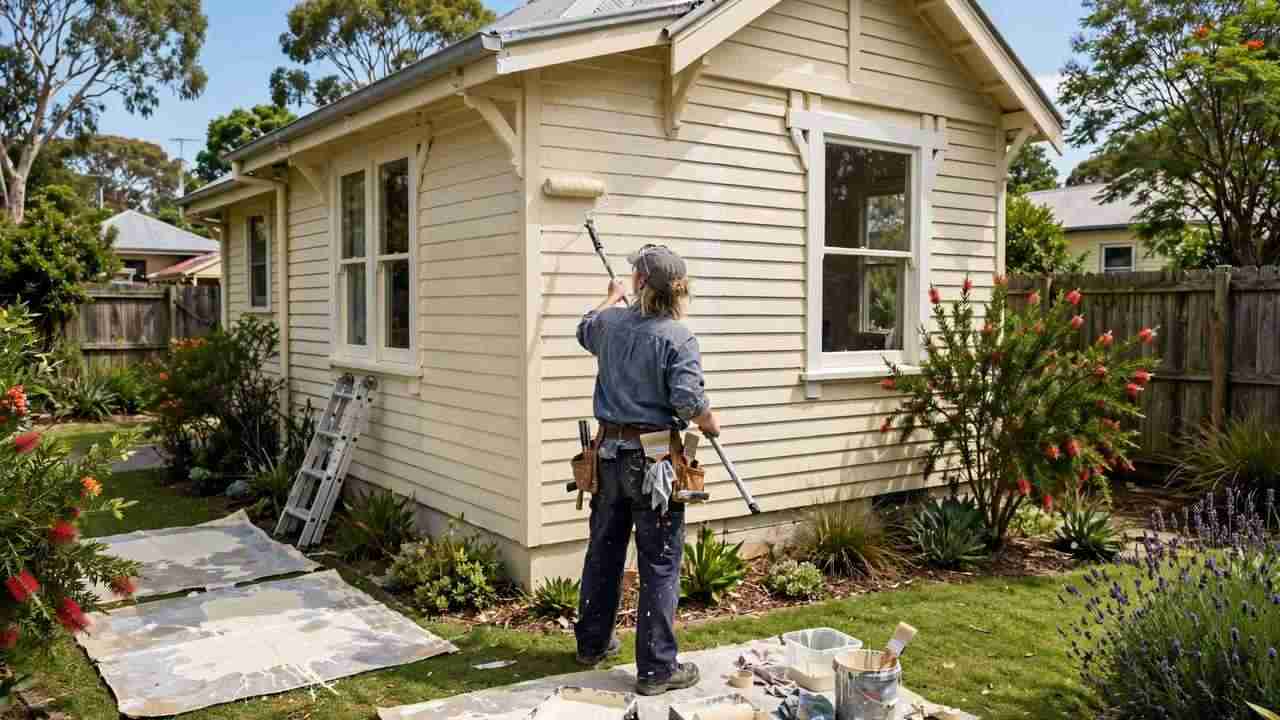
Exterior painting cost per square metre, by surface
The surface is the single biggest driver of your rate. Each material needs different preparation, primers and patience:
| Surface | Indicative rate per m² | What drives the rate |
|---|---|---|
| Rendered masonry | $30–$50 | Crack repairs and patching; straightforward if the render is sound |
| Painted brick | $30–$55 | Mortar repointing, efflorescence treatment on older brickwork |
| Weatherboard / timber | $35–$65 (up to $80 with heavy prep) | Scraping, sanding, replacing rotten boards, spot-priming bare timber |
| Fibro / fibre cement | $30–$55 | Low-pressure wash only — never high-pressure on fibro; check for asbestos if pre-1990 (see below) |
| Metal cladding | $25–$45 | Rust treatment and etch priming; fastest surface to coat |
Weatherboard has the widest spread because its condition varies most: a well-kept 1990s home sits near the bottom of the range, while a sun-beaten 1960s weatherboard with peeling paint and rotten boards can legitimately reach $80/m² — the prep is effectively a restoration. Second, fibro deserves its warning in bold: if your home was built before 1990, get the cladding checked for asbestos by a licensed assessor before any sanding, scraping or pressure-washing begins. Disturbing asbestos is a health risk and a legal one; a professional painter will insist on the check too.
Whole-home estimates: single vs double storey
Per-square-metre rates are useful, but most homeowners think in whole-house numbers. The ranges below assume a standard repaint in reasonable condition — two coats, standard prep, easy access:
| Home size | Single storey | Double storey |
|---|---|---|
| 2-bedroom | $3,000–$6,000 | $5,000–$9,000 |
| 3-bedroom | $5,000–$9,000 | $8,000–$15,000 |
| 4-bedroom | $7,000–$12,000 | $12,000–$20,000 |
Double storey costs 40–60% more than the same floor plan on one level, and almost all of the uplift is access: scaffolding or elevated work platforms typically add $1,500–$5,000 to the job, plus the slower pace of working at height.
If you’ve already priced the inside of the house, the comparison is instructive: our interior house painting cost guide runs through the per-room numbers, which tend to be lower per square metre because there’s no weather damage to undo and no scaffold to hire.
Why prep sets your price: the anatomy of a quote
Here’s the story painter-led pages rarely tell plainly: labour and preparation make up 70–80% of a repaint (per the Housing Industry Association). The paint — even premium exterior acrylic — is the minor line item. That means every dollar above the bottom of a rate range is buying prep hours, not fancier paint.
What “prep” actually means on a real job:
- Wash-down — removing dirt, mould, salt and chalking so paint can bond. Skipped on cheap quotes; non-negotiable on good ones.
- Scrape and sand — taking back flaking and peeling paint to a sound edge. On old weatherboard this can be days of work.
- Repairs — filling, bogging, replacing rotten boards, repointing mortar, patching render cracks.
- Caulk and seal — gaps around windows, doors and trims. Water gets in through gaps, and paint fails from behind.
- Prime — spot-priming bare timber and repairs, or full priming where the old coating has failed.
- Mask and protect — windows, paths, gardens, rooflines.
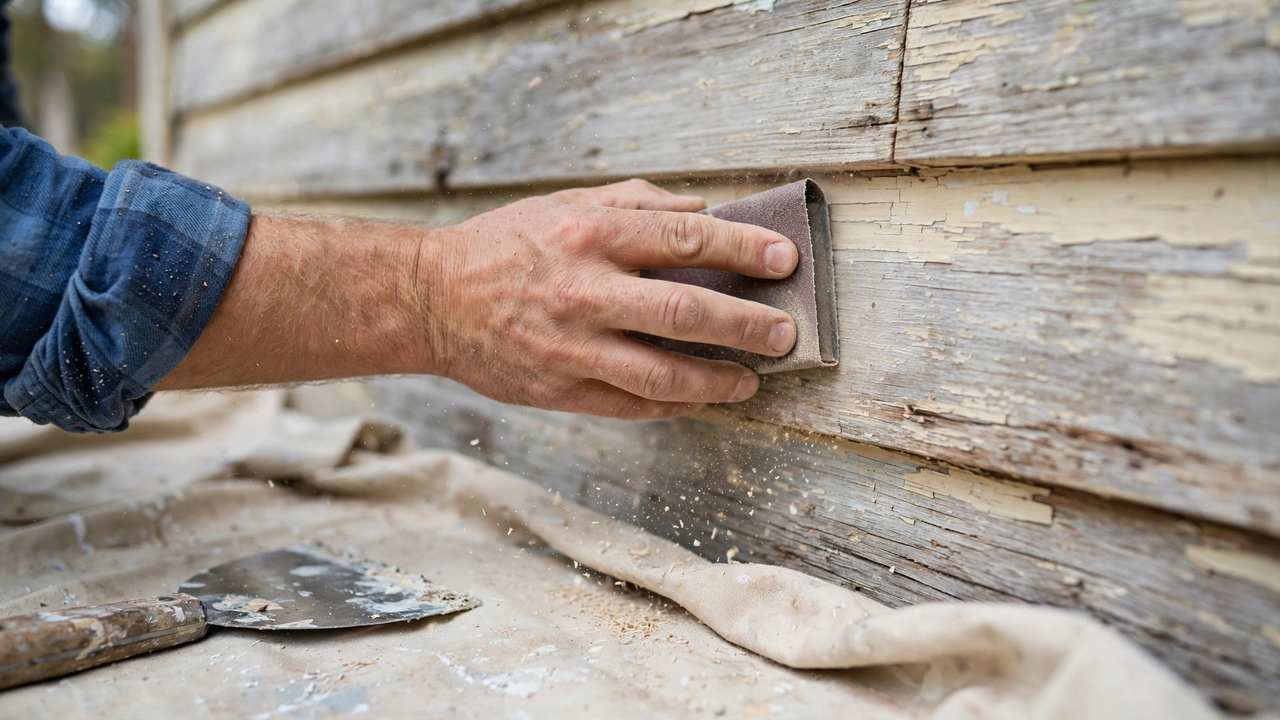
This is how to read competing quotes: when one painter quotes $4,500 and another quotes $7,500 for the same house, the difference is almost never the paint brand — it’s how many of these six steps the cheaper quote quietly skips. The quote that lists wash, scrape, repair and prime as line items is the one you can compare; the quote that says “prepare and paint exterior” is a black box.
Paint over unsound prep fails in a few years — and the redo costs full price again, because the failed coating must be stripped first. Proper prep once is the cheapest option over a decade.
The height and access uplift
Anything above single-storey reach changes the job’s economics. Scaffolding hire for a typical double-storey home runs $1,500–$5,000 — elevated work platforms price similarly for gables and awkward sections.
Access quirks that quietly add cost: steep or sloping blocks where scaffold needs levelling, narrow side passages that rule out platforms, and established gardens the crew must work around and protect.
DIY vs professional: an honest comparison
Exterior painting is one of the more DIY-able trades, but the honest comparison is about time and risk, not just money:
| DIY | Professional | |
|---|---|---|
| Cost | Materials only — paint, primer, brushes, rollers, drop sheets, plus ladder or scaffold hire. Indicative — get itemised quotes from suppliers. | $30–$80/m² all-in; labour and prep are 70–80% of the price |
| Time | A 3-bedroom single storey is typically 2–4 weekends for a competent DIYer — longer with heavy prep | 3–7 working days for a crew, weather permitting |
| Finish quality | Good on easy surfaces; cut-in lines and spray finish show the skill gap | Consistent coverage, sharp lines, proper mil thickness |
| Risk | Working at height without proper gear; missing prep that shortens the paint’s life; asbestos exposure on pre-1990 fibro | Insured, equipped for heights, knows the asbestos check |
| Best for | Single-storey, sound surfaces, owners with time and a head for heights | Double storey, damaged surfaces, pre-1990 homes, anyone short on weekends |
DIY saves the labour component (70–80% of a professional quote), but only if your prep matches a professional’s. Skip the wash-down and spot-priming and you save money this year and pay for a full repaint in three. If you DIY, buy the prep discipline, not just the paint: wash, scrape, repair, caulk, prime, then coat.
On asbestos: do not sand, scrape or pressure-wash pre-1990 fibro or fibre cement yourself. A licensed asbestos assessor’s check is cheap; the alternative is not.
Choosing paint for Australian conditions
Australian exteriors cop more UV than almost anywhere else paint is sold, plus heat, driving rain and salt air in coastal zones. The industry default is right: 100% exterior acrylic — flexible enough to move with timber, breathable enough for masonry, and formulated for UV exposure. Oil-based enamels still have a place on trims and doors for hardness, but the broadwall coating should be acrylic.
Colour choice is a performance decision, not just a style one. Lighter colours reflect heat and UV, which means less thermal stress on the coating and the substrate — a real factor on sun-blasted western walls. Dark colours look striking but run hotter, fade faster and show every imperfection in the prep. If your heart is set on a dark facade, budget for the premium heat-reflective formulations and accept a shorter repaint cycle on the harshest elevations.
Sheen matters too: low-sheen or satin on broadwalls hides surface imperfections better than gloss; gloss or semi-gloss on trims, doors and windows gives the crisp contrast and wipes clean. For the inside of the house, our popular interior paint colours guide covers the palette side in more depth.
Comparing quotes: red flags and the written-contract rule
Get three itemised quotes, and read them for what’s missing as much as what’s there. Red flags:
- No itemised prep. “Prepare and paint” with no breakdown means you can’t compare — and can’t hold them to a standard.
- No mention of primer. Bare timber, repairs and chalky surfaces need priming. A quote without it is planning to skip it.
- Cash-only or no ABN. No paper trail, no warranty worth anything, no insurance if a ladder goes through your window.
- Pressure to sign today. The “discount expires tonight” painter has a pipeline problem, not a generosity streak.
- Dramatically cheaper than the others. See the prep anatomy above: the missing dollars are missing prep hours.
The written-contract rule: in NSW, residential painting work over $1,000 must be under a written contract with a licensed contractor — a NSW Fair Trading requirement. Other states have their own thresholds, so check your state’s fair trading body. Either way, get it in writing: scope, prep standard, paint brand and line, coats, timeline, price and warranty. A painter who resists a written contract is telling you everything you need to know.
When to paint: timing and weather
Paint needs dry, mild conditions to cure properly — most exterior acrylics want the surface and air temperature above about 10°C and no rain for at least 24 hours after application. In practice, that makes autumn and spring the sweet spots across most of Australia: settled weather, moderate temperatures, lower humidity than summer.
Summer painting is possible but starts early and stops by mid-afternoon — paint applied to a 60°C western wall in January sun flashes off before it can level, leaving lap marks. One scheduling tip: book 4–8 weeks out — good painters are booked solid through the season, and one who can start tomorrow in October deserves a second look at their reviews.
Before you lock in dates, it’s worth running the numbers through our free paint calculator — it estimates how much paint your surface area needs, so you can sanity-check both DIY material lists and the quantities on professional quotes.
Frequently asked questions
How much does it cost to paint the exterior of a house in Australia?
Typically $30–$80 per square metre in 2026, depending on the surface and its condition. For whole-home budgeting: a 2-bedroom single storey runs $3,000–$6,000, a 3-bedroom $5,000–$9,000, and a 4-bedroom $7,000–$12,000. Double-storey homes cost 40–60% more due to scaffolding.
How much does it cost to paint a weatherboard house?
Weatherboard and timber cladding runs $35–$65 per square metre, rising to around $80/m² where there’s heavy preparation — peeling paint, rotten boards or sun damage. Weatherboard has the widest price spread of any surface because its condition varies so much.
What does it cost to paint a brick house exterior?
Painting over already-painted brick costs roughly $30–$55 per square metre, including mortar repairs and any efflorescence treatment. Note that painting bare, never-painted brick is a one-way decision — stripping it later is expensive — so be sure before you commit.
Why do exterior painting quotes vary so much?
Because quotes are really pricing preparation, not paint: labour and prep make up 70–80% of a repaint. A quote thousands cheaper than the others is almost certainly skipping prep steps — washing, scraping, repairs, priming — which means the paint fails years earlier. Always ask for prep to be itemised.
Can I paint my house exterior myself?
Yes, and you’ll save the labour component (70–80% of a professional quote), but budget 2–4 weekends for a 3-bedroom single storey and don’t skimp on prep — a DIY job without proper washing and priming fails early. Leave double-storey work, damaged surfaces and any pre-1990 fibro (possible asbestos) to licensed professionals.
Do I need a written contract for exterior painting?
In NSW, residential painting work over $1,000 must be under a written contract with a licensed contractor — a NSW Fair Trading requirement. Other states have their own thresholds, so check your state’s fair trading body. Always get scope, prep standard, paint details, timeline, price and warranty in writing.
Figures & sources
- Per-square-metre rates by surface ($30–$80/m² overall), whole-home ranges, double-storey uplift (40–60%) and scaffolding costs ($1,500–$5,000): tradieverify.com.au, per-m² exterior painting trade guide; modernizesolutions.com.au, painting rates per m²; brushworks.com.au, Sydney exterior painting pricing. All figures indicative — get itemised quotes.
- Labour and preparation as 70–80% of a repaint: Housing Industry Association (HIA), cited in published trade guides.
- NSW written-contract requirement for residential painting work over $1,000 with a licensed contractor: NSW Fair Trading. Other states: check your state fair trading / consumer affairs body, as thresholds differ.
- Asbestos warning for pre-1990 fibro/fibre cement: standard industry guidance — engage a licensed asbestos assessor before disturbing suspect material.
- Paint selection notes (exterior acrylic, lighter colours for UV/heat): general industry guidance for Australian conditions.