
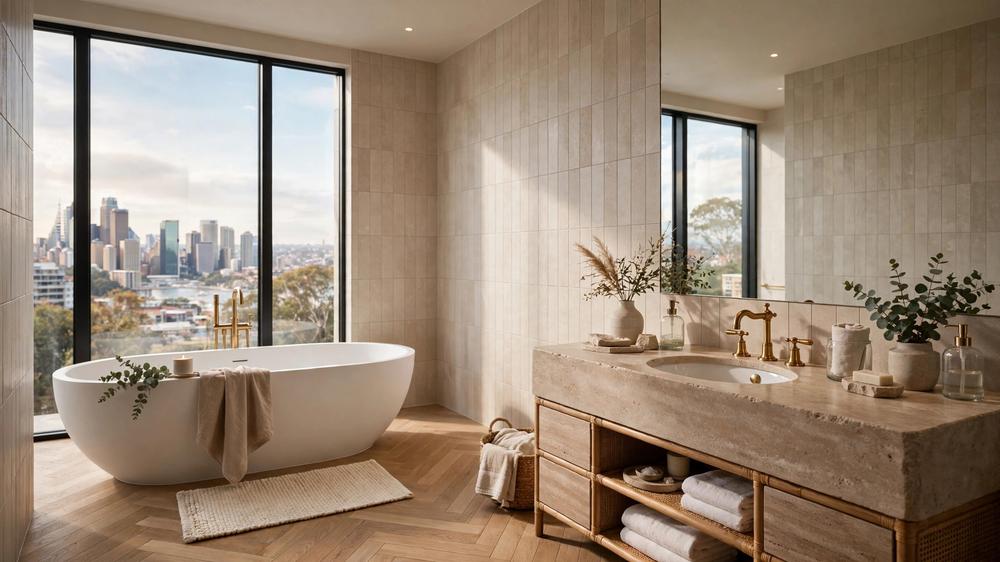
Working out the bathroom renovation cost in Sydney can feel like trying to hit a moving target. Quotes vary wildly, the scope of “a renovation” means different things to different builders, and the price you were quoted by a friend in Melbourne bears little resemblance to what you’ll pay in the Harbour City. In 2026, industry estimates put a basic Sydney bathroom renovation at $11,500–$23,000, a mid-range project at $23,000–$40,250, and a premium renovation at $40,250–$63,250 (GST included). The mid-range average sits around $29,900.
Sydney bathrooms cost more than almost anywhere else in Australia. The Housing Industry Association puts the average bathroom renovation at roughly $26,000 nationally — up 24% since 2021 — and Sydney consistently lands above that average thanks to higher labour rates, strata complications in the city’s vast apartment stock, and strict waterproofing requirements. This guide lays out what each budget tier buys, where the money goes, the rules that can trip you up, and how to keep costs under control.
Bathroom renovation cost Sydney: the three price tiers
Tier 1: Basic renovation ($11,500–$23,000)
The budget bathroom. You’re keeping the existing plumbing layout — toilet, vanity and shower stay exactly where they are — and refreshing surfaces and fixtures rather than rebuilding.
What you typically get:
- New vanity, toilet and tapware (budget to mid-range brands)
- Re-tiling of walls and floor with standard-format tiles
- New shower screen in the existing position
- Fresh paint, new mirror and basic accessories
- Existing bath retained or replaced like-for-like
This tier works well for rental properties, second bathrooms, or when the bones are sound and you just need something clean, modern and watertight. What you won’t get is layout changes, underfloor heating, or designer fixtures.
Tier 2: Mid-range renovation ($23,000–$40,250)
The sweet spot for most Sydney homeowners, with an average spend of around $29,900. The bathroom is stripped back to the studs and rebuilt properly — new waterproofing, new plumbing rough-in (in the same positions), and quality fixtures throughout.
What you typically get:
- Full strip-out and re-waterproofing to AS 3740
- New mid-range fixtures: wall-hung vanity, quality toilet suite, mixer tapware
- Frameless or semi-frameless shower screen
- Feature tiles or larger-format porcelain tiles
- New lighting, exhaust fan and possibly heated towel rail
- New bath if the layout includes one
This is the tier where the bathroom genuinely feels new and should last 15–20 years without major maintenance. Waterproofing is done properly, everything is compliant, and the finishes look considered rather than cheap.
Tier 3: Premium renovation ($40,250–$63,250)
The designer bathroom. Layout changes are on the table, fixtures come from European brands, and the details — recessed niches, wall-hung everything, statement tiles — are what you’re paying for.
What you typically get:
- Layout reconfiguration, possibly moving plumbing
- Designer fixtures and tapware (imported brands)
- Large-format tiles or natural stone
- Freestanding bath, walk-in rain shower
- Underfloor heating, in-wall cisterns
- Lighting design, heated mirrors, custom joinery
In prestige suburbs the spend can push beyond $63,250, but be honest about your property’s ceiling — a $70,000 bathroom in a $1M apartment is hard to justify on resale. Read up on whether a bathroom renovation adds value before you commit to the top tier.
Small bathrooms: the under-4m² reality
Many Sydney apartments and older terraces have bathrooms under 4 square metres, and the pricing logic is different. Industry estimates put a small bathroom renovation at $15,000–$25,000 — which sounds high per square metre, but the fixed costs (plumber, electrician, waterproofing, tiler call-outs) don’t shrink just because the room is small.
Small bathrooms actually demand more design skill, not less. Wall-hung vanities and toilets free up floor space, large-format tiles reduce visual clutter, and a well-placed mirror can double the perceived size. Skimp on the design and a small bathroom feels cramped no matter what you spend.
Bathroom renovation cost breakdown: where the money goes
For a mid-range Sydney bathroom, the budget typically splits like this (industry estimates):
| Component | Share of budget | Typical Sydney range |
| Plumbing (rough-in + fit-off) | 20–25% | $5,000–$10,000 |
| Tiling (labour + materials) | 20–25% | $5,000–$10,000 |
| Fixtures (toilet, vanity, tapware) | 15–20% | $3,500–$8,000 |
| Waterproofing | 5–10% | $1,200–$3,000 |
| Electrical | 5–10% | $1,200–$3,000 |
| Shower screen / bath | 5–10% | $1,000–$4,000 |
| Demolition and waste removal | 5% | $1,000–$2,500 |
| Painting and finishing | 5% | $800–$2,000 |
Plumbing and tiling together usually consume nearly half the budget — which is exactly why keeping the existing layout is the biggest single cost saver available to you.
Waterproofing: the non-negotiable
Every bathroom renovation in Australia must comply with AS 3740, the waterproofing standard. This isn’t a nice-to-have — it’s the law, and getting it wrong is the most expensive mistake in bathroom renovation.
Key points Sydney homeowners should know:
- Waterproofing must be done by a licensed waterproofer, with a compliance certificate issued on completion
- The membrane needs to extend up walls to specified heights (higher in showers)
- Failed waterproofing is the number one cause of bathroom insurance claims — leaks into the unit below can cost tens of thousands in rectification
- In apartments, your strata may require proof of waterproofing certification before they’ll sign off on the renovation
Never let a builder talk you into skipping or rushing the waterproofing stage. A proper membrane system adds a few days to the timeline and a couple of thousand dollars to the budget — a failed one can cost $20,000+ to fix, because everything above it has to come out.
Sydney apartments: strata rules and hidden costs
A huge share of Sydney bathroom renovations happen in apartments, and strata adds a layer of cost and complexity that house owners don’t face:
- Strata approval: you’ll need written approval before work starts; application and by-law review fees vary by building
- Restricted work hours: typically weekdays 7:30am–4:30pm, no weekends — which stretches the timeline and increases labour cost
- Lift bookings and protection: materials go up in the service lift, booked in slots, with mandatory lift and hallway protection
- Waste removal: no skip bin in the driveway — debris is carried out by hand or in small loads, which is slower and pricier
- Water shut-offs: building-wide shut-offs for plumbing tie-ins need scheduling with building management and notice to residents
- Noise and waterproofing sign-off: some buildings require independent inspection of waterproofing before tiling proceeds
Together, these constraints typically add a meaningful premium over an equivalent renovation in a freestanding house. Factor it in from the start rather than discovering it in week two.
The biggest cost saver: keep the plumbing where it is
Moving a toilet, shower or vanity to a new position is the fastest way to inflate a bathroom budget. It means cutting into the slab or floor structure, re-running drainage with correct falls, new waterproofing penetrations, and sometimes structural engineering. A layout change can easily add $5,000–$12,000 to the project.
Keeping the existing plumbing layout doesn’t mean keeping the existing look. New fixtures in the same positions, a reconfigured vanity, a glass screen instead of a shower curtain — all of this transforms the room without touching the drainage. If your budget is tight, this is the decision that matters most.
Timeline: 2–4 weeks on site
Bathrooms are quicker than kitchens, but the sequence is unforgiving — each trade depends on the one before:
1. Strip-out (2–3 days): demolition, rubbish removal, exposing the substrate
2. Rough-in (3–5 days): plumbing and electrical rough-in, any structural repairs
3. Waterproofing (3–5 days): preparation, membrane application, curing time (can’t be rushed)
4. Tiling (4–7 days): floor and wall tiles, grouting, curing
5. Fit-off (3–5 days): fixtures, tapware, shower screen, electrical fit-off, painting, silicone
Add 2–4 weeks before that for design, quoting and strata approval. The waterproofing cure time is the stage most often underestimated — rushing it voids warranties and risks failure.
Contingency: budget 10–15% for hidden water damage
Behind old bathroom tiles, Sydney renovators routinely find water-damaged framing, corroded pipes, and in older buildings, concrete cancer in the slab. You won’t know until the tiles come off, which is why a contingency fund is essential:
- 10% contingency for bathrooms under 15 years old in good condition
- 15% contingency for older bathrooms, apartments with a history of leaks, or any bathroom where you can already see signs of moisture
This money isn’t spare budget for nicer tapware — it’s insurance against the unknowns. If you don’t need it, it’s a pleasant surprise at the end.
How to save money without cutting corners
Genuine savings that don’t compromise quality:
- Keep the layout. As above — the single biggest lever on cost.
- Choose standard tile sizes. Large-format and mosaic tiles cost more to lay; standard 300×600 or 600×600 porcelain is the value sweet spot.
- Buy fixtures during sales. EOFY, Black Friday and clearance events can save 20–30% on toilets, vanities and tapware.
- Do your own demolition. If you’re handy, DIY strip-out saves $800–$1,500 — just don’t touch anything structural or asbestos-containing.
- One feature, not five. A single statement element (a feature tile wall, a beautiful vanity, a freestanding bath) gives the designer feel; trying to make everything a feature just costs money.
- Get three itemised quotes. Not ballpark estimates — detailed, line-by-line quotes you can genuinely compare.
What not to skimp on:
- Waterproofing (licensed, certified, no shortcuts)
- Plumbing (licensed plumber, compliance certificates)
- Exhaust fan (sized properly for the room — mould is the enemy)
- The contingency fund
To see how bathroom costs compare nationally, browse our national renovation cost database. And if you’re building a budget from scratch, our renovation cost calculators will help you sanity-check the numbers before you call a builder.
For an independent cross-check on pricing, see these independently verified cost ranges — if your quotes sit far outside them, ask your builder to walk you through the difference.
Frequently Asked Questions
How much does a bathroom renovation cost in Sydney in 2026?
Industry estimates put a basic renovation at $11,500–$23,000, mid-range at $23,000–$40,250, and premium at $40,250–$63,250 (GST included). The mid-range average is around $29,900. The HIA puts the national average at roughly $26,000, up 24% since 2021, with Sydney typically landing above that figure.
How much does it cost to renovate a small bathroom in Sydney?
For bathrooms under 4m², industry estimates suggest $15,000–$25,000. The per-square-metre rate looks high because fixed costs — plumber, electrician, waterproofing, tiler call-outs — don’t shrink with the room size. Smart design choices like wall-hung fixtures and large-format tiles matter more in small spaces.
Do I need strata approval to renovate my bathroom in Sydney?
Yes, if you live in an apartment. You’ll need written strata approval before work starts, and most buildings impose restricted work hours, lift booking requirements, and waste removal rules. Some buildings also require independent inspection of waterproofing before tiling. These constraints add cost compared to renovating a freestanding house.
What waterproofing standard applies to bathroom renovations?
All Australian bathroom renovations must comply with AS 3740. Waterproofing must be installed by a licensed waterproofer who issues a compliance certificate. Failed waterproofing is the most common cause of bathroom insurance claims and can cost $20,000+ to rectify, since everything above the membrane has to be removed and redone.
How long does a bathroom renovation take in Sydney?
Expect 2–4 weeks on site: strip-out, plumbing and electrical rough-in, waterproofing (including cure time), tiling, then fit-off. Allow another 2–4 weeks beforehand for design, quoting and strata approval. Waterproofing cure time can’t be rushed without voiding warranties.