
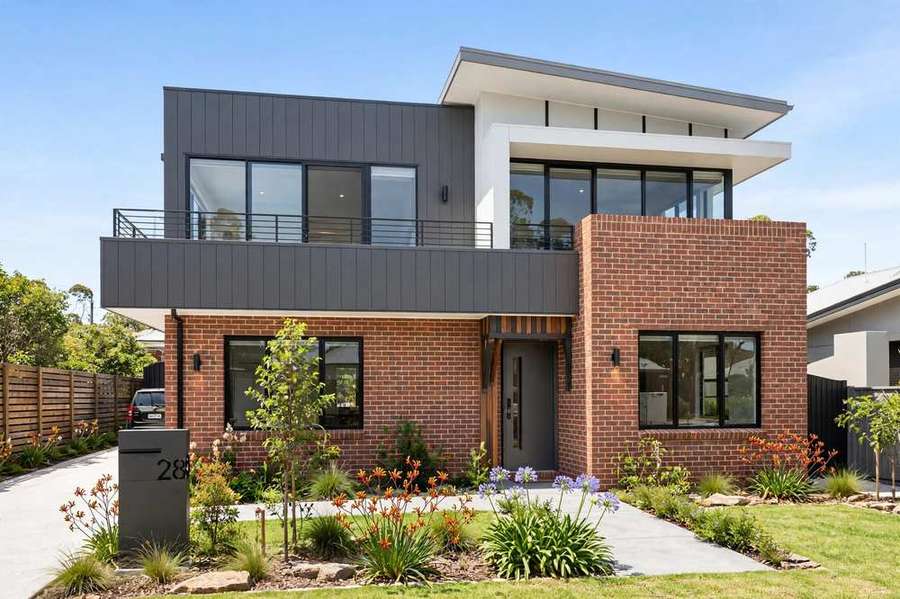
If your family is outgrowing the house but you love the street, the block, and the school run exactly as it is, you’ve probably asked the big question: does a second storey addition add value to home australia-wide, or is it just a very expensive way to get two more bedrooms? With second storey builds now costing $250,000 to $600,000+ in most metro areas, getting the answer wrong can mean hundreds of thousands spent with little to show for it.
The honest answer is: yes, a well-planned second storey usually adds value — but it rarely adds more than it costs. Whether it *pays off* depends on your suburb, your house, and what you put upstairs. Here’s how the numbers stack up in 2026.
The Short Answer
A second storey addition in Australia typically returns around $0.60 to $0.80 in added value for every dollar spent — so a $400,000 build might lift your home’s value by roughly $240,000 to $320,000. Property guides suggest a double storey addition can add 30% to 60% to a home’s value overall, depending on what the new level contains.
So it *adds value*, but it rarely *pays for itself* dollar-for-dollar. You build up because you need the space and want to stay put — not because it’s a money-making scheme. The one scenario where building up clearly wins is when you compare it against the cost of selling and buying again, covered below.
What a Second Storey Addition Costs in Australia in 2026
The most commonly quoted range for a full second storey in metropolitan Australia in 2026 is $250,000 to $600,000, at roughly $3,500 to $6,000 per square metre — figures informed by HIA residential construction data and current industry benchmarks, covering design, engineering, roof removal, the new floor structure, a new roof, fit-out and services.
Why does it cost more per square metre than a ground floor extension (which sits around $2,800–$4,500/m²)? Building up means roof removal, temporary weatherproofing while your home is open to the elements, structural reinforcement of existing footings, and a staircase — none of which apply when you build out.
Here’s a realistic breakdown by finish level:
| Finish level | Cost per m² (2026) | Typical scope | Indicative total |
| Basic | $3,000 – $3,500 | 1–2 rooms, standard finishes, simple roofline | $150,000 – $280,000 |
| Mid-range | $3,500 – $4,500 | 3–4 bedrooms, ensuite, quality finishes, new staircase | $300,000 – $450,000 |
| Premium | $4,500 – $6,000+ | Architect-designed, master suite, high-end finishes | $450,000 – $600,000+ |
These totals assume a footprint of roughly 80–110m² upstairs. Partial additions can start around $150,000, while full luxury builds can push well past $600,000. Build times typically run 6 to 10 months — longer than a ground floor extension — and you’ll likely need to move out or live through serious disruption.
Don’t forget the extras beyond the builder’s quote: architectural and design fees (5–10% of build cost), council approvals ($8,000–$25,000), engineering reports ($2,500–$6,000), and a contingency of at least 10–15%.
The Maths: Cost vs Value-Added
Here’s where it gets real. A second storey doesn’t add value in a vacuum — what matters is how much of the build cost you get back as added property value. Industry estimates vary, but here’s a reasonable picture for 2026 (our Australian renovation costs guide compares second storeys with other project types):
| Project | Typical spend | Estimated value added | Rough return per $1 |
| Mid-range second storey (3 beds + bathroom) | $350,000 | $250,000 – $320,000 | $0.70 – $0.90 |
| Basic partial addition (1–2 rooms) | $180,000 | $120,000 – $160,000 | $0.65 – $0.90 |
| Premium architect-designed upper level | $550,000 | $330,000 – $440,000 | $0.60 – $0.80 |
These ranges reflect the widely cited estimate that well-executed extensions return roughly $0.60 to $0.80 per dollar spent, with adding a bedroom or bathroom landing at the stronger end (analysts have historically quoted 70–90% returns for new rooms and 60–80% for an added ensuite).
The gap between cost and value-added is the price you pay for the lifestyle benefit — staying in your home, in your suburb, without moving.
The overcapitalisation trap
Overcapitalisation is when you spend more than the local market will ever give back. If the nicest homes in your street sell for $1.2 million and yours is worth $900,000, a $450,000 second storey is almost certainly overcapitalising — no matter how beautiful the finished rooms are.
The rule of thumb: your finished home’s value should sit comfortably *within* the price range of comparable larger homes in your suburb, not above it. Check what renovated two-storey homes have actually sold for nearby before you commit.
Building Up vs Moving: The Stamp Duty Maths
This is where building up starts to look a lot more attractive. Selling your home and buying a bigger one is staggeringly expensive in Australia — and most of that money adds nothing to your living space.
Consider a typical scenario. You sell your current home for around $1 million. Agent commission (roughly 1.8–2.5% in Sydney and Melbourne), marketing, conveyancing and legal fees can easily top $25,000 to $30,000. Then you buy a larger place for $1.4–1.5 million to get the extra bedrooms you need.
Now comes stamp duty. On a $1.5 million purchase, stamp duty is roughly $65,000 in NSW and $83,000 in Victoria (based on 2026 figures reported by property research groups). At Melbourne’s median house price of around $977,000, an owner-occupier still faces roughly $54,000 in stamp duty. Add removalists, loan fees, building and pest reports, and the whole move can push past $100,000 — all of it non-recoverable, none of it adding a single square metre to your life.
Stack that against a $350,000 second storey that returns, say, $280,000 in added value. Your true “loss” on the build is $70,000 — but you’ve gained the space you actually wanted while keeping your address, your neighbours, and your kids’ school. Compared to $100,000+ of dead money spent on moving, building up usually wins on pure economics.
Run your own numbers with our free renovation calculators before deciding.
What Adds Value — and What Doesn’t
Not all square metres are equal. What you put upstairs matters most for resale:
Adds the most value:
- Extra bedrooms — taking a 3-bedroom home to 4 or 5 bedrooms is the biggest value driver, especially in family suburbs.
- An additional bathroom — a second bathroom or master ensuite removes a daily pain point and is one of the most reliable value-adds.
- A proper master suite — bedroom with walk-in robe and ensuite upstairs consistently appeals to buyers.
- Keeping the backyard — unlike a ground floor extension, building up preserves outdoor space, which most suburban buyers prize.
Adds the least value:
- Niche rooms — home cinemas and wine cellars appeal to a narrow slice of buyers and rarely return their cost.
- Over-the-top finishes — luxury finishes don’t add value proportionate to their cost in a standard family home. Match finishes to your suburb.
- A fourth bedroom instead of a third — the jump from 3 to 4 bedrooms typically adds more value than 4 to 5.
The pattern is consistent: practical space — bedrooms and bathrooms in sensible proportion to the home — pays back. Luxury flourishes mostly don’t.
Structural and Council Considerations
Second storeys are heavily regulated, and this is where costs quietly blow out if you’re not prepared.
Can your house take it? Not every home can support a second level. Older homes with brick-veneer walls or shallow footings often need significant structural reinforcement — new footings, steel posts, or strengthened walls. A structural engineer’s assessment ($2,500–$6,000) is money well spent before you fall in love with a design.
Council approval is non-negotiable. Second storey additions almost always need a full development application (DA), not just a complying development certificate. Councils assess height limits, setbacks, overshadowing of neighbours, privacy (overlooking neighbouring yards), streetscape character, and floor-space ratios. In heritage conservation areas the rules tighten further — the addition may need to be set back so it’s not visible from the street.
Talk to your council before you pay an architect. A pre-DA meeting (usually a few hundred dollars) tells you what’s permissible on your block — height, setbacks, site coverage — so your designer works within reality from day one.
Neighbour objections can stall you. Second storeys attract objections over privacy and overshadowing. Frosted glass on side windows, careful roofline choices and generous setbacks reduce objections and speed approval.
For a neutral overview of what’s involved in going up versus out, realestate.com.au’s guide to adding a second storey vs extending is a useful starting point.
Expert Tips: Getting It Right
Get three itemised quotes, minimum. Builders make different assumptions about structural work, so quotes vary enormously. Itemised quotes let you compare properly — and beware of any quote dramatically cheaper than the others.
Use a fixed-price contract. Cost-plus contracts on a project this complex are a budget-blowout risk. Lock the price in before the roof comes off.
Budget for the ground floor too. Almost every second storey triggers ground floor work: the staircase needs somewhere to land and services need rerouting. Allow for it upfront.
Design for the way you actually live. Extra bedrooms, a second living area for teenagers, a proper home office — build what your family will use every day for the next decade.
Match the streetscape. The best second storeys look like they were always there. A jarring addition that fights the street’s character hurts resale.
Check your design style before you start. If you’re unsure whether a modern upper level suits your home’s bones, take our interior design style quiz — knowing your aesthetic direction helps you brief your architect clearly instead of discovering your taste mid-build.
Frequently Asked Questions
How much does a second storey addition cost in Australia in 2026?
For a full second storey in metropolitan Australia, expect $250,000 to $600,000+, or roughly $3,500 to $6,000 per square metre. A basic partial addition (one or two rooms) can start around $150,000, while premium architect-designed upper levels can exceed $600,000. These figures include design, engineering, roof removal and fit-out — but not ground floor renovations or landscaping.
Does adding a second storey increase property value?
Yes, in most cases. A well-executed second storey returns roughly $0.60 to $0.80 in added value per dollar spent, and can add 30% to 60% to a home’s overall value. But it rarely returns more than it costs — the real financial win is avoiding the $100,000+ in stamp duty, agent fees and moving costs involved in buying a bigger home.
Is it cheaper to build up or move house?
In most capital cities, building up is cheaper. Selling a $1 million home and buying a $1.4–1.5 million home can cost over $100,000 in stamp duty, agent commissions, legal fees and moving costs — money that adds nothing to your living space. A $350,000 second storey that adds $250,000–$320,000 in value typically leaves you better off while letting you keep your location.
Do I need council approval for a second storey addition in Australia?
Yes — almost always. A second storey typically requires a full development application (DA), with council assessing height limits, setbacks, overshadowing, privacy, and streetscape character. Rules are stricter in heritage conservation areas. Book a pre-DA meeting with your council before engaging an architect.
What is the biggest risk of a second storey addition?
Overcapitalisation — spending more than your suburb’s market will support. If the finished home would be priced above comparable larger homes nearby, you won’t recoup the spend at resale. Check recent sales before committing, and match finishes to the suburb.