
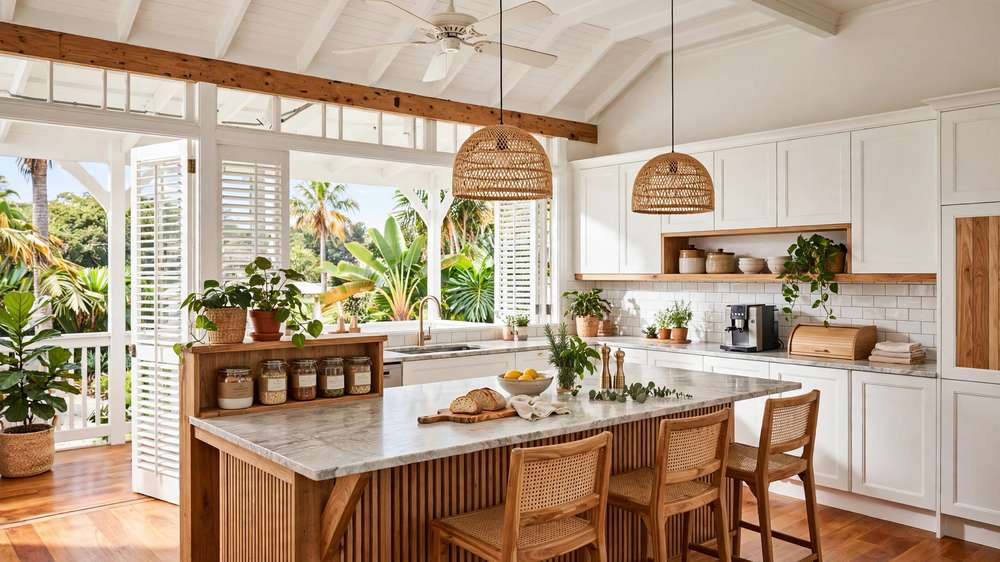
Understanding the kitchen renovation cost Brisbane homeowners actually pay — before you call your first tradie — is the difference between a smooth project and a budget that quietly doubles. Brisbane sits at the lower-to-mid end of Australian labour rates, but the city’s subtropical climate, flood planning overlays and termite pressures add cost lines that Sydney and Melbourne renovators never see. This guide breaks down what a Brisbane kitchen actually costs in 2026, tier by tier, with the trade rates, timelines and material choices that matter here.
How Much Does a Kitchen Renovation Cost in Brisbane in 2026?
Industry estimates put a typical Brisbane kitchen renovation between $12,000 and $45,000, up about 4.4% year-on-year. That band covers most of the real projects happening across the city right now — cosmetic refreshes in older Queenslanders, mid-range updates in post-war brick homes, and solid premium jobs in Paddington and Bulimba.
But “typical” hides a lot. A proper budget depends on which tier you’re aiming for, whether you’re moving plumbing or gas, and how far you want to go with finishes. Here’s the honest breakdown.
Brisbane Kitchen Renovation Costs by Tier
The table below gives the current 2026 ranges based on industry estimates from Queensland suppliers and builders. Use these as your planning brackets — your final quote will land somewhere inside one of them.
| Tier | Price range | What it includes |
| Cosmetic refresh | $8,500–$18,000 | Resurface or repaint cabinetry, new handles, benchtop overlay or respray, new tapware, splashback update, fresh paint |
| Mid-range renovation | $25,000–$42,000 | New cabinetry (flat-pack or semi-custom), new benchtop, mid-tier appliances, new splashback, lighting upgrade, minor electrical/plumbing |
| Premium renovation | $42,000–$85,000+ | Custom joinery, stone benchtops, integrated or high-end appliances, structural changes, new flooring, full electrical rework |
A cosmetic refresh works well when your layout is fine and the bones are sound — common in Brisbane’s character homes where owners want to keep the original footprint. The mid-range tier is where most families land: new everything, but no structural changes. Premium projects usually involve knocking out walls, relocating the kitchen, or the kind of joinery and appliance package that pushes past $60k quickly.
Where Your Money Goes: Typical Budget Split
Knowing how a mid-range Brisbane kitchen budget divides up helps you spot a quote that’s out of balance. For a $35,000 project, the split typically looks like this:
| Item | Share of budget | Approximate cost |
| Cabinetry (supply + install) | 30–35% | $10,500–$12,250 |
| Benchtops | 10–15% | $3,500–$5,250 |
| Appliances | 12–18% | $4,200–$6,300 |
| Electrical | 8–12% | $2,800–$4,200 |
| Plumbing | 5–10% | $1,750–$3,500 |
| Splashback, flooring, painting | 8–12% | $2,800–$4,200 |
| Contingency (10–15%) | 10–15% | $3,500–$5,250 |
Cabinetry dominating the budget is normal — it’s the most labour-intensive element. If a quote shows appliances or benchtops swallowing a disproportionate share, ask why. And the contingency isn’t optional padding; on Brisbane’s older housing stock, something unexpected turns up more often than not.
Getting Quotes in Brisbane: What to Ask
Brisbane has no shortage of kitchen companies, from national franchise showrooms to one-man cabinet-making operations. The quality spread is wide, so quote carefully:
- Ask for itemised quotes, not lump sums. You want to see cabinetry, benchtops, electrical, plumbing and appliances as separate lines so you can compare across suppliers.
- Check QBCC licensing. Any residential building work in Queensland over $3,300 must be done by a QBCC-licensed contractor. Verify the licence number on the QBCC website — it takes two minutes.
- Ask about lead times upfront. A quote is meaningless without a start date. If a cabinet maker can’t start for four months, that affects your whole plan.
- Clarify what’s excluded. Skip bins, plaster repairs, painting touch-ups and appliance disposal are common exclusions that surprise owners later.
- Get references for similar work. A company that does great new builds may not be the best choice for a 1930s Queenslander with wonky walls.
Aim for three quotes minimum. Be wary of any quote that arrives suspiciously fast or is dramatically cheaper than the others — in Brisbane’s competitive market, a quote 30% below the pack usually means something’s been left out.
Brisbane Tradie Rates: What You’re Actually Paying For
Labour is the single biggest line item in most kitchen renovations, typically eating 30–40% of the total budget. Brisbane’s trade rates sit at the lower-to-mid end nationally, which is one reason the city’s renovation costs compare favourably with Sydney.
- Electrician: $90–$140 per hour. Kitchens are electrical-heavy — expect charges for new circuits for the oven and cooktop, LED downlights, power points along the splashback, and an exhaust fan or rangehood circuit.
- Plumber: $100–$150 per hour. Moving a sink or dishwasher adds real money; keeping plumbing where it is keeps this line item lean.
- Cabinet maker / joiner: quoted per job, but custom joinery is where mid-range budgets climb toward premium.
- Tiler: splashback tiling typically runs $500–$1,500 depending on area and tile choice.
The fastest way to blow the budget is scope creep during demolition — a common story when 1970s Queenslanders reveal asbestos sheeting or dodgy wiring behind the cabinets. Always hold back a 10–15% contingency.
Brisbane-Specific Costs Most Guides Miss
Flood and cyclone resilience
Large parts of Brisbane sit under flood planning overlays. If your property is mapped in a flood zone, you may need a council development application before structural work — application fees typically run $400–$1,500 depending on the complexity and whether a town planner is involved. Even outside overlays, the 2022 floods reset how many Brisbane renovators think about water: materials that survive a wet event are worth the premium.
Termite protection
Subterranean termites are active across south-east Queensland year-round. Any renovation that opens up walls or replaces cabinetry near ground level is a good moment to check your termite management system. Budget a few hundred dollars for an inspection if one hasn’t been done in the last year — finding termite damage mid-renovation is the expensive version.
Humidity-proof materials
Brisbane’s humidity punishes cheap cabinetry. Moisture-resistant board for carcasses, properly sealed benchtops and good ventilation aren’t luxuries here — they’re how you stop swelling doors and bubbling laminate in three summers. This is also why independent cost data from Australian sources is more useful than US or UK guides, which never account for our climate.
The engineered stone ban
One national change affects every Brisbane kitchen project: engineered stone benchtops were banned in Australia from 1 July 2024 due to silicosis risk. If your plans still reference Caesarstone-style reconstituted stone, they need updating. The mainstream alternatives are:
- Natural stone (granite, marble) — premium pricing, each slab unique
- Porcelain benchtops — the closest engineered-stone lookalike, growing fast in popularity
- Solid surface (e.g. Corian-style acrylic) — seamless, repairable, mid-range cost
- Laminate — budget-friendly and far better quality than the laminates of the 1990s
What’s Driving Brisbane Kitchen Prices in 2026
Several forces are shaping what you’ll pay this year:
- Cabinetry choice. Flat-pack kitchens from the big hardware chains start around $3,000–$6,000 for the cabinets alone; semi-custom runs $10,000–$20,000; fully custom joinery starts around $20,000 and climbs.
- Benchtop material. Laminate from ~$1,500 installed; porcelain or natural stone from $4,000–$10,000+ depending on the stone and edge profiles.
- Appliances. A mid-range appliance package (oven, cooktop, rangehood, dishwasher) runs $3,000–$7,000; premium European brands double that easily.
- Layout changes. Moving plumbing, gas or load-bearing walls adds $3,000–$10,000+ and usually triggers certification requirements.
- Asbestos. Pre-1990 homes often have asbestos sheeting in kitchen walls or eaves. Licensed removal adds $1,500–$5,000 and must be done before other trades start.
Compare these against the national renovation cost database to see how Brisbane sits relative to other capitals — you’ll generally find Brisbane 5–10% below Sydney pricing for equivalent work.
Realistic Timelines: How Long Will Your Kitchen Take?
Most Brisbane kitchen renovations run 6–12 weeks from demolition to final clean, assuming no structural work. The breakdown looks roughly like this:
- Weeks 1–2: Demolition, strip-out, any asbestos removal, rough-in plumbing and electrical
- Weeks 3–6: Cabinetry installation (custom joinery has the longest lead times — order early), benchtop templating and installation
- Weeks 7–9: Splashback tiling, flooring, painting, appliance installation
- Weeks 10–12: Fit-off, electrical and plumbing final connections, defects, final clean
Custom joinery is the most common cause of delays — Brisbane cabinet makers with good reputations often book out 8–12 weeks ahead. If your timeline is tight, semi-custom or flat-pack cabinetry with a professional installer can cut the schedule significantly.
How to Keep Your Brisbane Kitchen Renovation on Budget
- Keep the layout. Every metre you move the sink, stove or dishwasher adds plumbing, electrical and certification costs. The existing footprint is almost always the cheapest footprint.
- Retain and resurface where you can. Solid timber cabinet carcasses in good condition can be re-faced rather than replaced, saving $5,000–$10,000.
- Choose appliances early. Appliance dimensions dictate cabinetry cut-outs — changing your mind after the joinery is ordered is an expensive mistake.
- Get three itemised quotes. Brisbane’s market is competitive; itemised quotes let you compare like with like and spot the tradie who’s padded the “provisional sums”.
- Time it right. Late autumn and winter are traditionally quieter for Brisbane trades, and you may negotiate better rates than in the spring rush.
- Check whether the spend adds value. Before committing to a premium tier, read up on whether a kitchen renovation adds value in the Australian market — overcapitalising is a real risk in some Brisbane suburbs.
Before you sign anything, run your numbers through the free renovation cost calculators to sanity-check quotes against current industry benchmarks.
Frequently Asked Questions
What is the average kitchen renovation cost in Brisbane?
Industry estimates put the typical Brisbane kitchen renovation between $12,000 and $45,000, covering cosmetic refreshes through to solid mid-range projects. Premium renovations with custom joinery and structural changes run $42,000 to $85,000 or more. Costs have risen about 4.4% year-on-year.
Do I need council approval to renovate my kitchen in Brisbane?
For a straightforward kitchen update with no structural changes, generally no. You’ll likely need approval if you’re removing load-bearing walls, changing the building footprint, or your property sits in a flood overlay — application fees typically run $400–$1,500. Check with Brisbane City Council or a private certifier before starting structural work.
How long does a kitchen renovation take in Brisbane?
Most projects take 6–12 weeks from demolition to completion. Custom joinery is the biggest variable — good Brisbane cabinet makers often have 8–12 week lead times, so order early. Flat-pack or semi-custom cabinetry can shorten the schedule considerably.
What benchtop materials can I use now that engineered stone is banned?
Engineered stone was banned nationally from 1 July 2024. Popular alternatives include natural stone (granite, marble), porcelain benchtops, solid surface materials like Corian-style acrylic, and modern high-pressure laminates. Porcelain is currently the closest visual match to the old engineered stone look.
How much do electricians and plumbers charge for a Brisbane kitchen renovation?
Expect electricians at $90–$140 per hour and plumbers at $100–$150 per hour — at the lower-to-mid end nationally. Kitchens need significant electrical work (oven and cooktop circuits, downlights, splashback power points), so get these trades quoted early. Keeping plumbing in its existing position is one of the simplest ways to control costs.