
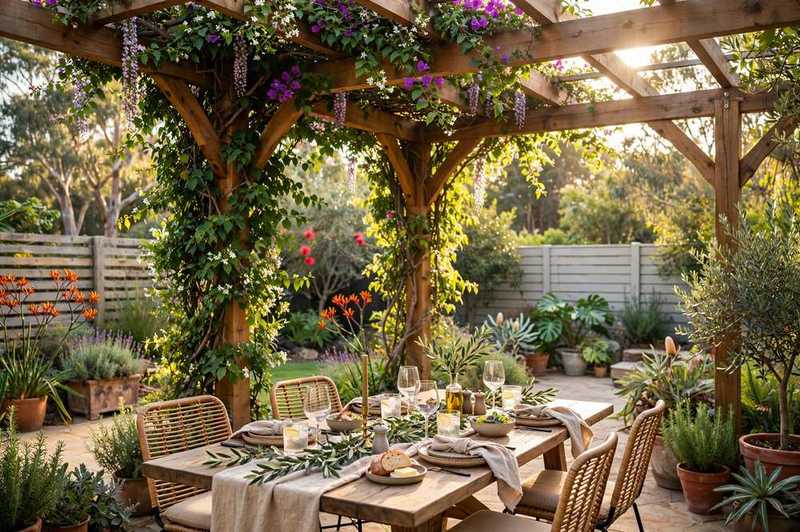
So, how much does a pergola cost in Australia? If you’re dreaming of a shaded spot to enjoy your backyard through summer and beyond, it’s the first question worth asking — and the honest answer is that prices swing a lot. A basic DIY timber pergola can come in around $2,000, while a fully engineered, motorised louvred-roof structure with lighting and drainage can pass $60,000. Most Australian homeowners land somewhere in the middle: roughly $5,000 to $25,000 professionally built, depending on size, materials, roofing and extras.
This guide breaks down pergola costs in Australia for 2026 — per-square-metre rates, what drives prices up or down, how costs differ between Sydney, Melbourne and Brisbane, and where you can realistically save money without building something you’ll regret in three years.
Pergola Cost Australia: The Quick Answer
If you just want the headline numbers, here they are:
- DIY pergola kit: $400 to $8,000 (plus your own labour)
- Basic timber pergola, professionally installed: $2,000 to $8,000
- Roofed pergola (polycarbonate or Colorbond): $8,000 to $20,000
- Mid-range custom pergola: $20,000 to $35,000
- Premium louvred-roof pergola: $35,000 to $60,000+
- Per-square-metre rate (installed): roughly $100 to $500 per m² for standard builds, climbing to $900 to $2,800 per m² for motorised louvred systems
Your actual price will depend on your site, your choices and your city — use these as a budgeting tool, not a quote. For a broader look at what outdoor projects cost this year, see our renovation costs Australia 2026 guide.
Pergola Cost Breakdown Table
Here’s how the money typically splits across the most common pergola types in 2026:
| Pergola Type | Size Example | Typical Total Cost | Approx. Per m² |
| DIY kit (timber, unroofed) | 3m × 3m | $400 – $2,000 | $45 – $220 |
| Basic timber pergola (installed, unroofed) | 3m × 4m | $2,000 – $5,000 | $170 – $420 |
| Timber pergola with polycarbonate roof | 4m × 5m | $5,000 – $12,000 | $250 – $600 |
| Metal/steel pergola with Colorbond roof | 4m × 6m | $8,000 – $18,000 | $330 – $750 |
| Gable-roof custom pergola | 5m × 6m | $12,000 – $25,000 | $400 – $830 |
| Mid-range roofed pergola (tradie-built) | 6m × 6m | $20,000 – $35,000 | $550 – $970 |
| Premium insulated louvred roof | 5m × 6m | $35,000 – $60,000+ | $1,150 – $2,000+ |
| Top-end motorised louvred system | 6m × 7m | $50,000 – $80,000+ | $1,200 – $2,800 |
Small pergolas always cost more per square metre than large ones, because fixed costs like footings, delivery and a day of labour don’t shrink just because the structure is smaller.
Factors Affecting Pergola Cost
Two pergolas that look identical in photos can differ by tens of thousands of dollars in price. These are the variables that move the needle.
Size and footprint
This is the single biggest driver. A 3m × 3m pergola needs four posts, a modest beam span and minimal roofing. Push it to 6m × 6m and you’re suddenly dealing with longer spans (which need bigger, dearer structural members), more footings, more roofing and often engineering certification. As a rough rule, doubling the floor area roughly doubles the build cost — but the per-square-metre rate drops, because the fixed costs are spread thinner.
Materials: timber vs steel vs aluminium
Timber is the classic choice and usually the cheapest installed option — treated pine or hardwood posts and beams typically run $5 to $25 per m² for materials in basic builds. Hardwood looks richer but costs more than treated pine, and it needs regular oiling to stay looking good.
Steel pergolas ($20 to $30 per m² for materials at the basic end) cost more upfront but need far less maintenance and handle longer spans with slimmer profiles. Colorbond-finished steel is the go-to in many suburbs because it matches modern rooflines.
Aluminium dominates the premium end — most louvred-roof systems are extruded aluminium. It’s light, won’t rust, and holds up beautifully in coastal suburbs, but it’s the priciest frame material of the three.
Roof type
An open-beam pergola with no solid roof is the cheapest option — less material, less labour. Add polycarbonate (Laserlite-style) sheeting and you’re up several thousand for the sheets, flashings and the extra structure to support them. A Colorbond metal roof costs more again but gives full weather protection. Gable roofs — cooler, brighter and better looking — add roughly 30 to 50 per cent over a flat skillion roof because of the extra framing and ridge work.
Louvred and motorised systems
This is where pergola pricing jumps a tier. Manual hand-crank louvre roofs start around $900 to $1,380 per m² installed. Standard motorised systems run $1,380 to $2,070 per m². Premium insulated or smart automated systems — rain sensors, integrated gutters, app control — run $2,070 to $2,875+ per m².
Site conditions and access
A flat, clear backyard with easy side access keeps quotes low. Sloping blocks need taller posts on one side, stepped footings or a retaining element. Rocky ground means dearer footing work. And if the only access is a narrow side passage, every beam and sheet gets carried in by hand, adding labour hours. Difficult sites can add 10 to 30 per cent to the total.
Extras: lighting, fans, gutters, flooring
The structure is only part of the story. Budget separately for:
- Lighting: $500 to $2,500 for LED strips, downlights or pendant lights with a sparky to wire them
- Ceiling fan or outdoor heater: $400 to $1,200 installed
- Gutters and downpipes: $800 to $2,000 tied into your stormwater
- Flooring (pavers, decking or concrete): $50 to $150+ per m²
- Privacy screens or blinds: $1,000 to $4,000
- Council permits and certification: $500 to $2,000 (see below)
Permits and council approval
Don’t skip this one. In most states, a permanent roofed pergola needs council building approval or complying development certification if it exceeds height limits, sits close to boundaries, or is in a bushfire or heritage zone. In Victoria, an open pergola is generally exempt only if it’s under 20m², under 3.6m high and not masonry — anything bigger or roofed typically needs approval. The Victorian Building Authority’s guide on when a building permit is required lays out the exemption criteria. Also note: in Victoria, any project over $10,000 must be built by a registered builder. Always check with your own council before committing money.
Pergola Costs by City
Sydney
Sydney is consistently the most expensive city to build a pergola in Australia — expect roughly 10 to 20 per cent above the national average. Labour rates are the main culprit: experienced carpenters and pergola specialists charge at the top end of the $50 to $80 per hour national range, and they’re in high demand. A standard roofed timber pergola costing $12,000 in a mid-sized city will typically quote $14,000 to $15,000 in Sydney. Steeper blocks on the north shore and eastern suburbs add site-work premiums, and many inner-Sydney councils have stricter planning controls that add time and fees to approvals.
Melbourne
Melbourne sits close to the national average, sometimes a touch below Sydney but above Brisbane. The city’s changeable weather shapes what people buy: strong demand for fully roofed and louvred systems that handle both summer heat and winter rain pushes average project values up even though hourly rates are moderate. Basic timber pergolas start from around $3,000 installed, while premium designs with retractable or louvred roofs commonly exceed $15,000. One Melbourne-specific tip: wind ratings matter, especially in bayside suburbs — make sure your quote includes engineering for local wind loads, not a generic kit rating.
Brisbane
Brisbane is generally the most affordable of the three big east-coast cities, thanks to lower labour rates and a huge, competitive market of patio and pergola specialists. Queensland’s outdoor lifestyle means tradies here build pergolas constantly — that volume keeps quotes sharp. A standard attached, roofed pergola costing $15,000 in Sydney often comes in around $11,000 to $13,000 in Brisbane. The main cost trap is cyclone and storm ratings: in wind regions, engineering and tie-down requirements can add several thousand dollars, so always confirm the wind rating in your written quote.
How to Save Money on a Pergola
Consider a DIY kit — honestly
If you’re genuinely handy, a DIY pergola kit ($400 to $8,000 depending on size and material) can save you 40 to 60 per cent off a tradie-built equivalent. Be realistic though: a roofed pergola needs proper footings, falls for drainage and — in most cases — a permit. Kits work best for simple, freestanding, unroofed designs. If you’re not confident with a level and a post-hole digger, the “savings” can evaporate in call-backs.
Buy the kit, hire the labour
A smart middle path: purchase the pergola kit yourself (you control the quality and avoid builder mark-ups on materials), then pay a carpenter or handyman to install it. Many tradies are happy with this arrangement, and it often lands 15 to 25 per cent cheaper than a full supply-and-install quote.
Keep the design simple
Every angle, gable and custom detail adds labour hours. A flat or single-slope (skillion) roof on a rectangular footprint is the cheapest roofed pergola you can build. Attached-to-the-house designs are cheaper than freestanding ones because the house wall does the work of two posts and a beam.
Get three quotes, minimum
Pergola quotes in the same suburb can vary by 30 per cent or more. Get at least three written quotes on identical specifications — same size, materials and roofing — so you’re comparing apples with apples. Check out our renovation tools for calculators that help you sanity-check the numbers before you sign.
Time it for winter
Pergola builders are busiest in spring and early summer when everyone wants their backyard ready for Christmas. Booking your build in late autumn or winter can mean shorter wait times and occasionally sharper pricing as builders fill quieter schedules.
Do the finishing yourself
Let the builder handle the structural work, footings and roofing — then stain or paint the timber yourself and hang your own plug-in lights. Finishing work is where hourly labour quietly inflates a quote, and it’s the easiest part to DIY well.
Frequently Asked Questions
How much does a pergola cost in Australia in 2026?
Most professionally built pergolas in Australia cost between $5,000 and $25,000 in 2026. Basic DIY kits start around $400 to $2,000, standard roofed timber pergolas run $8,000 to $20,000, and premium motorised louvred-roof systems cost $35,000 to $80,000+. Per-square-metre rates range from roughly $100 to $500 per m² for conventional builds, and $900 to $2,800 per m² for louvred systems.
Is it cheaper to build a pergola yourself?
Yes — significantly. A DIY pergola kit typically costs 40 to 60 per cent less than a tradie-built equivalent of the same size, because you’re removing all labour charges. The trade-off is time, tools and risk: footing depths, structural connections and roof drainage all need to be right, and most roofed pergolas still need council approval whether you build them yourself or not.
Do I need council approval for a pergola?
In most cases, yes — especially for roofed pergolas. Exemptions exist for small, open, low structures (in Victoria, for instance, open pergolas under 20m² and under 3.6m high are generally exempt), but the rules vary by state and council. Attached structures, roofed designs, anything near a boundary, and builds in bushfire or heritage zones almost always need approval. Check with your local council before you start, and budget $500 to $2,000 for permits and certification.
What is the cheapest type of pergola?
The cheapest pergola is a basic DIY timber kit with no roof — from around $400 for a small 3m × 3m kit. Professionally installed, the cheapest option is a simple freestanding treated-pine pergola without roofing, starting around $2,000 to $3,000. Adding any roof roughly doubles the cost; adding a motorised louvre roof multiplies it several times over.
Timber or steel pergola — which is better value?
Timber is cheaper to buy and install but needs re-staining or oiling every couple of years, which adds up. Steel (or aluminium) costs more upfront but needs almost no maintenance and lasts longer. Over a 15 to 20 year lifespan, a well-chosen steel or aluminium pergola often works out cheaper in total cost of ownership — though nothing beats the warmth of real timber if that’s the look you want.