
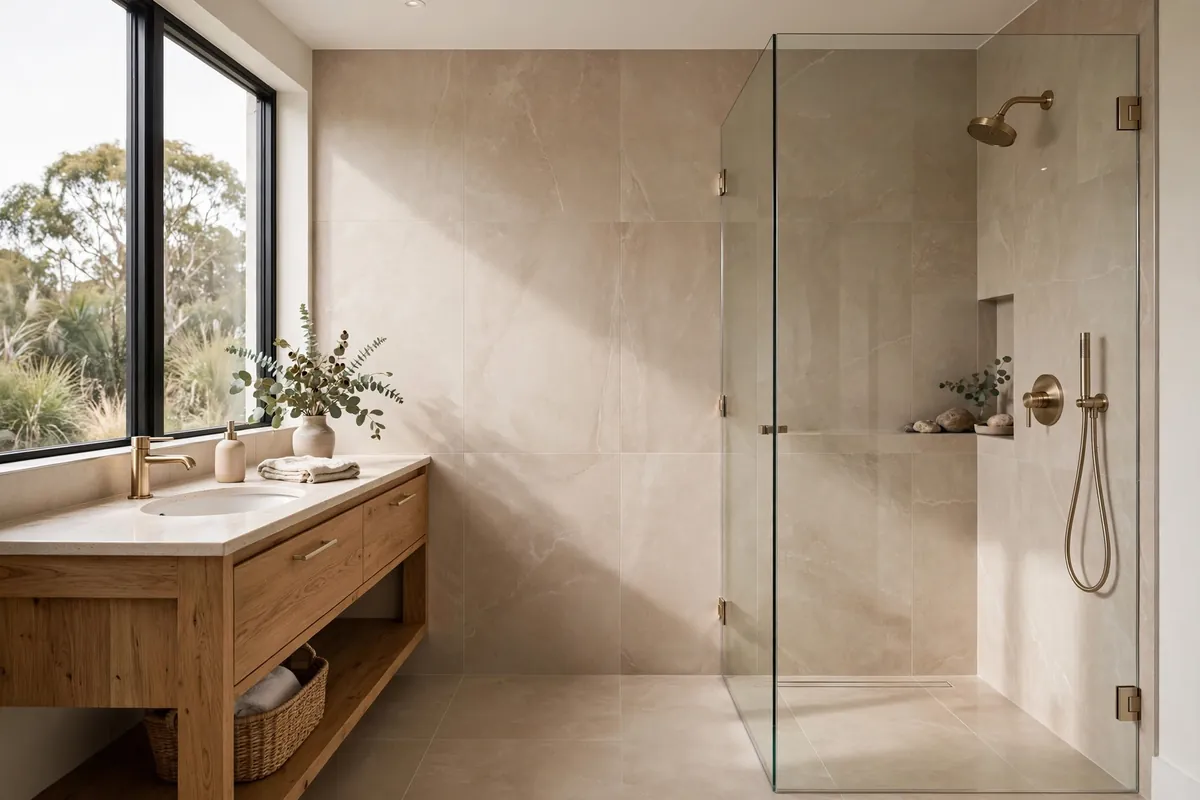
Tiles set the tone of your entire bathroom. They’re the biggest surface you’ll see, the hardest thing to change later, and — if you choose badly — the most expensive mistake in the renovation. This guide walks through the tile materials, patterns and costs that matter for Australian bathrooms in 2026.
How Much Does Bathroom Tiling Cost in Australia?
Bathroom tiling has two cost components: the tiles themselves and the labour to lay them. Here’s what to budget:
Tile Supply Costs (per m²)
- Standard ceramic: $20–$60/m² — the budget workhorse, huge range of colours
- Porcelain: $50–$130/m² — denser, less porous, better for wet areas
- Natural stone (marble, travertine): $80–$150+/m² — luxurious but needs sealing
- Mosaics and feature tiles: $60–$200+/m² — often sold per sheet
Labour Costs (per m²)
- Standard laying: $40–$70/m² for straightforward floor or wall tiling
- Complex work: $70–$120/m² for herringbone, mosaics, or fiddly cuts around fixtures
- Waterproofing: $500–$1,200 (mandatory in wet areas, must be done by a licensed waterproofer)
Total Project Ranges
- Small ensuite (~15m² tiled): $1,500–$3,500
- Standard family bathroom (~25m² tiled): $3,000–$7,000
- Large or premium bathroom (35m²+): $6,000–$12,000+
Sydney and Melbourne tilers typically charge 15–25% more than regional areas. Most tilers have a minimum call-out of $300–$500.
Ceramic vs Porcelain vs Natural Stone
Ceramic Tiles
The affordable classic. Modern ceramic tiles come in convincing stone and timber looks at a fraction of the price. Best for walls and low-traffic floors. Less dense than porcelain, so slightly more prone to chipping.
Porcelain Tiles
The best all-rounder for Australian bathrooms. Higher density means lower water absorption, better stain resistance and longer life. Worth the premium for floors and showers. Large-format porcelain (600×1200mm) is trending — fewer grout lines, easier cleaning. If you’re renovating a compact space, our small bathroom design ideas show how to make every square metre work harder.
Natural Stone
Marble, travertine and limestone deliver unmatched character — no two tiles are identical. But stone is porous, needs regular sealing, and can stain. Beautiful for a feature wall; think carefully before using it on a busy family bathroom floor.
Tile Sizes: What’s Trending
- Large format (600×600mm and up): The dominant trend. Fewer grout lines make small bathrooms feel bigger and cleaning easier.
- Subway tiles (75×150mm or 100×200mm): Timeless for feature walls and shower niches. Cheap ($20–$40/m²) and endlessly versatile.
- Kit-kat (finger) mosaics: Slim vertical strips that add texture and a Japanese-influenced feel. Popular for vanity splashbacks.
- Terrazzo-look: Speckled patterns that hide dirt well — practical and on-trend.
Patterns and Layouts That Work
- Stacked (grid): Modern, clean, minimal cutting waste. Best with large-format tiles.
- Brick/subway bond: Classic offset pattern. Forgiving of slightly uneven walls.
- Herringbone: Stunning but labour-intensive — expect to pay 30–50% more in laying costs, plus 15% extra wastage.
- Vertical stack: Running rectangular tiles vertically makes ceilings feel higher. Great trick for bathrooms with low ceilings.
Grout: The Detail Everyone Forgets
Grout colour changes the entire look. White grout with white tiles = seamless and calm. Dark grout with light tiles = bold and graphic (but shows every imperfection in laying). Mid-grey is the practical compromise — hides dirt, suits most tiles.
Use epoxy grout in showers if your budget allows ($15–$25/m² extra). It’s virtually stain-proof and doesn’t need sealing, unlike standard cement grout.
Wet-Area Rules You Must Know
Australian Standard AS3740 requires waterproofing in all wet areas, and it must be done by a licensed waterproofer — not your tiler, not your mate. Key points:
- Waterproof membrane goes under the tiles, not over them
- Allow proper curing time before tiling (usually 24–72 hours)
- Get a waterproofing certificate — you’ll need it for insurance and resale
- Floor wastes must be correctly positioned before screeding
Where to Splurge vs Save
- Splurge: Shower floor and walls (water exposure is highest), waterproofing (non-negotiable), grout quality
- Save: Behind the vanity and toilet (barely visible), ceiling (paint it), laundry splashback areas
- Smart compromise: Premium feature tile on one wall + affordable large-format everywhere else
Tile Maintenance: Keeping Them Looking New
Good tiles last decades with basic care. Sweep or vacuum weekly to prevent grit scratching the glaze. Mop with warm water and a pH-neutral cleaner — harsh acids and bleach damage grout and etch natural stone. Re-seal natural stone every 1–2 years and cement grout every 2–3 years. Fix cracked tiles promptly; water getting behind tiles is how small problems become expensive ones. In hard-water areas, squeegee shower walls after use to prevent mineral buildup — thirty seconds now saves hours of scrubbing later.
Choosing Tile Colours for Australian Bathrooms
Colour choice affects not just looks but how big the bathroom feels and how much cleaning you will do.
- White and off-white: The safe default. Makes small bathrooms feel larger, matches everything, and shows the least limescale. Can feel sterile without texture — pair with a feature tile or timber vanity for warmth.
- Grey: Practical and modern. Mid-grey hides dirt and water marks better than white. Dark charcoal greys are dramatic but show every water spot — keep them to feature walls, not shower floors.
- Beige and warm neutrals: The 2026 trend. Warmer than grey, more forgiving than white. Works beautifully with brass tapware and timber.
- Dark green and navy: Bold choices for powder rooms and feature walls. Use in small doses — a full dark bathroom needs excellent lighting to avoid feeling cave-like.
- Terrazzo and patterned: Busy patterns hide dirt brilliantly but can overwhelm small spaces. Limit patterned tiles to floors or one feature wall.
Pro tip: take tile samples home and view them in your bathroom’s actual light — morning, noon and evening. Showroom lighting lies.
FAQs
What is the cheapest way to tile a bathroom in Australia?
Use standard ceramic tiles ($20–$40/m²) in a simple stacked or brick pattern, keep the tiled area modest, and avoid mosaics and herringbone which blow out labour costs. A small bathroom re-tile can be done for $1,500–$2,500 this way.
Are porcelain tiles worth the extra cost over ceramic?
For bathroom floors and showers, yes. Porcelain’s lower porosity means better water resistance, fewer stains and longer life. For walls in a low-use powder room, ceramic is perfectly fine and much cheaper.
How long does bathroom tiling take?
A standard family bathroom takes 3–5 days for tiling alone (plus 1–2 days for waterproofing and curing before that). Complex patterns, mosaics or large bathrooms can stretch to a full week.
Can I tile over existing bathroom tiles?
Sometimes, but it’s risky. The existing tiles must be perfectly sound, and you’ll lose room dimensions and need to adjust fittings. Most tilers recommend stripping back to substrate for a proper job — tile removal costs $45–$55/m².
Do I need a licensed tiler in Australia?
Tilers don’t need a licence in most states for the tiling itself, but waterproofing MUST be done by a licensed waterproofer. Always check your tiler’s reviews, insurance and previous work regardless of licensing.