
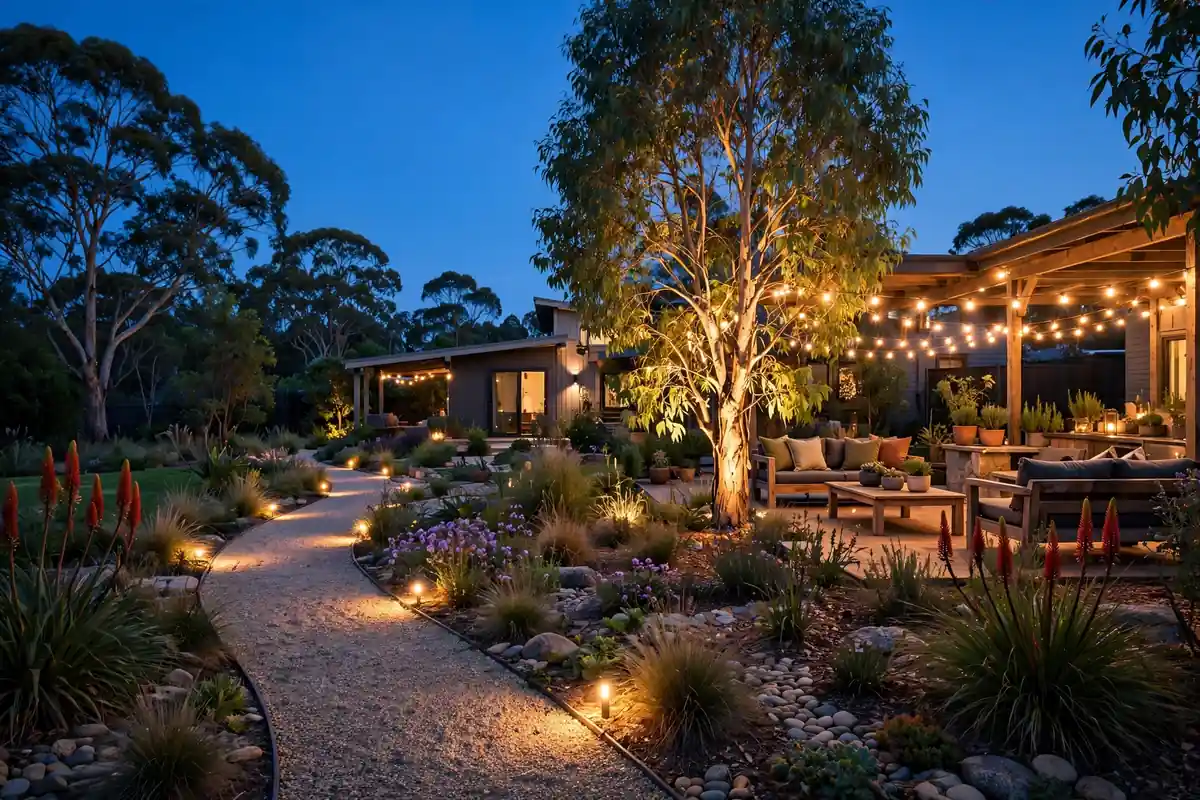
Good outdoor lighting does more than keep you from tripping over the garden hose after dark. Done well, it turns your backyard into an extra living room, makes your home safer, and shows off the garden you’ve worked hard on. The trick is knowing which lights go where — and what it should cost in Australia.
This guide covers the main types of outdoor lighting for Australian homes, realistic 2026 prices, and practical tips for garden, patio and security lighting.
How Much Does Outdoor Lighting Cost in Australia?
Costs vary enormously depending on whether you go DIY solar or hire a professional for a full wired system. Here’s what Australian homeowners typically pay:
- DIY solar path lights: $100–$500 total for a set of 6–10 lights from Bunnings or similar. No wiring needed.
- Low-voltage DIY kits: $1,000–$2,500 including fixtures, transformer and cable. A keen DIYer can install these over a weekend.
- Professionally installed garden lighting: $4,000–$12,000 for a typical suburban garden (design, fixtures, trenching, transformer and labour).
- Full landscape lighting design: $10,000–$20,000+ for large blocks with architectural lighting, pool lighting and smart controls.
Per-fixture supply costs: path lights $50–$200 each, spotlights $80–$250 each, LED strip lighting $30–$80 per metre. Electrician labour for 240V work runs $100–$150 per hour.
Path and Walkway Lighting
Path lights are the workhorse of garden lighting. They mark walkways, steps and driveways so nobody stumbles in the dark.
Best Options for Paths
- Solar bollards: Cheapest and easiest. Push into the ground, done. Light output is modest but fine for marking edges. Replace every 2–3 years as batteries fade.
- Low-voltage LED path lights: Brighter, more reliable, and last 10+ years. Need a transformer and cable run, but a handy homeowner can manage it.
- Recessed deck lights: Tiny lights set flush into decking or pavers. Beautiful effect along paths and steps. Best installed during construction or a re-deck.
Space path lights 2–3 metres apart and offset them either side of the path rather than in a straight military line — it looks far more natural. If you’re planning the path itself as well, see our timber deck cost guide for Australian pricing on outdoor surfaces.
Garden and Feature Lighting
This is where outdoor lighting gets fun. Uplights at the base of a feature tree, spotlights washing across a textured wall, or soft downlights from a pergola beam (“moonlighting”) create the layered look you see in magazines.
Techniques That Work
- Uplighting: Place a spotlight at the base of a tree or sculpture, aimed upward. Dramatic and simple.
- Downlighting/moonlighting: Mount lights high in a tree or under a pergola, aimed down. Mimics moonlight filtering through leaves.
- Wall washing: A row of evenly spaced lights aimed at a fence or rendered wall creates a warm, even glow.
- Silhouetting: Light placed behind a plant so its dark shape shows against a lit wall. Striking and cheap to achieve.
Warm white (2700K–3000K) suits Australian gardens far better than cool white, which can look harsh and clinical outdoors.
Patio, Deck and Entertaining Areas
Your entertaining zone needs flexible lighting — bright enough for cooking at the barbecue, dim enough for a late-night drink. Planning an outdoor cooking setup? Our outdoor kitchen ideas guide covers layouts and costs.
- Festoon/string lights: The crowd favourite. A 10–20 metre string of warm LED festoon lights over a patio instantly creates atmosphere. Expect $50–$200 for a quality outdoor-rated set.
- Wall-mounted sconces: Flank doors and seating areas with matching sconces for a finished look. Choose IP44-rated fittings minimum for exposed positions.
- Step lights: Essential for safety on deck stairs. Recessed or surface-mounted, low-voltage, and cheap to run.
- Dimmers and zones: Put entertaining lights on a separate circuit (or smart plug) so you can dim them independently of security lights.
Security Lighting
Security lighting and garden lighting serve different purposes — don’t confuse them. Security lights should be bright, sudden and a little bit startling.
- Motion-sensor floodlights: Cover driveways, side passages and back doors. LED floodlights cost $40–$120 each; a sparky charges $150–$300 to install one on an existing circuit.
- Positioning matters: Mount floodlights high (3+ metres) and aim them down across the area, not into neighbours’ windows.
- Sensor settings: Adjust the sensitivity and timer so the light doesn’t trigger every time a possum wanders past. Most allow 1–10 minute run times.
Keep security lighting on a separate switch from your ambient garden lights so you’re not blasting the backyard with floodlights during a dinner party.
Solar vs Low-Voltage vs 240V: Which System?
| System | Pros | Cons | Best For |
|---|---|---|---|
| Solar | No wiring, cheap, easy DIY | Dim, short-lived batteries, unreliable in shade | Renters, small accents |
| Low-voltage (12V) | Safe DIY, bright, long-lasting LEDs | Needs transformer and cable trenching | Most gardens |
| 240V mains | Brightest, powers anything | Licensed electrician required, dearest | Security floods, large systems |
For most Australian homes, a 12V low-voltage LED system is the sweet spot: safe to install yourself, bright enough for real effect, and cheap to run.
Smart Controls and Timers
There’s no point lighting the garden if you’re fumbling for switches in the dark. Options include:
- Dusk-to-dawn sensors: Lights switch on automatically at sunset. Built into many transformers.
- Smart plugs and Wi-Fi timers: Control garden lights from your phone or set schedules. $25–$60 per plug.
- Zoned transformers: Higher-end transformers offer multiple zones with independent timers — path lights on all night, feature lights off at midnight.
Common Mistakes to Avoid
- Too many lights: More is not better. A few well-placed lights beat twenty scattered ones.
- Wrong colour temperature: Cool white (5000K+) looks like a car park. Stick to 2700K–3000K warm white.
- Light pollution: Aim lights down and shield them. Your neighbours will thank you.
- Forgetting maintenance: Clean lenses yearly, trim plants that grow over fittings, and check cable connections.
- Skipping the plan: Sketch your garden and mark light positions before buying anything. It saves expensive rework.
FAQs
How much does professional outdoor lighting cost in Australia?
A professionally designed and installed garden lighting system typically costs $4,000–$12,000 for an average suburban block. Larger properties with architectural and pool lighting can run $15,000–$20,000+. DIY solar setups start from a few hundred dollars.
Are solar garden lights worth it?
Solar lights are fine for low-stakes accent lighting — marking a path edge or adding sparkle to a garden bed. But they’re dimmer and less reliable than wired lights, and the rechargeable batteries usually need replacing every 2–3 years. For anything you rely on (steps, security), go wired.
Can I install low-voltage garden lighting myself?
Yes. 12V low-voltage systems are safe for DIY in Australia — no electrician needed for the garden wiring itself. You’ll still need a sparky if you need a new outdoor power point for the transformer.
What colour temperature is best for outdoor lighting?
Warm white (2700K–3000K) is the best choice for residential gardens. It flatters plants, timber and stone, and feels welcoming. Cool white looks harsh outdoors and can annoy neighbours.
How do I stop my garden lights annoying the neighbours?
Aim all lights downward, use shielded fittings, keep brightness modest, and put feature lights on timers so they switch off by 10–11pm. Security floodlights should be aimed at your property, not across the fence.