
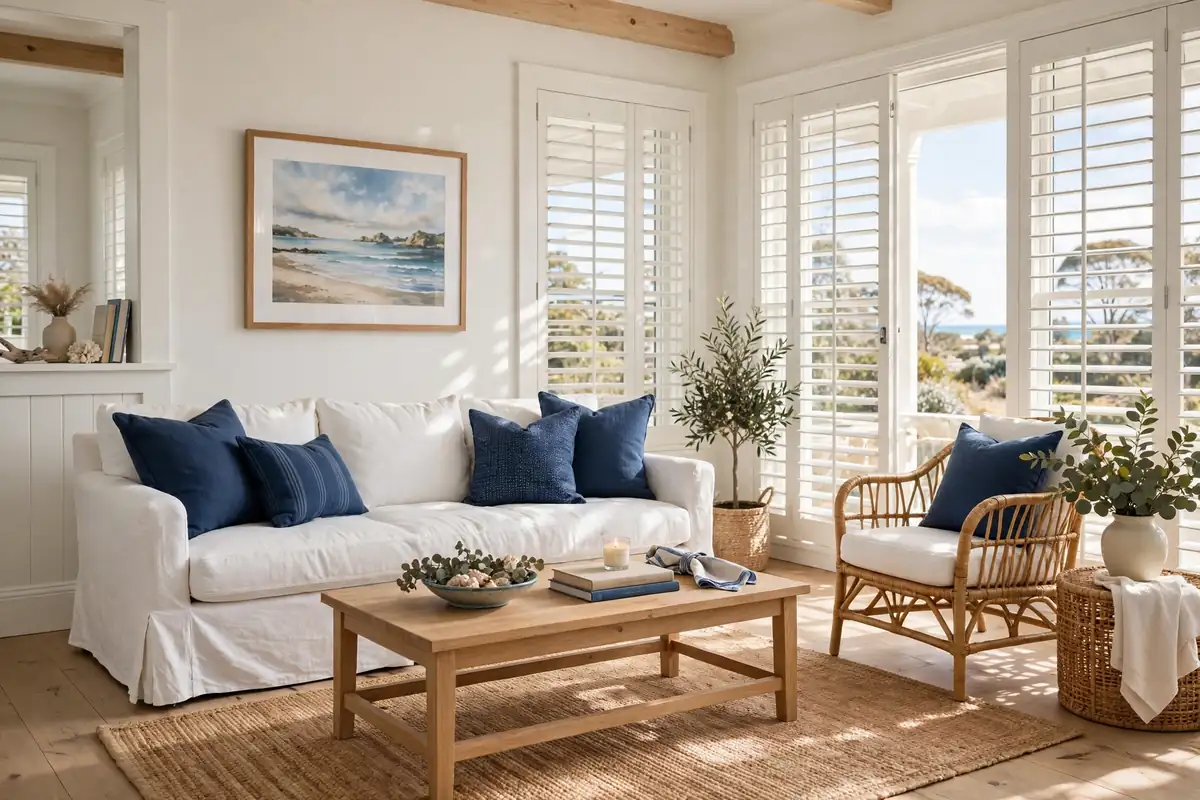
Few interior styles have captured Australian hearts like Hamptons. Born in the beach houses of Long Island, New York, it’s been lovingly adapted for our climate and way of living — think relaxed coastal elegance rather than stuffy formality. Whether you’re renovating a whole house or just refreshing a room, here’s how to get the Hamptons look right in 2026, room by room.
What Is Hamptons Style?
Hamptons style is classic coastal luxury: light-filled rooms, a calm neutral palette, natural textures and generous comfortable furniture. The Australian version leans more relaxed than the American original — less formal, more indoor-outdoor flow, with an emphasis on spaces that handle sandy feet, kids and entertaining without fuss. It’s timeless rather than trendy, which is why it photographs beautifully and, importantly, doesn’t date quickly. That longevity is exactly why it remains a safe investment for your home’s resale appeal too.
The Hamptons Colour Palette
Colour is the foundation. The classic Hamptons palette centres on crisp whites, soft greys, navy accents and sandy neutrals — a combination that feels fresh in summer and cosy in winter. Here’s the detailed breakdown:
- Whites and off-whites: crisp white walls (try Dulux Vivid White or Lexicon) create the light, airy base. Use warmish whites to avoid a stark feel.
- Soft greys: for upholstery, rugs and secondary walls — keep them light to mid-tone.
- Navy blue: the signature accent. Use it on cushions, occasional chairs, artwork or a feature wall — never the whole room.
- Sandy neutrals and taupes: bring warmth through timber tones, jute rugs and natural fibres.
- Soft blues, sea-glass greens: contemporary Australian Hamptons often adds these as secondary accents.
The golden rule is restraint. Stick to three or four colours per room, with white doing most of the heavy lifting.
Key Elements Room by Room
Living Room
Start with a generous linen-look sofa in white or natural — slipcovers are practical for Australian family life. Layer with navy and blue cushions, a jute or sisal rug, and a timber or marble coffee table. Button-tufted occasional chairs and a rattan accent chair complete the look. Keep window treatments simple: sheer curtains or white plantation shutters that maximise natural light.
Kitchen
The Hamptons kitchen is all about the details. Shaker-style cabinetry (flat-panel doors with a simple frame) in white or soft grey, a large island bench with pendant lights above, and marble-look benchtops — Carrara-look engineered stone is the practical Australian choice. Subway or herringbone splashback tiles in white, brushed nickel or matte black tapware, and a butler’s sink if the budget allows. Our butler’s pantry guide pairs perfectly with a Hamptons kitchen.
Bedroom
A Hamptons bedroom should feel like a boutique hotel retreat. An upholstered bedhead in white or natural linen, layered white bedding with blue or grey throws, and matching bedside tables with table lamps for symmetry. A woven pendant light or rattan ceiling fan adds texture overhead. See our master bedroom ideas for layouts that suit the Hamptons aesthetic.
Bathroom
White subway tiles, a freestanding or shaker-style vanity, marble-look floor tiles and polished nickel tapware. A large mirror (or twin mirrors over a double vanity) bounces light around. Add a timber stool or woven basket for warmth.
Materials and Textures That Define the Look
- Natural fibres: linen, cotton, jute, sisal, rattan, wicker — layer them generously
- Timber: light oak, whitewashed or painted white; weathered finishes for a relaxed feel
- Stone: marble or marble-look surfaces in kitchens and bathrooms
- Panelling: VJ (vertical joint) boards on walls or ceilings are a Hamptons signature in Australia
- Metals: polished nickel, brushed brass or matte black for tapware, handles and lighting
Hamptons vs Coastal: What’s the Difference?
People often confuse the two. Coastal style is casual and beachy — think driftwood, bright blues, surf shack vibes. Hamptons is coastal’s more polished sibling: classic, structured and elegant, with tailored upholstery, symmetrical styling and a more restrained palette. If coastal is barefoot on the sand, Hamptons is barefoot on the deck of a beautiful beach house.
Getting the Look on a Budget
You don’t need a full renovation. The highest-impact, lowest-cost changes:
- Repaint walls in a warm white ($500–$1,500 for a room, DIY or professional)
- Swap cushion covers for linen in white, navy and natural tones ($100–$300)
- Add a jute or sisal rug ($200–$600)
- Replace heavy curtains with sheers ($150–$400 per window)
- Add greenery — a fiddle leaf fig or palm in a woven basket ($80–$200)
Invest the most in pieces you’ll keep for years: the sofa, dining table and bedheads. Accessories and soft furnishings can be updated cheaply as trends evolve.
Don’t Forget the Exterior
True Hamptons style starts at the street. Weatherboard cladding (or a modern equivalent with shallow shadow lines) in white or soft grey, a dark front door (navy or charcoal) with classic hardware, and symmetrical landscaping with clipped hedges all signal Hamptons before you step inside. On the deck, continue the palette: white outdoor furniture with navy cushions, lantern-style lighting and plenty of greenery in classic pots. The goal is a seamless flow — when the sliding doors open, inside and outside should feel like one generous space.
Common Mistakes to Avoid
- Too much navy: it should be an accent, not the dominant colour
- Going too themed: a few coastal touches (coral, shells, rope) are enough — you don’t want a souvenir shop
- Ignoring natural light: heavy drapes kill the Hamptons feel; keep windows light and bright
- Cheap-looking wicker: invest in quality rattan — flimsy imitations cheapen the whole room
- Forgetting the outdoors: Australian Hamptons should flow to the deck or patio — style your outdoor space to match
For open-plan spaces, our open plan living ideas show how to carry a cohesive Hamptons palette across kitchen, dining and living zones.
Frequently Asked Questions
Is Hamptons style still popular in Australia in 2026?
Yes — it’s one of the most requested styles by Australian interior designers year after year. Its timeless palette and relaxed elegance mean it doesn’t date the way trend-driven styles do. The current evolution (“modern Hamptons”) adds warmer neutrals and softer lines.
What white paint is best for Hamptons style?
Dulux Vivid White and Lexicon are the go-to choices. Vivid White is a clean, bright white; Lexicon has slightly warmer undertones. For woodwork (skirtings, architraves, doors), use the same white in a semi-gloss for a crisp finish.
Can I do Hamptons style in a small apartment?
Absolutely — it’s actually ideal for small spaces because the light palette makes rooms feel bigger. Focus on white walls, a light sofa, one or two navy accents, natural textures and a large mirror to bounce light. Keep furniture scaled to the room.
What’s the difference between Hamptons and modern coastal?
Modern coastal is more relaxed and minimalist with a neutral, often warmer palette. Hamptons is more classic and structured — tailored upholstery, symmetrical arrangements, shaker cabinetry and the signature navy accent. Think of Hamptons as coastal with better tailoring.
How much does it cost to decorate a living room in Hamptons style?
A cosmetic refresh (paint, cushions, rug, curtains, accessories) runs $2,000–$5,000. A full furniture overhaul for a living room is typically $8,000–$20,000+ depending on quality. Start with paint and soft furnishings for maximum impact per dollar.