
Walk In Shower Ideas Small Bathroom Australia: The 2026 Layout, Cost & Waterproofing Guide
If you’re hunting for walk-in shower ideas for a small Australian bathroom, you’re in the right place. For instance, a tiny bathroom with a clunky framed shower feels cramped and dated. By contrast, a well-planned walk-in can make the same room feel twice the size.
The catch? Walk-ins hide nothing. With no hob, the waterproofing, falls and drainage must be right — otherwise, water wanders across your floor and into your walls.
Short answer: The best walk-in shower ideas for small Australian bathrooms are a single fixed frameless glass panel (900–1200mm), a hobless (curbless) entry with a linear drain, floor tiles falling 1:80–1:50 to the waste, waterproofing to AS 3740:2021, and a WELS-rated showerhead. Keeping the existing drain position, expect $4,000–$8,000 in 2026; a full rebuild with a relocated drain runs $8,000–$15,000+. Costs vary by location and supplier — get itemised quotes.
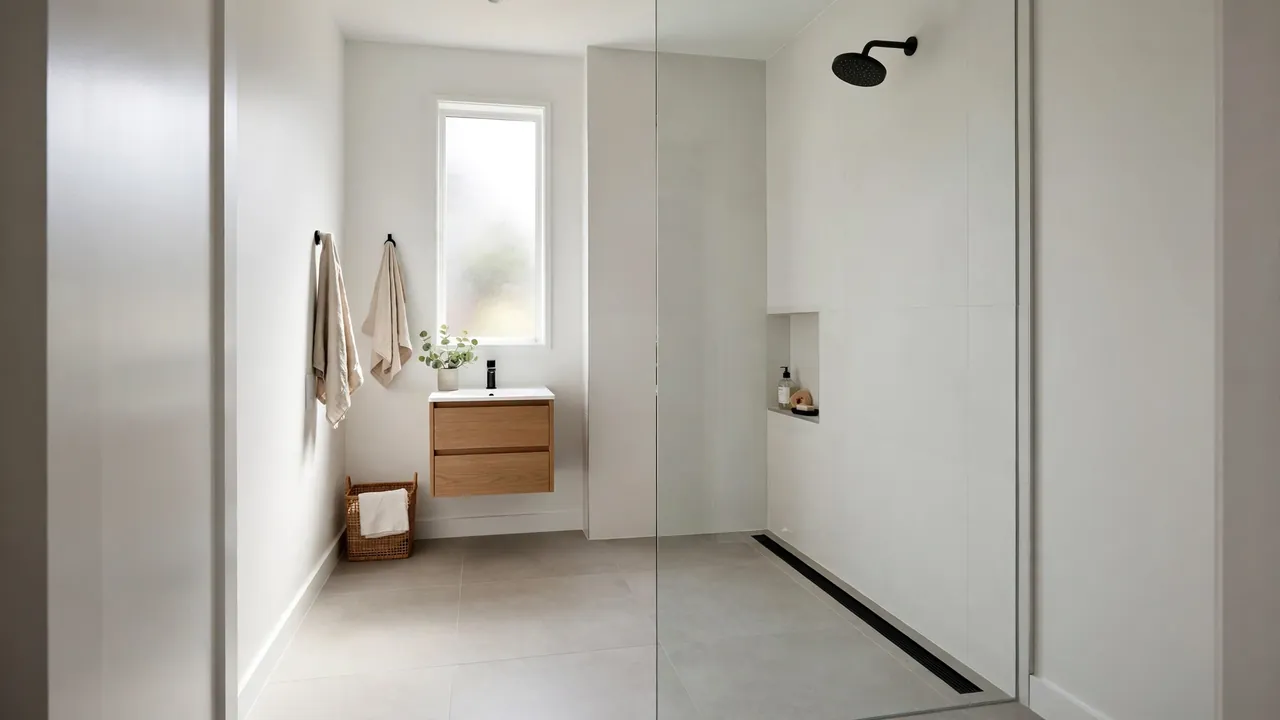
Figures below are indicative 2026 Australian ranges from published supplier and trade guides (sources at the end). Costs vary — always get itemised quotes.
Walk in shower ideas for small bathrooms: 7 layouts that actually fit
Most small Australian bathrooms fit a walk-in within the existing footprint — if the layout respects the plumbing you've got.
Corner walk-in with a single fixed panel
The classic. Showerhead on one corner wall, a fixed frameless glass panel (900–1200mm) at right angles from the other. No door to swing, one sheet of glass to clean.
Wet-room style (no screen)
Instead, waterproof the whole floor and grade it to a drain. The ultimate space-saver for ensuites under 4m², but the rules are strict (see AS 3740 below).
Long-wall walk-in
In a narrow bathroom, run the shower along the short end wall with entry on the long side. A 1200mm fixed panel contains spray while the open side gives a generous entry.
L-shaped return panel
A fixed panel with a short 300–400mm return blocks sideways spray without a door — handy when the showerhead sits opposite the entry.
Curbless entry with a linear drain
A curbless shower (also called hobless) removes the raised lip so the floor flows straight in. Pair it with a linear drain at the back wall and large-format tiles: the single-plane fall is simpler to tile than the four-way fall a point waste needs.
Shower-over-bath with a frameless screen
Not strictly a walk-in, but ideal for the tiniest bathrooms: keep the bath, add a frameless bath screen and rainfall showerhead. The open look for less — and families keep the tub. Frameless over-bath screens start around $1,000 supply.
Walk-in with a bench and niche
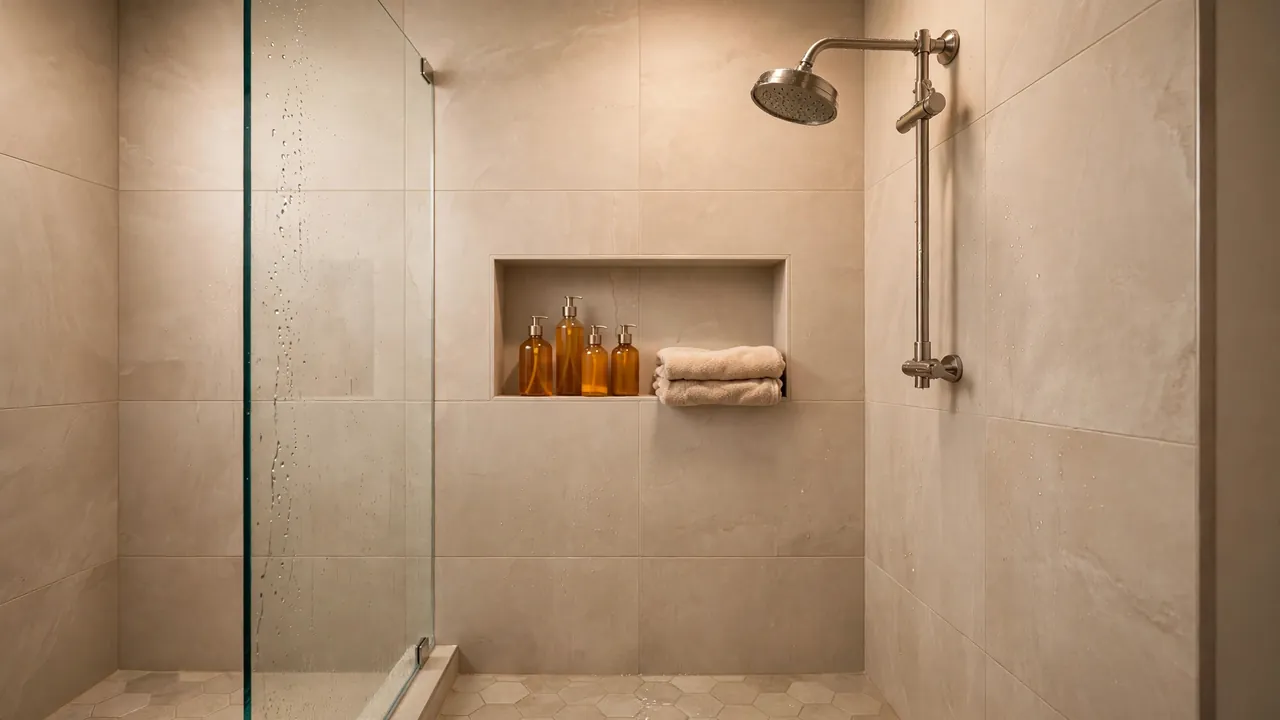
With 1200mm+ of shower length, a floating tiled bench (~400mm deep) doubles as a shaving ledge and seat, and a recessed niche keeps bottles off the floor. So plan both before the waterproofer arrives.
Frameless shower screen small bathroom: what to know before you buy glass
Above all, a frameless screen is the biggest visual upgrade in a small walk-in — one clear panel erases the barrier that makes a 3m² bathroom feel like a cupboard.
Glass and standards. Frameless panels are typically 10mm toughened safety glass, and all shower screens sold in Australia must meet AS/NZS 2208. Full enclosures run roughly $400–$1,200+ supply.
Installation. Professional installation runs about $250–$800, with frameless at the top end, because heavy glass needs precise alignment.
Fixed panel vs door. A fixed panel with a 700–900mm open entry is usually enough when the showerhead aims away from the opening. Add a door only if the layout forces spray toward the entry.
Clear vs textured. Clear glass maximises space. However, fluted or frosted glass hides water spots but visually shrinks the room.
Walk in shower small bathroom layout: clearances that keep it comfortable
After all, a cramped shower is a measuring mistake, not a design choice. Practical minimums:
- Shower footprint: 900×900mm is about the smallest comfortable shower, while 900×1200mm is the sweet spot for a walk-in.
- Entry opening: at least 700mm clear (800–900mm better) — also the accessibility sweet spot for ageing in place.
- Glass to spray: aim the showerhead so spray lands 500mm+ from any open glass edge, or fit an L-shaped return panel (layout #4).
- Door swing: check the bathroom door can't hit the glass or someone stepping out — a cavity slider is the classic fix.
- Floor finish: use slip-resistant tiles (P3 or higher) since a walk-in floor doubles as the bathroom floor. Our guide to the best flooring for Australian homes covers wet-area tiles in more detail.
Waterproofing to AS 3740: the rules that stop walk-in showers leaking
The current standard is AS 3740:2021 (Waterproofing of domestic wet areas), alongside the National Construction Code:
- Floor falls: where a floor waste is installed, the finished floor must fall to it at 1:80 minimum and 1:50 maximum — about 12.5mm of drop per metre at the gentle end.
- The membrane must fall too: grade the waterproof membrane itself to the drain's puddle flange as well.
- Shower walls: waterproof the entire wall lining in the shower area to 1800mm above the finished floor, or 50mm above the shower rose — whichever is higher.
- Unenclosed showers: with no screen, waterproof and fall the floor out to at least 1500mm from the shower rose. A waterstop at 1500mm limits the "shower area" — skip it and the whole bathroom floor may count as the shower area.
- Penetrations: seal every tap, mixer, drain and pipe penetration into the membrane.
In most states a licensed waterproofer must do (or certify) this work. Waterproofing adds $500–$1,500 per room — trivial next to the $1,000–$3,000+ a full replacement costs, or up to $4,000 for a shower re-tile. Standards Australia publishes the standard.
Drainage and gradients: linear drains vs point wastes
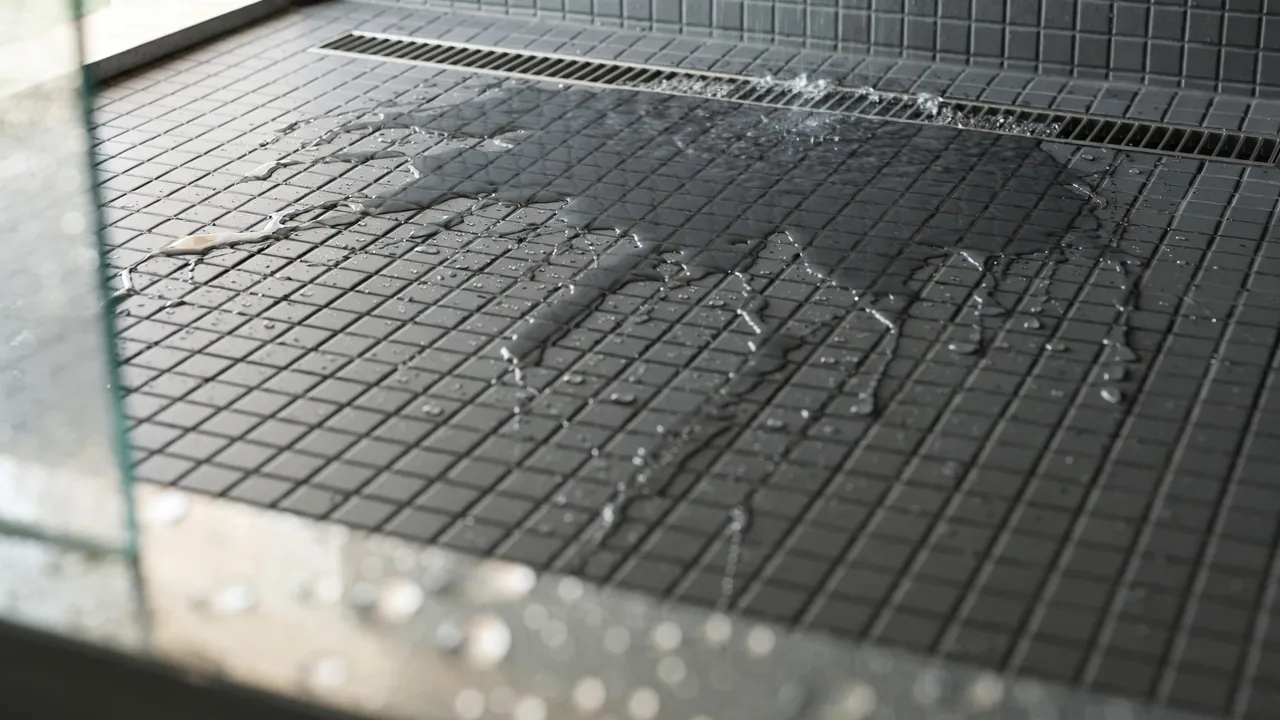
Linear (channel) drains sit in a line — usually against the back wall — letting the floor fall on a single plane, so large-format tiles run straight through with minimal cutting. A 600mm tile-insert grate costs roughly $189–$400. However, the trade-off is deeper floor build-up and pricier tiling labour.
Point wastes are cheaper and simpler, but the floor must fall to them from all four directions — forcing small-format tiles or mosaics.
Confirm the grate carries WaterMark certification, and match the showerhead to the drain: a standard 100mm outlet handles a normal showerhead, but twin rainfall heads need a plumber's tick on capacity first.
WELS-rated showerheads: save water without a weak shower
Australia's WELS scheme caps shower flow at 9 litres per minute — a 3-star shower. Since the 2022 update, showers can reach 5 stars, using as little as 5–7 litres per minute.
For a walk-in, a 3-star rail shower with an adjustable handpiece is the practical pick: decent pressure and easy rinsing, yet it won't flood the room faster than the drain copes. Oversized rainfall heads push water sideways, so that's extra splash you'll have to manage. Check ratings on the official WELS flow controller guidance page before buying.
What a walk in shower conversion costs in Australia in 2026
Two very different projects hide under "walk-in shower conversion":
| Project | Indicative 2026 range | What's involved |
|---|---|---|
| Refresh in place | $4,000–$8,000 | Keep the drain position; re-tile shower walls and floor; re-waterproof; frameless fixed panel ($400–$1,200 supply + $250–$800 install); new mixer, showerhead and drain |
| Full rebuild, drain relocated | $8,000–$15,000+ | Move the waste and re-grade the floor; curbless entry; full-room waterproofing; frameless glass; new tapware; possible structural work |
The refresh is the smart money for most small bathrooms, because moving a drain through a slab or re-grading a timber floor adds thousands in labour. Australian guides put a full shower renovation after water damage at $3,000–$10,000+.
To budget the whole room, read our bathroom renovation costs in Australia guide, check the renovation cost per square metre in Australia, and use our free tile calculator for tile quantities.
Personal experience: what I'd do differently
An illustrative account of a typical small-ensuite renovation, written to show the decisions involved — not a claim of professional credentials.
Converting my own 2.1 × 1.8 metre ensuite, I assumed the tiler would "sort out the falls". He did, mostly. What I didn't plan was the niche: I asked for one mid-job, the waterproofer had finished, and cutting into a waterproofed wall meant re-waterproofing and a four-day delay.
Still, that cost about $600 and a week. Next time I'd finalise every niche, bench and mixer on paper before the waterproofer arrived — and I'd spring for the linear drain, because mopping a flat bathroom floor every morning gets old.
Expert insights: what the published guidance actually says
No invented quotes — just what Australian industry sources genuinely publish:
- On falls: Stormtech publishes that good practice is a 1:60 to 1:80 fall in high-risk (Category 1) wet areas, with AS 3740:2021 requiring falls in the substrate as well as the finished surface.
- On floor wastes: under AS 3740:2021 and the NCC, shower areas of Class 1 buildings need a floor waste — so a walk-in without one is non-compliant, not just inconvenient.
- On water efficiency: the official WELS site caps showers at 9 litres per minute (3 stars), while modern flow controllers can bring efficient showers down to 5–7 litres per minute.
- On glass: frameless screens need professional installation with tight tolerances, and all screens must use toughened safety glass meeting AS/NZS 2208.
5 mistakes that cause walk-in shower leaks
- Treating waterproofing as optional. Wrong product or an unlicensed handyman is the fastest route to a five-figure rebuild.
- A flat floor. No fall means water sits, seeps through grout and rots the substrate. The 1:80–1:50 range exists for a reason.
- No waterstop under the screen. It stops water tracking out into the room, so don't let anyone trim it down to make fitting easier.
- Unsealed penetrations. Seal mixers, rails and tap flanges into the membrane — silicone is a finish, not waterproofing.
- Oversizing the showerhead. A big rainfall head can deliver water faster than a single 100mm waste clears it — match the head to the capacity your plumber confirms.
Frequently asked questions
How much does a walk-in shower cost in a small bathroom in Australia?
Keeping the existing drain position: typically $4,000–$8,000 for re-tiling, re-waterproofing, a frameless fixed panel ($400–$1,200 supply plus $250–$800 install) and new tapware. A full rebuild with a relocated drain, curbless entry and full-room waterproofing runs $8,000–$15,000+. Costs vary by location and supplier — get itemised quotes.
Can you have a walk-in shower in a very small bathroom?
Yes. A 900×900mm shower with a single fixed frameless panel and open entry is the minimum comfortable walk-in, and a wet-room style suits ensuites under 4m². Keep the drain in place to control costs.
Do walk-in showers need a door?
Not usually. A fixed panel with a 700–900mm open entry works when the showerhead aims away from the opening. A fully unenclosed shower must be waterproofed out to 1500mm from the shower rose under AS 3740:2021.
What fall does a walk-in shower floor need?
Under AS 3740:2021, the finished floor must fall to the floor waste at 1:80 minimum and 1:50 maximum (about 12.5mm of drop per metre at the gentle end). The membrane underneath must also be graded to the drain's puddle flange.
Are walk-in showers more likely to leak than hobbled showers?
Only if built badly. A walk-in built to AS 3740:2021 — correct falls, graded membrane, sealed penetrations and adequate drainage — is no more leak-prone than a hobbled shower.
What WELS rating should my showerhead be?
Shower flow is capped at 9 litres per minute (a 3-star shower). A 3-star rail shower with an adjustable handpiece is the practical walk-in choice; 4- and 5-star showers are available using as little as 5–7 litres per minute.
Costs vary by location, supplier and project complexity. Figures above are indicative 2026 ranges from the sources below — get itemised quotes for your bathroom.
The bottom line
A walk-in shower is the highest-impact upgrade for a small Australian bathroom — one fixed frameless panel, a hobless entry and continuous tiles can make the room feel twice the size. What makes or breaks it is the hidden work: AS 3740:2021 waterproofing, 1:80–1:50 falls, a WaterMark-certified drain, and a WELS-rated showerhead.
Keep the drain where it is, finalise every niche and mixer before the waterproofer arrives, and budget $4,000–$8,000 for a refresh or $8,000–$15,000+ for a full rebuild.