
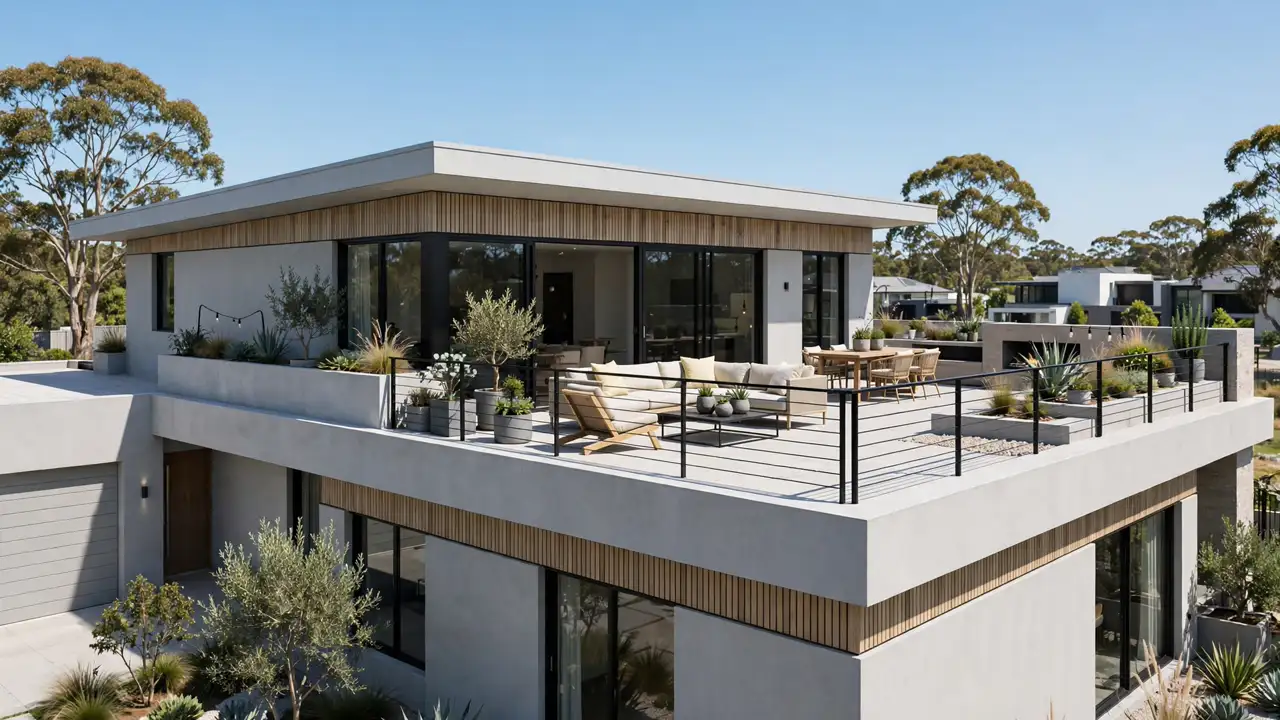
$50 to $100 per square metre. That is what a flat roof houses australia project typically costs for supply and installation in 2026. Current industry benchmarks for New South Wales residential builds put it there. It is the only number in this guide that looks simple. Everything else about a flat roof is a trade. You get the clean lines and rooftop space, but you must design the drainage rather than assume it. You use fewer materials, but the membrane has to be perfect.
Flat Roof Houses Australia in 2026: The Short Answer
A flat roof on a new Australian home costs $50 to $100 per square metre for supply and installation. A skillion roof in Colorbond steel at a standard pitch costs $60 to $120 per square metre. It is not actually flat. It carries a very slight pitch, typically between one and five degrees, just enough for water to drain. Done well, with a quality membrane and regular upkeep, it can last up to 30 years. Done badly, water ponds, the membrane fails at the seams, and the repair bill lands in the room below.
What a Flat Roof Costs — and Why Two Quotes Never Match
The $50 to $100 per square metre band covers the roof structure and membrane on a straightforward build. However, it does not cover everything a flat roof needs. A parapet, a box gutter, internal outlets, overflow provisions, insulation and the waterproofing details at every junction sit on top. The final price moves with the roof’s use. A plain roof over a garage costs far less per square metre than a trafficable rooftop terrace. That terrace needs paving, balustrade and drainage falls built into the slab.
Compare the alternatives on the same basis. A skillion roof is a single flat plane set at an angle. For example, it costs $60 to $120 per square metre in Colorbond. It sheds water far faster, which matters in high-rainfall areas. A gable roof costs more in materials and labour but needs almost no drainage engineering. A flat roof saves on height and structure. That is why it suits tight planning envelopes and two-storey designs where a pitched roof would breach a height limit.
| Roof type | Indicative cost, 2026 | Drainage | Best for |
|---|---|---|---|
| Flat roof | $50–$100/m² supply + install | Designed falls, outlets, overflow | Modern homes, terraces, solar, tight height limits |
| Skillion roof (Colorbond) | $60–$120/m² | Fast run-off to one side | Modern homes in wetter areas |
| Gable roof | More materials + labour | Excellent natural run-off | High-rainfall areas, traditional designs |
| Flat roof + terrace | $100/m² and well above | Trafficable falls + box gutters | Rooftop living, gardens, entertaining |
Flat roofed houses are growing in popularity in Australia, particularly among homeowners seeking a clean, contemporary look. In contrast, they suit the Australian climate better than cold, snowy ones. Rainfall here is relatively modest and heavy snow is rare. That is a reason to consider one, not a reason to skip the drainage design.
Membranes Compared: The Choice That Decides the Lifespan
A flat roof is only as good as its membrane. In practice, the membrane is where the cheapest quote usually hides its saving. Built-up roofing, layers of bitumen and felt, is often the cheapest form of flat roof available. It is relatively fire retardant, but it is heavier and its seams need care. Single-layer membrane roofs — PVC, TPO and EPDM — cost more than other flat roof options. Their welded seams handle standing water better than the seams on a modified bitumen roof. Modified bitumen does not handle ponding as effectively as a thermoplastic membrane such as PVC.
There is no single best membrane. PVC suits roofs that will see standing water and foot traffic. EPDM suits large, simple roofs with few seams. Modified bitumen suits budget jobs with good falls and a roofer who details the laps properly. What matters is that the roofer specifies the membrane, the insulation and the drainage together. Ask for the membrane brand and type, the seam method, and the warranty in years and what voids it. Above all, get it in writing before the roofer starts. The Australian Government’s Your Home guide notes that flat roof home designs carry greater condensation risks. They need specialist advice on insulation.
Drainage Design: Falls, Outlets and the Overflow That Saves the Ceiling
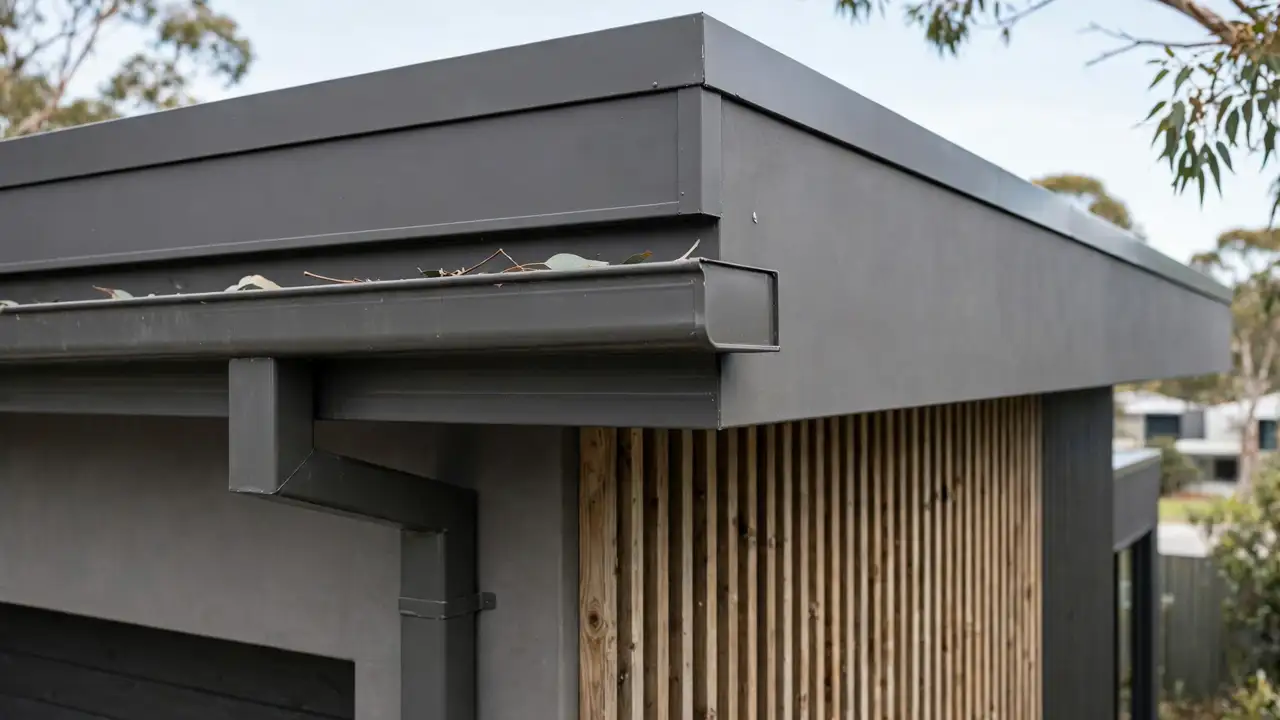
Water on a flat roof moves slowly, so every part of the drainage path needs designing. The falls are the slight slope built into the roof, typically one to five degrees. They have to run to the outlets without a low spot anywhere. In practice, a low spot becomes a pond, and a pond becomes a leak. Size outlets for local rainfall, not for the average day. The roof often needs a box gutter where it meets a parapet. And builders miss the overflow provision most often. If the main outlet blocks, the water needs a second way off the roof, not into the house.
Use this checklist on the plans before you approve them. One, the drawings show the falls with a direction and a gradient. They do not leave them to the roofer’s judgement on the day. Two, every outlet has an overflow at a lower level than the ceiling. As a result, a blocked outlet floods the garden, not the living room. Three, size the box gutter, where the roof needs one, for the roof area and the local rainfall intensity. Four, the drawings show downpipe locations, and their capacity matches the outlet. Five, specify leaf guards, because a single autumn’s leaves can block an outlet that was perfect in summer. Six, design safe maintenance access in. A house with straight roof lines looks simple from the street; the engineering is all underneath. That is why flat roof houses australia guides put drainage on the drawings before anyone chooses the membrane.
Pros and Cons, Honestly Weighed
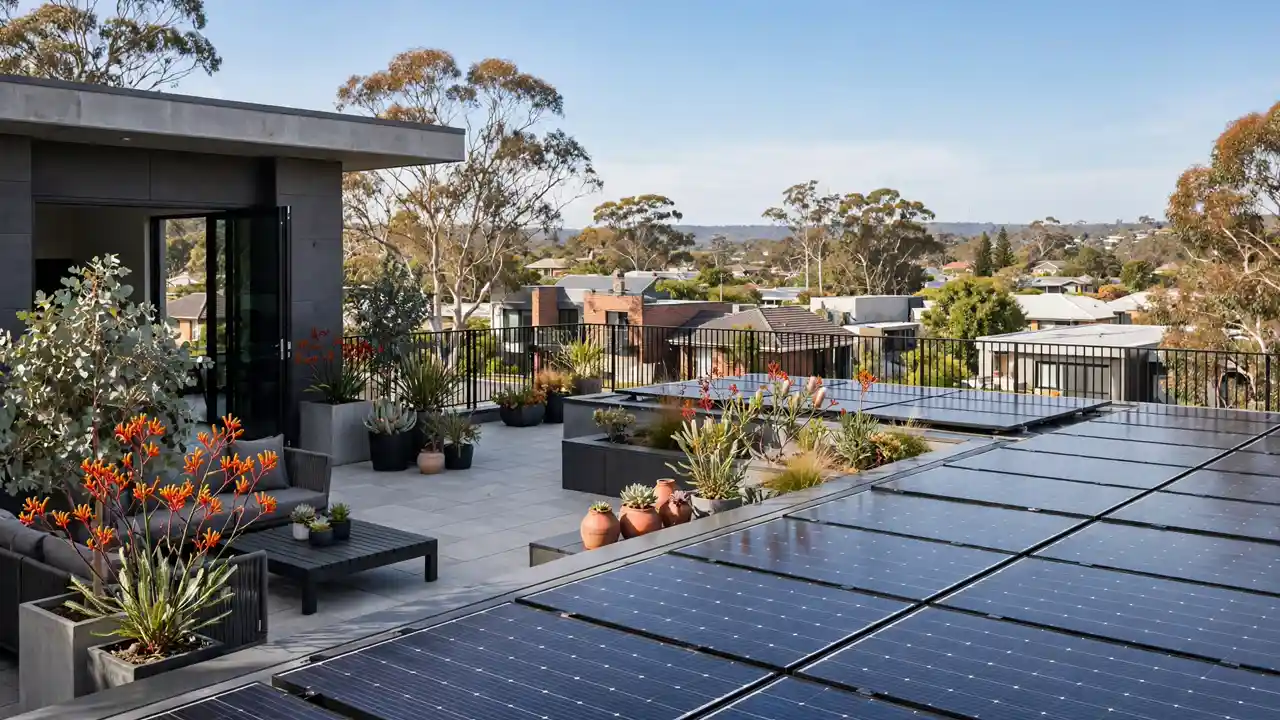
The case for a flat roof is real. A flat roof creates usable rooftop space for outdoor living, gardens or solar panels, on land you already own. It keeps the building height down, which matters under planning height limits and on tight blocks. Fewer materials go into a flat roof than a pitched roof, and the structure is simpler. Access is easy, so inspection is safer and simpler than on a steep gable. Solar panels suit a flat roof well, because you can lay them at their ideal tilt on a flat deck.
The case against it is equally real. Drainage and waterproofing are the big priorities. Unlike steeper roof designs, a flat roof sheds water more slowly. Correct falls, well-positioned outlets and suitable overflow provisions are essential. As a result, poor detailing leads to ponding, leaks and costly repairs. It is not ideal in heavy-rain regions without a purpose-designed drainage system. Maintenance is not optional — leaves, debris and blocked outlets interfere with drainage. Insulation is harder, because space is tight. In fact, the Your Home guide warns that flat roofs carry greater condensation risks and need specialist advice.
Where a Flat Roof Works — and Where It Does Not
Climate decides more than taste. A flat roof works best in drier regions. It works best on homes where the roof is part of the design: a terrace, a solar array, a garden. It is not a cost saving alone. In Adelaide’s dry climate it is a sound choice with proper drainage. However, in high-rainfall tropical Queensland or the alpine areas, it needs a purpose-designed system and an experienced roofer.
The block matters as well. A flat roof suits a modern two-storey home on a narrow block. A pitched roof there would eat the height allowance and shade the neighbours. It suits an extension where the new roof has to tuck under the existing eaves. A home where the roof is the outdoor room suits it too. It does not suit a home where the roof is an afterthought. Nor does it suit a budget with no line for drainage design.
Our roof painting cost guide prices the coating and maintenance side of any roof. In addition, our passive house cost guide covers the airtightness and insulation standards that a flat roof has to meet.
Flat Roof Houses Australia: 3 Worked Budgets
Three budgets built only from the sourced prices above, for a 150 square metre roof unless stated.
Budget 1 — 150 m² flat roof, new single-storey home, standard membrane: $7,500–$15,000. Roof at $50–$100 per square metre is $7,500–$15,000 for supply and installation. Parapet capping, outlets and overflow add $2,000–$4,000, and insulation adds $1,500–$3,000. Total $11,000–$22,000 all in.
Budget 2 — 150 m² flat roof, premium PVC membrane, box gutters: $15,000–$28,000. Premium single-layer membrane runs above the standard band; allow $90–$140 per square metre, giving $13,500–$21,000. Box gutters, parapet flashing and two internal outlets add $3,000–$6,000, and leaf guards plus safe access add $1,000–$2,000. Total $17,500–$29,000, stated as $15,000–$28,000.
Budget 3 — 100 m² trafficable rooftop terrace, flat roof below: $35,000–$70,000. The roof below the terrace at $50–$100 per square metre is $5,000–$10,000. Trafficable falls built into the slab, waterproofing to terrace standard, paving, drainage, balustrade and access add $25,000–$50,000. In addition, the terrace needs a structural engineer where the slab carries people, planters and furniture. Stated as $35,000–$70,000 with engineering, certification and a 10 per cent contingency. Our renovation cost per square metre guide helps check the terrace figure against the rest of the project.
Maintenance: The Schedule That Keeps a Flat Roof Dry
Inspect a flat roof twice a year and it lasts. Ignore it and it leaks. In autumn, clear the outlets and box gutters of leaves and check the overflow is open. After any big storm, walk the roof. Look for ponding that is still there 48 hours after the rain stops. Once a year, check the membrane at every penetration and seam, and check the parapet capping and flashing.
Three red flags mean call a roofer now. Water stains on the ceiling below the roof mean the membrane has already failed somewhere. Ponding that stays for days after rain means the falls or the outlet are wrong. As a result, the membrane is sitting in water it cannot handle. A musty smell in the room below a flat roof can mean condensation trapped in the ceiling. In fact, the Your Home guide flags that as a specific flat-roof risk needing specialist advice.
How to Read a Flat Roof Quote
A flat roof quote is only comparable if it names the same things. Ask for the membrane brand and type and the seam method. Get the falls and their gradient, the outlet sizes and positions, and the overflow provision. Ask for the box gutter specification where the roof needs one. Get the insulation type and R-value, and the parapet and flashing details. Finally, get the warranty in years with its exclusions. Comparing flat roof houses australia figures without those lines is guesswork, so get three quotes on the same drawings.
Watch for the exclusions that sink budgets. Parapet capping, box gutters, internal outlets, overflow, insulation and safe access all count. So does engineering where the roof is trafficable, and the cost of re-doing the ceiling if the membrane fails. Check the roofer’s licence. Above all, ask for two recent flat roofs you can see, preferably one at least five years old. The cheapest quote is only cheap if it names the same job as the others. The Your Home renovations guide explains why a re-roof is the right time. Fix insulation and condensation at the same time.
Frequently Asked Questions
How much does a flat roof cost in Australia?
A flat roof typically costs $50 to $100 per square metre for supply and installation in 2026, against $60 to $120 per square metre for a skillion roof in Colorbond steel. Parapets, box gutters, outlets, overflow and insulation sit on top.
Are flat roofs good in Australia?
Yes, in the right place and with the right drainage. Flat roofs suit Australia’s relatively modest rainfall and dry climate better than cold, snowy ones, and they create rooftop space, keep building height down and suit solar panels well.
How long does a flat roof last?
A flat roof can last up to 30 years when correctly installed by a roofing specialist and regularly maintained.
Do flat roofs leak more than pitched roofs?
They leak more often when the drainage is wrong, and no more often when it is right. A pitched roof sheds water by gravity; a flat roof sheds it by design, so falls, outlets and overflow provisions have to be correct.
What is the best membrane for a flat roof?
There is no single best membrane. PVC suits roofs that will see standing water and foot traffic, because its welded seams handle ponding better than modified bitumen. EPDM suits large, simple roofs with few seams.
Can you put solar panels on a flat roof?
Yes, and a flat roof is one of the best places for them. Panels can be laid at their ideal tilt on a flat deck rather than following a roof pitch that faces the wrong way.
Get the drainage on the drawings, the membrane in writing and the overflow lower than the ceiling. The flat roof houses australia figure you accept will be the one you actually pay. Design for the water and maintain the membrane.