
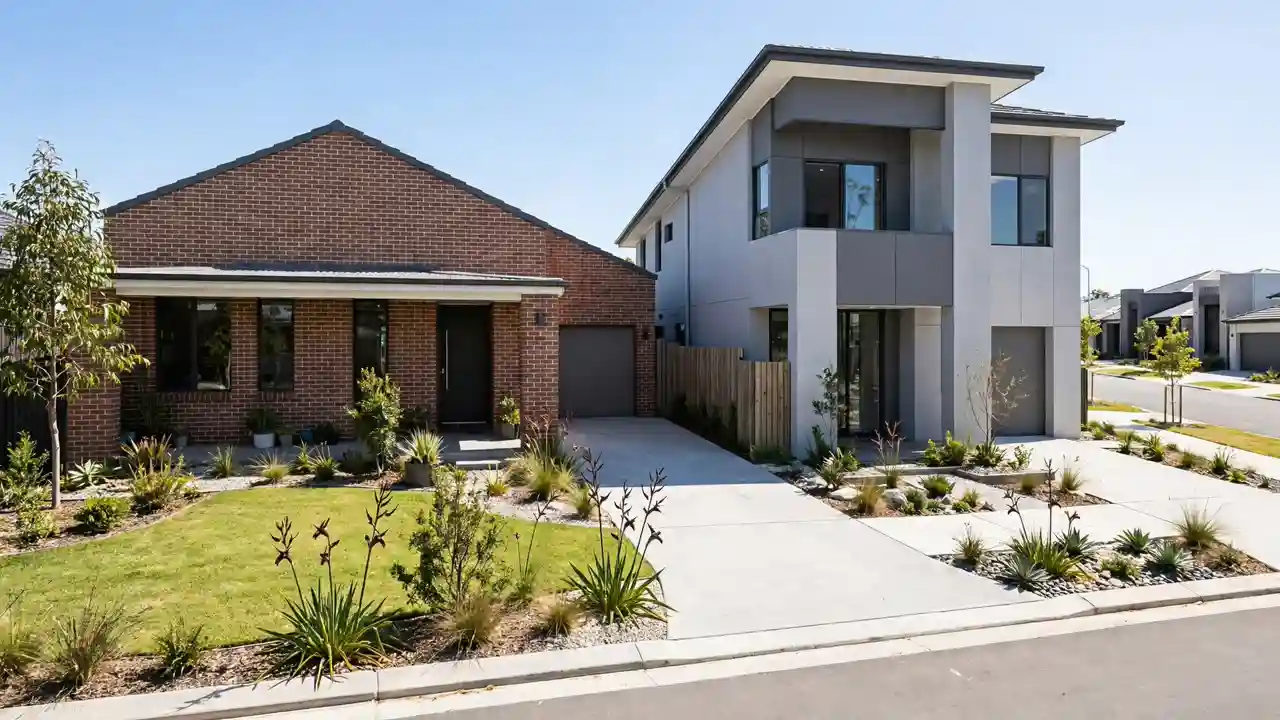
Single storey vs double storey houses is the first big decision in any Australian new build. The price gap is smaller than most people expect. A single storey house costs $1,800 to $2,800 per square metre to build in 2026. A double storey house costs $2,100 to $3,500 per square metre. That is roughly 10 to 20 per cent more per square metre, not double. Above all, the real trade is land. A double storey house needs about half the footprint for the same floor area. That is why it wins on narrow and small blocks and loses on flat, generous ones. This guide compares the two on cost, land, stairs, lifts and resale, with 2026 Australian figures.
Single Storey vs Double Storey Houses: The Short Answer
Build single storey if your block is wide and flat: it is cheaper per square metre, has no stairs, and suits ageing in place. In contrast, build double storey if your block is narrow or small: it costs 10 to 20 per cent more per square metre. However, it halves the footprint and leaves you a real backyard. On a 200 square metre house, expect roughly $360,000 to $560,000 for a single storey. A double storey runs $420,000 to $700,000 at 2026 rates. That is a gap of $60,000 to $140,000 for the same floor area. Next, the rest of this guide shows where that gap comes from and when it is worth paying.
Cost Per Square Metre: What the Sources Say
If you search “two story house cost”, the figures you will find are per-square-metre build rates. They disagree because they measure different things. First, Bhumi puts a single storey house at $1,800 to $2,800 per square metre. A double storey runs $2,100 to $3,500. The national average runs $1,800 to $3,500, with premium builds above $5,000. Next, Sydney Estimator puts the national house at $1,600 (low), $2,400 (mid) and $4,000 (high) per square metre. Sydney single storey runs $2,200, $3,000 and $4,200. Sydney double storey runs $2,400, $3,300 and $4,800. Sydney runs about 15 to 20 per cent above other capitals. Regional builds more than 100 km from a capital add 10 to 15 per cent.
BMT’s 2026 Sydney figures, ex-GST, put a 3-bedroom brick veneer single storey at $2,176, $2,424 and $2,895 per square metre. Then, a 4-bedroom two-level home runs $3,418, $3,924 and $4,284. Finally, Matrix puts basic builds at $2,100 to $3,000 and medium at $2,500 to $3,700. High builds run $3,500 to $5,000, and prestige $5,000 to $8,500 or more, all ex-GST. Matrix also notes a two-storey home costs 10 to 20 per cent more per square metre than a single storey. Meanwhile, in Perth, Residential Attitudes puts the industry range at $2,300 to $4,750 per square metre before siteworks. Single storey builds start from $356,000, and double storey from $582,000.
| Source (2026) | Single storey /m² | Double storey /m² | Notes |
|---|---|---|---|
| Bhumi | $1,800–$2,800 | $2,100–$3,500 | National; premium $5,000+ |
| Sydney Estimator | $2,200–$4,200 (Sydney) | $2,400–$4,800 (Sydney) | Sydney 15–20% above capitals |
| BMT / Feasly | $2,176–$2,895 (Sydney) | $3,418–$4,284 (Sydney) | Ex-GST; 3-bed vs 4-bed |
| Matrix | $2,100–$3,000 basic | 10–20% more per m² | Ex-GST; ~300 m² double $850k–$1.5M |
| Residential Attitudes (Perth) | From $356,000 build-only | From $582,000 build-only | $2,300–$4,750/m² before siteworks |
Why the Ranges Differ
Sydney figures include Sydney labour and material premiums; BMT’s are ex-GST and split by bedroom count. Matrix’s “10 to 20 per cent more” is the cleanest like-for-like comparison. It holds the finish level constant. Similarly, HomeBuildBudget’s cross-check ($1,900–$2,400 single, $2,300–$3,100 double) sits inside the same band. Overall, the honest national answer is $1,800 to $2,800 per square metre for single storey. Double storey runs $2,100 to $3,500. Sydney sits at the top of both ranges.
What the per-square-metre rate usually leaves out matters as much as the rate itself. For example, most published rates cover the house itself — slab, frame, roof, fit-out. They exclude siteworks, the driveway, landscaping, fencing and council fees. That is why Residential Attitudes quotes its $2,300 to $4,750 range “before siteworks” and BMT quotes ex-GST. In other words, a rate that looks cheap can simply be the one that excludes the most. When you compare two builders, ask each one to list what sits outside the rate. Then, add the same siteworks figure to both before you compare.
Single Storey vs Double Storey Houses: The Same House, Two Ways
For example, take a 200 square metre house on the same block. As a single storey at Bhumi’s rates it costs $360,000 to $560,000; as a double storey it costs $420,000 to $700,000. The $60,000 to $140,000 gap pays for the staircase, the upper floor structure, extra scaffolding, and the second-storey wet areas. It buys back roughly half the block.
A single storey 200 square metre house needs a footprint of about 200 square metres plus setbacks; the double storey version needs about 100 square metres. On a 450 square metre block, that is the difference between a small courtyard and a real backyard. It has room for a shed, a clothesline and a tree. Finally, the Australian Bureau of Statistics puts the average new house at 230 to 245 square metres of floor area. The 200 square metre example is on the modest side. At 240 square metres, the same maths gives $432,000 to $672,000 single storey and $504,000 to $840,000 double storey.
Land Use: When the Block Decides for You
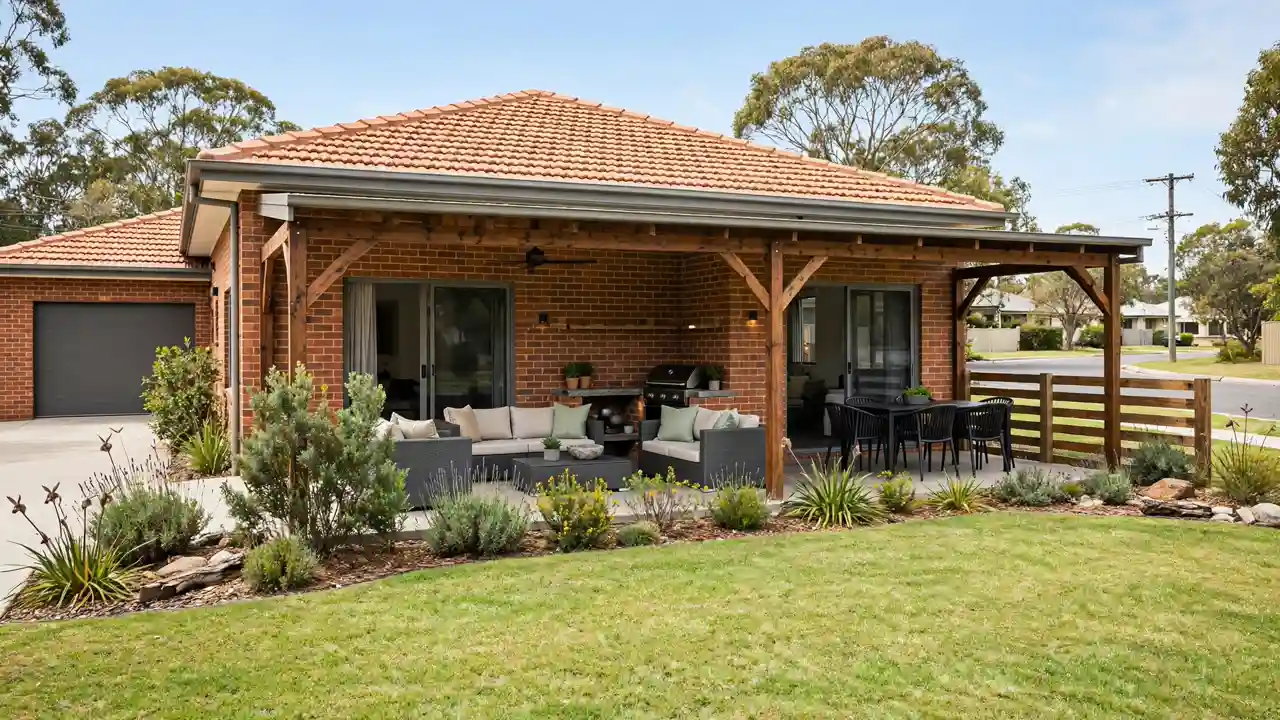
First, on a wide, flat block the single storey wins: cheaper per square metre, no stairs, and every room opens to the garden. However, on a narrow block, the double storey is often the only way to fit four bedrooms and two living areas. A garage fits too. That avoids paving the whole lot. Blocks of 10 to 12.5 metres wide are common in new estates. For example, the Green Swing townhouses in Lathlain, Perth, show the extreme. Each home sits on a footprint of 60 to 75 square metres. It opens to 120 to 150 square metres across two levels on an 837 square metre site. It holds a NatHERS 10-star rating in reverse brick veneer.
Indeed, the YourHome Green Swing case study is the clearest Australian example of a small footprint delivering a full-size home. Single storey vs double storey houses is therefore rarely a taste question: measure the block first, then decide. In short, if the block is under 400 square metres or narrower than 12.5 metres, price the double storey seriously. The per-square-metre rate may be higher, but the land it saves is worth more than the rate gap.
Stairs, Lifts and Living With Two Levels
Two levels mean stairs every day, and that cost is easy to forget. The per-square-metre rate includes a standard internal staircase, but not a feature stair. Replacing an internal staircase costs $14,000 to $32,000, and a custom feature stair runs $30,000 to $70,000 or more. If anyone in the household has limited mobility, a lift changes the maths. A home lift for two floors costs $18,000 to $32,000 installed (Swift Lifts). With building works of $8,000 to $25,000 on top (LiftQuotes), it runs $20,000 to $70,000 installed. Each extra stop adds $3,000 to $8,000. A retrofit to an existing home runs $30,000 to $80,000 or more.
Meanwhile, servicing costs $400 to $700 a year (Swift Lifts) or $500 to $1,500 a year ex-GST (LiftQuotes). A straight stair lift is cheaper at $4,000 to $9,000. A curved one runs $10,000 to $20,000, with $200 to $500 a year in maintenance. Overall, a double storey house without a lift is a house you may have to leave. Retrofitting it later costs $30,000-plus if mobility changes. A single storey house has no such cliff. Our study nook ideas guide shows the upstairs landing of a double storey home earning its keep as a workspace.
Resale: Does the Second Storey Pay?
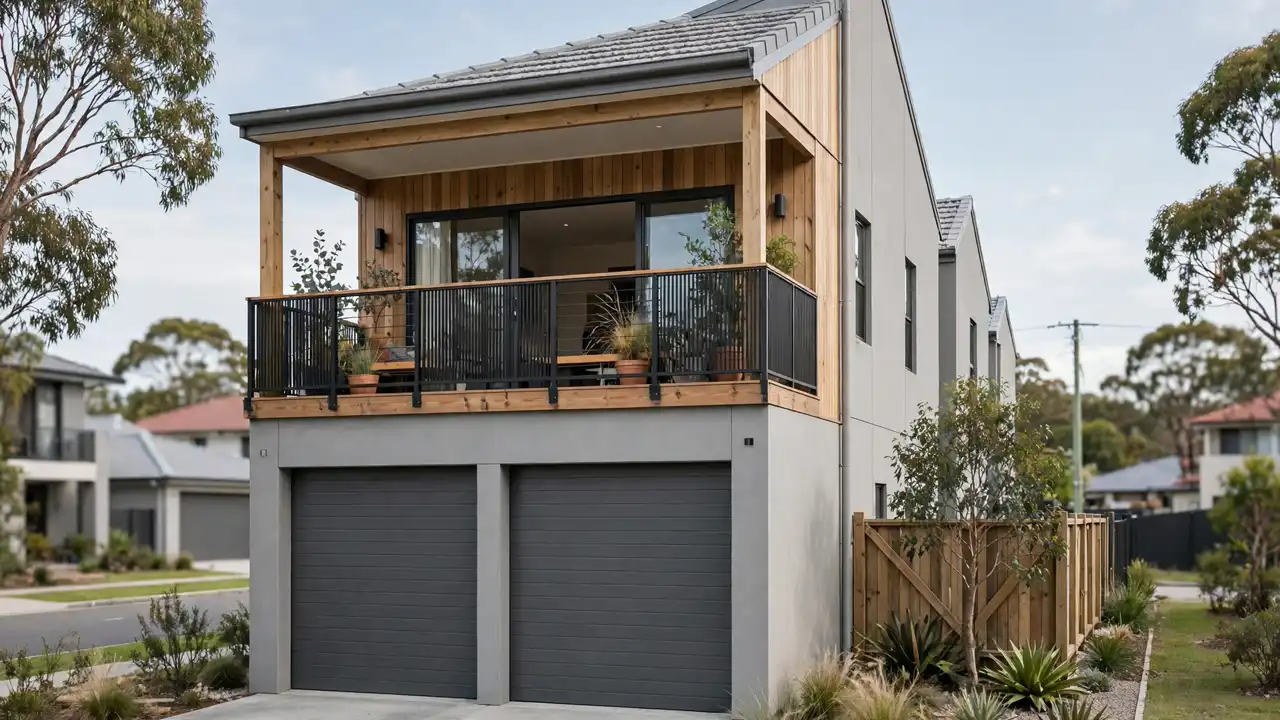
A second storey adds value when it adds bedrooms or living space the block could not otherwise hold. That is why our does a second storey add value guide prices the renovation case separately. For a new build, the resale question is simpler: buyers pay for floor area and land, not for storeys. Take a 200 square metre double storey on a 450 square metre block. It sells against a 200 square metre single storey on a 600 square metre block. The single storey usually wins on land value. The double storey wins on floor area per dollar of land.
The renovations that add value guide shows the same pattern across renovation types: space buyers can use beats space they admire. Running costs stay qualitative. A double storey home can zone heating and cooling by floor. It also has more external wall and a stairwell that moves warm air upstairs. No honest source puts a dollar figure on the difference. Finally, do not let any builder quote you one.
Which One Should You Build?
Build single storey if the block is wide and flat. Build it too if anyone in the household has mobility limits, or if the budget is tight. It is cheaper per square metre and has no stairs to maintain or retrofit. However, build double storey if the block is narrow or small. Build it too if you want a real backyard on a small lot, or if the view is upstairs. Single storey vs double storey houses comes down to one measurement and one question: how wide is the block, and who will climb the stairs in twenty years? Above all, answer those two before you fall in love with a floor plan.
Frequently Asked Questions
How much more does a double storey house cost than a single storey?
A double storey house costs 10 to 20 per cent more per square metre than a single storey at the same finish level. On a 200 square metre house at 2026 rates that is $420,000 to $700,000 against $360,000 to $560,000 for a single storey — a gap of $60,000 to $140,000 for the same floor area.
What is the cost per square metre to build a single storey house in Australia?
A single storey house costs $1,800 to $2,800 per square metre in 2026, with a national low of $1,600 and a high of $4,000. Sydney runs higher at $2,200 to $4,200 per square metre, and regional builds more than 100 km from a capital add 10 to 15 per cent.
Is a double storey house cheaper per square metre of land?
No — it costs more per square metre of floor area, but it needs about half the footprint. A 200 square metre double storey house sits on roughly 100 square metres of land, against 200 square metres for the same house as a single storey. The saving is land, not build cost.
How much does a home lift cost in Australia?
A home lift for two floors costs $18,000 to $32,000 installed, or $20,000 to $70,000 with building works of $8,000 to $25,000 on top. Servicing costs $400 to $700 a year, or $500 to $1,500 a year ex-GST. A retrofit to an existing home runs $30,000 to $80,000 or more.
Do double storey houses sell for more?
Buyers pay for floor area and land, not for storeys. A double storey house sells well when it adds bedrooms or living space the block could not otherwise hold; a single storey house on a larger block usually wins on land value. The second storey pays when it creates usable space, not when it only adds height.
Which is better for a narrow block?
A double storey house is usually better for a narrow block. On a 10 to 12.5 metre wide block it is often the only way to fit four bedrooms, two living areas and a garage without paving the whole lot. The Green Swing townhouses in Perth fit 120 to 150 square metres of home on a 60 to 75 square metre footprint.
First, measure the block, then choose the storeys. Single storey vs double storey houses is not a style decision. It is a land decision. The right answer is the one that leaves you a home you can live in for twenty years. It is not just a floor plan you liked on the day.