
Few kitchen decisions divide Australian renovators like this one. On one side: a flat-pack kitchen you can order on a Tuesday, have delivered within weeks, and install yourself for the price of a used car. On the other: a custom kitchen designed around your space, built by a joiner, costing as much as a new car outright. Both sides have passionate advocates, and — here’s the awkward bit — almost every comparison you’ll find online is written by someone selling one of the two.
The flat-pack retailer says custom is a rip-off; the joiner says flat-pack is disposable rubbish. The truth: each wins in the right circumstances, and the real price gap is much smaller than either admits once installation, adjustments and hidden extras are counted.
Short answer: In 2026, flat-pack cabinetry supply runs from around $1,500 for budget kits to $2,500–$8,000 for a small-to-mid kitchen (boxes and doors only). Add professional installation at $2,000–$5,000 and the realistic all-in flat-pack total is $5,000–$14,000. Semi-custom installed sits at $8,000–$18,000. Fully custom starts from around $15,000 and typically lands at $15,000–$35,000+ depending on finish and complexity. The gap narrows sharply on older or non-square homes, where flat-pack needs extra fitting work.
All prices below are indicative 2026 Australian figures from published trade guides (sources at the end); costs vary by city and supplier — always get itemised quotes.
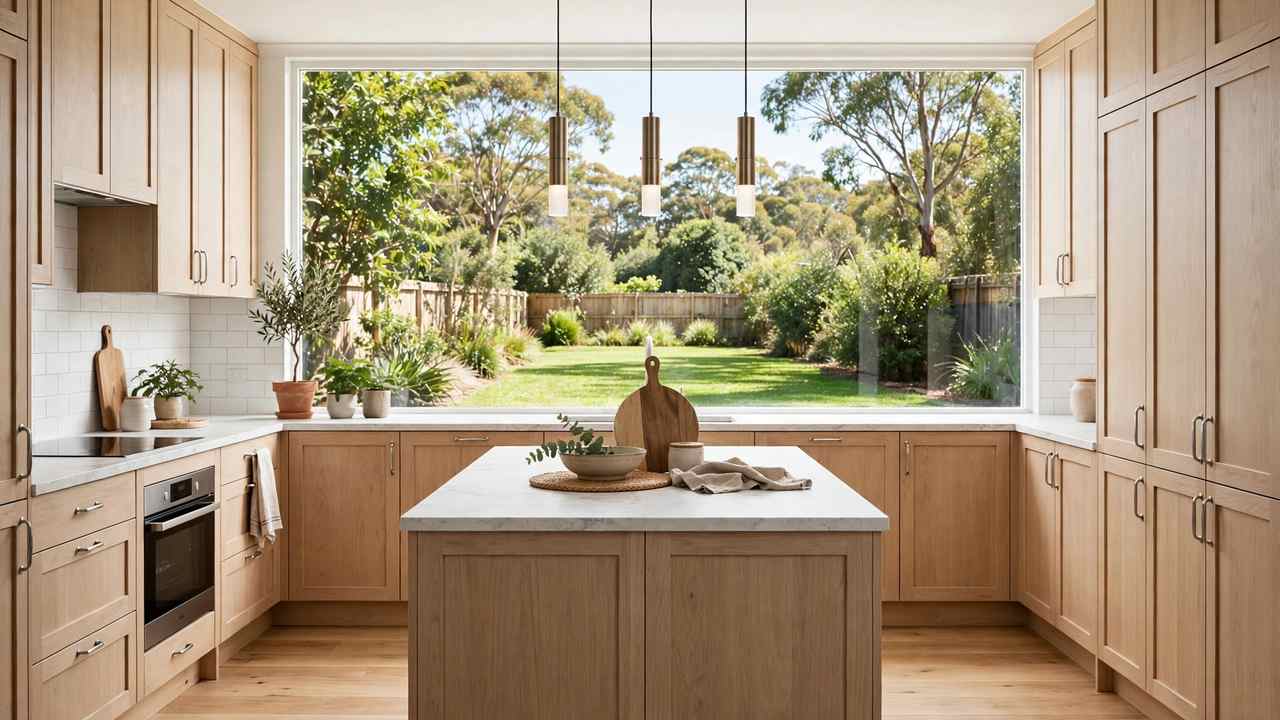
The three tiers: flat-pack, semi-custom and custom price bands
Kitchen cabinetry in Australia really comes in three tiers, not two — and the middle one is where a lot of renovators end up once they see the numbers. Here’s how the bands compare for cabinetry alone, before benchtops, appliances and trades:
| Tier | Supply cost (indicative) | Typical installed total | Lead time |
|---|---|---|---|
| Flat-pack (DIY) | $1,500–$8,000 (boxes and doors only) | $5,000–$14,000 with pro install | 2–4 weeks |
| Semi-custom | Included in installed price | $8,000–$18,000 | 4–8 weeks |
| Fully custom | Included in installed price | $15,000–$35,000+ | 6–12 weeks |
Quick definitions: flat-pack = standard-sized modules manufactured off-site and assembled on-site. Semi-custom = factory cabinetry with selectable dimensions, finishes and fittings, usually supplier-installed. Fully custom = a joiner designs and builds to your exact measurements and installs it.
Flat-pack supply figures come from a 2025 Perth trade guide; semi-custom and custom bands reflect current Australian installer and joinery pricing. These figures exclude demolition, benchtops, plumbing, electrical, tiling, painting and appliances — our kitchen renovation cost guide covers the full end-to-end picture.
What “supply only” really means: the costs that close the gap
The supply price is not the kitchen price. These costs apply to every tier — but they hit flat-pack buyers hardest, because they’re the ones who assumed the sticker price was the whole story.
Installation: $2,000–$5,000. A Melbourne joinery cost guide puts professional installation in this range — hence the realistic $5,000–$14,000 all-in flat-pack total. DIY costs weekends instead of dollars, but levelling or fixing mistakes mean wobbly benchtops and doors that never quite close.
Demolition and disposal: $500–$1,500. Rip-out, skip bin hire and tip fees apply to every tier — but custom quotes usually bundle this in, while flat-pack buyers discover it separately.
Hardware upgrades: $200–$1,500. Budget kits save money on hinges, drawer runners and handles. Upgrading to soft-close hardware and full-extension drawers — standard in most custom work — narrows the quality gap but adds to the bill.
Design fees: $1,500–$5,000. Custom joiners usually include design in their quote. Flat-pack buyers design it themselves (free, but risky) or pay a designer — a few hundred to a few thousand dollars that prevents expensive ordering mistakes.
Adjustments on real-world homes. Flat-pack modules come in fixed widths; Australian homes — especially pre-1990s ones — have walls that lean, floors that slope and corners that aren’t square. Filling the gaps needs filler panels and scribe work billed at trade rates, and on a non-square older home the installed gap between flat-pack and semi-custom can nearly disappear.
Flat-pack kitchens: the honest deep dive
Flat-pack cabinetry has one unbeatable advantage and several manageable drawbacks. Let’s take them in order.
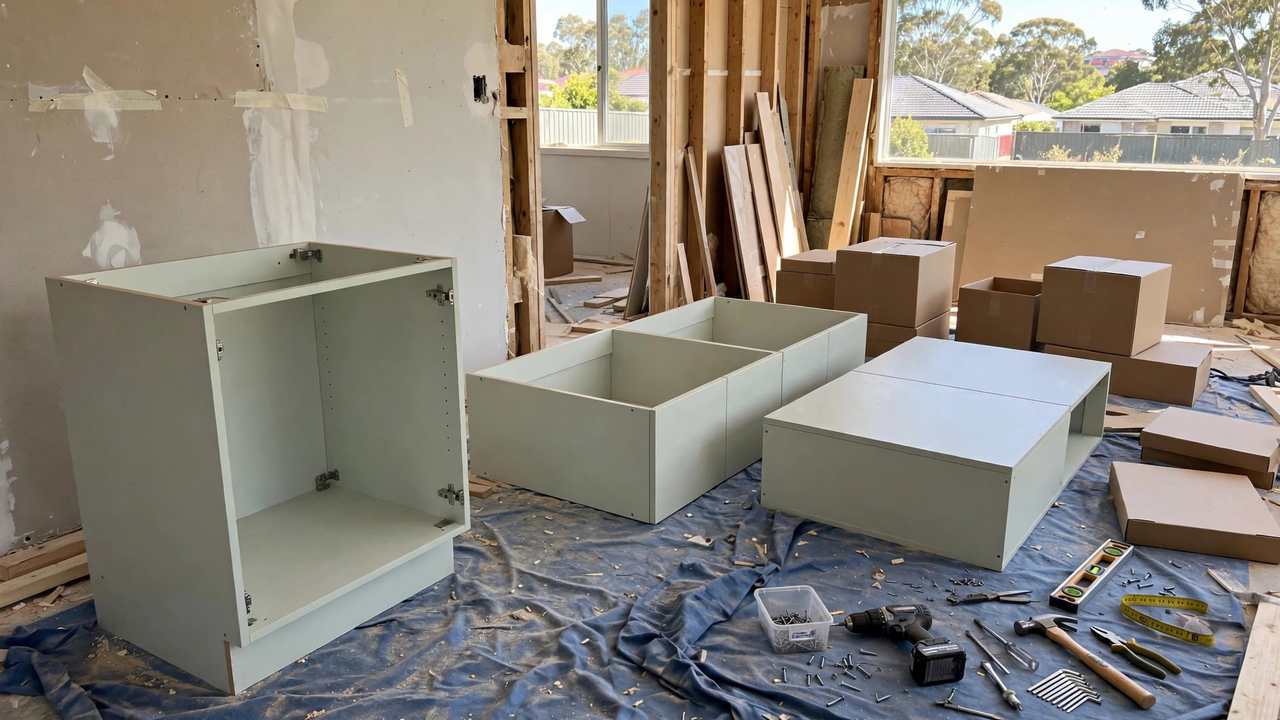
The genuine pros: a functional, good-looking kitchen for $5,000–$14,000 all-in is real and achievable. Speed is underrated: 2–4 week lead times suit tight schedules and rental turnarounds.
The genuine cons: fixed module sizes mean wasted space in awkward layouts and filler panels that never look as good as a cabinet built to fit. Board and hardware quality varies enormously at the budget end. And the finish range still can’t match a joiner’s veneers, 2-pack polyurethane or specialty laminates.
Flat-pack suits: budget renovators, rentals and flips, straightforward rectangular kitchens in newer homes with square walls, confident DIYers, and tight deadlines. It also suits second kitchens — butler’s pantries and laundries where cabinetry works hard but nobody photographs it.
Custom kitchens: the honest deep dive
Custom joinery is the best cabinetry for your specific home — and you pay for it.
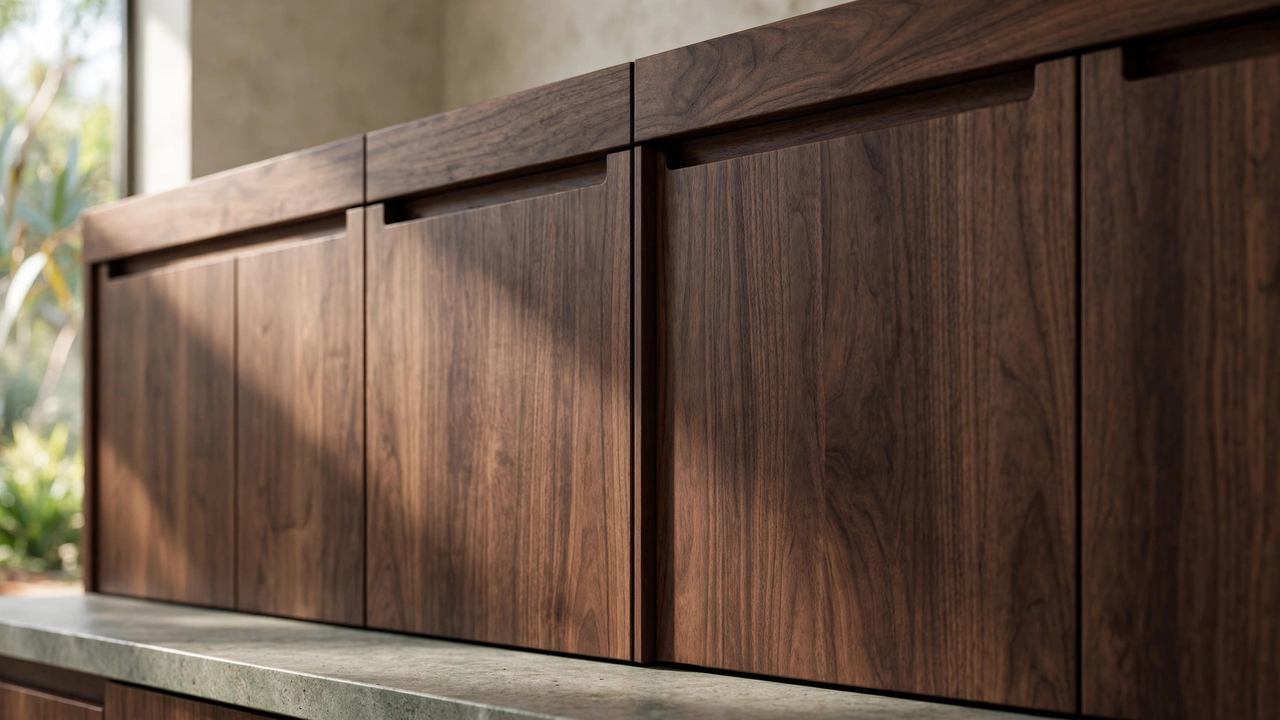
The genuine pros: every millimetre is used — awkward corners become storage, any ceiling height gets proper bulkheads, and cabinetry fits walls that were never straight. Material and hardware choice is effectively unlimited, and it’s built to be repaired rather than replaced.
The genuine cons: cost — $15,000–$35,000+ for cabinetry alone, before benchtops and trades. Time — 6–12 week lead times are normal, longer with a busy joiner. You’re locked into one tradesperson’s schedule and workmanship — always inspect finished work before committing.
Custom suits: forever homes, premium properties, awkward or heritage layouts, cooks wanting specific storage, and anyone valuing longevity over upfront cost.
The middle path: semi-custom and hybrid approaches
Most Australian kitchens are neither: the middle path has become the default for mid-range renovations, in two flavours.
Semi-custom ($8,000–$18,000 installed) is factory cabinetry with meaningful choice — dimensions within a range, a proper finish library, better hardware as standard, and installation by the supplier’s own trades. You get most of custom’s fit and finish at roughly half the price, with 4–8 week lead times. For standard layouts in reasonably square homes, it’s the sweet spot neither flat-pack retailers nor joiners mention — because neither sells it.
Hybrid builds mix tiers deliberately: flat-pack carcasses for the run-of-the-mill base and wall cabinets, with custom pieces where they matter — the island, the tall pantry wall, the awkward corner. A premium benchtop over mid-range cabinetry also reads as a premium kitchen. Our kitchen benchtop materials guide compares porcelain, natural stone, timber and laminate with 2026 installed prices, so you can allocate the budget where eyes actually land.
The hybrid approach demands an installer comfortable cutting and scribing standard modules to fit like custom — ask specifically about filler-panel and scribe work, not just assembly.
Quality checks before you buy either
Apply these checks to flat-pack and custom quotes alike.
Board thickness and type. 16mm is standard in budget flat-pack, 18mm is sturdier, and moisture-resistant (MR) board is worth specifying for sink cabinets regardless of tier.
Edge-banding. Every exposed edge should be sealed; thicker (1–2mm) banding on door edges resists chipping far better than the thin tape on cheap kits.
Hardware brand and warranty. Ask for the hardware brand and warranty in writing. Soft-close doors and full-extension drawers are the baseline for a kitchen that feels quality; budget $200–$1,500 to upgrade a flat-pack kit if they’re not included.
Drawer construction. Dovetailed or metal-sided drawers outlast stapled particleboard boxes. Check the joints on a display drawer.
Finish warranty. Get the warranty on doors and panels in writing — coverage (delamination, fading, warping) and duration. Vague verbal assurances are worth nothing.
Installation reality: DIY, flat-pack installer or joiner?
Who installs matters as much as what you buy. Three paths:
DIY ($0 labour, 2–4 weekends). Viable if you’re handy, patient and your walls are square. The critical skills: levelling, fixing into studs, and scribing filler panels. Where DIY goes wrong: benchtops on unlevel cabinets (which crack), wall cabinets fixed to plasterboard instead of studs, and unlicensed plumbing or electrical — both legally require licensed tradespeople in every state.
Flat-pack installer ($2,000–$5,000). A full day to a few days of professional work, proper levelling and fixing, and someone accountable if a door doesn’t close. Get the scope in writing — assembly only, or assembly plus levelling and filler panels?
Joiner (bundled in custom quotes). Installation is part of the package, including all scribe work and adjustments — a meaningful chunk of what custom money buys: the fitting, not just the boxes.
Book licensed plumbers and electricians early for rough-in and fit-off — and see our kitchen splashback cost guide for 2026 splashback costs.
Picks by budget and situation
Start from your situation, not the showroom:
| Your situation | Best pick | Why |
|---|---|---|
| Rental, flip or tight budget under $10k | Flat-pack, DIY or pro install | Lowest all-in cost, fast turnaround, easy part replacement |
| Mid-range renovation, $10k–$20k cabinetry budget | Semi-custom or hybrid | Best fit-per-dollar; custom pieces where they show |
| Forever home or premium suburb | Fully custom | Maximum storage, longevity and resale impact |
| Older home with wonky walls | Semi-custom or custom | The flat-pack price advantage evaporates in fitting labour |
| Butler’s pantry or laundry | Flat-pack | Works hard, unseen — spend the savings on the main kitchen |
| Tight deadline (under 6 weeks) | Flat-pack or semi-custom | 2–4 week lead times beat custom’s 6–12 weeks |
Flat-pack wins on price and speed, custom wins on fit and longevity, semi-custom wins the value argument for most mid-range renovations. Decide on your walls, your timeline and how long you’ll live with it — not on who shouted loudest in the showroom.
Frequently asked questions
How much does a flat-pack kitchen cost in Australia in 2026?
Budget kits start from around $1,500 supply-only; small-to-mid kitchens run $2,500–$8,000 for boxes and doors. Add $2,000–$5,000 for professional installation for a realistic $5,000–$14,000 all-in. Benchtops, appliances, plumbing, electrical and tiling are extra — always get itemised quotes.
Is a custom kitchen worth the extra money?
It depends on the home and your tenure. Custom ($15,000–$35,000+ installed) buys exact fit, premium materials and longevity — worthwhile in forever homes, premium suburbs and awkward layouts. In a rental, a flip or a straightforward newer kitchen, the premium is hard to justify; semi-custom usually delivers better value.
Can I install a flat-pack kitchen myself?
Yes, if you’re handy and your walls are reasonably square — budget two to four weekends and a laser level. All plumbing and electrical work legally requires licensed tradespeople in every state. If your walls lean or floors slope, a professional installer ($2,000–$5,000) will save you grief.
How long does each option take from order to finished kitchen?
Flat-pack: 2–4 weeks from order to delivery, plus installation. Semi-custom: 4–8 weeks. Fully custom: 6–12 weeks, sometimes longer with a busy joiner — and that clock starts after the design is finalised, not from your first phone call.
What is semi-custom cabinetry?
Factory-made cabinetry with selectable dimensions, finishes and fittings, usually installed by the supplier’s trade team. At $8,000–$18,000 installed it sits between flat-pack and fully custom — and it’s the option neither flat-pack retailers nor custom joiners tend to mention.
Do flat-pack kitchens last as long as custom kitchens?
It varies more by supplier than by tier. Well-made flat-pack with 18mm moisture-resistant boards, proper edge-banding and quality hardware can serve 15–20 years; budget kits with thin boards and basic hinges wear faster. Custom joinery generally uses higher-grade boards and hardware and is built to be repaired — but premium flat-pack outlasts poor custom work. Check board thickness, edge-banding and hardware warranty before buying either.
Figures & sources
Every figure in this guide traces to a published source. Figures were current at the time of the source’s publication; always confirm with itemised quotes for your kitchen.
- 2025 Perth trade guide — flat-pack supply price bands: budget kits from ~$1,500; small-to-mid kitchens $2,500–$8,000 (boxes and doors only).
- Melbourne joinery cost guide — flat-pack installation $2,000–$5,000; realistic all-in flat-pack total $5,000–$14,000.
- Australian kitchen supplier and installer pricing (2026, indicative) — semi-custom installed $8,000–$18,000; fully custom from ~$15,000, typically $15,000–$35,000+; hardware upgrades $200–$1,500; design fees $1,500–$5,000; lead times flat-pack 2–4 weeks, custom 6–12 weeks.
- Australian demolition and waste pricing (2026, indicative) — kitchen demolition and disposal $500–$1,500.