
A basic walk-in pantry costs $1,500 to $4,000. For a working butler’s pantry, expect $10,000 to $20,000. Finally, a premium scullery costs $20,000 to $35,000 or more. However, the difference is not the shelves. It is the bench, the sink, the plumbing and the power. This guide settles butlers pantry vs walk-in pantry on 2026 Australian costs and real sizes. It also covers what each room does. So you can tell which one your floor plan can hold before you pay for a quote.
Butlers Pantry vs Walk-in Pantry: The Short Answer
In short, a walk-in pantry is a storage room: shelves, jars, baskets, a door you can close. A butler’s pantry is a working room. It also has a bench, a sink, power points and usually a second fridge or dishwasher. Its door closes on the mess. When you weigh butlers pantry vs walk-in pantry, the deciding question is not which one looks better in a photo. It is whether you need a place to store food, or a place to work unseen. Storage-only suits a walk-in. Daily cooking, entertaining and hiding the mess suit a butler’s pantry, if the kitchen can spare the space.
What Each One Actually Is
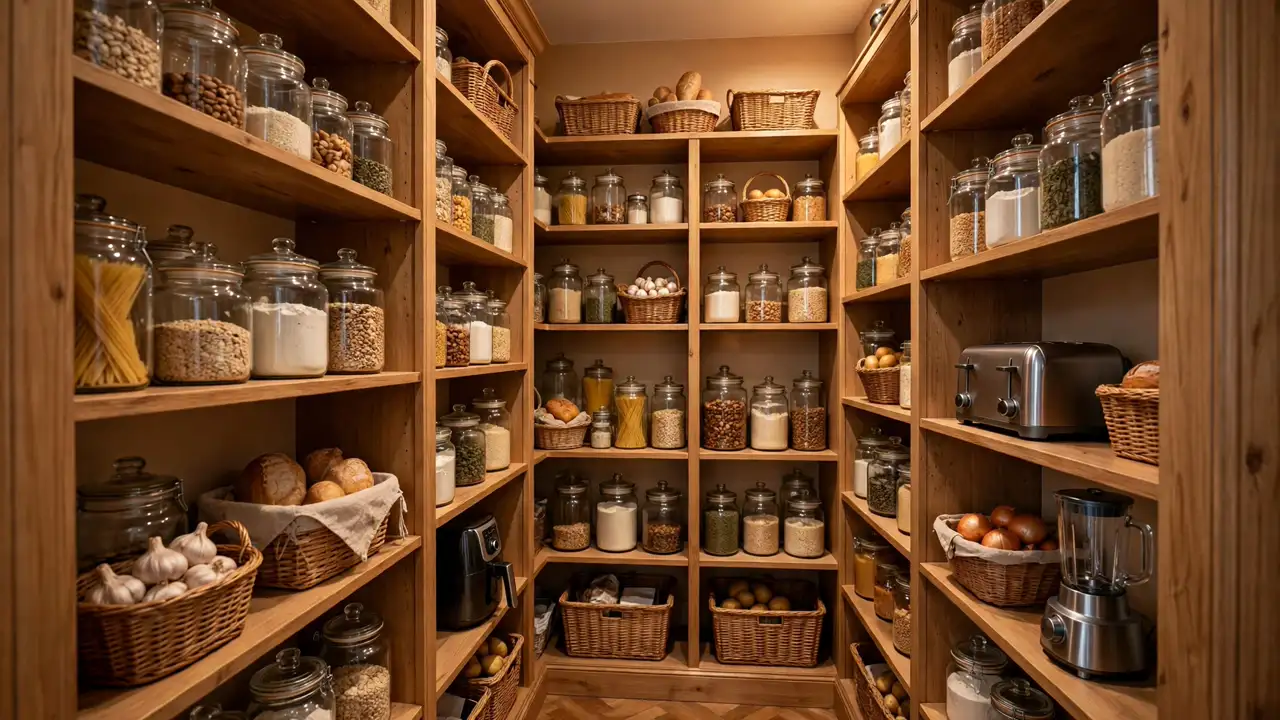
A walk-in pantry is a small room off the kitchen, lined with open shelving, no bench, no sink. It also holds dry goods, bulk buys and small appliances. The smallest workable size is 1.6 by 2.2 metres. That leaves a 900 to 1,000 millimetre walkway. Otherwise, anything smaller is a cupboard with a door, not a room you can walk into.
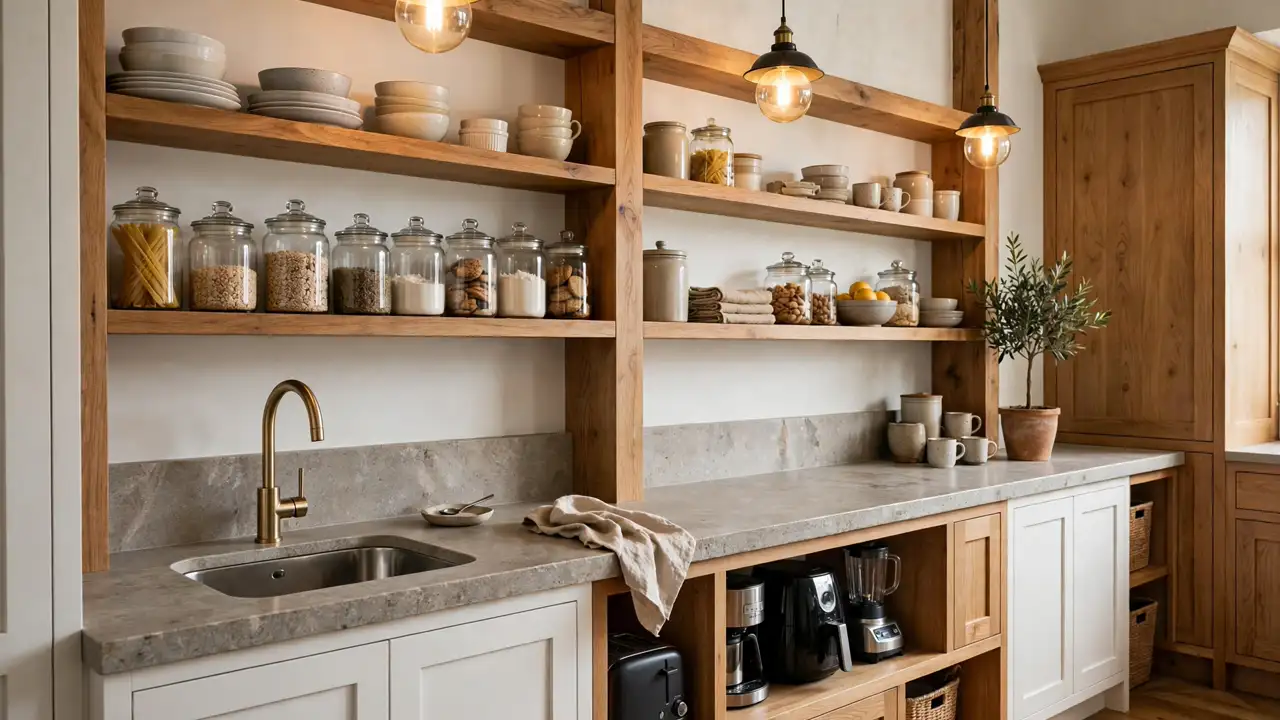
A butler’s pantry is a walk-in pantry with a working bench added. Also, the bench changes everything. A bench needs 450 to 600 millimetres of depth, power points along the wall, task lighting, and usually a sink with plumbing roughed in. With a sink and power, the room holds a kettle, a toaster, a coffee machine and a second fridge. It also takes the prep mess out of the main kitchen while you entertain. Our butler’s pantry design ideas guide shows the layouts that work in Australian kitchens, from a straight galley to an L-shape.
A scullery is the premium end of a butler’s pantry, not a third category: a larger working room with a second sink, often a second dishwasher, and bench to prep a full meal out of sight.
| Option | What it is | Minimum size | Typical cost, 2026 | Best for |
|---|---|---|---|---|
| Walk-in pantry | Shelves only | 1.6 × 2.2 m | $1,500–$10,000 | Storage on a budget |
| Butler’s pantry | Bench + sink + power | 2.4 × 2.4 m | $5,000–$20,000 | Cooking and entertaining |
| Scullery | Second sink, full bench | 2.4 × 3.0 m | $20,000–$35,000+ | Big kitchens, big families |
What Each One Costs in 2026
Published 2026 Australian ranges agree on the order — walk-in cheapest, butler’s in the middle, scullery dearest. However, the numbers differ. Kitchen Fox in Adelaide, updated 8 October 2026, prices a storage-only galley at $5,000 to $10,000. It prices a working butler’s at $10,000 to $20,000 and a premium scullery at $20,000 to $35,000 or more. Sorse Furniture’s 2026 guide prices a local custom butler’s at $6,000 to $15,000. A flat-pack version costs $2,500 to $6,000. Airtasker, updated 31 July 2025, lists a butler’s at $5,000 to $10,000 or more. A walk-in costs $2,000 to $10,000. CraftBuilt prices a basic pantry at $1,500 to $4,000 and a mid-range one at $5,000 to $10,000. A high-end one costs $15,000 or more. Tauji’s guide of 10 November 2026 prices semi-custom pantries at $8,000 to $15,000. High-end custom ones cost $20,000 to $45,000.
The ranges differ for three reasons. First, inclusions: a joinery-only quote and an all-in quote are different jobs. Bench, sink, plumbing, power and appliances can add thousands. Second, custom versus flat-pack: a flat-pack walk-in from Sorse starts at $2,500, a local custom build at $6,000. Third, date and city: Airtasker is mid-2025, Kitchen Fox October 2026 Adelaide, Tauji November 2026 luxury. In fact, the HIA Kitchens and Bathrooms Report puts the national median kitchen at $30,000 to $35,000 in 2025. The 2026 average is about $42,630. Therefore, a working butler’s at $10,000 to $20,000 is roughly a third to a half of a full new kitchen. A basic walk-in at $1,500 to $4,000 is a fraction of one. Our flat-pack kitchen cost guide breaks down where flat-pack savings come from. Flat-pack wins on the room, custom wins on the fit.
Sizes and Layouts: The Space Test
Size decides this choice before price does. In summary, the published minimums are consistent. A single-sided walk-in needs at least 1.6 by 2.2 metres. An L-shape needs 2.4 by 2.4 metres, and a U-shape 2.4 by 3.0 metres or more, per discount.com.au’s Perth sizing guide. The bench runs 450 to 600 millimetres deep. The walkway needs 900 to 1,000 millimetres. In fact, ABI Interiors puts the minimum at 1,000 millimetres.
Run the space test before you get a quote. Measure the wall the pantry would take, and check the kitchen left behind. A walk-in needs a clear 1.6 by 2.2 metres with a door clear of the bench. In addition, a butler’s needs a 600 millimetre bench run and a wall with power. If the kitchen cannot give up that much floor without losing bench space it needs, the pantry is not viable. Instead, tall pull-out cabinets give most of the storage in a fraction of the floor. The space test settles butlers pantry vs walk-in pantry before any quote does. After all, a room that does not fit is not a choice at any price.
Pantry Layouts
Layout matters as much as size. A single-sided layout suits a narrow room: shelves on one wall, walkway beside them. An L-shape suits a square room: shelves on two walls, bench on one. A U-shape suits a large room: shelves and bench on three sides, door on the fourth. In fact, a pocket or cavity sliding door saves the swing space a hinged door needs. Often, that decides it. The doorway should open from the kitchen’s working side, not from the dining room. A pantry you must walk around the island to reach will not get used. Similarly, our kitchen island design guide covers the clearances an island needs. The same walkway rule applies between island and pantry door.
The Quote-Exclusions Decoder
In fact, a pantry quote is only comparable if you know what it leaves out. For instance, joinery quotes typically cover cabinets and shelves only. What they commonly exclude is the benchtop, sink and tap, plumbing rough-in, power points and lighting, appliances, ventilation, painting, flooring and splashback. A $6,000 joinery-only quote and a $15,000 all-in quote can describe the same room. The difference is what is still to buy.
First, decode any quote with five questions. Does it include the benchtop, and which material? Does the sink, tap and plumbing rough-in come with it, or is a plumber separate? Do power points and lighting come with it, or is an electrician separate? What about appliances — second fridge, second dishwasher — do they come with it, or are they yours? And does it include painting, flooring and splashback, or does the room arrive unfinished? A quote that answers all five in writing is comparable. One that answers none is a starting number, not a price. Overall, the most expensive mistake is comparing a joinery-only figure against an all-in figure and believing the cheaper one.
Three Worked Budgets
For example, three budgets from the same 2026 published ranges show where butlers pantry vs walk-in pantry money goes. First, a small kitchen with a storage-only walk-in. Flat-pack joinery costs $2,500 to $6,000 per Sorse, or a basic build costs $1,500 to $4,000 per CraftBuilt. As a result, a $2,000 to $6,000 room all-in has no bench, sink or plumbing. Second, a mid-size kitchen with a working butler’s pantry: $10,000 to $20,000 per Kitchen Fox, or $6,000 to $15,000 custom per Sorse. That covers joinery plus bench, sink, plumbing rough-in and power. Third, a large kitchen with a premium scullery: $20,000 to $35,000 or more per Kitchen Fox, or $20,000 to $45,000 high-end custom per Tauji. That buys a second sink and dishwasher, a full bench run, and room to prep a meal out of sight.
In short, the pattern is the point. The jump from a walk-in to a butler’s pantry is not a bigger room. Instead, it is a working room. The jump from a butler’s to a scullery is not a better room. It is a second set of everything. In the end, budget for the jump you are actually buying. Check the quote against the five decoder questions before you sign it.
The Engineered Stone Rule
One rule changes the benchtop choice in every pantry built since July 2024. Engineered stone benchtops, panels and slabs with 1 per cent or more crystalline silica have been banned in Australia since 1 July 2024, imports from 1 January 2025. Porcelain and sintered stone made without resin are excluded, and natural stone is not banned. The SafeWork NSW crystalline silica guidance sets out exactly what is banned and what is not. Any quote that still lists engineered stone for a benchtop quotes a material you can no longer legally have installed.
Overall, the practical effect is on price and choice. Porcelain and natural stone cost more than the engineered stone they replace. As a result, a quote that names the benchtop material is comparable. One that just says “stone benchtop” is not. Ask for the material by name, and check it against the SafeWork list before ordering.
Which Suits Which Kitchen
First, match the room to the kitchen, not to the photo. A small kitchen that cannot pass the space test should take tall pull-out cabinets instead of any pantry. Losing the cooking bench to a walk-in is a loss, not a gain. A mid-size kitchen with a spare wall suits a working butler’s pantry for a household that cooks daily. Its bench and sink earn their floor space every day. Large kitchens in houses that entertain often suit a scullery. The second sink and dishwasher keep the main kitchen presentable while the mess stays behind a door. Finally, households that buy in bulk or run a big family suit the biggest storage they can fit. Whatever the room is called.
Finally, two warnings close the decision. First, a pantry without ventilation will smell of everything stored in it. Allow an opening window or a vent, and do not seal the room tight. Second, a butler’s pantry with no power points is a walk-in with a bench you cannot use. Count the points on the quote, not just the bench length. Both are cheap to prevent at the design stage. However, they are expensive to fix after the joinery is in.
Frequently Asked Questions
How much does a butler’s pantry cost in Australia in 2026?
A basic butler’s pantry costs $5,000 to $10,000 or more, a working one costs $10,000 to $20,000, and a premium scullery costs $20,000 to $35,000 or more. A flat-pack version starts at $2,500 to $6,000, a high-end custom build runs $20,000 to $45,000. Check whether the quote is joinery-only or all-in before comparing.
What is the minimum size for a walk-in pantry?
The minimum for a single-sided walk-in pantry is 1.6 by 2.2 metres, with a 900 to 1,000 millimetre walkway. An L-shape needs 2.4 by 2.4 metres, a U-shape 2.4 by 3.0 metres or more. Anything smaller is a cupboard with a door.
Is a butler’s pantry worth it?
It is worth it if you cook daily or entertain often and the kitchen can spare the floor without losing bench space it needs. It is not worth it in a small kitchen that fails the space test, or if the quote is joinery-only and the bench, sink and plumbing would double the price.
What is the difference between a butler’s pantry and a scullery?
A scullery is the premium end of a butler’s pantry: a larger working room with a second sink, often a second dishwasher, and bench to prep a full meal out of sight. A butler’s pantry is the broader term for any working pantry with bench, sink and power.
Can I add a walk-in pantry to a small kitchen?
Only if the kitchen passes the space test: a clear 1.6 by 2.2 metres with a door clear of the bench, and a 900 to 1,000 millimetre walkway. If it cannot, tall pull-out cabinets give most of the storage in a fraction of the floor.
Is engineered stone banned in pantries?
Yes. Engineered stone benchtops, panels and slabs with 1 per cent or more crystalline silica have been banned in Australia since 1 July 2024, imports from 1 January 2025. Porcelain and sintered stone made without resin are excluded, and natural stone is not banned.
Measure the wall first, then the quote. For example, a walk-in pantry costs $1,500 to $4,000 and gives you storage. A working butler’s costs $10,000 to $20,000. It gives you a second kitchen you can close a door on. Overall, compare butlers pantry vs walk-in pantry on the same brief, with the same inclusions. The right room is usually obvious.