
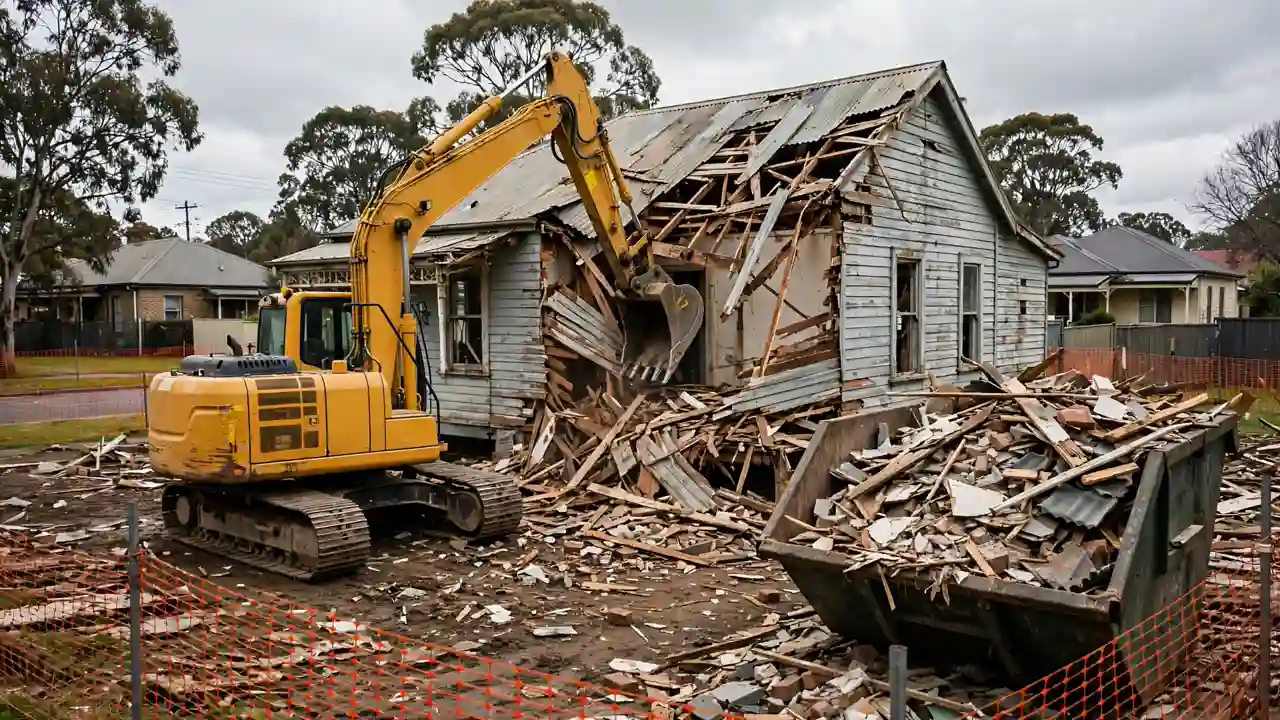
A full interior renovation in Sydney runs $200,000 to $500,000. A custom knockdown rebuild starts from $650,000. The cheaper number is not the better deal. One buys changes inside a house you keep. In contrast, the other buys a new house on land you already own. This guide settles knockdown rebuild vs renovation on whole-project budgets, not headline rates per square metre. It covers 2026 Australian costs, real timelines, and the heritage and asbestos rules that decide it before price does.
Knockdown Rebuild vs Renovation: The Short Answer
Renovate if the structure is sound and the layout mostly works. Rebuild if you are fighting the block or the bones of the house itself. A cosmetic or mid-range renovation is usually cheaper, because you only pay to change part of the house. A major structural renovation is not. At $3,500 to $6,000 per square metre it can cost more than a new build at $3,000 to $4,500. It still leaves you with old bones and a compromised layout. When you weigh knockdown rebuild vs renovation, the deciding question is not which is cheaper per square metre. It is how much of the old house is actually worth keeping.
What Each Option Actually Means
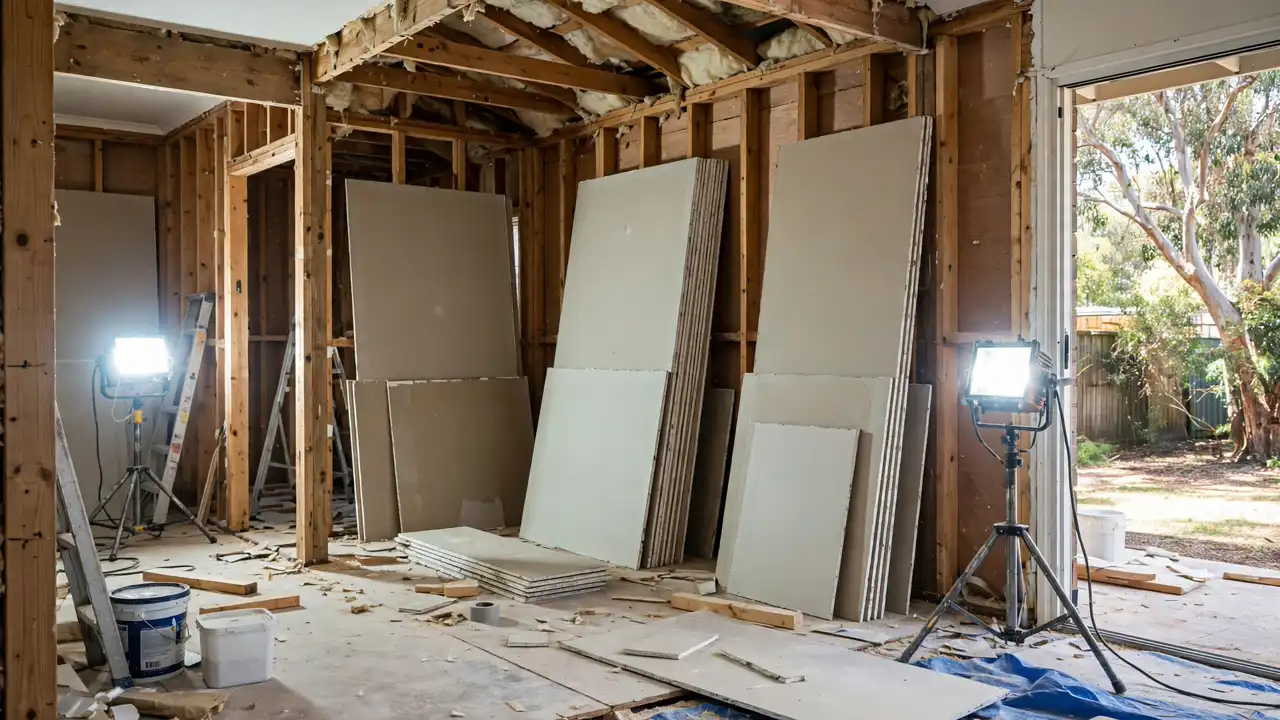
A renovation works inside the house you already have. Cosmetic work covers paint, floors and fixtures. Mid-range work changes kitchens, bathrooms and layouts, but the shell stays. Major structural work moves walls and changes the roof line. The work sits inside an existing building. Every price assumes the rooms are sound, need no structural upgrade, and have good access. Hazardous material removal and temporary accommodation are extra, and wet areas are priced separately.
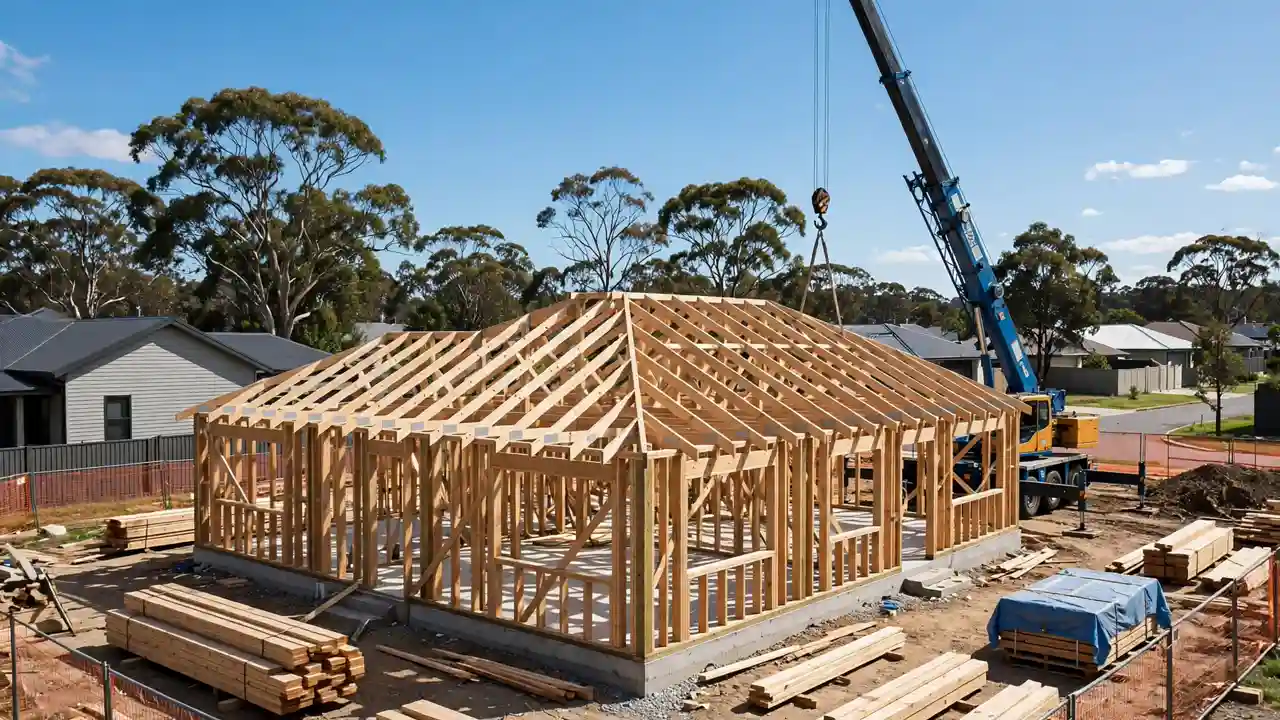
A knockdown rebuild demolishes the existing dwelling and builds a new home on the same block. The old house goes entirely — demolition, disconnections, site clearing. Then a new home goes up on a clean slate, designed for the block as it is now. There are no constraints from the old floor plan and no hidden defects inside retained walls. Finally, the finished home must meet current standards, including the mandatory 7-star NatHERS energy rating. What you give up is time and the existing house. A rebuild takes 14 to 22 months from application to handover. So you need somewhere else to live for most of it.
| Option | What changes | Typical total, 2026 | Timeline | Best for |
|---|---|---|---|---|
| Cosmetic renovation | Finishes only, no structural work | $500–$1,500/m² | Weeks | Tired but sound homes |
| Mid-range renovation | Kitchen, bathroom, layout changes | $2,000–$4,000/m² | 3–6 months | Sound homes needing an update |
| Major structural renovation | Walls, floors, roof line move | $3,500–$6,000/m² | 6–18 months | Rarely the best value |
| Knockdown rebuild | Demolish and build new | $450,000–$1,300,000+ | 14–22 months | Bad bones, bad layout, bad block fit |
What Each One Costs in 2026
Archicentre Australia’s CostGuide 2026 gives the cleanest national bands, pricing the two scopes separately. New construction, including extensions, runs $2,700 to $5,100 per square metre. Work inside an existing building runs $1,600 to $3,900 per square metre. The renovation band assumes sound rooms and good access. It excludes wet areas. In particular, the bands list bathrooms separately at about $17,500 to $35,000, and kitchens at $23,000 to $49,000. The new-construction band is a basic shell and extended roofline: first-floor additions, adverse ground and professional fees sit outside it.
Builder-published figures fill in the totals. Demolition of a standard Australian home costs $15,000 to $40,000. Size, construction type and hazardous materials decide the figure, per Builtly’s October 2026 guide. New custom construction in 2026 runs $3,000 to $4,500 per square metre at standard specification. Mid-to-high runs $4,500 to $6,500, and luxury $6,500 to $10,000 or more. Renovation runs $500 to $1,500 cosmetic, $2,000 to $4,000 mid-range, and $3,500 to $6,000 for major structural work. Builtly puts a 15 to 20 per cent contingency on major renovations, higher than for new construction. After all, the existing structure always holds surprises.
In Sydney, a full interior renovation costs $200,000 to $500,000. An extension costs $130,000 to $650,000. A custom knockdown rebuild starts from $650,000, commonly $650,000 to $1,300,000 or more, per LikeSilk’s 2026 Sydney guide. In Melbourne, total knockdown rebuild budgets range from $450,000 to $900,000 or more. Construction runs $420,000 to $780,000 or more, per Xircon Homes’ 2026 Melbourne guide. The reason knockdown rebuild vs renovation cost guides disagree is the same reason any two quotes disagree. In short, different scopes, different cities, different things left out. Only a whole-project budget built from the same brief gives an honest comparison.
The Like-for-Like Whole-Project Budget
Take one brief: a 170 square metre home, with 120 square metres to rework plus a 50 square metre extension. Then price it both ways from the Archicentre 2026 bands. Renovating: 120 square metres inside the existing house at $1,600 to $3,900 is $192,000 to $468,000. The 50 square metre extension at $2,700 to $5,100 is $135,000 to $255,000. Overall, that is a shell-only total of $327,000 to $723,000. Then add the kitchen at $23,000 to $49,000 and a bathroom at $17,500 to $35,000. The bands list them separately. Then add a 15 to 20 per cent contingency. So a renovation budget is a forecast until the walls are open.
Rebuilding the same brief: demolition at $15,000 to $40,000, plus a new 170 square metre home at $3,000 to $4,500. That is $510,000 to $765,000 — $525,000 to $805,000 before fees, landscaping and rent elsewhere. The Melbourne cross-check lands in the same place. Xircon’s total knockdown rebuild budgets of $450,000 to $900,000 or more cover the same scope. On this brief the two paths overlap heavily. A light renovation wins clearly. A heavy renovation loses to a rebuild. Neither option is cheaper in general. Our house renovation cost per square metre guide breaks down the renovation side of this maths room by room.
Timelines: How Long Each Path Really Takes
Time is the cost people forget to budget, and the gap is large. Bathrooms and kitchens take weeks. A full interior renovation takes 3 to 6 months, and an extension 4 to 8 months. A knockdown rebuild takes 10 to 14 months from demolition to handover. From first lodgement to handover, allow 14 to 22 months, per LikeSilk’s Sydney figures. Approvals are a large part of that. A straightforward renovation can run through complying development in 4 to 8 weeks. By contrast, a knockdown rebuild usually needs a full development application, typically 4 to 8 months.
A renovation can sometimes be lived through, room by room. The cost is dust, noise and a kitchen that does not work for weeks. A rebuild cannot be lived through at all: the house is gone. Twelve to eighteen months of rent belongs in the rebuild budget, and it is rarely in the builder’s quote. If the renovation timeline stretches, the same rent line appears there too. Likewise, major renovations run 6 to 18 months, per Xircon.
Heritage, Overlays and Asbestos: The Three Things That Decide It
Three constraints can settle the decision before price is even discussed. The first is heritage. A heritage-listed home, or one in a heritage conservation area, generally cannot be demolished. Instead, a renovation needs a development application with the significant fabric retained. That removes the rebuild option entirely, so the comparison ends there. A well-planned heritage renovation can still be the best outcome for the house. Our heritage home renovation guide covers what can change and what must stay.
The second is asbestos. If your home was built before the late 1980s, it may contain asbestos. Check flooring, kitchens, bathrooms, roofs, ceilings and walls. Always use a licensed asbestos professional to remove friable asbestos. Similarly, the same rule covers more than 10 square metres of bonded asbestos. SafeWork NSW recommends a licensed professional for any amount. That is because disturbing it releases fibres that cause asbestosis, lung cancer and mesothelioma. Around 4,000 Australians die every year from asbestos-related diseases. SafeWork NSW’s asbestos guidance sets out who can remove what. It also states when a clearance certificate is needed before anyone moves back in. Get the survey before the decision, not after it: finding asbestos mid-renovation is how budgets double.
The third is the block itself. Bushfire and flood overlays add approvals and construction requirements to both paths. Similarly, a sloping or poorly oriented block can make a rebuild far more expensive than the rate suggests. A new home must meet the 7-star NatHERS rating; a renovation’s energy performance is variable, constrained by the existing shell. None of these three picks a path for you — they tell you whether both paths are genuinely open.
The 7-Question Scorecard
Seven yes-or-no questions settle most cases better than any cost calculator. Give one point for every yes. Is the structure compromised — cracking, movement, termite damage, a roof at the end of its life? Does the layout fail — bedrooms where living space should be, no way to add a bathroom without gutting it? Is the house free of heritage listing, so rebuilding is legally possible? Does the block fight the house — bad orientation, slope, overshadowing that no renovation can fix? Do you need more than half as much floor area again? Can the budget stretch to $650,000 or more, which most custom rebuilds need? Do you want a 7-star rated home with a new-home warranty and no inherited defects?
Score it plainly. Zero to two: renovate — the house is worth keeping and the money goes further inside it. Three to four: get a structural engineer’s report before you decide. The answer now depends on facts no guide can see. Five or more: rebuild — you are paying renovation prices for a new-home result. Run it before you compare knockdown rebuild vs renovation quotes. First, it tells you which quotes to get. Second, it stops you getting quotes for the wrong job. It is not a substitute for quotes, or for the engineer’s report.
Mistakes That Blow the Budget
The most common mistake is comparing per-square-metre rates across different scopes. A renovation rate excludes the kitchen and bathroom. A rebuild rate excludes demolition and fees. Second, many budgets carry no contingency on a renovation, where 15 to 20 per cent is the published guidance. Third, some owners decide before the asbestos survey and the engineer’s report. Fourth, living in the house during major works to save rent means paying for it in delays. Finally, the cheapest quote is not always the best — check what it leaves out. Our renovation mistakes guide covers these in full. In fact, every one applies to a rebuild too, including the demolition quote that omits hazardous material removal.
Frequently Asked Questions
Is it cheaper to knock down and rebuild or renovate?
It depends on the scope. A cosmetic or mid-range renovation is almost always cheaper than a rebuild, because you only pay to change part of the house. A major structural renovation at $3,500 to $6,000 per square metre can cost more than a new build at $3,000 to $4,500, and still leave you with old bones and a compromised layout. Compare whole-project budgets, not headline rates.
How much does a knockdown rebuild cost in Australia in 2026?
In Melbourne, total knockdown rebuild budgets typically range from $450,000 to $900,000 or more. In Sydney, a custom knockdown rebuild typically starts from $650,000, commonly $650,000 to $1,300,000 or more. Demolition typically costs $15,000 to $40,000, and new custom construction runs $3,000 to $4,500 per square metre.
How long does a knockdown rebuild take?
A knockdown rebuild takes 10 to 14 months from demolition to handover, and 14 to 22 months from the first development application lodgement to handover. Approvals alone typically take 4 to 8 months, because a rebuild almost always needs a full development application.
Can I renovate a heritage-listed home instead of rebuilding?
Yes, and usually you must: a heritage-listed home generally cannot be demolished, and a renovation needs a development application with the significant fabric retained. The rebuild option is off the table, so the comparison ends there.
Do I need an asbestos check before demolishing or renovating?
Yes, for any home built before the late 1980s. Get an asbestos survey before you decide: finding asbestos mid-renovation is how budgets double. Friable asbestos and more than 10 square metres of bonded asbestos must be removed by a licensed professional, and SafeWork NSW recommends a licensed professional for any amount.
Is a knockdown rebuild worth it?
It is worth it when the home is structurally compromised, poorly configured, or at the end of its functional life, and when a major renovation’s all-in cost approaches the rebuild total. For sound homes that just need refreshing, renovation is the more efficient path. The worked budget in this guide tells you which side your house falls on.
Get the engineer’s report and the asbestos survey before you get the quotes. If the house is worth keeping, a renovation will beat a rebuild on price, on time and on disruption. If it is not, no renovation budget will fix what is wrong with it. Compare knockdown rebuild vs renovation on the same brief, with the same inclusions, and the right answer is usually obvious.