
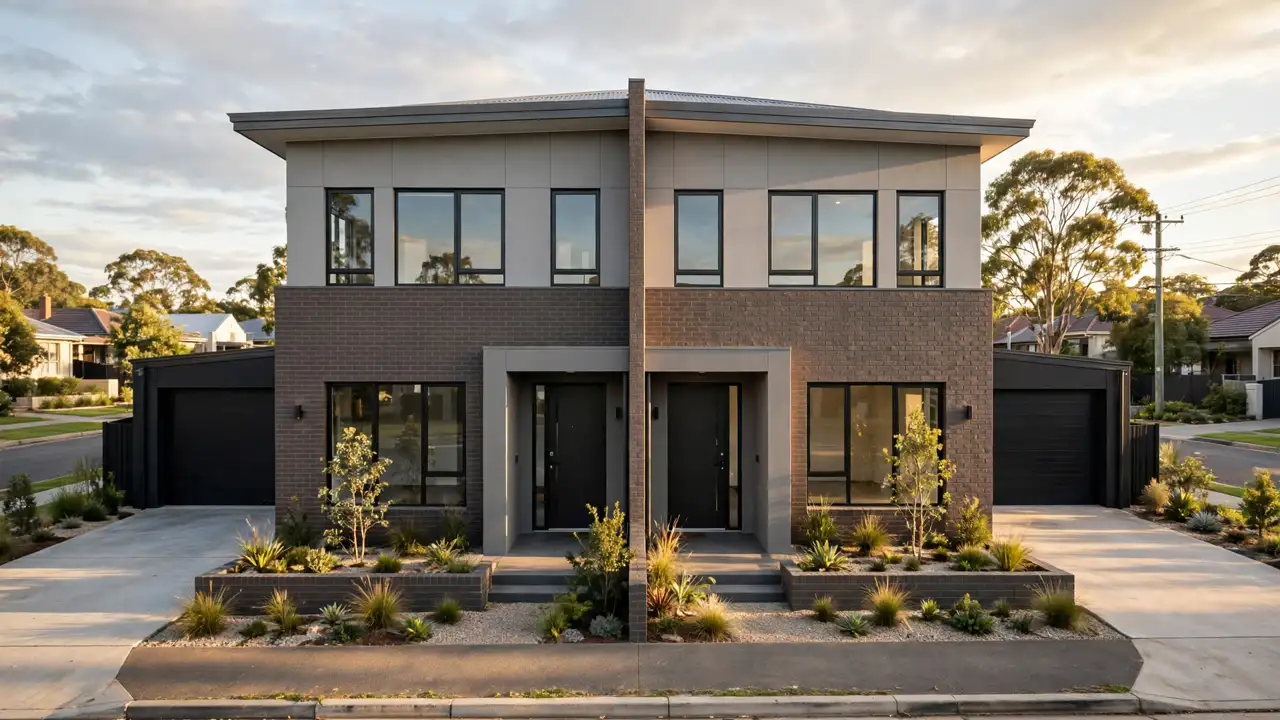
A duplex build in Sydney costs $1.0–$1.8 million before land. A granny flat in the same city costs $180,000–$260,000 all in. Both put two households on one block. People call both dual occupancy. Councils, lenders and valuers treat them as different things. This guide compares dual occupancy vs duplex vs granny flat. It covers what each one is, what it costs to build in 2026, how approval works, and what rent it can earn.
Dual Occupancy vs Duplex vs Granny Flat: The Short Answer
If you want two full-size homes you can sell separately, build a duplex. In Brisbane, both dwellings cost from around $350,000. In Sydney, they cost $1.0–$1.8 million. Both figures exclude land. If you already own a house and want a second income with the least fuss, add a granny flat: $120,000–$200,000 nationally. In New South Wales, a private certifier can approve it as complying development in weeks. Dual occupancy is the planning term covering the duplex and the dual-key home. A granny flat is legally a secondary dwelling, not a dual occupancy. That distinction decides whether you can subdivide. When you compare dual occupancy vs duplex vs granny flat, start with the title question. Do you need two titles, or one title with two rents?
What Each One Actually Is
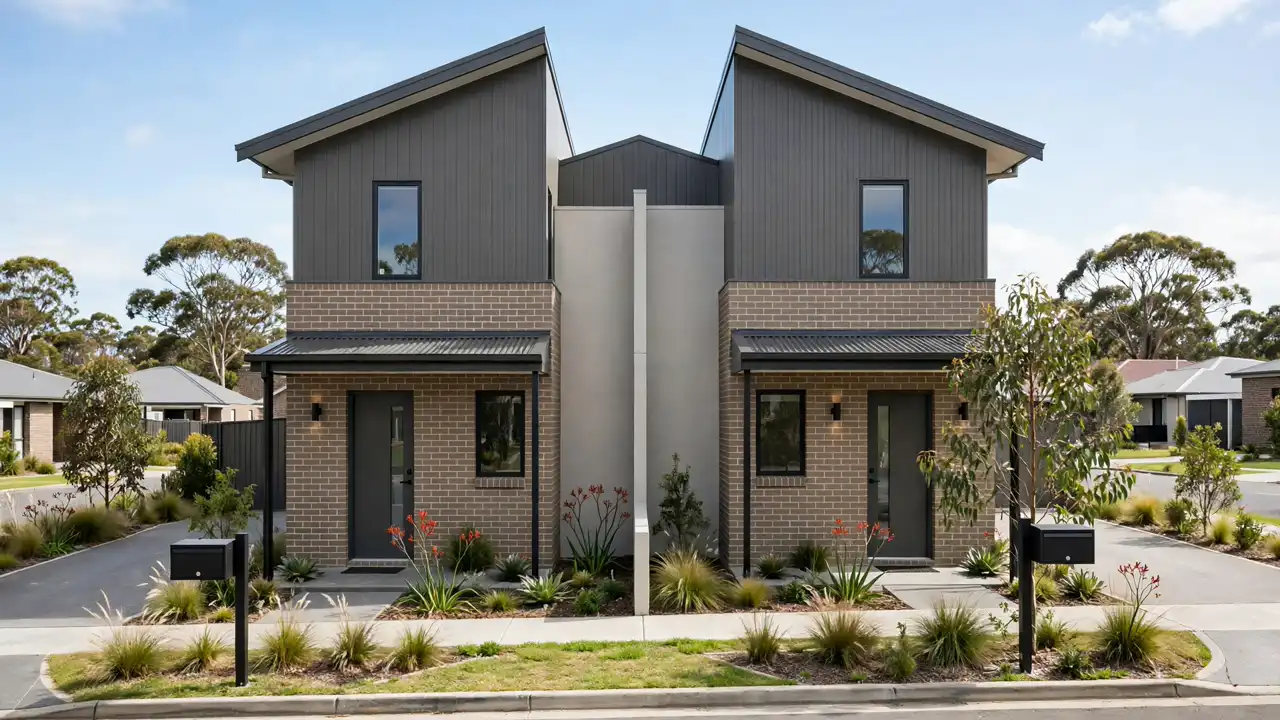
Dual occupancy is the planning term for two dwellings on one lot. It takes two forms. Attached dual occupancy is the duplex. Two homes share a wall, side by side or one behind the other. Each has its own entrance, kitchen, bathroom and services. Detached dual occupancy is two freestanding homes on the same lot. You can split both forms into two separate titles if you meet the council’s standards. Then you can sell one side later and keep the other.
Duplex and Detached Dual Occupancy
A duplex is the everyday word for the attached form. Each home is a full-size dwelling with two or three bedrooms. Sharing a wall, a roof line and often a driveway crossover makes a duplex cheaper per dwelling than two detached houses on separate blocks. Even so, it still costs far more than a granny flat. You are building two complete homes.
Granny Flats and Dual-Key Homes
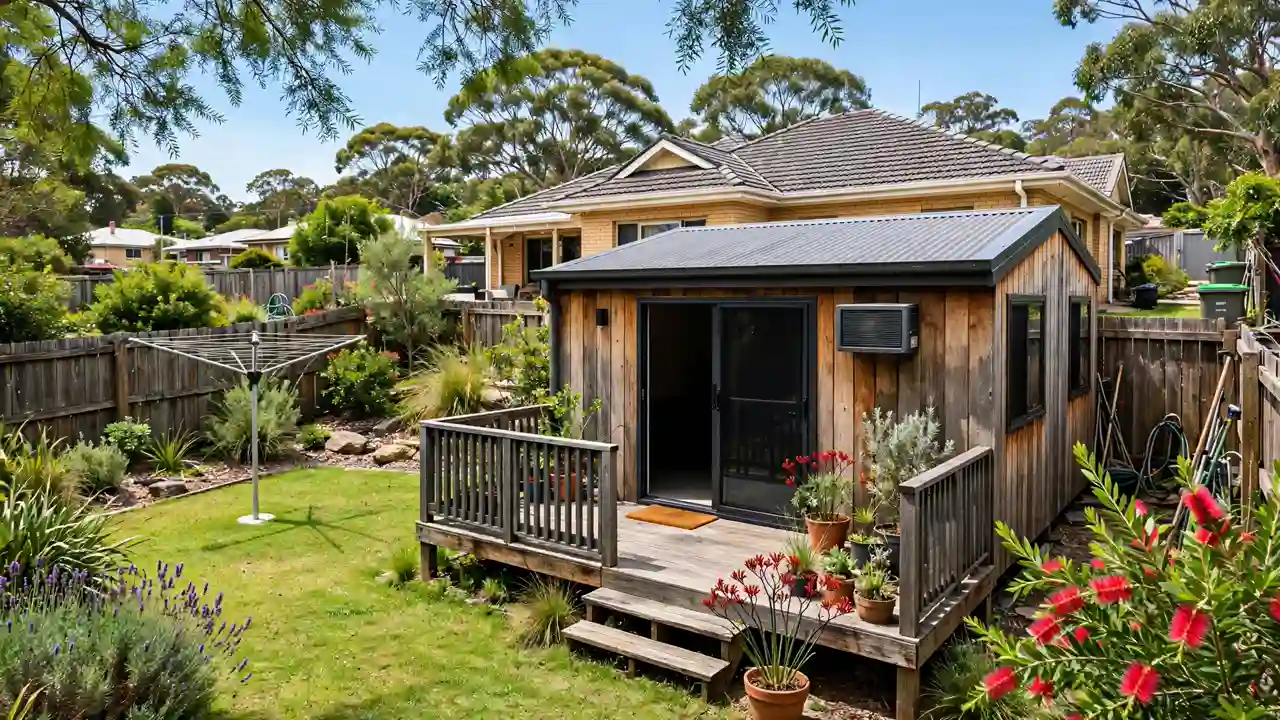
A granny flat — secondary dwelling in planning language — is a smaller self-contained dwelling on the same lot as a principal home. It has its own kitchen, bathroom and bedroom. It can stand detached, attach to the main house, or sit within it. The critical legal difference is that you cannot subdivide the lot: you own one title with two dwellings on it. In New South Wales, each lot allows one secondary dwelling.
People also confuse a fourth option with all three: the dual-key home. One building divides into two lockable, self-contained sections: a larger three-bedroom side and a smaller one-bedroom side, on one title. You cannot sell the sections separately. Build costs run lower because they share walls, roof and services.
| Option | What it is | Separate title? | Typical 2026 build cost | Best for |
|---|---|---|---|---|
| Duplex (attached dual occupancy) | Two full-size homes sharing a wall | Yes, if subdivided | $350,000–$1,800,000 for both | Investors, resale flexibility |
| Detached dual occupancy | Two freestanding homes, one lot | Yes, if subdivided | Similar to a duplex | Wide or battleaxe blocks |
| Granny flat (secondary dwelling) | Small second dwelling beside a main house | No, never | $120,000–$260,000 | Second income, family use |
| Dual-key home | One building, two lockable sections | No | Premium over a standard house | One title, two rents |
What Each One Costs to Build in 2026
Duplex pricing is where the state gap is widest. In Sydney, a duplex costs roughly $1.0 million to $1.8 million to build in 2026, before land, demolition, contributions and subdivision. Provincial Homes’ August 2026 Sydney guide gives that figure. In Brisbane, Dixon Homes puts a duplex build at $350,000 or more for both dwellings combined. Nationally, the guide range for construction in regional markets is $400,000–$700,000, before land. The Sydney figure covers the same two homes, with Sydney labour and site costs.
That is why dual occupancy vs duplex vs granny flat cost figures look contradictory at first glance. A Sydney duplex and a Brisbane granny flat are different products in different markets, with different inclusions. Ask what any figure leaves out. Land, demolition, subdivision, council contributions, site works and landscaping are usually extra. On a duplex, the contributions alone run $20,000 to $55,000 per dwelling in Western Sydney — and councils charge them twice.
Granny flat pricing is far tighter, because the product is smaller.
Granny Flat Prices
Propperly’s 2026 national guide puts a granny flat build at $120,000–$200,000 or more, from the modular and kit end to a custom build. In Sydney, Provincial Homes puts a 60 square metre granny flat at $180,000 to $260,000 all in. In South East Queensland, Dixon Homes’ granny flat designs start from $130,900 and run to about $250,000.
Kit pricing shows the same pattern at the bottom of the market.
Kit Prices
Austec Homes’ dual living price list, effective 1 March 2026, lists standalone granny flat designs from $154,996. Site works, piers and BASIX add $59,720 on top: $22,000 for the site, $6,720 for piers and $31,000 for BASIX. That $59,720 is the clearest published example of what a base price leaves out. If a duplex build is out of reach, a kit home is the cheapest way to put a second dwelling on land you already own. Our kit home cost guide breaks down what those packages include and what they leave out.
Approvals: CDC, DA and the Rules That Differ by State
Approvals are where dual occupancy vs duplex vs granny flat decisions most often go wrong. The fast lane exists for only one of them. In New South Wales, secondary dwellings run through the State Environmental Planning Policy (Housing) 2021 — the Housing SEPP. The general standards are 60 square metres maximum floor area and a 450 square metre minimum lot. They allow one secondary dwelling per lot, up to an 8.5 metre maximum height. If it meets every standard, a private accredited certifier can approve it as complying development. A straightforward granny flat can then win approval in weeks. If the land is flood-prone, heritage-listed or bushfire-prone, the complying development path is generally off the table. You need a development application to council instead.
One local variation matters. Shoalhaven City Council states one rule for land outside a rural zone. The total floor area must not exceed 60 square metres or 60 per cent of the principal dwelling’s total floor area, whichever is greater. The Shoalhaven secondary dwellings guide sets out the complying development standards and when you need a development application instead.
Duplex approvals are slower and less certain. A duplex usually requires a development application. It can take 3 to 12 months or more, depending on the council. In Brisbane, most zones allow duplexes on blocks over 400 square metres. In New South Wales, R2 low density zones across the state have allowed dual occupancies since 1 July 2024. Even so, the development application, the subdivision and the titling still need sequencing, and each step has its own clock. Since Queensland’s 2022 rule change, anyone can rent a granny flat there, not only members of the same household.
Rental Yields: What Two Incomes Actually Earn
Two incomes on one title is why most people build any of these. The national average gross yield for houses sits around 4.69 per cent in the first quarter of 2026. Buyers Agency Australia quotes Global Property Guide figures. Dual-income properties deliver 5–8 per cent gross in the same markets. Split by type, a duplex with both sides rented delivers 5.5–7 per cent in Brisbane, Perth and Adelaide. A house plus granny flat delivers 6–8 per cent in regional Queensland and on the New South Wales Central Coast. The granny flat wins on yield because you already own the land. The second income comes from a $120,000–$200,000 build, not from a second land purchase.
In Brisbane’s middle ring suburbs, a duplex earns approximately $900 to $1,200 or more per week combined. A two-bedroom granny flat earns approximately $200 to $500 per week, according to Dixon Homes’ 2026 Brisbane figures.
Propperly’s 2026 guide gives this worked example: a $700,000 purchase plus a $150,000 granny flat, earning $820 per week combined. That is $42,640 a year on $850,000 of capital, or 5.0 per cent gross. Gross yield is not cash flow. Separate metering, extra insurance and extra rates charges in some councils all come out of the same rent. So does the cost of finding and keeping a tenant. Our guide to whether a granny flat adds value looks at the resale side. A second income that adds nothing at sale time is a different investment from one that does.
Which One Suits Your Block?
A corner or battleaxe block over 400 square metres with two street frontages suits a duplex best. It gives separate entrances, separate driveways and a clean subdivision. A standard suburban block with an existing house suits a granny flat best. In New South Wales, it needs at least 450 square metres. A narrow block where two driveways will not fit points to a dual-key home instead.
Three questions settle most cases. First, do you need two titles? Only a dual occupancy splits, so if selling one side later matters, the granny flat is out. Second, how much capital can you put in? A granny flat at $120,000–$260,000 is a different commitment from a duplex at $350,000–$1,800,000. Buyers usually fund granny flat construction against the main dwelling’s equity. Lenders can add a higher-density loading to dual-key purchases. Third, who will live there? Ageing parents and adult children suit a granny flat. Two unrelated tenant households suit a duplex. Get the planning answer in writing before you pay for drawings. The build cost is only one line of the budget. Our granny flat cost guide itemises the rest, from site works to connections.
What the Build Price Usually Leaves Out
The price never includes land, demolition of an existing house, subdivision, titling and survey. Council contributions are usually extra. On a duplex, councils charge them per dwelling. BASIX, site works and piers are usually extra. Austec’s $59,720 of site, piers and BASIX on a $154,996 base price shows the honest version of a line every builder has. Landscaping, driveways, fencing, retaining, separate connections and stamp duty on any land purchase are usually extra.
Three red flags mark a quote that will grow. First, no site cost allowance on a sloping or rocky block. Second, the quote shows a “from” price for the smallest design in the range, as if it were the price for the design you actually want. Third, a duplex quote with no subdivision or contributions line at all. Get three quotes on the same drawings and inclusions. The cheapest one will usually stop looking cheap.
Frequently Asked Questions
What is the difference between dual occupancy and a duplex?
A duplex is a dual occupancy: the planning term for two dwellings on one lot, and a duplex is the everyday word for the attached form, where the two homes share a wall. A granny flat is not a dual occupancy at all: it is a secondary dwelling, and the lot it sits on can never be subdivided.
How much does a granny flat cost to build in Australia in 2026?
The national guide range is $120,000 to $200,000 or more. In Sydney, a 60 square metre granny flat costs $180,000 to $260,000 all in. In South East Queensland, designs start from $130,900 and run to about $250,000.
Can I subdivide a granny flat?
No. A secondary dwelling lot cannot be subdivided, and only one is allowed per lot. Only a dual occupancy can be split into two separate titles, Torrens or strata, if the council’s standards are met.
How big can a granny flat be in NSW?
Under the Housing SEPP the general standard is 60 square metres maximum floor area, a 450 square metre minimum lot, one secondary dwelling per lot, and an 8.5 metre maximum height. Some local environmental plans allow more, so check your council’s plan before you commit to a design.
What rental yield does a duplex earn?
A duplex with both sides rented delivers 5.5 to 7 per cent gross yield in Brisbane, Perth and Adelaide, against a national average of about 4.69 per cent. In Brisbane, a duplex earns approximately $900 to $1,200 or more per week in combined rent.
Do I need council approval for a granny flat?
Yes — through a complying development certificate if it meets every standard in the Housing SEPP, or a development application to council if it does not. Flood-prone, heritage-listed or bushfire-prone land generally needs a development application.
Start with the title question, not the floor plan. If you need two titles, only a duplex gets you there. If you need a second rent on land you already own, a granny flat does it. It costs a fraction of the build cost. Compare dual occupancy vs duplex vs granny flat quotes on the same inclusions, not the same headline.