
Subdivision costs Australia wide run $30,000 to $150,000 for a typical residential job in 2026. A simple two-lot split can land under $25,000. By contrast, a multi-lot project with new roads and services can pass $150,000. There is no single average, because the bill adds two kinds of money together. First come government fees, published and fixed. Second comes quoted work from surveyors, planners, engineers and civil contractors. That work depends entirely on the block, so this guide prices both halves for 2026 and works out three budgets.
Subdivision Costs Australia in 2026: The Short Answer
A simple two-lot split on a flat, serviced block costs $8,000 to $25,000. Also, SwiftLandBuyers’ benchmark for that job is $15,000 to $20,000. The breakdown is about $5,500 for surveying, $2,000 for permits; utility connections cost $6,000, legal work $1,000 and registration $1,500. Once infrastructure or three or more lots enter the picture, budgets climb to $25,000 to $50,000 or more per project. Canstar, citing Draftee, puts the range at $30,000 to $150,000 for complex cases. At the low end sits a paper subdivision where the services already exist. By contrast, the high end is a project that has to build them.
| Job type | Typical range, 2026 | What drives it |
|---|---|---|
| Simple 2-lot split, serviced block | $8,000–$25,000 | Survey, permit, titles, connections |
| 3+ lots, new services or roads | $25,000–$50,000+ per project | Contributions, engineering, works |
The state matters more than the size of the block. Feasly’s figures for subdividing one property into two come from Canstar in October 2026. New South Wales runs $50,000 to $90,000, while Queensland runs $60,000 to $90,000. South Australia runs $20,000 to $25,000, while Victoria runs $35,000 to $110,000. Western Australia runs $40,000 to $70,000, while Tasmania runs $30,000 to $55,000. The ACT runs $35,000 to $65,000, while the Northern Territory runs $25,000 to $45,000. Overall, South Australia is cheapest, because its charges are lower and its process shorter. By contrast, Victoria’s range is widest. A growth-area split there can attract an infrastructure contribution. A simple infill split can skip the open space charge altogether.
The 8 Cost Stages, in Order
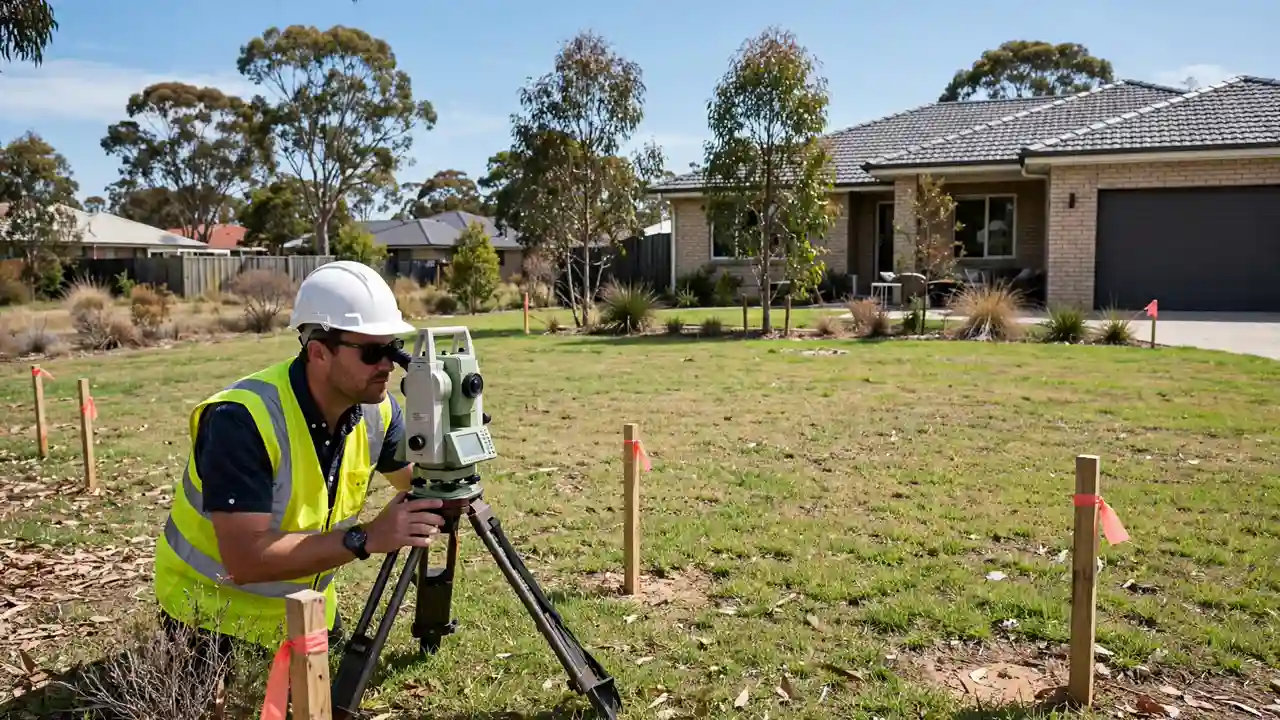
Every small residential subdivision passes through eight cost stages, although the names change by state. First, feasibility and early checks. Title searches cost $18.70 in New South Wales and $25.71 in Queensland. They also cost $33.90 in Western Australia, $39.20 in Tasmania and $42 in the Northern Territory. Second, survey, planning and design. The surveyor prepares the plan, while a town planner may prepare the report. The site may need bushfire, flood, heritage, geotechnical or contamination reports, while scope sets the price of each report. A contour survey runs $1,200 to $3,300, while a boundary survey runs $1,000 to $3,000.
Third, the application fee. Most states set it statewide, while each council sets it in Queensland and Tasmania. Fourth, referral, servicing and water and sewer charges, set by the water authority for each new lot. Fifth, developer, infrastructure and open space contributions, often the largest official cost. Councils charge many per new lot. Sixth, works and connections: water, sewer, drainage, power, telecommunications, driveways and demolition. Seventh, certification or sealing of the plan, and eighth, titles registration. Conveyancing carries a separate quote.
Official Fees
Subdivision Checker’s guide, updated 15 November 2026, tabulates the official fees for 2026–27. A Victorian planning permit to subdivide into two lots costs $1,537.00, while a VicSmart subdivision costs $233.10. A two-lot application to the Western Australian Planning Commission costs $4,007 from 1 July 2026. Brisbane charges $4,500 per application for up to two lots, plus $900 for each additional lot. New South Wales charges $458 plus $53 per additional lot with no new public road created.
In South Australia lodgement starts at $98.50 plus planning consent, while the Certificate of Approval costs $1,229. Titles registration is a per-plan fee plus a per-lot fee. New South Wales charges $384.78 to lodge a plan, plus $384.78 for each lot after the first. Queensland charges $496.12 per plan, plus $36.49 per lot and $94.42 per new title. Western Australia charges $364 plus $97 per lot, with new titles at $225.10 plus $8.20 per lot.
Contributions: The Line That Doubles the Bill
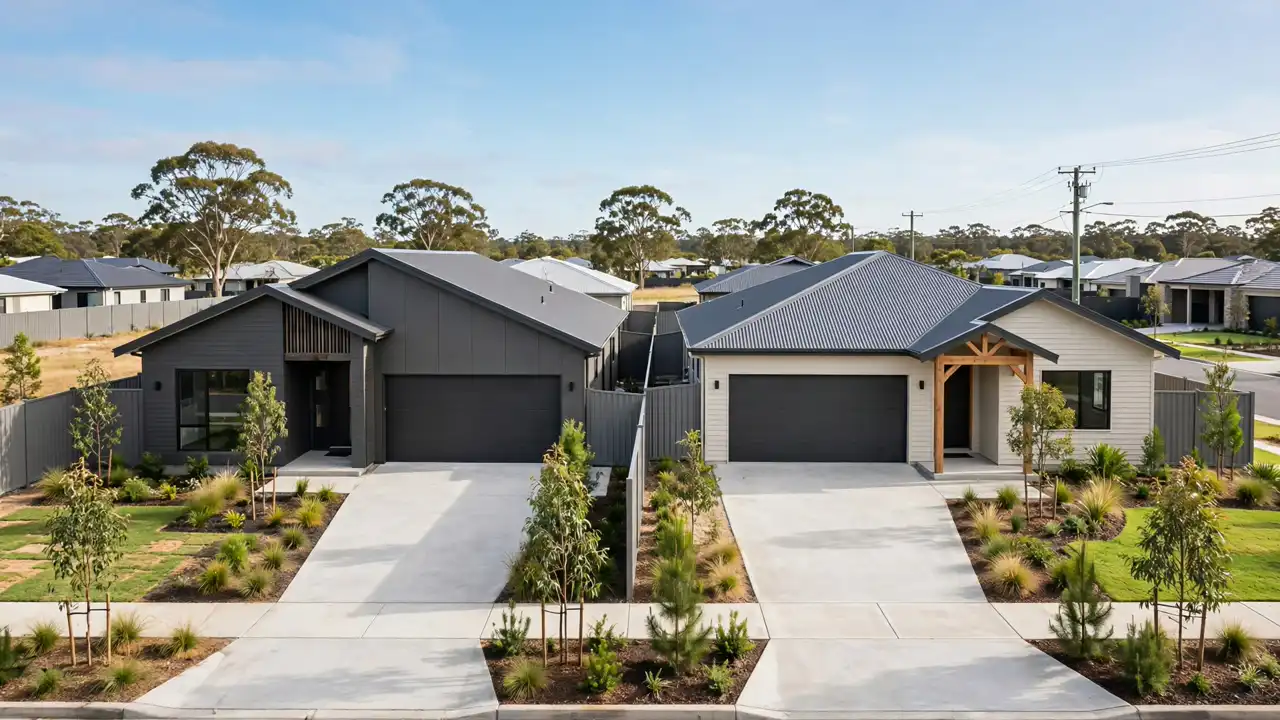
Contributions are where subdivision budgets often double. Councils charge them per new lot, but they arrive late, at plan sealing. New South Wales charges $13,000.73 per new dwelling lot in Greater Sydney from 1 July 2026. Brisbane’s council charge is $18,793.33 per lot from 1 July 2026. Urban Utilities levies water and sewerage separately at a similar amount. So allow around $37,000 to $38,000 per new lot.
South Australia sets the open space contribution at $10,166 per new allotment in Greater Adelaide, while elsewhere it is $3,723. Meanwhile, Western Australia’s Water Corporation charges $2,756 for water and $5,121 for wastewater per lot. The public open space requirement there is 10 per cent of the gross subdivisible area. Meanwhile, infill defaults to zero per cent until 18 December 2027.
Victoria caps the open space contribution at 5 per cent under the Subdivision Act 1988. However, a two-lot split can skip the charge where the council considers further subdivision unlikely. Yarra Valley Water charges $1,113.63 for water and $1,113.63 for sewer per lot. The ACT sets the lease variation charge at $7,500 for each additional lease when splitting into two or three leases. A suburb-based Schedule 2 charge can also apply, and in Kambah it is $65,000 for two dwellings. Ask for the infrastructure charges notice that came with the approval before budgeting anything. It names the exact figure for the lot.
2-Lot vs Multi-Lot: Where the Maths Changes
A two-lot split and a four-lot subdivision are not the same job at twice the price. On a two-lot split the fixed costs spread across one new lot. That means the survey, application, planner and legal work. So they dominate the bill. On a multi-lot job those fixed costs spread thinner. Every additional lot pays its own application increment, titles fee, water and sewer charge and infrastructure contribution. The works get bigger in kind, not just in size.
However, a third or fourth lot can trigger a new road, a drainage upgrade or a public open space dedication. In Queensland civil works often need a separate operational works approval. That approval also brings its own fees, inspections and bonds. For example, Brisbane sealing costs $600 per request plus $450 per lot. A bond request costs $3,000 per component, while the minimum bond is $25,000. A bond lets a plan seal before every piece of work is finished. Meanwhile, the money stays tied up until the work is done. In short, a two-lot split is a paperwork project with some works attached. A multi-lot subdivision is a civil works project with paperwork attached. The goal may be to build on the new lot. Then read our guide to whether a granny flat adds value first.
Timelines and Holding Costs: The Silent Half of the Bill
Holding costs are the silent half of subdivision costs Australia wide. The land keeps costing money while the paperwork moves. Feasly’s timelines for a two-lot split run 6 to 18 months. South Australia takes 6 to 8 months, while Victoria and the Northern Territory take 6 to 12 months. Queensland and Tasmania take 8 to 14 months, while the ACT takes 10 to 16 months. New South Wales and Western Australia take 12 to 18 months.
On a $500,000 block with a 6 per cent loan, holding costs run about $2,500 a month in interest alone. A six-month delay costs roughly $15,000, while a twelve-month delay costs roughly $30,000. Therefore, a VicSmart application in Victoria is worth asking about before lodging. It costs $233.10, against $1,537.00 for a standard two-lot permit. Notification and referrals add fees and time. In South Australia public notification costs $299 where required, while a standard referral costs $476. In New South Wales integrated development adds $194 to council plus $443 to each approval body. A neighbour objection does not just cost a fee, but it costs months. Never buy a block to subdivide without a written feasibility opinion from the surveyor first.
Subdivision Costs Australia: 3 Worked Budgets
Three budgets built only from the sourced prices above.
Budget 1 — simple 2-lot split, Victoria, flat serviced block: $12,000–$20,000. Survey $5,500, planning permit $1,537, certification and titles about $700, water and sewer $2,227, legal $1,500, and searches about $500. Total: $11,964, stated as $12,000, and the top of the range allows for a town planner and a specialist report. This matches SwiftLandBuyers’ $15,000 to $20,000 benchmark. It also assumes an open space exemption, which the council must confirm.
Budget 2 — 2-lot split, Brisbane, new services needed: $51,000–$55,000. Infrastructure charges $37,000 to $38,000, application $4,500, plan sealing $1,500, survey $5,500, titles about $758, legal $1,500. Total: $50,758 at the low end of the infrastructure range, stated as $51,000 to $55,000. The infrastructure charge alone is more than the whole of Budget 1. So the charges notice that came with the approval is the first document to read.
Budget 3 — 4-lot subdivision, New South Wales, 3 new lots: $87,000–$110,000. Application $617, Housing and Productivity Contribution on three new lots $39,002, survey $10,000 and works and connections $30,000. Titles $1,539, legal $3,000 and subdivision certificates $2,704. Total: $86,862, stated as $87,000. The top of the range allows for works to run higher once the ground is opened.
Five Traps That Sink a Subdivision Budget
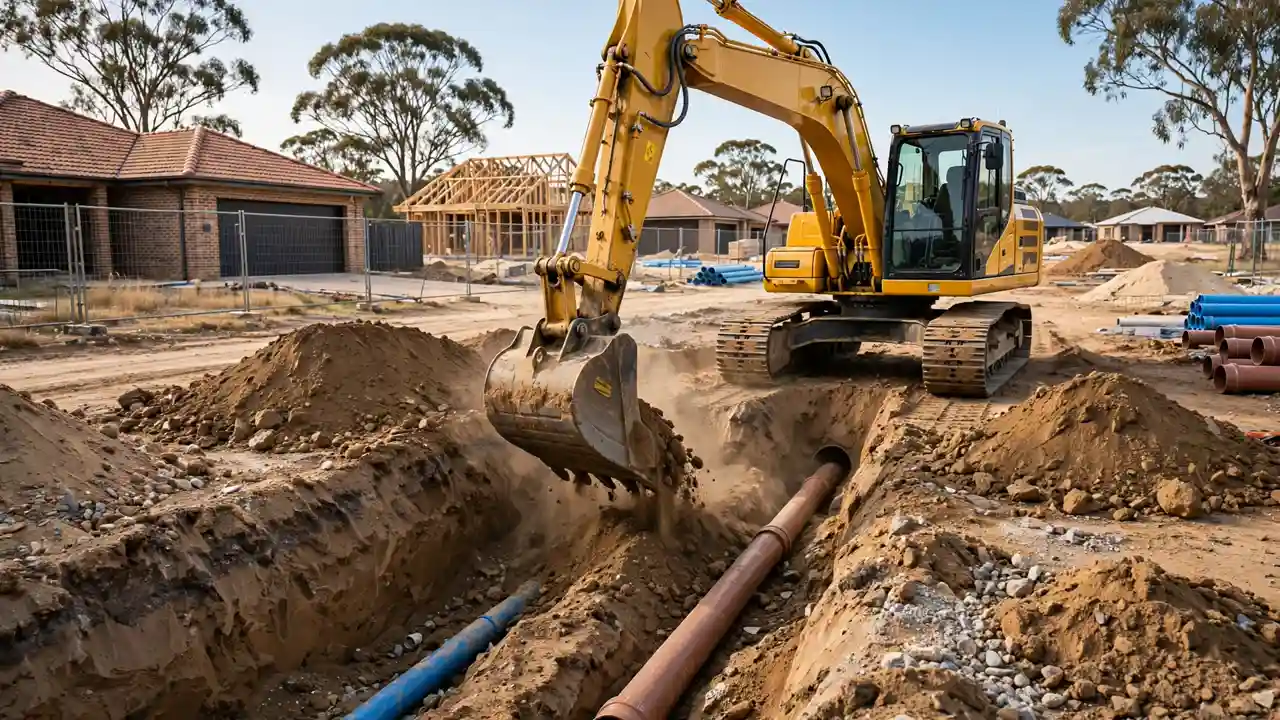
First, the contribution that was never in the quote. A surveyor’s fee covers the survey, not the council’s infrastructure charge, which is often the biggest single line. Second, servicing. A sewer main crossing the lot, limited street capacity or a required main extension can add tens of thousands. However, where mains do not reach the lot, the cost and time both rise sharply. Third, bonds. Brisbane’s minimum bond is $25,000 per component. Bonding lets a plan seal early, but the money stays tied up until the work is certified.
Fourth, engineering plan checks and supervision. In Victoria the council can charge up to 0.75 per cent of the works cost for checking plans. It can also charge up to 2.5 per cent for supervising works. Clarence City Council in Tasmania charges 2 per cent, minimum $643, for plan approval and inspection. Fifth, the existing building. A house, shed or garage straddling a new boundary needs alteration or removal. Demolition is rarely in the first quote. Finally, the defence against all five is the same. Get the surveyor’s feasibility opinion and the council’s charges notice in writing. Add the water authority’s requirements before paying for detailed design. New boundaries mean new fences and driveways, so price those in the same budget. Our fence cost per metre guide and our carport cost guide cover the two items people most often forget.
Frequently Asked Questions
How much does it cost to subdivide land in Australia?
Subdivision costs Australia wide run $30,000 to $150,000 in 2026, with a simple two-lot split on a serviced block at $8,000 to $25,000. The state matters most: a two-lot split runs $20,000 to $25,000 in South Australia and $35,000 to $110,000 in Victoria.
What is the cheapest state to subdivide in?
South Australia, at $20,000 to $25,000 for a typical two-lot split over six to eight months. Its open space contribution is $10,166 per new allotment in Greater Adelaide and $3,723 elsewhere.
How long does subdivision take?
Six to eighteen months for a two-lot split, depending on the state: six to eight months in South Australia, six to twelve in Victoria and the Northern Territory, eight to fourteen in Queensland and Tasmania, ten to sixteen in the ACT, and twelve to eighteen in New South Wales and Western Australia. Objections, referrals and servicing upgrades all add time.
Do I need a surveyor to subdivide?
Yes. Only a licensed surveyor can prepare the plan of subdivision, and the survey is the first step, because it proves the split is possible and sets the lot boundaries. Surveying commonly costs $2,000 to $10,000. Get the surveyor’s feasibility opinion before buying a block to subdivide.
What are infrastructure contributions?
Charges levied per new lot to pay for the trunk networks the new lots will use: roads, parks, stormwater, water and sewer. Brisbane charges $18,793.33 per lot to council plus a similar amount to Urban Utilities, and New South Wales charges $13,000.73 per new lot in Greater Sydney. They are often the largest official cost in the budget.
Can I subdivide without council approval?
Almost never for a Torrens title split. A development application or a complying development certificate is required in most cases, and in New South Wales all subdivision certificates must be lodged online through the NSW Planning Portal. The City of Sydney’s subdivision works page explains the approval path, including that a subdivision works certificate must be obtained before any building work starts.
Get the surveyor’s feasibility opinion, the council’s charges notice and the water authority’s requirements in writing before spending on design. Subdivision costs Australia wide are not one number but eight stages. Overall, the budget that holds prices the contributions and the servicing before the survey is even lodged.