
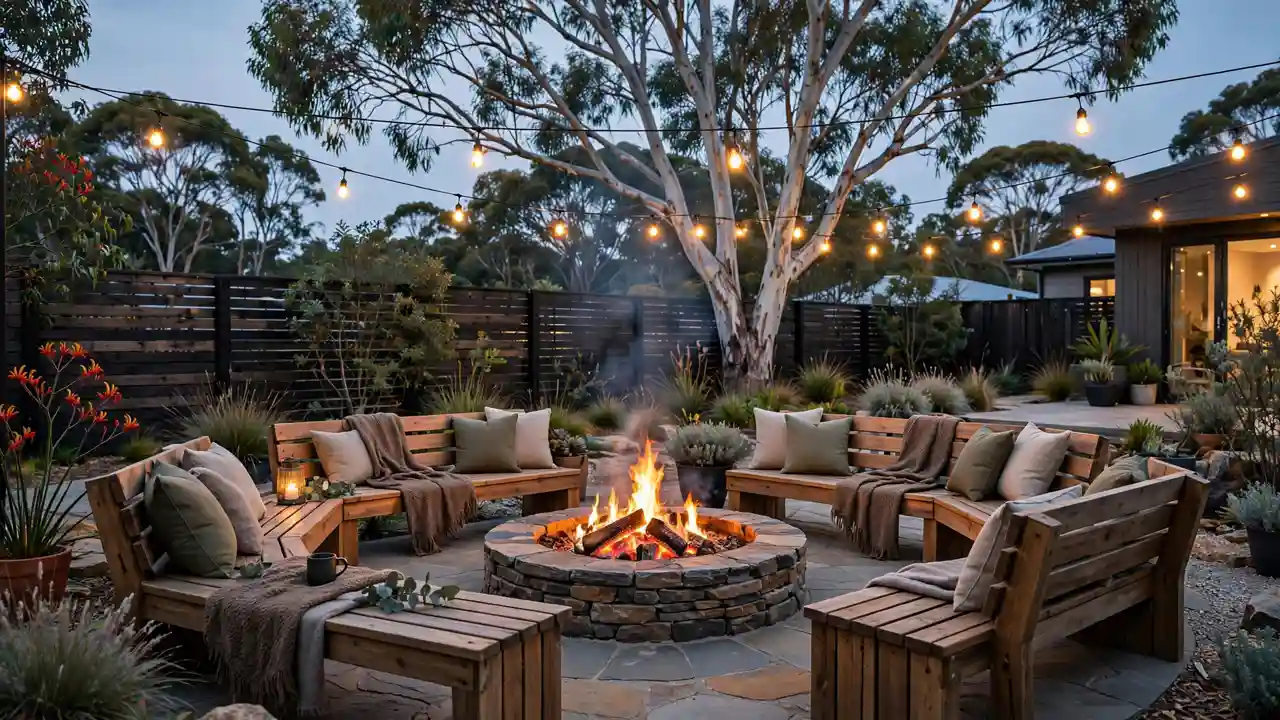
If you are pricing a fire pit, the first thing to know is that the number most guides quote is only one line of the real cost. A fire pit cost australia search returns prices for the bowl alone, the kit alone, or the whole built project — thousands of dollars apart. Once you split the project into its parts — pit, base, gas line if it has one, and seating — the figures settle into a clear pattern, and you can compare quotes fairly.
This guide prices a fire pit the way a careful landscaper does — unit, base, fuel connection, and extras, each on its own line — with every figure from 2026 Australian sources.
Fire Pit Cost Australia at a Glance
For a standard suburban backyard, plan on these bands — portable and DIY are buy-it-and-place-it prices, built-in bands are supply-and-install before seating or paving:
| Type | Typical range | Best for |
|---|---|---|
| Portable bowl or brazier | $150–$500 | Renters and small courtyards |
| DIY built pit | $300–$1,500 | Handy owners |
| Built-in masonry pit | $1,200–$3,500 | A permanent feature |
| Built-in gas pit | $2,500–$8,000 | Instant flame, no ash |
| Fire table | $800–$10,000 | Dining-height flame |
| Bioethanol kit | $2,095–$15,595 | Courtyards with no gas line |
| Outdoor fireplace | $3,000–$8,000 | A walled hearth |
The two lines most guides leave out are the gas connection and the freight — and that is where most fire pit cost australia confusion comes from. A gas line runs $500 to $1,500 in typical homes, and a heavy cast-iron pit can add freight calculated at checkout.
Portable Fire Pits: $150–$500
A portable pit is a steel, cast-iron, or corten bowl on legs, bought ready to use — Trusted Tradie Network puts basic ones at $150 to $500. Retail backs that up: Early Settler’s 80 cm Apollo corten pit is $269, Outdoor Escape lists corten pits from $359 to $889, and cast-iron cauldrons run $405 to $1,500 by size.
What you pay for is size and steel, not installation. You set the bowl on a non-combustible base and move it when the seating moves. The trade-off is heat: a small bowl warms the people nearest it, and cheap thin steel rusts through in a few seasons, while corten weathers on purpose and cast iron lasts decades if kept dry.
DIY Fire Pits: What a Home Build Really Costs
A home-built pit is the cheapest way to a permanent feature — the labour line is yours. Space Designs, a Sydney landscaping firm, puts a simple DIY in-ground pit at a few hundred dollars in materials, and a Bunnings Workshop project from Coffs Harbour — a paved pit with a curved rendered seat, built entirely by the owner — came in at around $1,500.
The mistakes that cost money later are all preventable: build on soil instead of compacted gravel and the ring sinks; build hard against a timber fence and the heat becomes a neighbour problem; skip drainage and the pit holds water, which cracks mortar and rusts a steel insert.
Built-In Masonry Fire Pits: $1,200–$3,500
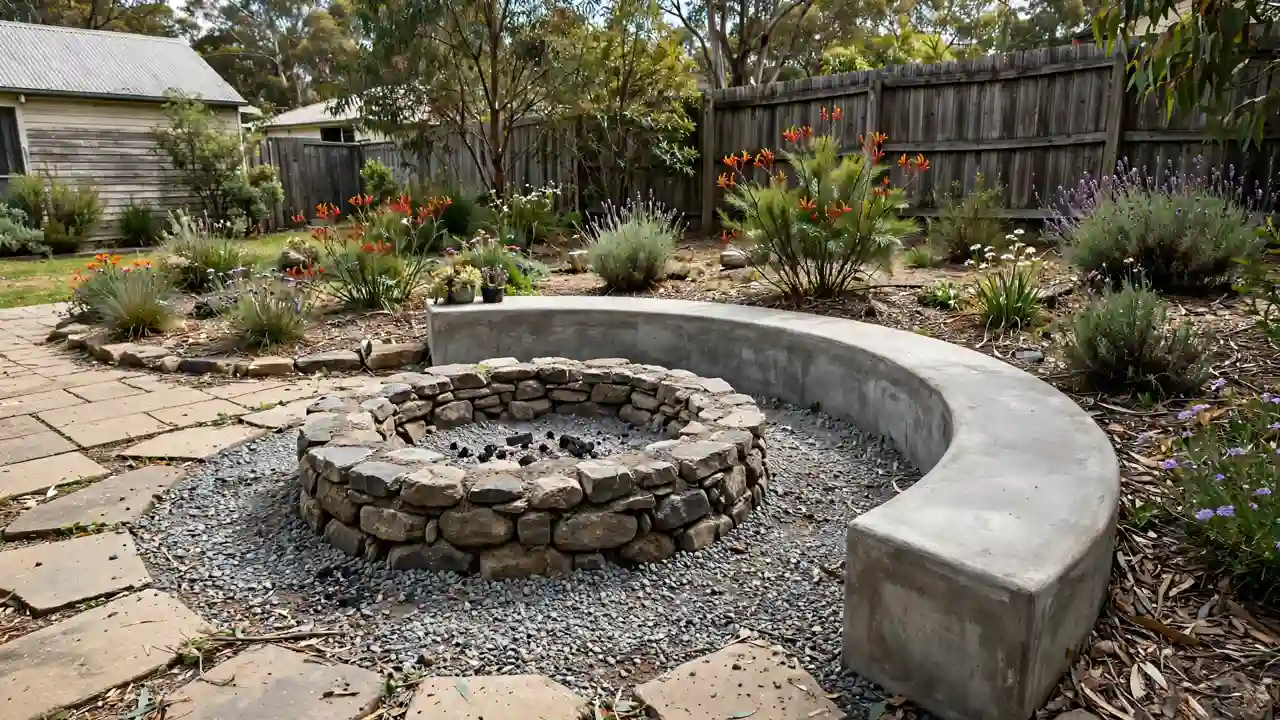
A built-in masonry pit is a brick or stone ring on a proper footing, usually with a cap you can rest a drink on. Trusted Tradie Network puts mid-range built-in pits at $1,200 to $3,500, including masonry construction plus basic seating, usually professionally installed.
Size, stone, and capping move the price inside that band: a low round ring in standard brick sits at the cheap end, and a square pit in split-face stone with a sawn cap and paved apron sits at the dear end. Seating is the quiet multiplier — a curved bench in matching stone can cost as much as the pit itself, which is why hipages quotes a conversation pit with paving and built-in seating from $5,000 combined.
Gas Fire Pits and the Gas Line
A gas pit swaps wood, ash, and smoke for a switch. The Quote Yard, a Queensland trade guide, prices a built-in gas fire pit at $2,500 to $8,000 — the pit and burner, not the plumbing behind it. A gas line from the meter or the LPG cylinders runs $500 to $1,500 in typical homes, and a bayonet point runs $350 to $800.
Gas work is licensed work — a gas line is not a DIY job — and a proper quote names the fitter, the line size, and the certificate at completion.
Gas earns its premium in daily use: it lights instantly, needs no wood store, leaves no ash, and stays usable on total fire ban days when solid-fuel pits cannot be lit. That usability is part of the fire pit cost australia equation that never shows in a unit price. The running cost has no single per-hour figure: ask the fitter for the burner rating in megajoules per hour, then price that against your gas tariff.
Fire Tables and Bioethanol Kits
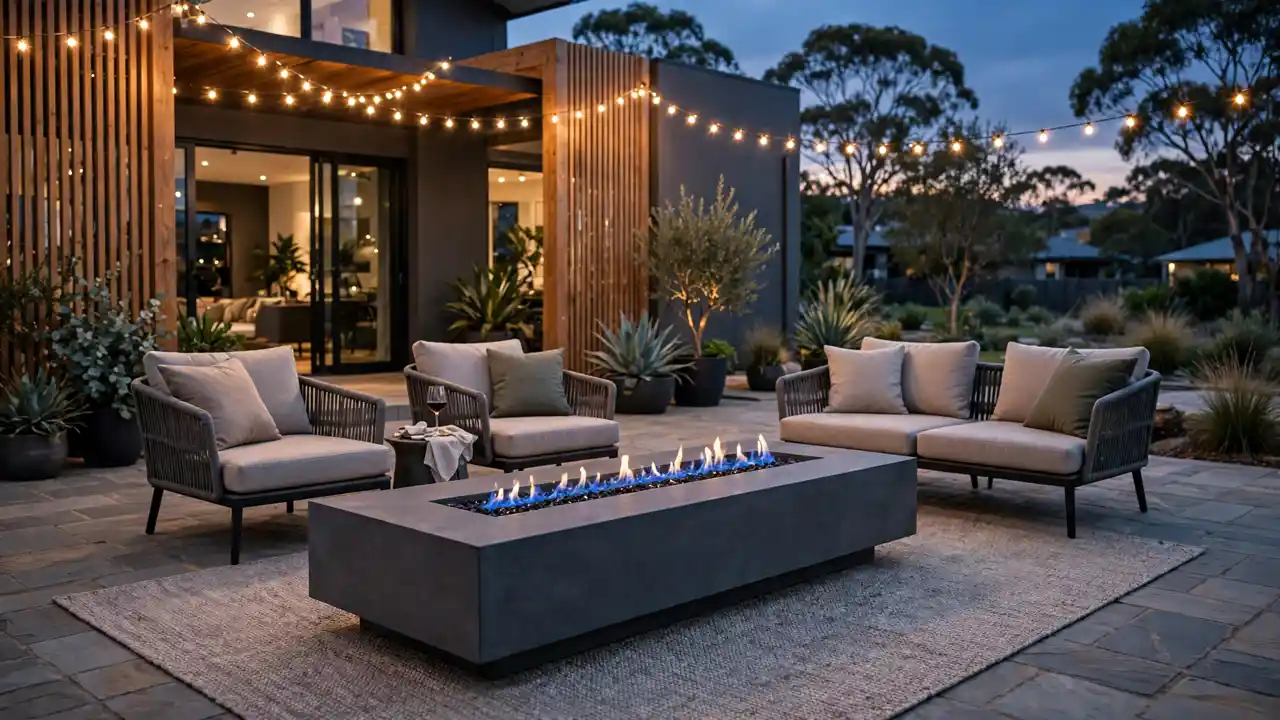
A fire table is a pit built into a dining-height table; a bioethanol kit is a burner set into a surround. Aussie Green Thumb puts fire tables at $800 to $10,000, with good gas tables available for just over $2,000; EcoSmart lists its kits from $2,095 to $15,595, with Australian retailers showing sale prices from $1,571.
Bioethanol kits suit places a gas line cannot reach: the fuel sits in a self-contained burner, so there is no venting, no gas line, and no ash. The trade-off is heat — at 4 to 13 kW against 19 kW for a single gas burner, a bioethanol flame is ambient warmth for a mild evening, not the main heat source for a cold one.
Custom builds sit above the kits at $4,000 to $25,000 for the core elements alone, before surround and labour.
Outdoor Fireplaces vs Fire Pits
A fireplace is a different project from a pit, and the price shows it: Trusted Tradie Network puts a standard outdoor fireplace at $3,000 to $8,000 and a fully customised design at $10,000 to $20,000 or more, while The Quote Yard prices a built outdoor fireplace in Queensland at $4,000 to $15,000 and beyond.
Choose by how the space is used. A pit is a circle — people sit around it and the fire is the centre. A fireplace is a wall — people sit facing it and it throws heat in one direction. If the alfresco already has a kitchen and a dining table, a pit usually fits better; if the space needs a backdrop and a windbreak, the fireplace earns its keep. Our outdoor kitchen ideas show how the cooking zone and the fire zone can share one paved area.
Fire Pit Cost Australia: Three Worked Budgets
These three budgets use only figures from the sources above:
| Budget | What it includes | All-in range |
|---|---|---|
| Courtyard starter | Portable pit on existing paving | $150–$500 |
| DIY built pit | Owner-built ring and gravel base, with a curved seat | $900–$1,800 |
| Gas entertaining zone | Built-in gas pit plus gas line | $3,000–$9,500 |
The courtyard starter is the honest minimum — a $269 pit on paving you already have, up to $500 for a heavy bowl. The DIY budget runs from a few hundred dollars for a plain ring to around $1,500 for the paved pit with a curved seat. The gas budget adds the $500 to $1,500 gas line to the $2,500 to $8,000 pit — which is why a gas project that looks like $3,000 lands near $9,500 once the plumbing is counted.
One more line belongs in every budget: somewhere to keep the wood dry. Our garden shed cost guide prices the small shed that ends up holding the firewood, the tools, and the pit cover over winter.
Reading a Fire Pit Quote Line by Line
A good quote has seven lines. Ask for each by name before you sign:
- Pit or burner unit — make, model, and size, priced as supplied.
- Masonry or surround — blocks or stone, capping, and mortar, priced per the drawing.
- Gas line and certification — line length, fitter, and certificate at completion, or a clear statement the pit is wood-only.
- Base and paving — excavation, compacted gravel, and the paved apron around the pit.
- Seating — bench or chairs, matching material or a separate supply line.
- Delivery and freight — heavy pits and stone are freighted.
- Approval check — a line confirming the council rules were checked.
The red flags are the same as in every trade quote, and they are where fire pit cost australia comparisons usually fall apart. A single lump sum with no lines cannot be compared with anything. An “allowance” with no figure is a price rise waiting for the second invoice. A gas pit with no certification line is an unlicensed job. A quote far cheaper than the others has usually left out the base, the gas line, or the freight.
Rules, Fire Bans and Neighbours Before You Light It
Price the pit, then check the rules — they decide when you can actually use it. Most New South Wales councils do not require approval for a backyard fire pit used for cooking or recreation, provided it is operated responsibly and does not cause excessive smoke — the City of Coffs Harbour burning controls say exactly that, limiting fuel to dry seasoned untreated wood, LPG, natural gas, or approved barbecue fuels. Household waste, treated timber, and plastics must not be burned.
The rules change with the season. During the Bush Fire Danger Period, 1 October to 31 March in New South Wales, fire permits and total fire bans apply, and on a Total Fire Ban day no fire can be lit in the open — which covers a backyard wood pit. Gas and electric features are generally still permitted on those days. Check your own council before you build — the rules differ by council and by state.
The same thinking applies around water: if your pit sits near the pool, the fence rules are separate and strict — our pool fence cost guide covers glass and aluminium barriers, gates, and certification.
How much does a fire pit cost in Australia?
A portable fire pit costs $150 to $500, a mid-range built-in masonry pit costs $1,200 to $3,500, a built-in gas pit costs $2,500 to $8,000 before the gas line, and a premium custom feature costs $5,000 to $12,000 or more. A fire table runs $800 to $10,000 and a bioethanol kit $2,095 to $15,595. Add $500 to $1,500 for a gas line and freight for heavy pits.
Is it cheaper to build or buy a fire pit?
Building is usually cheaper on materials — a simple DIY pit costs a few hundred dollars in pavers, blocks, and gravel, against around $700 for a typical pre-made pit — but buying wins on time and certainty. A custom built pit costs around $700 to build well, and a pre-made pit or fire table costs about the same, so the choice is more about your weekend than your wallet. Buy when you want a known price and a warranty; build when the pit has to fit an exact spot or match existing stone.
Do I need council approval for a fire pit in Australia?
Generally no, for a recreational fire pit used responsibly. Most councils do not require approval for fire pits, barbecues, and campfires used for cooking or recreation, provided they burn only dry seasoned wood, LPG, natural gas, or approved barbecue fuel and do not cause excessive smoke. Check your own council’s burning controls before you build, because rules differ by council, and a fire permit is required during the Bush Fire Danger Period for open burning.
Can I use a fire pit during a total fire ban?
No, not a solid-fuel one. Wood and charcoal fire pits cannot be used on a NSW Rural Fire Service total fire ban day, even in your own backyard. Gas and electric fire features are generally still permitted on those days in most circumstances, but check the current NSW RFS rules and your council’s conditions before lighting anything outdoors, because restrictions shift with fire danger ratings and can change at short notice.
How much does it cost to run a gas fire pit?
There is no single per-hour figure worth quoting, because the running cost depends on the burner size and your gas tariff. The fixed cost is the gas line at $500 to $1,500 installed, plus the bayonet point at $350 to $800 if you want a portable gas heater as well. Before you choose between natural gas and LPG, ask the fitter for the burner rating in megajoules per hour and price that against your tariff — a bigger burner on LPG is the dearest combination, and a small burner on natural gas is the cheapest to run.
What size fire pit should I get?
An 800 mm bowl suits four people pulled in close, and a 1,200 mm bowl suits six without anyone sitting in the smoke line. Retail cauldrons run from 800 mm to 1,500 mm, with the 1,200 mm the common family size. Measure the paved area first, leave room for chairs to pull back from the heat, and keep the ground around the pit clear of combustible material — a pit that fits the paving is a pit that gets used.