
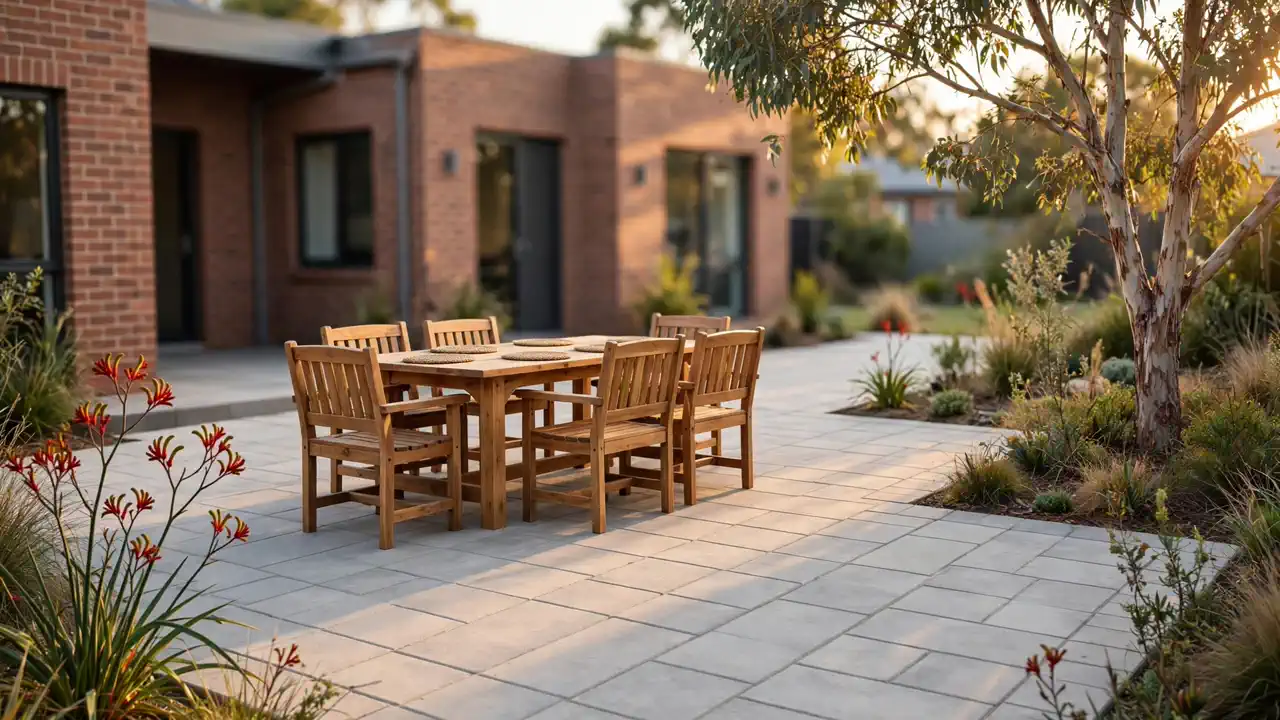
A paved patio, path or pool surround is one of the few outdoor jobs where the quote and the final price can sit a long way apart. The first number you need is the outdoor paving cost Australia homeowners actually pay in 2026 — not the per-paver price on a supplier’s website, but the whole installed job. This guide prices that whole job, material by material, with three worked budgets and a quote decoder.
Outdoor paving cost Australia at a glance
For a standard patio or path on flat ground, expect $40–$280 per square metre installed in 2026 — budget concrete pavers at the bottom, natural stone and porcelain at the top. Labour adds $25–$70 per square metre, site preparation $30–$40, and sealing $5–$15. A typical 20-square-metre courtyard patio in concrete pavers lands around $2,100–$3,300 all in; in travertine, around $3,500–$5,500.
| Material | Installed, per m² (2026) | Best for |
|---|---|---|
| Concrete pavers | $65–$150 | Patios, paths, driveways |
| Clay / brick pavers | $100–$200 | Heritage looks, paths |
| Limestone | $100–$160 | Warm-toned patios |
| Travertine | $130–$230 | Pool surrounds |
| Natural stone (granite, bluestone, sandstone) | $150–$350 | Premium patios |
| Porcelain pavers (20 mm) | $120–$280 | Modern patios |
Every figure above is an installed rate — pavers supplied and laid — from 2026 Australian price guides. Supply-only prices look far lower: a travertine paver at $75–$130 per square metre from the supplier still needs laying, a base, edging and sealing before anyone can walk on it.
Outdoor paving cost Australia by material
The paver you choose sets about half the job’s cost. The other half is the groundwork underneath it, which barely changes between materials.
Concrete pavers: $65–$150 per square metre installed
Concrete pavers are the value option and the most common choice for Australian patios. Supplied and laid they run $65–$110 per square metre on most 2026 guides, $150 for coloured, exposed-aggregate or premium decorative finishes. Large-format pavers are available from $64 per square metre supply-only, which keeps the material bill low on big areas. They come in almost any size and colour, and a simple stretcher-bond pattern keeps labour at the cheap end of the $25–$70 per square metre band.
Clay and brick pavers: $100–$200 per square metre installed
Clay pavers cost more than concrete because the colour runs through the brick, so wear and chips barely show — a real advantage on paths and driveways that cop daily traffic. Installed rates run $100–$160 per square metre nationally and $130–$200 in Queensland, with the material alone at $70–$95. They last 40–80 years, suit heritage and Hamptons-style homes, and the recommended herringbone pattern adds a little labour over a simple running bond.
Limestone: $100–$160 per square metre installed
Limestone is a warm, pale stone for Australian alfresco areas, cooler underfoot than darker surfaces in summer. The material runs $45–$90 per square metre, with installed rates of $100–$160. It is porous and marks easily from oil, wine and leaf tannin — a penetrating sealer is worth budgeting for. A 40-square-metre limestone alfresco lands around $4,000–$8,000 supplied and laid.
Travertine: $130–$230 per square metre installed
Travertine is the usual choice around pools: cool underfoot, naturally slip resistant when tumbled or honed, and good looking for decades. Installed rates run $130–$230 per square metre; the stone itself is $75–$130 per square metre plus GST for 30 mm pavers. French-pattern packs are the classic layout, and the pitted surface that gives travertine its character means it needs sealing — and resealing every two to three years — to stop it staining.
Natural stone: granite, bluestone and sandstone, $150–$350 per square metre installed
Natural stone is the premium end of paving. Granite and bluestone pavers are exceptionally hard-wearing — bluestone can last 80–100 years — while sandstone brings a softer, warm look, from $65 per square metre stone-only for sawn modular sandstone. Installed rates run $150–$280 per square metre nationally and up to $350 in Queensland. Stone is heavy, cuts slowly and usually goes down over a concrete sub-base rather than sand, which is part of why the installed rate climbs.
Porcelain pavers: $120–$280 per square metre installed
Twenty-millimetre porcelain pavers are the breakout modern option: large-format tiles that look like stone or timber, barely stain, and need no sealing. Installed rates run $120–$210 per square metre nationally and $180–$280 in Queensland, where the thicker format and pedestal or mortar-bed fixing push labour up. They are the near-zero-maintenance pick — no sealing, no staining, a 50-year-plus service life — but they need a flat, well-prepared base, and a cracked paver cannot be patched the way a concrete one can.
What the per-square-metre price leaves out
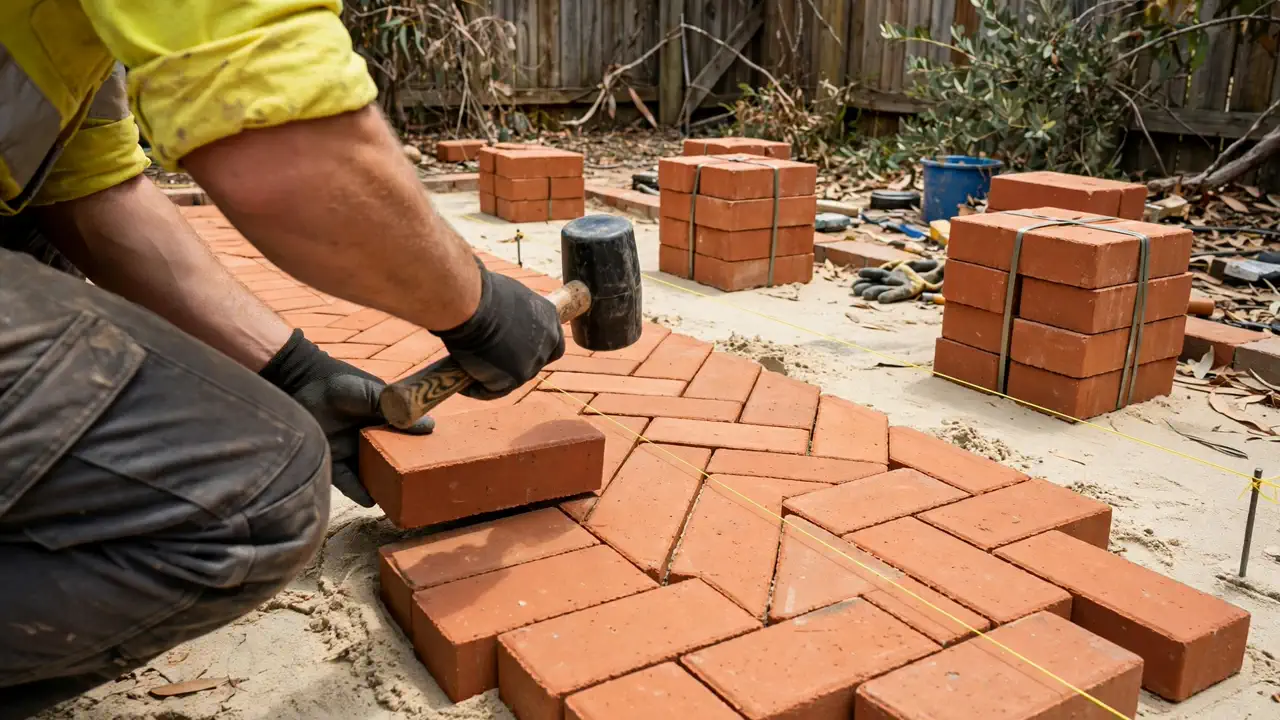
A per-square-metre paving rate usually covers pavers and laying only. The rest of the job is where budgets blow out — and where cheap quotes hide their margin. Site preparation runs $30–$40 per square metre: excavation, a 100 mm compacted road-base layer and a sand bed on top — the layer that decides whether your paving stays flat. Skimp on it and pavers sink and rock within a few winters, no matter how good the stone is.
Drainage is the next line most quotes gloss over. Paving needs a fall away from the house; on clay soils or flat blocks that can mean a spoon drain, a strip drain or a stormwater pit, priced separately. Edge restraints — the concrete haunch or aluminium angle that stops the outer pavers creeping outward — are often an extra too. Then sealing at $5–$15 per square metre, waste removal if an old slab or lawn is coming out, and access: a narrow side passage that forces barrow-only access adds labour on every square metre. Ask for each as its own line before you sign, not as a single lump sum.
Three worked budgets
These three budgets use the outdoor paving cost Australia ranges above, with preparation and sealing as separate lines.
Budget 1: 20 m² courtyard patio, concrete pavers — $2,100–$3,300
Pavers supplied and laid at $70–$110 per square metre: $1,400–$2,200. Site preparation at $30–$40: $600–$800. Sealing at $5–$15: $100–$300. Total: $2,100–$3,300. Simple stretcher-bond pattern on flat ground, no drainage work, easy barrow access. If the courtyard needs planting and layout too, our courtyard garden design ideas show how the paved area fits the whole space.
Budget 2: 40 m² alfresco, limestone — $5,400–$8,600
Pavers supplied and laid at $100–$160 per square metre: $4,000–$6,400. Site preparation at $30–$40: $1,200–$1,600. Sealing at $5–$15: $200–$600. Total: $5,400–$8,600 — close to a Perth landscaper’s published guide of roughly $4,000–$8,000 for a 40-square-metre limestone alfresco before sealing.
Budget 3: 60 m² pool surround, travertine — $8,700–$14,100 before sub-base
Pavers supplied and laid at $140–$220 per square metre: $8,400–$13,200. Sealing at $5–$15: $300–$900. Total before sub-base: $8,700–$14,100. On top sits the concrete sub-base, the coping and the falls to drainage, priced per job — pool paving is dearest because the base is structural, the fall exact, and every cut around the coping hand work.
Paving vs poured concrete
Poured concrete is usually cheaper upfront. Plain sealed concrete runs $90–$130 per square metre installed, while the cheapest pavers start around $65–$110 — so on a straight comparison the gap is small, and a plain slab often wins on price alone. What pavers buy you is repairability and looks: a stained or cracked paver lifts out and a new one drops in, while cracked concrete means cutting out a whole section. Pavers also come in colours, textures and patterns a slab cannot match, and a permeable paver system drains better than a sealed slab. If the job is a driveway rather than a patio, the numbers change again — our driveway cost guide prices that job separately, with heavier pavers and a deeper base. For a patio you see every day, the extra is usually worth paying; for a side path nobody sees, concrete is the sensible spend.
Pool surrounds: slip ratings and stone choice
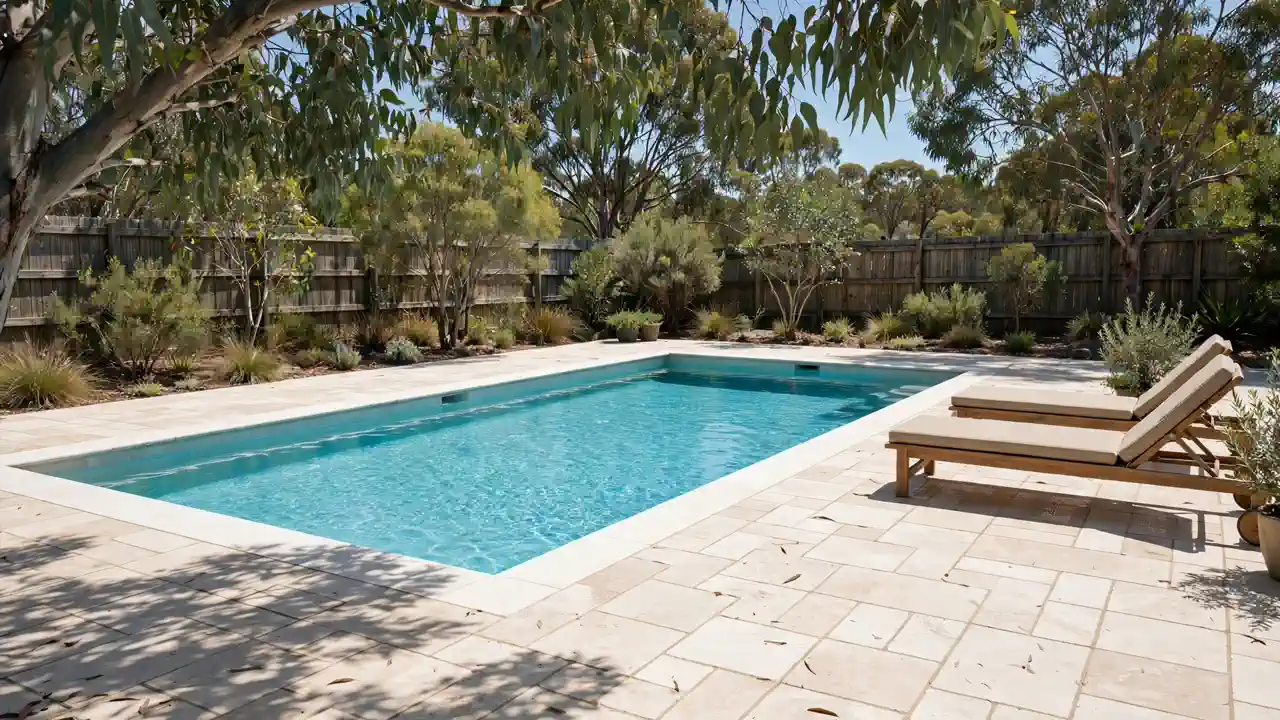
Pool paving is where the outdoor paving cost Australia averages hide the widest spread, because the base is structural and the stone has to be safe wet. Look for a slip rating of P4 or R11 — the band outdoor porcelain and tumbled travertine usually sit in, and what keeps bare feet steady on a wet deck. Travertine is the default for a reason: cool underfoot in full sun, grippy when wet, and pale enough to keep the pool area bright. Limestone works too but needs sealing more often, and polished stone of any kind is a poor choice around water. Budget for the concrete sub-base, the coping, and sealing every two to three years — skip the sealer and pale travertine will show every leaf stain by the second summer.
How to read a paving quote
A good paving quote reads like a parts list, not a single number. It names the paver — brand, size, thickness and colour — states the base depth in millimetres, lists edge restraints, joint sand and sealing separately, and confirms the fall and where the water goes. A quote that beats the outdoor paving cost Australia bands in this guide by a third is not a bargain; it has left something out, and the missing line is usually the base.
Red flags: no base depth stated at all; a paver “allowance” with no dollar figure attached; sealing mentioned in conversation but absent from the written quote; no mention of drainage or fall; pressure to pay a large cash deposit on the spot. Get three quotes on the same written scope — same paver, same area, same base — and the real price difference will show itself. The Concrete Masonry Association of Australia, the industry body for segmental paving manufacturers, publishes the standards pavers are made to (MA20 and AS/NZS 4455) — a useful check when a supplier cannot name the standard their pavers meet.
Do you need council approval?
Most at-grade patio and path paving needs no development application — ground-level work that does not change the building. Check the exceptions before you book: a driveway crossover, where paving meets the kerb, usually needs a separate council permit — around $300–$600 in Perth — and work that changes stormwater flow, adds a retaining wall, or sits in a heritage or flood overlay can trigger approval. Rules vary by council, so a five-minute call to your local council beats discovering the rule after the pavers are down.
Frequently asked questions
The six questions below come up most often once the numbers are on the table.
How much does outdoor paving cost per square metre in Australia?
In 2026, outdoor paving costs $40–$280 per square metre installed, depending on the material. Budget concrete pavers start around $65–$150 per square metre installed, clay or brick pavers run $100–$200, and travertine or natural stone runs $130–$350. The paver itself is only part of the total — base preparation, drainage, edging and sealing sit on top.
Is paving cheaper than concrete?
Poured concrete is usually cheaper upfront — plain sealed concrete runs $90–$130 per square metre installed, while the cheapest pavers start around $65–$110. Pavers cost more because each unit is laid by hand, but a damaged paver can be lifted and replaced on its own, while cracked concrete means cutting out a whole section. Over 20 years the gap narrows, and pavers usually add more to a home’s street appeal.
Do pavers need sealing?
Natural stone pavers — travertine, limestone, sandstone and bluestone — should be sealed, and resealed every two to three years. Sealing costs $5–$15 per square metre and protects against stains from oil, wine and leaf tannin. Concrete and porcelain pavers cope without sealer, though a penetrating sealer still makes cleaning easier. Budget for sealing as a separate line — most quotes exclude it.
How long does outdoor paving last?
Properly laid paving lasts decades. Clay brick pavers last 40–80 years and natural stone 50–100 years or more. What fails first is rarely the paver — it is the base. A thin or poorly compacted base lets pavers sink and rock within a few winters, which is why base depth and compaction matter more than the paver brand.
Can you pave over existing concrete?
Yes, if the concrete is sound, level and free of major cracks — pavers can be glued directly to it with a flexible adhesive, or laid on a thin mortar bed. Expect an extra preparation charge on top of the laying rate for cleaning, priming and adhesive. If the slab is cracked, heaved or sloping toward the house, it needs to come out first; paving over a failed slab just hides the problem for a season or two.
What is the cheapest paving option in Australia?
Standard concrete pavers are the cheapest paving option, at $65–$110 per square metre supplied and laid in 2026. Large-format concrete pavers from $64 per square metre supply-only keep the material bill low, and a simple stretcher-bond pattern on flat ground keeps labour at the $25–$70 per square metre end. Gravel and asphalt are cheaper still, but they are not paving — and neither looks like it.
Price the whole job, not the paver: get base depth, drainage and sealing in writing, compare three quotes on the same scope, and the cheapest usually stops looking cheap.