
Walk into any Australian flooring showroom and you’ll hear two words constantly: hybrid and laminate. Similar on the sample board, both click-lock floating floors, both sold as affordable timber looks — but fundamentally different products. And nearly every ranking comparison online is written by someone who sells one of them. This one isn’t. It leads with the thing that matters most: what happens when water gets involved.
Short answer: Hybrid has a mineral-plastic core that is genuinely waterproof through the plank — spills and steam mops don’t faze it. Laminate has a wood-fibre (HDF) core that is water-resistant at best: wipe spills quickly, keep steam mops away. Hybrid $28–$65/m² supply; laminate $20–$55/m². Choose hybrid for kitchens, laundries, pets, kids and rentals; laminate for bedrooms and living rooms on a budget. Neither can be refinished — buy the wear layer you’d want for a decade.
All prices below are indicative 2026 Australian figures (sources at the end). Costs vary by brand, retailer and region — always get itemised quotes.
What hybrid flooring actually is
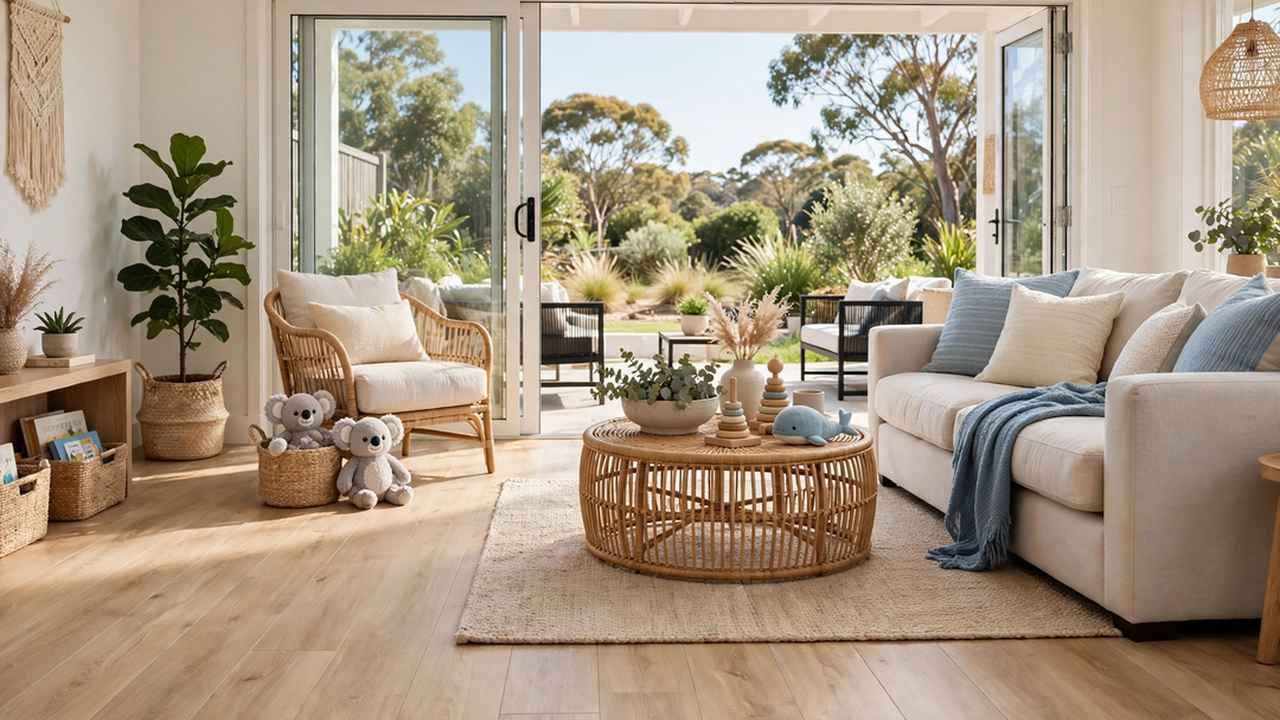
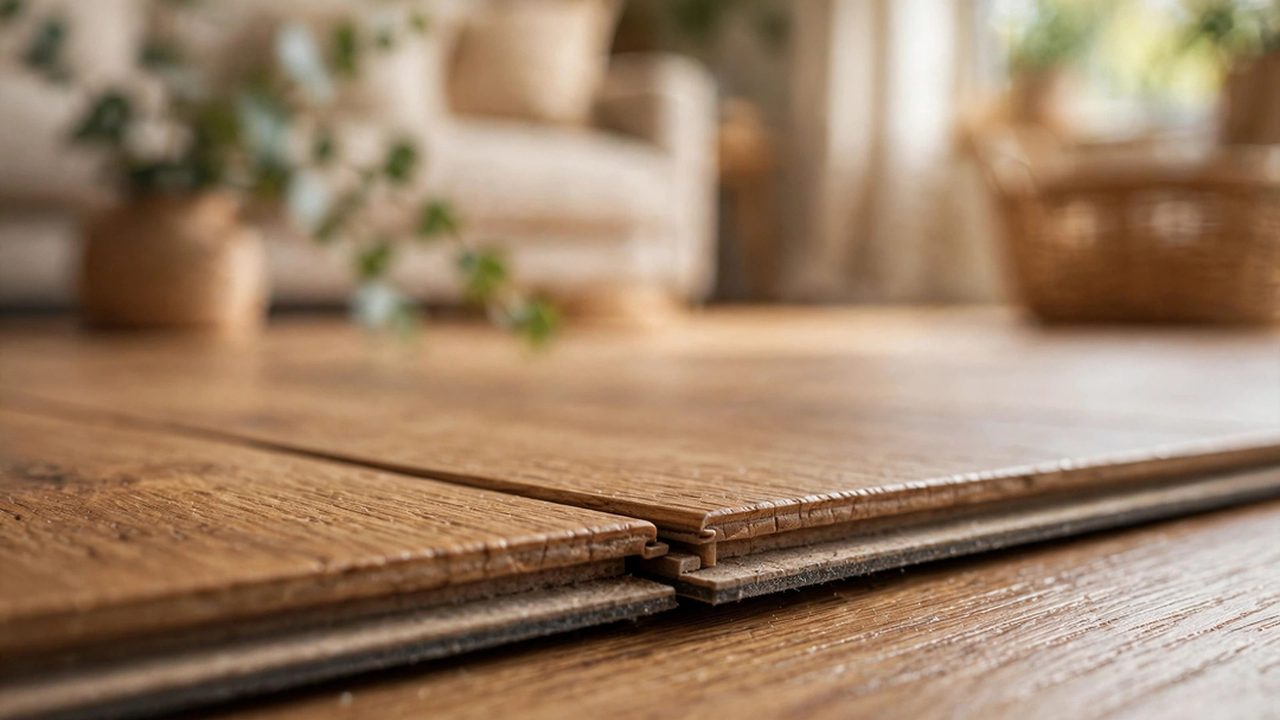
Hybrid flooring is a rigid floating plank with a stone-plastic composite (SPC) core — limestone powder mixed with PVC stabilisers — topped with a printed timber-look film and a clear wear layer. It clicks together and floats: no glue, no nails.
Three properties define it. First, the core is 100% waterproof: the plank cannot absorb water, swell or warp — spills can sit on it, and steam mops won’t hurt the board (check warranty wording first). Second, it’s dimensionally stable: the rigid core resists the expansion and contraction temperature swings cause, from humid Queensland to frosty Canberra. Third, it’s firm underfoot — harder and more solid-feeling than laminate, and quieter with an attached underlay (many boards ship with thin IXPE foam bonded on).
The honest downsides: it’s plastic. The SPC core won’t biodegrade and isn’t kerbside recyclable. It can’t be refinished — once the wear layer is gone, the plank is done. And it’s thinner and harder than real timber, so it never feels like a solid floor underfoot.
What laminate flooring actually is
Laminate is a floating plank with a high-density fibreboard (HDF) core — wood fibres compressed with resins — topped with a printed timber film and a melamine wear layer. It also clicks together and floats. Same look from the top; the difference is entirely in the core.
That HDF core is the whole story. It’s water-resistant, not waterproof. The surface shrugs off a quick spill, but water that reaches the core — a slow drip under the dishwasher, a pet accident left overnight, repeated steam mopping — swells the fibreboard, and a swollen plank can’t be fixed. Some brands sell “waterproof laminate” with edge-sealed cores: treat these as brand claims and read the warranty, because the core is still wood fibre and the fine print usually excludes standing water.
Laminate’s honest advantages: price (it undercuts hybrid at the budget end) and a huge range of realistic timber looks at $20–$35/m². It can sound hollow without a quality underlay — budget for a good one; it matters more than the plank price. Like hybrid, it can’t be refinished, and end-of-life recycling is essentially non-existent despite the recycled wood content many brands use.
Hybrid vs laminate: head-to-head
| Hybrid (SPC) | Laminate (HDF) | |
|---|---|---|
| Core | Stone-plastic composite | High-density fibreboard |
| Waterproof? | Yes — core and surface | No — water-resistant only; wipe spills fast |
| Steam mops | Generally fine (check warranty) | Risky — avoid |
| Supply cost | $28–$65/m² | $20–$55/m² |
| Feel underfoot | Firm, solid; quieter with IXPE underlay | Can feel hollow; needs quality underlay |
| Dent / scratch resistance | Very good — rigid core | Good — depends on wear layer (AC rating) |
| Temperature stability | Excellent — minimal expansion | Good — needs expansion gaps |
| Refinishable? | No | No |
| End of life | Not recyclable (plastic-mineral composite) | Not recyclable after use |
The table hides one nuance: locking quality varies enormously between cheap and mid-range boards. Bargain boards with sloppy tolerances separate at the joints — and once joints open, grit gets in and the floor is finished. On a tight budget, a mid-range board with a proven locking system beats a cheap board with a thicker wear layer.
The waterproofing truth (with the fine print)
This is where most comparisons get vague, so let’s be precise. Hybrid’s waterproof claim means the plank itself: water cannot damage the board. It does not mean your floor is a bathtub — water can still travel between planks to the subfloor if it pools for hours, and no warranty covers flood damage. What hybrid buys you is forgiveness: the spilled dog bowl found at bedtime, the toddler’s bath-time escape, the slow leak caught on Sunday — none ruin the floor.
Laminate buys much less forgiveness. The surface handles a wiped-up spill, but the HDF core swells wherever water lingers — most commonly around dishwashers, fridges with ice-makers and pet water stations. Swelling shows as raised, peaking joints and is irreversible. With any of those risk factors, laminate in those rooms is a false economy.
On both: neither is a substitute for proper wet-area flooring. In bathrooms and laundries — floor wastes, constant splash — tiles remain the correct answer. Hybrid works in kitchens (no floor waste, splashes wiped up); pushing any floating floor into a full wet room is asking for the warranty argument you will lose. And on “waterproof laminate”: the core remains wood fibre, so treat the label as marketing and read the warranty’s water clauses.
Cost comparison: supply and install reality
| Product | Supply (indicative) | Install labour (indicative) | 50m² all-in (indicative) |
|---|---|---|---|
| Budget laminate | $20–$30/m² | $25–$40/m² | $2,250–$3,500 |
| Mid-range laminate | $35–$55/m² | $25–$40/m² | $3,000–$4,750 |
| Budget hybrid | $28–$40/m² | $25–$40/m² | $2,650–$4,000 |
| Mid-range hybrid | $45–$65/m² | $25–$40/m² | $3,500–$5,250 |
| Engineered timber (context) | $60–$150/m² | $35–$60/m² | $4,750–$10,500 |
Three things the table doesn’t show. First, labour is identical — both are floating click-lock floors laid the same way, so the installed gap is purely supply price. Second, underlay, trims and transitions add roughly $5–$10/m² to both; don’t let a quote hide them. Third, subfloor preparation is the great budget-killer: both need a flat subfloor (generally within 3mm over 3m), and levelling a wonky slab can add thousands. Get the subfloor assessed before you lock a product budget. For how flooring sits in a whole-house refresh, see our best flooring for Australian homes guide.
Durability, comfort and noise
Durability. Both live or die by the wear layer, not the core. Laminate uses AC ratings (AC3 residential, AC4–AC5 heavy use); hybrid uses wear-layer thickness (0.3mm light residential, 0.5mm+ for busy homes). A 0.5mm-wear hybrid and an AC4 laminate will both handle a decade of family life; a cheap AC3 laminate in a hallway won’t. Match the wear layer to the room’s traffic, not the showroom price tag.
Comfort. Neither feels like timber. Hybrid is firmer and cooler underfoot; laminate slightly warmer but can sound hollow. Rugs solve both in living areas.
Noise. A floating floor over a hard subfloor transmits footfall — to the room below in apartments, and as a hollow echo in the room itself. Hybrid with attached IXPE underlay is noticeably quieter than bare laminate; a separate acoustic underlay closes the gap. In strata apartments, check the by-laws: many require a minimum acoustic rating.
Installation and subfloor notes
Both are DIY-friendly in theory — click-lock, floating, no glue. In practice, the subfloor decides. It must be clean, dry and flat; floating floors telegraph every bump, and a board rocking over a high spot eventually cracks its locking joint. Concrete slabs need a moisture test (especially ground-floor slabs in older homes); timber subfloors need screwing down and levelling.
Leave expansion gaps around the perimeter (typically 8–12mm per the manufacturer’s instructions) and use transition trims in long runs and doorways where specified — a single continuous run through three rooms looks seamless until it buckles in summer.
One more practical note: acclimatise the boxes in the room for 48 hours before laying. Skipping this causes most DIY gapping complaints six months later.
Environmental notes
Neither product is an environmental hero. Hybrid’s SPC core is a plastic-mineral composite: durable, but not kerbside recyclable and it won’t biodegrade. Laminate’s HDF core often contains recycled wood — but the finished plank can’t be recycled either, because resins and melamine contaminate the fibre.
The honest environmental case for both is longevity: a floor that lasts 15 years has a lower footprint than a cheaper floor replaced twice. If sustainability is the priority, neither beats refinished solid timber — but that’s a different budget.
Room-by-room picks
| Room | Pick | Why |
|---|---|---|
| Kitchen | Hybrid | Spills, steam, dropped pans — waterproof core earns its keep |
| Laundry | Tiles (hybrid at a stretch) | Floor waste + constant moisture; tiles are the correct answer |
| Bathroom | Tiles | Full wet area — no floating floor belongs here |
| Living / dining | Either | Budget decides; hybrid feels more solid, laminate costs less |
| Bedrooms | Laminate (or carpet) | Low moisture risk; spend the saving on a better underlay |
| Hallway / entry | Hybrid | Wet shoes, highest traffic — waterproofing + wear layer matter |
| Rental property | Hybrid | Survives tenant life; fewer early replacements |
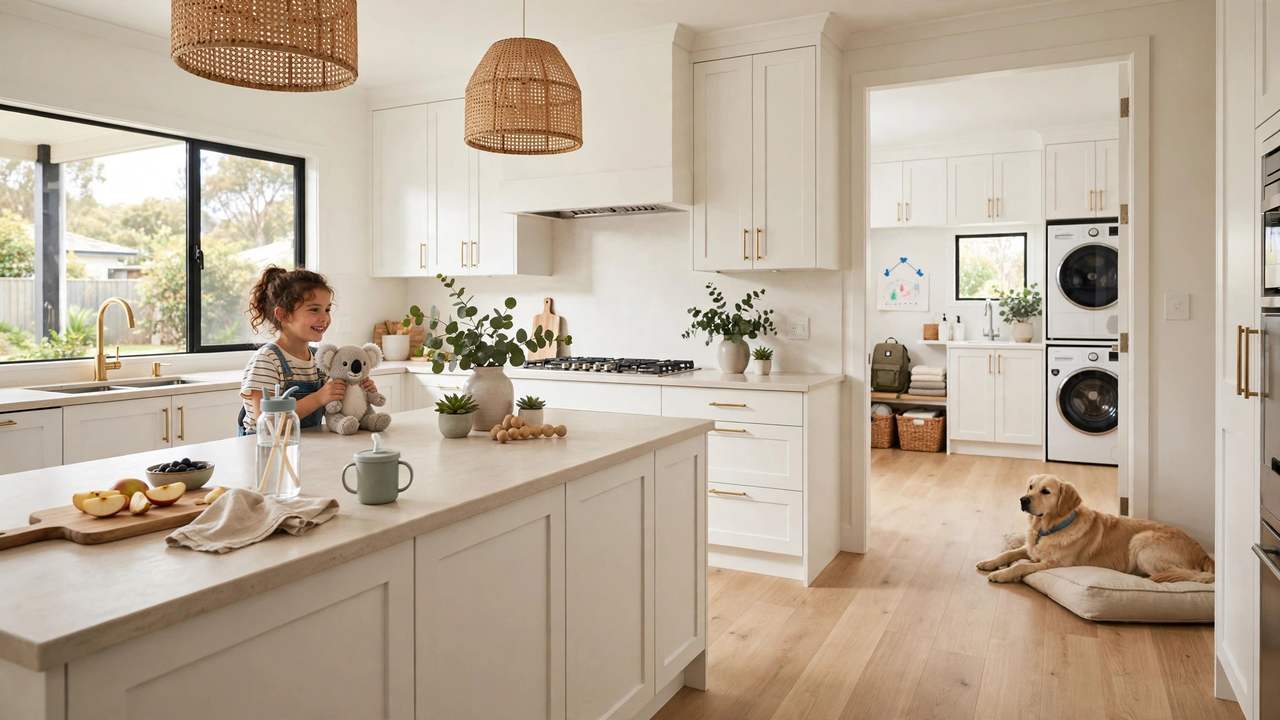
| Pets / kids | Hybrid | Accidents happen; the floor shouldn’t punish you for them |
One design note: mid-tone oak-look planks are the safe Australian default — they hide dust and work with most wall colours. If you’re repainting around a new floor, our popular interior paint colours guide pairs wall colours with common floor tones, and our interior painting cost guide helps budget the walls to match.
Which should you choose?
Run this honestly and the answer picks itself:
- Does the room see water? Kitchen, entry, laundry-adjacent living — hybrid, no contest. Dry bedrooms and studies — laminate is fine.
- Do you have pets, kids or tenants? Any yes points to hybrid. The waterproof core is insurance against the accidents you can’t schedule.
- Is budget the deciding factor? A mid-range laminate at $35–$45/m² with a good underlay beats a budget hybrid with a sloppy lock. Don’t buy the cheapest board of either type.
- How long will you keep it? Neither refinishes, so the wear layer you buy is the wear layer you live with. For a forever home, pay for 0.5mm wear (hybrid) or AC4+ (laminate).
- Strata or apartment? Check acoustic by-laws first — the underlay choice may be dictated for you.
Most buyers would be happy with either product if they bought a decent mid-range board on a properly prepared subfloor. The product debate is secondary to installation quality — vet the installer, not the sample board.
Frequently asked questions
Is hybrid flooring better than laminate?
For wet-prone rooms, yes — hybrid’s waterproof core survives spills, steam and pet accidents that swell laminate’s wood-fibre core. For dry bedrooms and living rooms, a mid-range laminate performs just as well for less money. Neither is universally “better”; the room decides.
Is hybrid flooring actually waterproof?
The plank itself is — the SPC core cannot absorb water, swell or warp. That doesn’t make your floor a bathtub: water can still reach the subfloor through the joints if left pooling for hours, and flood damage isn’t covered by warranties. Think “forgiving”, not “submersible”.
Can you steam-mop hybrid and laminate floors?
Steam mops are generally fine on hybrid (confirm in your brand’s warranty first) and risky on laminate — repeated steam drives moisture into the HDF core and swells the joints. On laminate, a well-wrung damp mop is the safe option.
How long do hybrid and laminate floors last?
A mid-range board (0.5mm wear hybrid, AC4+ laminate) typically lasts 10–15 years in a family home; budget boards in high traffic can look tired in 5. Neither refinishes, so lifespan is set by the wear layer and the subfloor.
Which is better for rentals and pets?
Hybrid. Tenant turnover and pet accidents are exactly what the waterproof core is built for — landlords replace water-damaged laminate far more often, and the higher supply cost usually pays for itself.
Can hybrid or laminate flooring be refinished?
No. Both have a printed design layer under a clear wear layer — there’s no real timber to sand back. Once the wear layer is worn through, the plank must be replaced. This is the main long-term argument for engineered timber if your budget stretches to $60–$150/m² supply.
Figures & sources
Supply bands (hybrid $28–$65/m², laminate $20–$55/m², engineered timber $60–$150/m²) and install labour ($25–$40/m² floating, $35–$60/m² engineered) are indicative 2026 Australian ranges — get itemised quotes. Core constructions (SPC stone-plastic composite; HDF high-density fibreboard), waterproof vs water-resistant behaviour, steam-mop guidance, AC/wear-layer ratings, locking-system notes and end-of-life recyclability — product-category knowledge compiled from Australian flooring supplier specifications, 2026.
- Australian flooring supplier specifications and warranty documentation (hybrid SPC and laminate ranges), 2026
- Published Australian trade pricing guides for floating-floor installation labour, 2026