
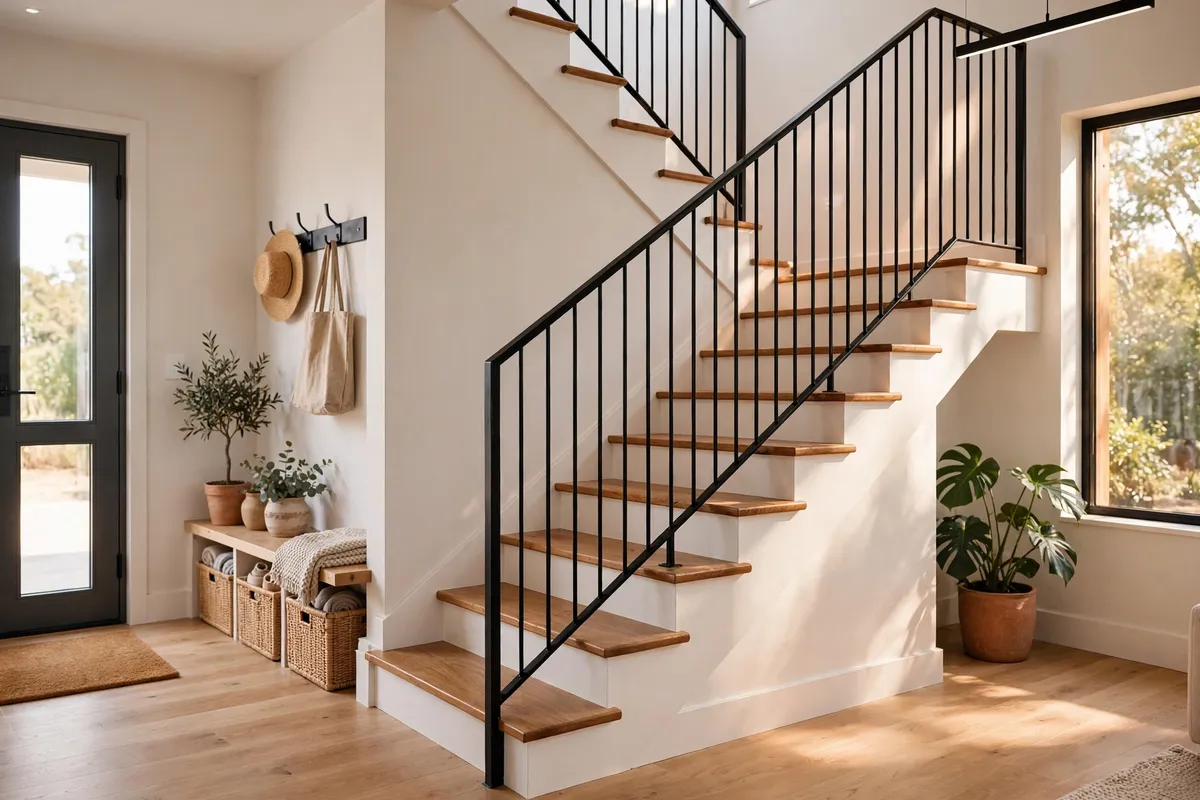
The staircase is one of the most-used features in a two-storey Australian home, yet it’s often the last thing homeowners think to renovate. A tired staircase with worn carpet, dated balusters or a wobbly handrail can drag down the feel of an entire entryway. The good news: a staircase renovation is one of the most cost-effective ways to modernise your home’s interior.
But how much does it actually cost? Staircase renovation prices in Australia range from around $1,000 for a cosmetic refresh to $10,000+ for a full rebuild. This guide breaks down realistic 2026 prices, the materials worth considering, and the design ideas delivering the best return.
Staircase Renovation Cost in Australia: At a Glance
| Project Type | Typical Cost (AUD) | What’s Included |
|---|---|---|
| Cosmetic refresh | $1,000 – $3,000 | Repaint, re-stain, new balusters, stair runner |
| Mid-range remodel | $4,000 – $10,000 | New treads, upgraded balustrade, minor structural tweaks |
| Full rebuild / custom | $10,000 – $25,000+ | New staircase, custom design, glass or steel features |
These are indicative ranges based on recent Australian project data. Every staircase is different — always get at least three itemised quotes before committing.
What Drives the Cost?
1. Scope of work
A simple repaint and new handrail is a weekend job for a painter. Replacing treads, reconfiguring the layout or widening the staircase involves carpentry, and potentially structural engineering. The bigger the structural change, the bigger the bill.
2. Materials
- Painted MDF / pine: the budget option, $1,000–$3,000 for a refresh. Looks clean and modern when done well.
- Hardwood treads (spotted gum, blackbutt, Tasmanian oak): $150–$400 per tread supplied and installed. Warm, durable, and very Australian.
- Glass balustrade: $600–$1,200 per linear metre. Opens up the space visually but needs regular cleaning.
- Steel / wrought iron balusters: $80–$200 per baluster. Modern industrial look, extremely durable.
- Timber handrail: $100–$300 per linear metre depending on species and profile.
3. Labour
Expect to pay $60–$100 per hour for a licensed carpenter in most Australian capitals. A full tread replacement on a standard straight flight typically takes 2–4 days. Regional areas may be cheaper, but availability can be limited.
4. Compliance and permits
If your renovation involves structural changes, you’ll need to comply with the National Construction Code (NCC). Key requirements include minimum tread depth, maximum riser height, and balustrade heights (generally 1m minimum for internal stairs). Your builder or certifier can advise whether a development application is needed.
Popular Staircase Renovation Ideas for 2026
Timber treads with white risers
The classic Hamptons-inspired look. Keep the risers crisp white and stain the treads in a warm timber tone. It works in almost any Australian home and photographs beautifully for resale listings.
Glass balustrade upgrade
Replacing timber balusters with frameless or semi-frameless glass instantly modernises a staircase and lets more light through. Best suited to contemporary homes. Budget $600–$1,200 per linear metre installed.
Black steel statement
Matte black balusters, handrails or a full steel stringer deliver an industrial-luxe feel. Pairs well with concrete-look tiles and timber flooring. Powder-coated steel is low maintenance and won’t date quickly.
Stair runner for warmth
A quality wool runner ($500–$1,500 depending on length) softens a timber staircase, reduces noise between floors, and adds grip. Choose a flat-weave for durability in high-traffic homes.
Under-stair storage
While you’re renovating, consider what happens underneath. Custom joinery can turn dead space into drawers, a reading nook or a compact home office. Allow $2,000–$5,000 for built-in storage depending on complexity.
DIY vs Hiring a Professional
Cosmetic work — sanding, painting, installing a runner — is very achievable for a competent DIYer and can save $1,000–$2,000 in labour. But anything structural (moving the staircase, altering stringers, changing the pitch) legally requires a licensed builder in most states.
A good rule: if it affects how the staircase bears weight or complies with the NCC, hire a professional. The cost of getting it wrong far exceeds the saving. If your renovation is part of a bigger project, see our guides on second storey addition costs and house extension costs in Australia to budget the full scope.
How Long Does It Take?
- Cosmetic refresh: 2–5 days
- Tread and balustrade replacement: 1–2 weeks
- Full rebuild: 2–4 weeks including design and approvals
Timber Species Compared: What Suits Australian Homes?
Choosing the right timber matters — it affects cost, durability and how well the staircase ages. Here’s how the popular options stack up:
- Spotted gum: $200–$400 per tread. Dense, durable, with striking colour variation. A premium Australian hardwood that handles heavy foot traffic beautifully.
- Blackbutt: $180–$350 per tread. Warm blonde tones, very hard-wearing. A favourite for coastal and contemporary homes.
- Tasmanian oak: $150–$300 per tread. Lighter in colour, takes stain well. Good value for a classic look.
- American oak: $150–$280 per tread. Consistent grain, widely available. Works well painted or stained.
- Pine (painted): $80–$150 per tread. The budget choice — best when painted rather than stained, as the grain is less attractive.
For rental properties or tight budgets, painted pine with a durable floor enamel is perfectly serviceable. For your forever home, investing in a quality hardwood pays off in longevity and feel underfoot.
The Renovation Process: What to Expect
Step 1: Assessment and quote
A carpenter or staircase specialist will inspect the existing structure, check for damage (borers, rot, loose fixings), and discuss your goals. Expect itemised quotes within a week. Be wary of quotes that seem too cheap — they often exclude finishing, which is where the real craftsmanship shows.
Step 2: Design decisions
Finalise your materials, colours and balustrade style before work begins. Changing your mind mid-project is the fastest way to blow the budget. If you’re matching existing flooring, bring a sample to your supplier.
Step 3: Demolition and prep
Old carpet, balusters and handrails come off. The stringers (the structural sides) are inspected. Any structural repairs happen now — this is also when hidden problems surface, so keep a 10–15% contingency.
Step 4: Installation
New treads go in, balustrade is fitted, handrail installed. A good tradie will protect surrounding floors and walls. Dust is inevitable — seal off the area if you can.
Step 5: Finishing
Sanding, staining or painting, then clear coats. This stage makes or breaks the final look. Don’t rush it — allow proper drying times between coats.
Common Mistakes to Avoid
- Skipping the slip test: Highly polished treads look stunning but can be dangerously slippery in socks. Use a satin finish or add discreet anti-slip strips.
- Ignoring the NCC: Non-compliant balustrade gaps or handrail heights can fail inspection and create liability. Know the rules before you build.
- Mismatched whites: If you’re painting risers white to match existing trim, test the colour first. “White” varies enormously between brands.
- Forgetting lighting: A staircase renovation is the perfect time to add LED strip lighting under treads or wall washers. Retrofitting later costs far more.
- Choosing style over durability: That ultra-pale timber looks incredible in photos but shows every mark in a busy family home. Be honest about your lifestyle.
Frequently Asked Questions
How much does it cost to replace stair treads in Australia?
Replacing treads with hardwood typically costs $150–$400 per tread supplied and installed. A standard flight of 13–14 treads lands around $2,000–$5,500 depending on timber species and finish.
Can I renovate my staircase without council approval?
Cosmetic changes like painting or replacing balusters generally don’t need approval. Structural changes — altering the staircase position, width or pitch — usually require certification under the NCC. Check with your local council or a private certifier before starting.
What’s the cheapest way to update a staircase?
Paint is the cheapest transformation. Sand back the handrail and balusters, paint risers white, and stain or paint the treads. A full cosmetic refresh can cost under $1,000 in materials if you DIY.
Are glass staircases safe for families with kids?
Yes, when installed to Australian Standards. Toughened safety glass (minimum 10mm for frameless) is extremely strong. Ensure gaps comply with NCC requirements — a 125mm sphere must not pass through any opening.
Does a staircase renovation add value to my home?
A well-executed staircase renovation improves first impressions and can lift perceived value, particularly in the entry. While it’s hard to isolate the exact return, agents consistently note that a modern staircase photographs well and helps listings stand out.