
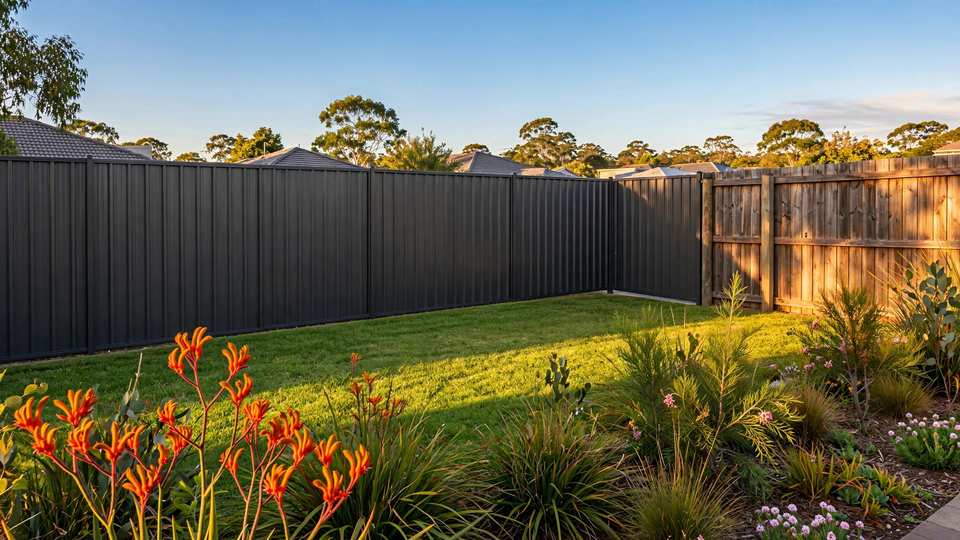
Fencing installation in Australia typically costs $75 to $350 per linear metre fully installed in 2026, depending on the material you choose. A standard 30-metre treated-pine paling fence runs $2,400 to $3,600 installed, while the same length in Colorbond steel costs $2,850 to $4,800. For a full 40-metre boundary, most homeowners pay between $4,000 and $9,000 all up.
Whether you’re replacing a falling-down fence or building new, this guide breaks down fence costs by material, the extras contractors charge for, council height rules you need to know, and whether DIY actually saves you money.
Fence Installation Cost Per Metre by Material (2026)
Fencing is priced per linear metre, and the material sets the band you’re in. All figures below are installed prices in Australian dollars, including GST, based on 2026 metro pricing.
| Material | Cost per metre (installed) | Lifespan |
|---|---|---|
| Chain wire | $30–$70 | 10–15 years |
| Treated pine paling | $75–$130 | 12–20 years |
| Hardwood paling | $100–$190 | 15–25 years |
| Colorbond steel (1.8m) | $75–$160 | 25–30+ years |
| Colorbond steel (2.1m) | $120–$250 | 25–30+ years |
| Aluminium slat screening | $150–$350 | 20–30 years |
| Timber picket | $60–$250 | 10–15 years |
| PVC / vinyl | $50–$150 | 20–30 years |
| Aluminium pool fence | $100–$350 | 20+ years |
| Frameless glass pool | $300–$800 | 25+ years |
| Rendered brick / block (1.8m) | $250–$800 | 50+ years |
Colorbond Fence Cost: The 2026 Breakdown
Colorbond remains Australia’s most popular fencing material, and for good reason — it needs no painting, shrugs off termites, and lasts 25 to 30 years or more. A standard 1.8-metre Colorbond fence typically costs $100 to $130 per metre installed in metro areas, with most quotes landing in that band.
Height makes the biggest difference to a Colorbond quote. A 1.2-metre front fence runs $110 to $150 per metre, the standard 1.8-metre backyard boundary costs $130 to $180, and a 2.1-metre privacy fence climbs to $155 to $215 per metre. Taller fences need bigger posts, more steel sheet, and deeper footings.
What pushes a Colorbond quote up or down:
- Slope. Stepped or raked panels take longer to set out than a level run. On hilly blocks, slope can add 20 to 40 percent to the base rate.
- Ground conditions. Posts into rock, heavy clay, or old concrete footings cost more to dig than posts into sandy soil. Cheap quotes often skip this and add it later.
- Old fence removal. Taking out and disposing of an old timber fence usually adds $15 to $30 per metre — and if it contains asbestos cement sheeting, that requires a licensed removalist at extra cost.
- Access. No side access, a pool along the fence line, or established garden beds all slow the job down and lift labour costs.
For a typical 20-metre backyard boundary on flat ground with easy access, expect $2,600 to $3,600 installed. Under Victoria’s Fences Act 1968 (and equivalent dividing-fences laws in other states), that cost is generally split equally with your neighbour.
Timber Paling Fence Cost
Treated pine paling is the budget standard for Australian backyards, running $75 to $130 per metre installed — with most 1.8-metre jobs landing around $100 to $115. Hardwood palings cost more upfront ($100 to $190 per metre) but last longer and handle weather better.
The catch with timber is maintenance. A pine fence needs re-staining or painting every 3 to 7 years, at roughly $600 to $1,200 for a 30-metre run, and posts commonly need replacing around the 10-year mark ($140 to $300 per post). Over 20 years, a 30-metre timber fence costs $5,000 to $8,000 all up — compared to $3,000 to $5,500 for Colorbond over the same period.
Timber wins on looks for heritage homes and natural gardens, and it’s the easiest material to repair yourself (a few palings and a hammer). Just budget for the maintenance from day one.
Aluminium Slat, Glass and Brick Fences
Aluminium slat fencing sits in the mid-to-premium band at $150 to $350 per metre installed, with $270 typical. It’s popular for front fences and pool surrounds because it looks sharp, needs almost no maintenance, and handles coastal salt air well. Slat spacing affects privacy — tighter slats cost more.
Pool fencing is governed by strict safety standards (AS1926.1), which is one reason it costs more. Aluminium pool fencing runs $100 to $350 per metre, while frameless glass panels cost $300 to $800 per metre installed. The glass itself is the big cost driver — plus the spigots, posts, and self-closing gate hardware the standard requires.
Rendered brick or block fences are the premium option at $250 to $800 per metre for a 1.8-metre wall. They’re essentially permanent — 50-plus years — and deliver the best noise reduction, but the footings alone are a major cost. These are common in new estates with design guidelines and on noisy main roads.
Extras That Add to Your Fence Quote
The per-metre rate is the headline number, but the final invoice usually includes extras. Here’s what to budget for:
| Extra | Typical cost |
|---|---|
| Old fence removal + disposal | $15–$50 per metre |
| Single pedestrian gate (installed) | $250–$650 |
| Double driveway gate, manual (installed) | $800–$2,500 |
| Post replacement (per post) | $140–$300 |
| Timber retaining wall | $150–$450 per metre |
| Lattice topper or plinth | $30–$80 per metre |
Retaining walls deserve a special mention: on sloping blocks, a fence often can’t be built without one, and they run $150 to $450 per metre for timber (more for concrete or stone). Retaining over 500mm may need engineering certification. Always get the retaining quoted as a separate line item — don’t let a contractor bury it in the fence price.
DIY vs Professional Fence Installation
DIY can genuinely save money on fencing — but only if you know what you’re doing. Materials-only Colorbond runs $55 to $95 per metre (panels, posts, rails, capping), and timber paling materials run $40 to $60 per metre. Professional labour adds roughly $45 to $100 per metre on top, depending on your location and the job’s complexity.
That means DIY on a 30-metre Colorbond fence saves roughly $1,350 to $3,000 in labour. But there are real caveats:
- Posts are the hard part. Setting posts plumb, at the right depth, in concrete — this is where DIY fences fail. A leaning fence in two years wipes out your savings.
- You still need council compliance. Height limits, boundary offsets, and pool safety standards apply whether you DIY or not.
- Neighbour disputes. If it’s a boundary fence, your neighbour is legally involved. Get the agreement in writing before you start.
- Your time has value. A pro crew does 30 metres in a day or two. DIY typically takes several weekends.
The sweet spot for many homeowners: remove the old fence yourself (saving $15 to $50 per metre in disposal fees), then pay a professional to build the new one properly.
Council Height Rules and Permits
You don’t need council approval for most standard fences — but you do need to know the limits. As a general rule across Australian states:
- Side and rear boundaries: up to 2.0 metres high usually needs no permit. The standard is 1.8 metres.
- Over 2.0 metres: requires a building permit, and in some states a setback from the boundary.
- Front fences near the street: typically capped at 1.2 to 1.5 metres (1.2m for masonry, 1.5m for timber near street alignments).
- Corner blocks: fencing within 9 metres of a street intersection is often limited to 1 metre for driver visibility.
- Pool fences: must meet AS1926.1 — minimum 1.2 metres high, non-climbable, with a self-closing, self-latching gate.
Exact limits vary by council, so check your local council’s website before finalising a design — especially for front fences, corner blocks, and anything over 2 metres. Heritage overlays can add further restrictions.
Sharing the Cost With Your Neighbour
Under each state’s dividing-fences legislation (like Victoria’s Fences Act 1968 or NSW’s Dividing Fences Act 1991), neighbours generally share the cost of a “sufficient” boundary fence equally. Key points:
- Talk to your neighbour before getting quotes — a written agreement avoids disputes.
- If one party wants a more expensive fence than the “sufficient” standard (say, rendered brick instead of Colorbond), they usually pay the difference.
- If your neighbour won’t engage, serve a formal “notice to fence” as set out in your state’s act — it creates a legal paper trail.
- Pool fencing costs sit with the pool owner, not the neighbour.
- Councils don’t get involved in neighbour fence disputes — that’s what the tribunal/court process is for.
How to Get the Best Fence Quote
Fencing is one of the few trades where quotes genuinely vary — commonly by 20 to 30 percent for identical work. The product is standardised, so you’re mostly comparing labour and margin. That makes getting three written quotes one of the highest-return things you can do.
- Get three quotes minimum from local fencing contractors with recent reviews.
- Insist on line items: materials per metre, labour per metre, removal, gates, retaining — separately.
- Check what’s excluded: rock excavation, retaining, painting, and permit fees are the usual surprise add-ons.
- Ask about the footings: post depth and concrete volume separate good installers from cheap ones.
- Confirm the timeline and get start/finish dates in writing.
- Never pay the full amount upfront. A deposit of 10 to 20 percent is standard; the balance on completion.
Frequently Asked Questions
How much does a Colorbond fence cost per metre in 2026?
A standard 1.8-metre Colorbond fence costs $75 to $160 per metre installed, with most metro jobs landing around $100 to $130. A 20-metre backyard boundary typically totals $2,600 to $3,600 on flat ground.
Is Colorbond or timber paling cheaper?
Timber paling is cheaper upfront ($75–$130/m vs $75–$160/m for Colorbond), but Colorbond is cheaper over 20 years because timber needs re-staining every 3–7 years and post replacements. Over 20 years, a 30m timber fence costs roughly $5,000–$8,000 versus $3,000–$5,500 for Colorbond.
How high can I build a fence without council approval?
Generally up to 2.0 metres on side and rear boundaries needs no permit (1.8m is standard). Front fences near the street are usually limited to 1.2–1.5m. Anything over 2m needs a building permit. Check your local council, as rules vary.
Does my neighbour have to pay half the fence cost?
Under each state’s dividing-fences legislation, neighbours generally share the cost of a “sufficient” boundary fence equally. If you want something more expensive than the standard, you typically pay the difference. Talk to your neighbour first and get agreements in writing.
How long does a fence take to install?
A professional crew installs 20–40 metres in one to two days on a straightforward site. DIY typically takes several weekends. Add time for old fence removal, retaining walls, or difficult ground.
Can I install a fence myself?
Yes — materials-only costs are roughly $40–$95 per metre depending on material, saving you $45–$100 per metre in labour. But posts must be set properly, council height and boundary rules still apply, and pool fences must meet AS1926.1. Many homeowners DIY the old-fence removal and hire a pro for the build.
What is the cheapest fence option?
Chain wire at $30–$70 per metre installed is cheapest but offers no privacy. For a private boundary fence, treated pine paling at $75–$130 per metre is the most affordable standard option.
How much does a pool fence cost?
Aluminium pool fencing costs $100–$350 per metre installed; frameless glass costs $300–$800 per metre. Pool fencing must comply with AS1926.1 (minimum 1.2m high, non-climbable, self-closing gate), and the pool owner pays the full cost.
Updated: October 2026. Prices are national averages based on 2026 metro quotes and include GST; always get three written quotes for your specific site.