
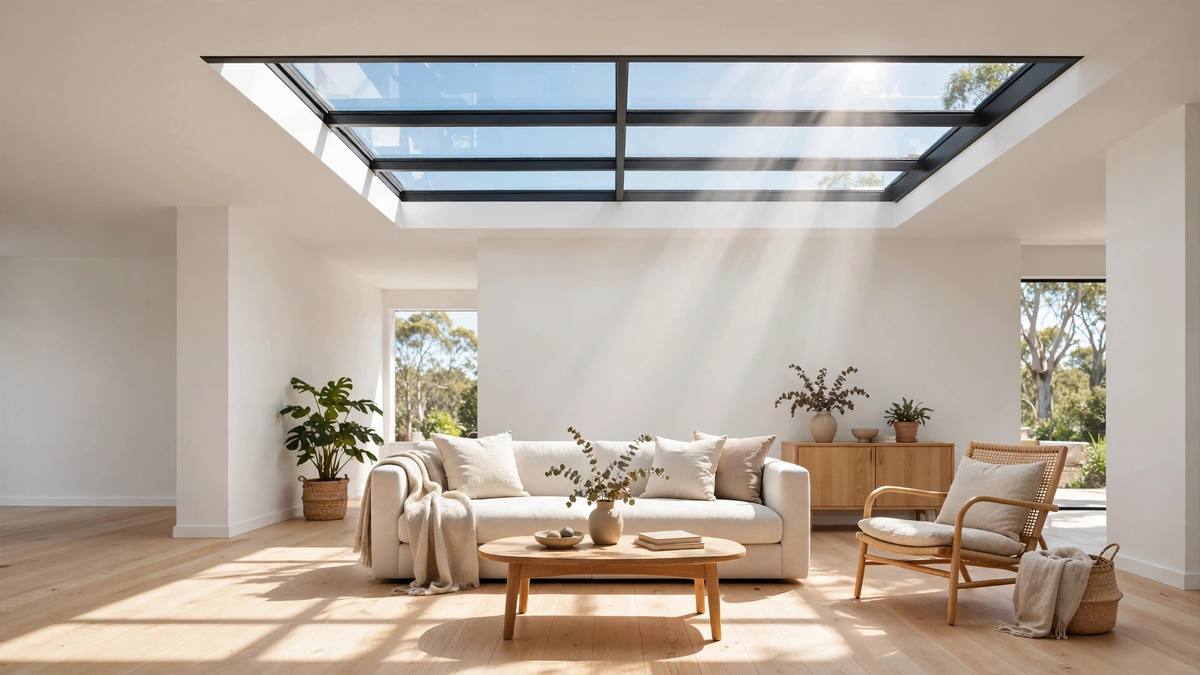
Skylight installation in Australia costs $600–$6,500 in 2026, depending on the type of skylight and how complex the roof work is. A basic tubular daylighting system for a hallway or bathroom starts around $600–$1,800 fully installed, while a standard fixed VELUX glass skylight lands at $2,500–$4,000 installed. Opening models — manual, electric or solar-powered — run $3,200–$6,500+, and custom architectural skylights start at $5,000. This guide breaks down every cost: skylight prices by type, the 2026 VELUX price list, how your roof type changes the quote, DIY versus professional installation, and the questions to ask before you sign anything.
How Much Does Skylight Installation Cost in Australia? (2026)
A skylight is really two purchases in one: the skylight product itself and the installation (roof cutting, flashing, light shaft, plastering and painting). Across Australian installer guides and retailer listings checked in October 2026, the installed ranges are consistent:
- Tubular daylighting system (e.g. Solatube): $600–$1,800 installed
- Fixed glass skylight: $1,200–$3,500 installed (standard VELUX installs $2,500–$4,000)
- Manual-opening skylight: $1,800–$4,500+ installed
- Electric/solar-opening skylight: $4,500–$6,500+ installed
- Custom/architectural skylight: $5,000–$15,000+ installed
The honest caveat: no single national 2026 price survey exists for skylights. The figures below are compiled from Australian installer price guides, the official VELUX 2026 recommended retail price list, and live retailer listings — all checked in October 2026.
Skylight Cost by Type: Full Comparison
| Skylight type | Installed cost (AUD) | Light effect | Best for |
|---|---|---|---|
| Tubular (Solatube-style) | $600–$1,800 | Diffused, evenly spread light | Hallways, bathrooms, wardrobes, laundries |
| Fixed glass skylight | $1,200–$3,500 | Direct, bright overhead light + sky view | Living rooms, kitchens, open-plan areas |
| Ventilating (manual opening) | $1,800–$4,500+ | Bright light plus fresh air | Kitchens, bathrooms, laundries |
| Ventilating (electric/solar) | $4,500–$6,500+ | Light + powered ventilation | High ceilings, hard-to-reach spots |
| Custom/architectural | $5,000–$15,000+ | Statement daylight feature | Design-led renovations, large rooms |
VELUX Skylight Prices 2026 (Supply-Only RRP)
VELUX is the dominant skylight brand in Australia, and its official 2026 price list (effective 1 April 2026, prices include GST) gives a reliable baseline for product costs. These are supply-only prices — installation is extra:
| VELUX model | Type | RRP range (supply only) |
|---|---|---|
| FS | Fixed, double-glazed | $558–$1,056 |
| VS | Manual opening, double-glazed | $1,271–$2,009 |
| VSE | Electric opening | $2,392–$2,995 |
| VSS | Solar-powered opening | $2,579–$3,229 |
| EDW flashing | Tile/metal roof flashing kit | $117–$176 |
| Blinds | Solar honeycomb / pleated | $635–$663 |
The key insight from this price list: the product is often the smaller half of the total. A fixed FS skylight at $558–$1,056 supply-only typically costs $2,500–$4,000 fully installed in Melbourne (per 2026 installer guides), because the roof opening, structural framing, flashing, light shaft, plastering and painting usually exceed the product cost. A solar-opening VSS at $2,579–$3,229 supply-only lands at $4,500–$6,500+ installed.
Blinds are worth budgeting for upfront: a VELUX solar honeycomb blind runs $635–$663 supply-only, and installers consistently recommend them for heat and glare control — especially on north-facing skylights.
Tubular Skylights: The Budget Option
Tubular daylighting systems (Solatube is the best-known brand) capture daylight through a small roof dome and pipe it down a highly reflective tube. They need only a small roof penetration, so installation is quicker, cheaper and less disruptive than a traditional skylight. Solatube Australia’s official pricing:
- Econotube (budget, flexible duct): $250–$600
- Heavenly Performance range: $600–$1,000
- Daylighting System (DS) premium range: $1,000–$1,800
- Standard supply + installation overall: $600–$1,800
Tubular skylights suit smaller, darker spaces — hallways, bathrooms, walk-in robes, laundries and internal toilets — where you want daylight without a large roof opening. The trade-off: no sky view and no ventilation (vent kits exist as add-ons). For a living room where you want the drama of a visible sky, a fixed glass skylight is the better choice.
What Affects Skylight Installation Cost?
Two identical skylights can cost very different amounts to install. Installers price on the job, not just the product. The main cost drivers:
Roof type and flashing
This is the single biggest variable after skylight type. The same VELUX model needs a completely different installation detail on different roofs:
- Concrete or terracotta tiles: standard compatible flashing kits; tile condition and profile matter
- Corrugated Colorbond/metal: conventional or made-to-order flashing; roof profile and upslope drainage checked
- TRIMDEK / Klip-Lok: purpose-made flashing designed for the actual profile — wide-span concealed-fix roofing needs profile-specific water management and typically costs more
- Flat or low-pitch roofs: need a kerb/upstand plus waterproofing membrane detailing; drainage pathways must be designed
Light shaft depth and internal finishing
A skylight in a single-storey home with a shallow roof cavity is a straightforward job. A deep light shaft through a two-storey void means more framing, plasterboard, setting, sanding and painting — all of which add labour cost. Confirm whether your quote includes painting; many don’t.
Access and height
Steep pitches, two-storey heights and difficult roof access may require scaffolding or height allowances. These show up as line items on professional quotes.
Structural work and services
Cutting roof framing may require structural reinforcement. If electrical wiring, ducting or plumbing runs through the planned location, rerouting adds cost. Licensed trades and documentation may be required.
The product-versus-install split
One Australian roofing guide puts it plainly: the skylight product runs $400–$2,000 while professional installation labour runs $500–$4,000 — and the skilled installation is typically the largest slice of the investment. Supply-only listings always look cheap because they exclude the roof opening, labour, framing, flashing and plasterwork.
DIY vs Professional Skylight Installation
Tubular systems are the most DIY-friendly: Solatube markets its kits as installable in a few hours, and some homeowners do tackle them. Even so, you’re cutting a hole in your roof — waterproofing mistakes are expensive.
Fixed and opening skylights should be professionally installed. The job involves cutting roof structure, structural framing, flashing integration with your specific roof profile, and waterproofing — get any of it wrong and you have a leak that can cost thousands to fix. Professional installation also protects product warranties, which DIY work can void.
As a rule of thumb: if the skylight needs a light shaft, plastering or structural work, hire a professional. The labour component ($500–$4,000) is money well spent against the cost of a leaking roof.
Ongoing Costs: Blinds and Maintenance
Budget beyond the installation day:
- Blinds: $635–$663 supply-only for VELUX solar blinds; worth it for glare and heat control
- Cleaning: skylight glass needs periodic cleaning, inside and out — factor in safe access
- Seal checks: inspect flashing and seals every few years; resealing is cheap, water damage isn’t
- Lifespan: a well-installed quality skylight lasts 15–25 years; budget tubular systems less
Double-glazed or low-E glass is worth specifying at purchase: it reduces heat transfer and blocks UV, keeping the room comfortable without driving up cooling costs.
Are Skylights Worth the Cost?
For dark internal rooms — hallways, bathrooms, laundries — a $600–$1,800 tubular system is one of the cheapest ways to transform a space, and it cuts daytime lighting use. For living areas, a fixed skylight at $2,500–$4,000 adds genuine architectural value and can make rooms feel significantly larger.
Ventilating skylights earn their premium in kitchens and bathrooms by releasing trapped heat and moisture, reducing reliance on exhaust fans and air conditioning. Solar-opening models ($4,500–$6,500+) make sense for high or hard-to-reach ceilings where manual or wired operation is impractical.
The main risk is poor installation — leaks. Choose an installer who details the flashing for your actual roof profile (not a generic kit), and get the quote in writing with inclusions listed: roof opening, flashing type, shaft lining, plastering, painting, waste removal and warranty terms.
Choosing the Right Size and Placement
Size matters more than most buyers expect. As a rough guide, the skylight’s glazed area should be about 5–10% of the room’s floor area for balanced daylight — a 20m² living room wants roughly 1–2m² of skylight. Go smaller and the effect is underwhelming; go much larger and you’ll battle heat and glare, especially on north and west-facing roof slopes.
Orientation changes everything in Australia. A north-facing skylight delivers beautiful winter sun but can overheat a room in summer without a blind. South-facing skylights give soft, consistent light year-round with minimal heat gain — often the best choice for home offices. East-facing catches gentle morning light; west-facing copes the harsh afternoon sun and usually needs shading. If you have the choice, prioritise south and east orientations and budget for blinds on any north or west-facing unit.
Placement within the roof also affects cost. Centring a skylight between rafters avoids structural cutting; spanning rafters means reframing and a higher quote. An installer assessing your roof will check rafter spacing before confirming the size — another reason the final price is only ever fixed after a site inspection.
Questions to Ask Your Installer Before You Sign
Skylight quotes vary wildly because inclusions vary wildly. Ask these seven questions and compare answers like-for-like:
- Is the flashing designed for my exact roof profile? Generic kits on TRIMDEK or Klip-Lok are a leak waiting to happen.
- Does the quote include the light shaft lining, plastering, setting and sanding? And painting — or is that on you?
- What structural work is needed, and is it included? Rafter cutting and reframing should be itemised, not assumed.
- Who handles electrical work for powered models? Electric and solar-opening skylights may need a licensed electrician.
- What warranty covers the installation workmanship — separate from the product warranty?
- Is scaffolding or height access included, or billed as a variation later?
- What happens if you find damaged battens or sarking once the roof is opened? Get the variation process in writing.
A quote that answers all seven clearly is worth more than a cheaper one that answers none. The most expensive skylight is the one you pay to install twice.
The Bottom Line
For most Australian homes in 2026, a sensible skylight project costs $1,500–$4,000 installed — a tubular system or standard fixed VELUX in a straightforward single-storey roof. Add opening mechanisms, difficult roof profiles or deep light shafts and you’re at $4,500–$6,500+. Get three itemised quotes, confirm what’s included (especially painting and flashing type), and never choose a skylight on supply-only price alone. Done right, it’s one of the highest-impact home improvements per dollar — natural light changes how a whole house feels. If you’re planning broader renovation work, our house restumping cost guide and rainwater tank cost guide cover two other high-value upgrades.
Prices checked against Australian installer guides, the VELUX 2026 RRP price list and live retailer listings in October 2026. Always get itemised quotes for your specific roof — these are planning ranges, not fixed quotes.
Frequently Asked Questions
How much does it cost to install a skylight in Australia?
In 2026, skylight installation costs $600–$6,500 in Australia. Tubular systems cost $600–$1,800 installed, fixed glass skylights $1,200–$3,500 (standard VELUX installs $2,500–$4,000), manual-opening models $1,800–$4,500+, and solar/electric-opening models $4,500–$6,500+. The product itself is often less than half the total — installation labour, flashing, framing and plastering make up the rest.
How much is a VELUX skylight in Australia?
VELUX 2026 recommended retail prices (supply only, incl. GST): fixed FS models $558–$1,056, manual-opening VS $1,271–$2,009, electric VSE $2,392–$2,995, and solar-powered VSS $2,579–$3,229. Flashing kits add $117–$176 and blinds $635–$663. Fully installed, a standard fixed VELUX typically costs $2,500–$4,000.
Are tubular skylights cheaper than traditional skylights?
Yes — significantly. A Solatube tubular system costs $600–$1,800 supply and install, versus $2,500–$4,000 for a standard fixed glass skylight. Tubular systems need only a small roof penetration, so labour is lower. The trade-off is no sky view and no ventilation.
Can you install a skylight in a Colorbond or metal roof?
Yes. Skylights can be installed in Colorbond, corrugated metal, TRIMDEK and Klip-Lok roofs, but the flashing must be designed for the specific profile — wide-span concealed-fix profiles like Klip-Lok need purpose-made flashing, which costs more than standard kits. Expect metal-roof installs to run 20–30% higher than the simplest scenarios.
Do skylights leak?
A correctly installed skylight with flashing matched to your roof profile should not leak. Most skylight leaks trace back to poor installation or wrong flashing, not the product. This is the strongest argument for professional installation: cutting roof structure and waterproofing are not forgiving of mistakes.
Can I install a skylight myself?
Tubular skylight kits are marketed as DIY-friendly and can be installed in a few hours by a handy homeowner. Fixed and opening skylights should be professionally installed — the job involves structural roof cutting, flashing, waterproofing and often plastering. DIY mistakes void warranties and risk leaks costing thousands to repair.
Do I need council approval for a skylight?
Most straightforward like-for-like skylight replacements and new skylights don’t need planning approval, but rules vary by council and heritage overlays or strata schemes may impose restrictions. If structural roof framing is altered, a building permit may be required. Check with your local council before cutting.